
Commercial ads remain the cornerstone of brand communication in 2026, driving billions in revenue while shaping consumer behavior across digital and traditional platforms. As advertising landscapes evolve with emerging technologies and shifting viewer preferences, businesses must understand how to create compelling video content that cuts through noise and delivers measurable returns. The integration of programmatic solutions, artificial intelligence, and data-driven targeting has transformed how brands connect with audiences, making professional video production more critical than ever for companies seeking competitive advantages in crowded marketplaces.
The Evolution of Commercial Advertising in 2026
The commercial advertising industry has experienced remarkable transformation over the past few years. Digital ad revenue climbed to nearly $300 billion, reflecting unprecedented growth in the sector. This expansion demonstrates how commercial ads have adapted to meet consumer demands across multiple touchpoints.
Traditional television advertising continues to hold significant value alongside digital channels. Recent data shows that 68% of the top 100 brands increased their TV ad impressions in early 2025, proving that broadcast media remains relevant when integrated with comprehensive marketing strategies.
Platform Diversification Strategies
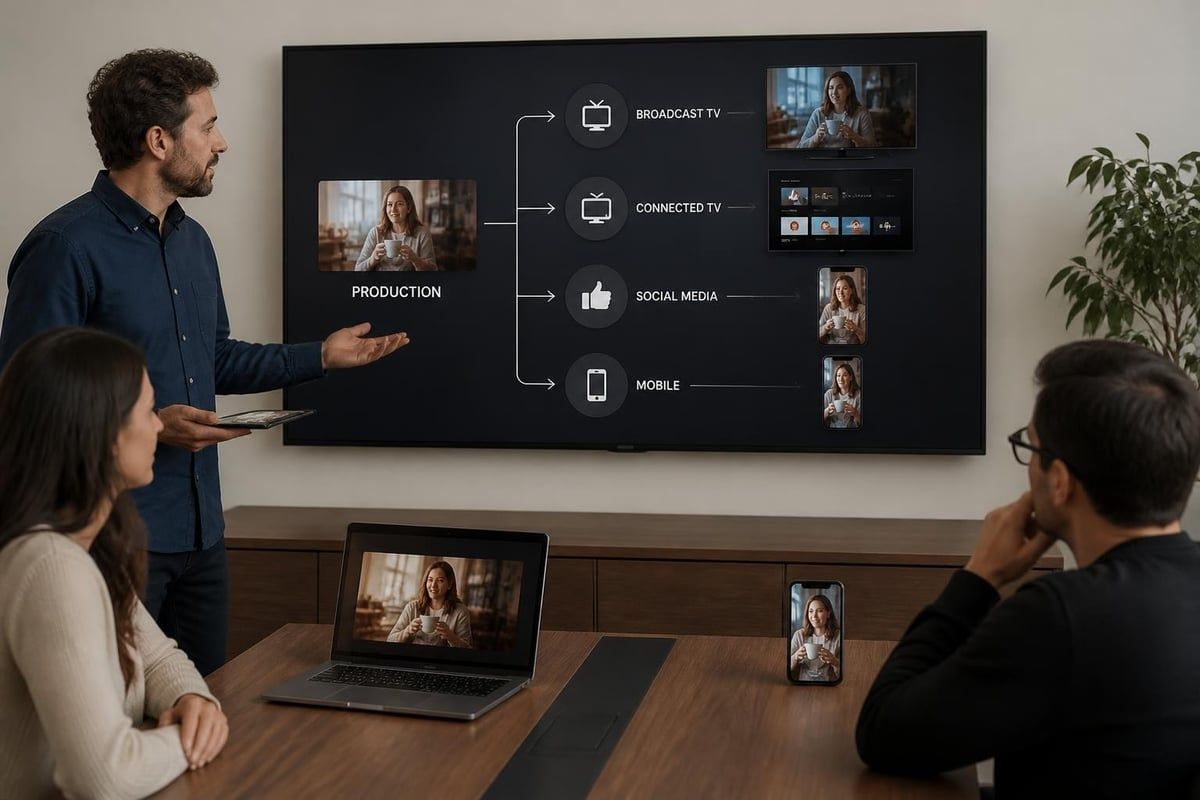
Modern commercial ads require multi-platform distribution to maximize reach and engagement. Brands must consider:
- Connected TV (CTV) platforms delivering targeted household reach
- Social media channels offering precise demographic targeting
- Traditional broadcast maintaining broad audience coverage
- Programmatic platforms enabling real-time optimization
- Mobile-first formats capturing on-the-go viewers
The convergence of these platforms creates opportunities for sophisticated campaigns that maintain consistent messaging while adapting creative executions to platform-specific requirements. Companies investing in advertising video production recognize that successful campaigns balance creative excellence with technical precision across all distribution channels.
Strategic Planning for Commercial Ad Production
Effective commercial ads begin with comprehensive strategic planning that aligns creative vision with business objectives. Production companies must collaborate with clients to establish clear goals, target audiences, and key performance indicators before cameras start rolling.
Budget allocation represents a critical early decision. Commercial ad production costs vary dramatically based on scope, talent requirements, location needs, and post-production complexity. Toronto-based businesses benefit from local production resources that reduce travel expenses while providing access to world-class crews and facilities.
Pre-Production Excellence
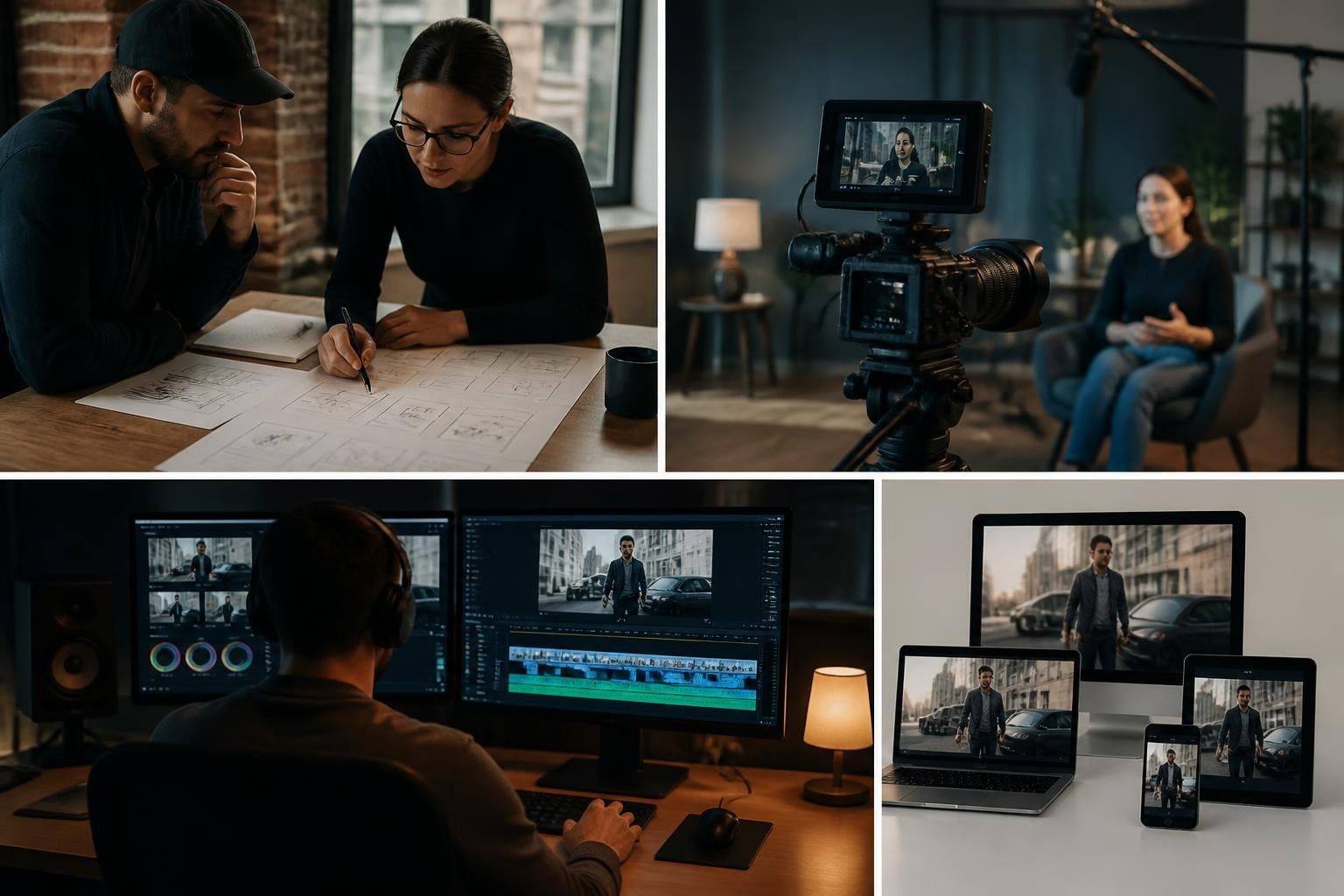
The foundation of successful commercial ads lies in meticulous pre-production planning:
- Concept development translating brand messages into compelling visual narratives
- Scriptwriting crafting dialogue and voice-over that resonates with target demographics
- Storyboarding visualizing shot sequences before production begins
- Location scouting identifying settings that enhance brand storytelling
- Talent casting selecting on-screen personalities that embody brand values
- Technical planning determining equipment, crew, and production timeline requirements
This systematic approach minimizes production delays while ensuring creative teams capture all necessary footage during scheduled shoot days. Professional video production services streamline these processes through established workflows and vendor relationships.
| Production Phase | Timeline | Key Deliverables |
|---|---|---|
| Concept Development | 1-2 weeks | Creative brief, mood boards |
| Scriptwriting | 1 week | Final script, shot list |
| Pre-Production | 2-3 weeks | Locations, talent, equipment |
| Principal Photography | 1-3 days | Raw footage, B-roll |
| Post-Production | 2-4 weeks | Edited versions, revisions |
Creative Excellence in Commercial Storytelling
Commercial ads succeed when they forge emotional connections with viewers while communicating clear brand messages. The most effective campaigns balance creativity with strategic messaging, ensuring entertainment value never overshadows business objectives.
Storytelling techniques have evolved beyond simple product demonstrations. Contemporary audiences expect narratives that reflect their values, address their challenges, and present authentic solutions. Brands achieving breakthrough results invest in understanding customer journeys, identifying pain points, and crafting stories that position products as meaningful solutions rather than commodities.
Visual Language and Brand Identity
Consistent visual language strengthens brand recognition across commercial campaigns. Color palettes, typography, composition styles, and pacing rhythms create distinctive signatures that audiences associate with specific brands. Production teams must balance creative innovation with brand guideline adherence, ensuring each new commercial ad feels fresh while maintaining strategic consistency.
Lighting design plays a crucial role in establishing mood and directing viewer attention. High-key lighting creates upbeat, energetic atmospheres ideal for lifestyle brands, while dramatic shadows and selective illumination build sophistication for luxury products. Technical expertise in cinematography transforms ordinary scenes into memorable brand moments.
Technology Integration in Modern Commercial Production
The commercial advertising landscape has been revolutionized by technological advancement. Generative AI and automation now lead marketing evolution, streamlining workflows while enabling unprecedented creative possibilities.
Camera technology has advanced dramatically, with 8K resolution and high dynamic range capture becoming standard for premium commercial ads. These technical capabilities provide flexibility in post-production, allowing editors to reframe shots and extract maximum quality from footage.

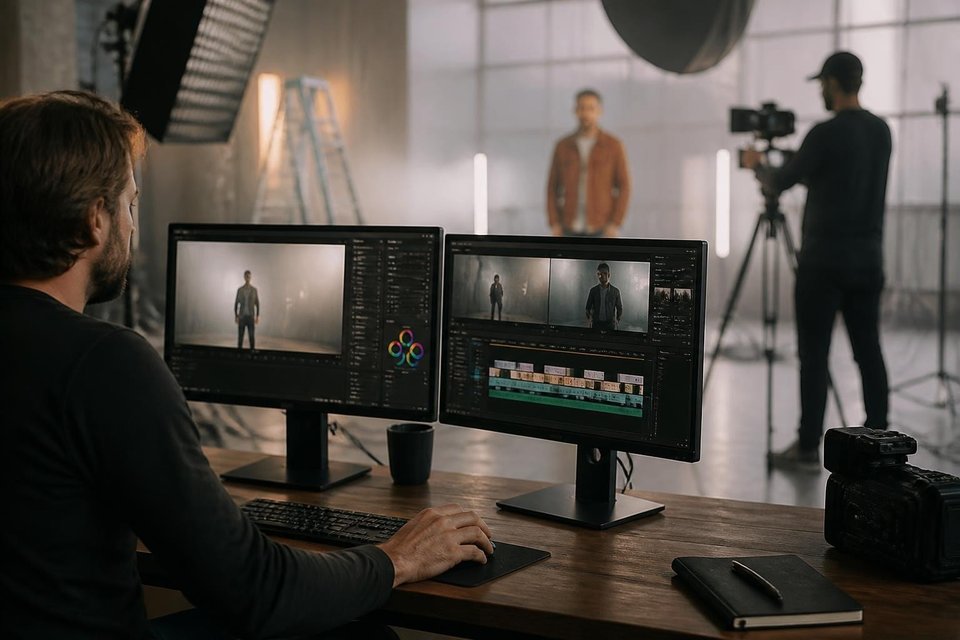
Post-Production Innovation
Contemporary commercial ads leverage sophisticated post-production techniques:
- Color grading establishing consistent brand aesthetics across footage
- Motion graphics enhancing storytelling with animated elements
- Sound design creating immersive audio experiences that reinforce messaging
- Visual effects seamlessly integrating impossible shots into realistic environments
- Format optimization adapting master edits for various platform specifications
The rise of video-first content strategies reflects how commercial ads have become central to comprehensive marketing approaches. Brands no longer view video as supplementary content but as primary communication vehicles driving customer engagement.
Measuring Commercial Ad Performance
Data-driven measurement separates effective commercial ads from expensive experiments. Modern analytics platforms provide granular insights into viewer behavior, enabling continuous campaign optimization based on real-world performance rather than assumptions.
Key performance indicators vary based on campaign objectives but typically include:
- View-through rates measuring audience retention across ad duration
- Engagement metrics tracking likes, shares, comments, and saves
- Conversion tracking connecting ad exposure to desired actions
- Brand lift studies assessing awareness and perception changes
- Return on ad spend calculating revenue generated per dollar invested
| Metric Type | Purpose | Measurement Tools |
|---|---|---|
| Awareness | Track brand recognition | Survey panels, search volume |
| Engagement | Measure interaction | Platform analytics, heat maps |
| Conversion | Quantify actions | Pixel tracking, attribution |
| Sentiment | Assess perception | Social listening, reviews |
Attribution Modeling Challenges
Accurately attributing business results to specific commercial ads remains complex in multi-touchpoint customer journeys. Viewers might encounter ads across television, social media, and connected TV before making purchase decisions, making single-source attribution misleading.
Advanced marketing mix modeling helps brands understand how different channels contribute to overall performance. These statistical approaches analyze historical data to estimate each touchpoint's incremental impact, guiding future budget allocation decisions.
Platform-Specific Commercial Strategies
Different advertising platforms require tailored creative approaches to maximize effectiveness. Understanding platform-specific audience behaviors and technical requirements ensures commercial ads perform optimally wherever they appear.
Television commercials benefit from longer durations allowing narrative development, though :15 and :30 second formats dominate inventory. Premium production values and broad appeal characterize successful TV campaigns, with creative teams focusing on memorable moments that survive in viewer consciousness long after exposure.
Social Media Adaptation
Social platforms demand distinct creative strategies. Short-form video content captures attention in crowded feeds where users scroll rapidly. Successful social commercial ads hook viewers within the first three seconds, using bold visuals, unexpected moments, or compelling questions that interrupt scrolling patterns.
Vertical formats optimize viewing experiences on mobile devices where most social consumption occurs. Brands repurposing horizontal television spots for vertical platforms often experience reduced performance compared to native vertical production.
Connected TV advertising combines television's immersive viewing environment with digital targeting precision. Programmatic solutions for linear TV enable household-level targeting previously impossible in traditional broadcast.
Production Quality and Brand Perception
Commercial ad production quality directly influences brand perception. Audiences unconsciously associate production values with company credibility, making professional execution essential for brands seeking premium positioning.
Amateur production undermines messaging regardless of strategic brilliance. Poor lighting, inconsistent audio, awkward performances, and clumsy editing signal lack of attention to detail that consumers project onto products themselves. Investing in high-quality video production protects brand equity while maximizing message effectiveness.
Talent and Performance Direction
On-screen talent brings scripts to life, transforming words into persuasive performances. Casting decisions consider not just physical appearance but authenticity, relatability, and alignment with target audience characteristics. The most effective commercial ads feature performers who audiences perceive as genuine rather than obviously acting.
Performance direction requires balancing natural delivery with message clarity. Directors guide talent toward authentic expressions while ensuring key brand messages receive appropriate emphasis. This delicate balance separates compelling commercial ads from forgettable content.
Budget Optimization Strategies
Commercial ad budgets span from modest local campaigns to multi-million dollar national initiatives. Regardless of scale, strategic budget allocation maximizes return on investment by focusing resources on elements delivering greatest impact.
Pre-production investment yields significant downstream savings. Thorough planning prevents costly on-set changes, reduces shoot days through efficient scheduling, and minimizes expensive post-production fixes. Production companies with established pre-production workflows help clients avoid common budget pitfalls.
Production efficiency doesn't require sacrificing quality. Experienced crews work faster while maintaining standards, strategic location selection reduces logistical expenses, and smart scheduling consolidates similar shots to minimize setup changes.
Value Engineering Approaches
Value engineering identifies opportunities to reduce costs without compromising creative vision:
- Using existing locations instead of elaborate set construction
- Scheduling talent efficiently to minimize overtime charges
- Selecting versatile locations supporting multiple scene requirements
- Investing in core hero shots while using stock footage for transitions
- Prioritizing essential elements over nice-to-have additions
These strategic choices allow brands to produce commercial ads matching competitive quality levels while respecting budget constraints.
Regulatory Compliance and Legal Considerations
Commercial ads must navigate complex regulatory landscapes governing advertising claims, disclosures, and content standards. Different industries face specific restrictions, with financial services, healthcare, and children's products requiring particularly careful compliance attention.
Truth in advertising regulations require substantiation for any factual claims. Brands making performance, quality, or comparison statements must possess reliable evidence supporting assertions. Production teams should work closely with legal counsel during script development to ensure compliance before filming begins.
Talent rights management requires careful attention to usage agreements. Commercial ad talent contracts must clearly specify usage terms, duration, geography, and media platforms. Inadequate rights documentation creates expensive problems when brands need to extend campaigns or expand distribution.
Music Licensing Complexity
Music enhances commercial ads emotionally while creating memorable brand associations. However, music licensing involves navigating complex rights structures including composition copyrights and master recording rights. Production companies experienced in corporate video services maintain relationships with music libraries and composers, streamlining licensing while avoiding infringement risks.

Future Trends Shaping Commercial Advertising
The commercial advertising industry continues evolving as technology, consumer behavior, and media consumption patterns shift. Despite macroeconomic concerns affecting advertising budgets, social media, retail media, and connected TV still demonstrate strong growth trajectories.
Interactive commercial ads enabling viewer participation represent emerging opportunities. Shoppable video formats allow audiences to purchase products directly from advertisements, collapsing traditional purchase funnels. These formats perform particularly well for product demonstrations where viewers can immediately act on purchase intent.
Personalization technology enables dynamic commercial ads adapting creative elements to individual viewer characteristics. Rather than producing single static versions, brands create modular components that assemble into customized experiences based on viewer data. This approach improves relevance while maintaining production efficiency through component reuse.
Sustainability messaging increasingly influences commercial ad creative strategies. Consumers, particularly younger demographics, expect brands to demonstrate environmental responsibility. Authentic sustainability stories resonate when supported by genuine corporate practices, while greenwashing attempts generate backlash.
ROI-Focused Commercial Production
Modern businesses demand accountability from marketing investments, making ROI measurement essential for commercial advertising programs. Production companies that understand business metrics deliver greater value than those focused exclusively on creative execution.
Goal alignment ensures commercial ads support specific business objectives rather than pursuing artistic visions disconnected from commercial reality. Whether driving website traffic, generating leads, increasing brand awareness, or stimulating immediate sales, clear objectives guide creative decisions throughout production.
Testing and optimization extend commercial ad value beyond initial campaigns. Producing multiple creative variations enables A/B testing that identifies highest-performing approaches. These insights inform future production decisions, creating continuous improvement cycles that enhance effectiveness over time.
| Optimization Element | Testing Approach | Impact Measurement |
|---|---|---|
| Opening hook | 3-5 second variations | Retention rate comparison |
| Call-to-action | Wording and placement | Conversion rate analysis |
| Length | :15, :30, :60 versions | Completion rate tracking |
| Music style | Emotional tone testing | Engagement metric comparison |
| Talent selection | Demographic alignment | Brand lift studies |
Performance analytics reveal which commercial ads justify increased distribution investment versus those requiring creative revision. This data-driven approach replaces intuition with evidence, enabling confident budget allocation decisions.
Commercial ads represent powerful tools for businesses seeking measurable growth through compelling video content that resonates with target audiences across evolving media landscapes. Success requires balancing creative excellence with strategic planning, technical expertise, and data-driven optimization. Viva Media specializes in creating high-performance commercial video content that delivers real ROI for forward-thinking brands throughout the Greater Toronto Area. Contact our team to discuss how professional commercial ad production can elevate your brand and drive meaningful business results.