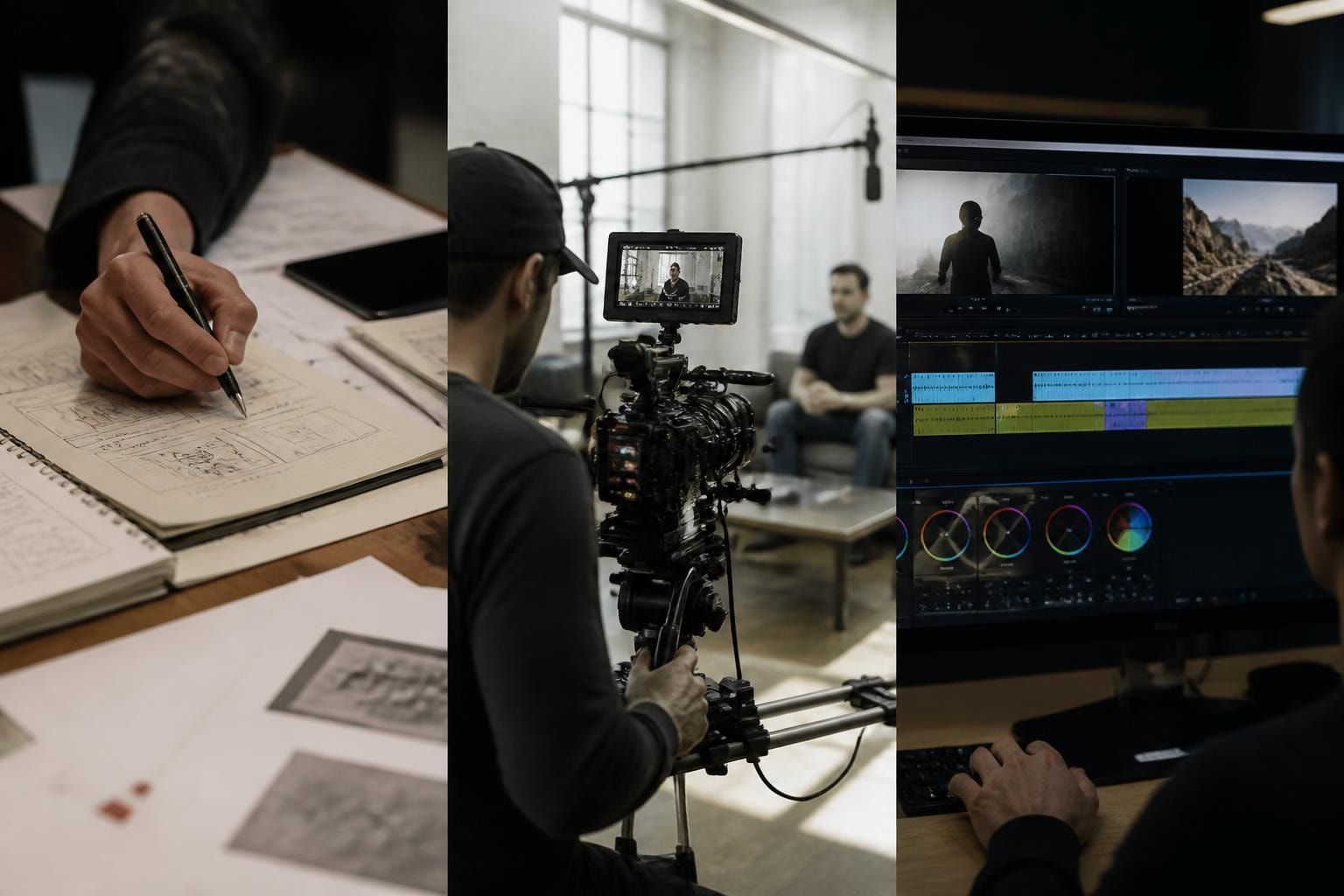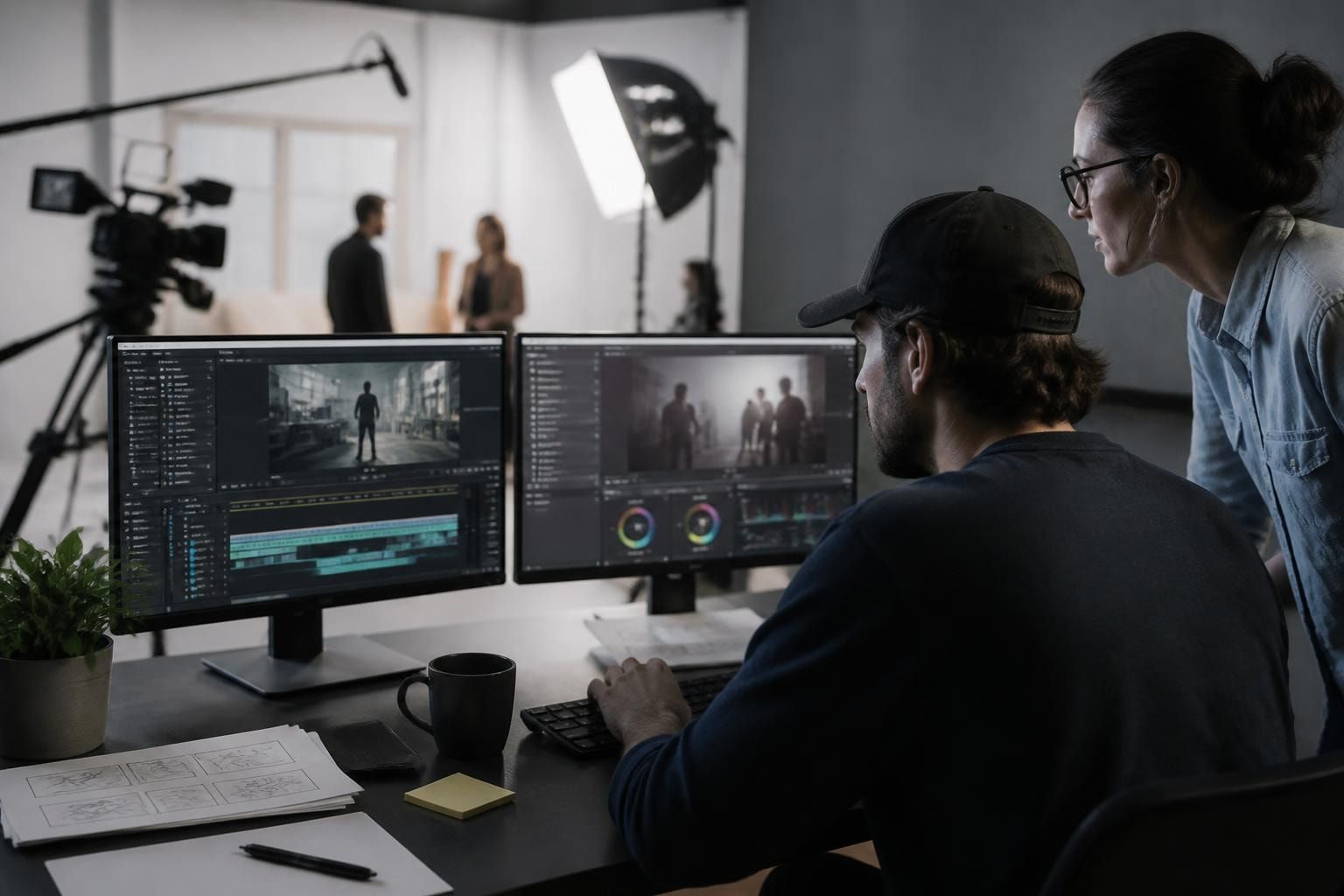


The dominance of short clips in digital marketing has fundamentally transformed how businesses communicate with their audiences. These bite-sized pieces of video content, typically ranging from 15 to 90 seconds, have become the primary vehicle for brand awareness, customer engagement, and conversion across social platforms. For businesses in the Greater Toronto Area and beyond, understanding how to strategically produce and deploy short clips has shifted from optional to essential. The format demands precision, creativity, and a deep understanding of platform-specific behaviors that determine whether your content captures attention or disappears into the algorithmic void.
The Strategic Value of Short Clips for Business Growth
Short clips have evolved far beyond entertainment into powerful business tools that deliver quantifiable results. According to recent industry analysis, short-form video content is projected to account for 82% of all internet traffic by the end of 2026, representing an unprecedented opportunity for brands to reach their target audiences where they spend the majority of their digital time.
The strategic advantage of short clips lies in their ability to convey complex messages efficiently. A well-crafted 30-second video can communicate brand positioning, product benefits, and calls to action more effectively than lengthy written content. This efficiency translates directly into marketing ROI, as production costs for short clips often represent a fraction of traditional commercial video production while delivering comparable or superior engagement metrics.
Platform Distribution Considerations
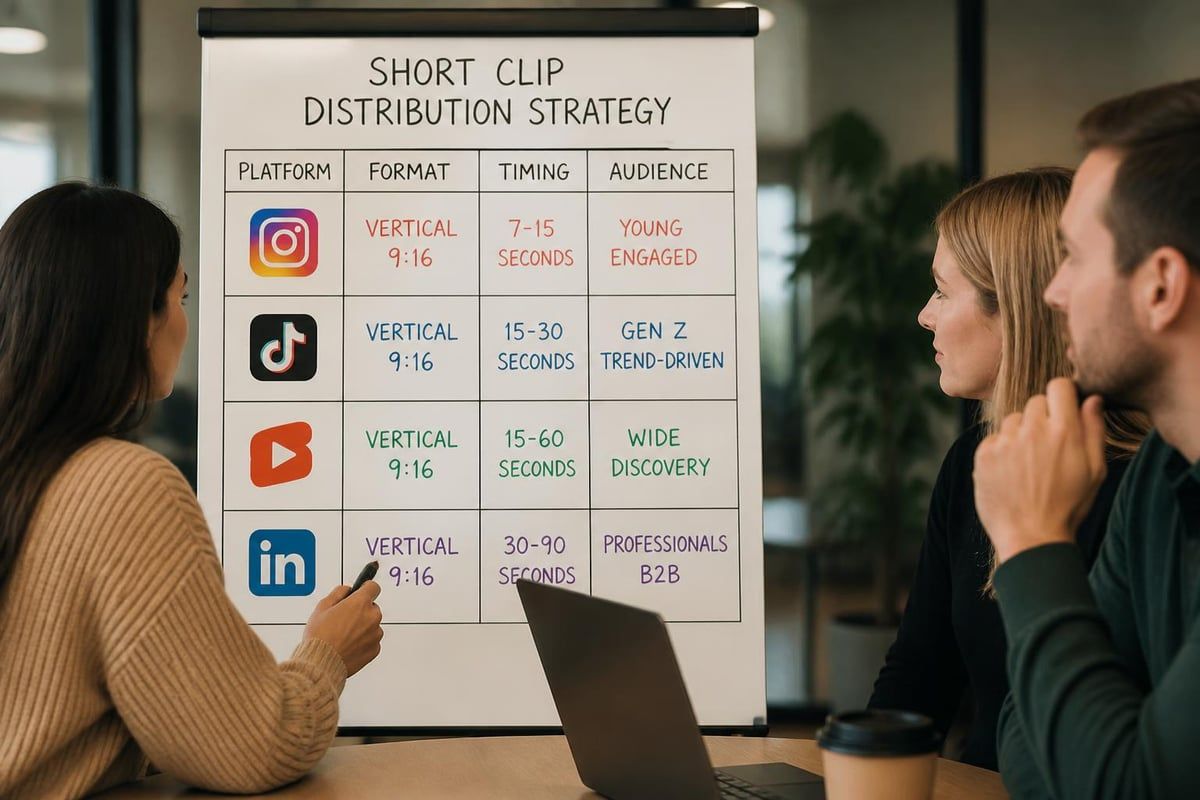
Different platforms require different approaches to short clips, each with unique specifications and audience expectations:
- Instagram Reels: 90-second maximum, vertical format, trending audio integration critical
- TikTok: Up to 10 minutes available, but optimal performance at 21-34 seconds
- YouTube Shorts: 60-second limit, strong integration with longer-form content strategies
- LinkedIn: 30-60 seconds preferred, professional tone essential for B2B audiences
Understanding these platform nuances becomes crucial when developing social media video production strategies that maximize reach and engagement across channels.
Production Techniques That Maximize Short Clip Performance
Creating effective short clips requires a fundamentally different approach than traditional video production. The condensed timeframe demands immediate visual impact, with the first three seconds determining whether viewers continue watching or scroll past. Professional production teams understand that every frame must serve a strategic purpose, eliminating any element that doesn't directly contribute to the intended message or emotional response.
The technical execution of short clips has become increasingly sophisticated. High-quality short clips leverage dynamic editing techniques, strategic use of captions for sound-off viewing, and precise pacing that matches platform-specific consumption patterns. Editing techniques for short-form video emphasize the importance of hook moments, pattern interrupts, and visual variety that maintains viewer attention throughout the entire clip duration.
The Hook-Value-CTA Framework
Successful short clips typically follow a proven three-part structure:
- The Hook (0-3 seconds): Immediate visual or verbal element that stops scrolling behavior
- The Value Delivery (4-25 seconds): Core message, product demonstration, or storytelling sequence
- The Call to Action (final 5-10 seconds): Clear next step with minimal friction
This framework applies across industries and objectives, whether the goal is brand awareness, lead generation, or direct sales conversion. The key lies in execution quality and alignment with broader marketing video strategies that connect short clips to measurable business outcomes.
AI Integration and Production Efficiency
The integration of artificial intelligence into short clip production has accelerated dramatically in 2026. AI-generated short-form videos now constitute 67% of such content, fundamentally changing production workflows and budget allocation strategies. However, the most successful implementations combine AI efficiency with human creative direction, using technology to handle repetitive tasks while preserving brand authenticity and emotional resonance.
AI tools excel at several aspects of short clip production:
- Automatic caption generation with brand-consistent styling
- Scene detection and optimal cut point identification
- Audio normalization and enhancement
- Format adaptation for multi-platform distribution
- Performance prediction based on historical engagement data
The strategic question for businesses isn't whether to incorporate AI but how to balance automation with the creative judgment that differentiates compelling content from generic output. Professional commercial video production teams leverage AI as an enhancement tool rather than a replacement for creative vision and strategic thinking.
| Production Element | Traditional Approach | AI-Enhanced Approach | Hybrid Best Practice |
|---|---|---|---|
| Script Development | Manual copywriting | AI generation | AI drafts + human refinement |
| Editing Workflow | Manual cuts and timing | Automated scene detection | AI rough cut + manual polish |
| Caption Creation | Manual transcription | Auto-generated captions | AI captions + brand styling |
| Format Optimization | Manual resizing | Automated reframing | AI adaptation + quality check |
Emerging Trends Reshaping Short Clip Strategy
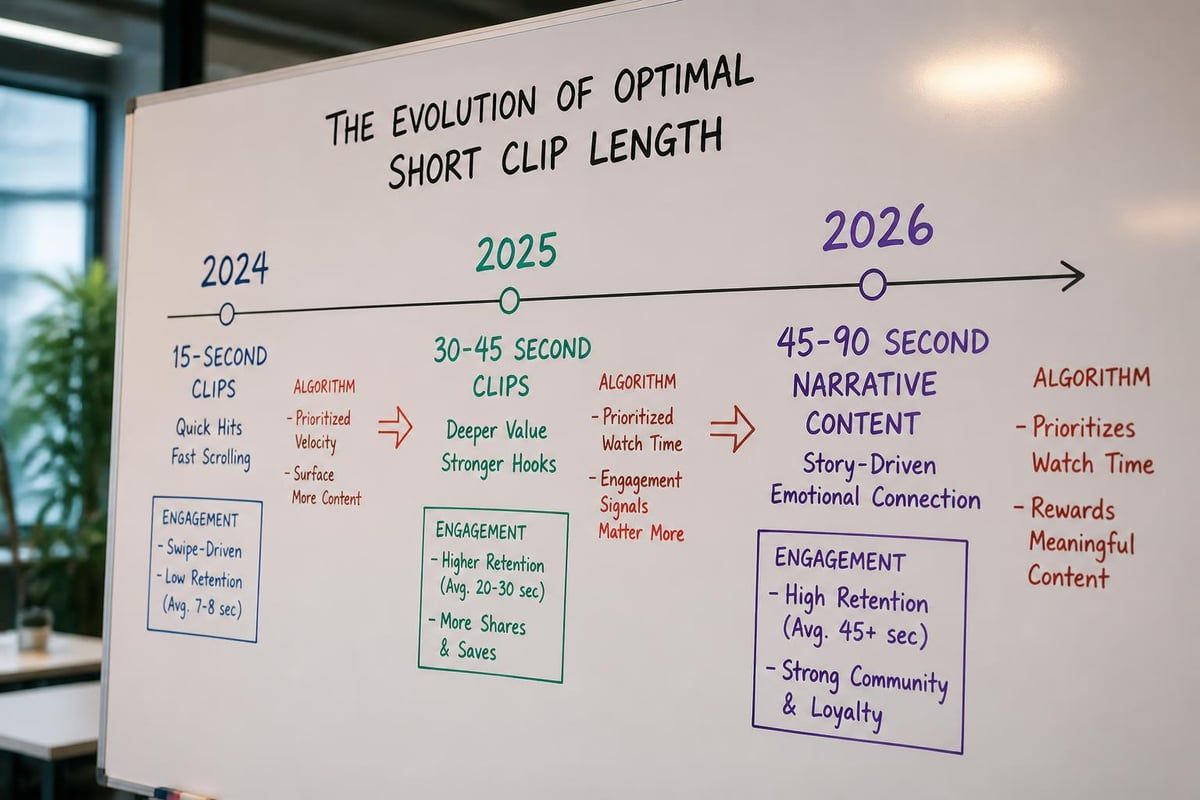
Choose a clip length that gives the subject enough explanation, then assess it against the result you wanted. Record the platform, duration and review period so comparisons have useful context. The video measurement worksheet can help you define that review before the next edit.
Authenticity Over Production Polish
While professional production values remain important, audiences in 2026 increasingly respond to authentic, behind-the-scenes content that feels genuine rather than overly polished. This shift doesn't diminish the value of professional production but rather changes how that expertise is applied. Successful short clips often intentionally incorporate elements that signal authenticity-natural lighting, spontaneous moments, or employee testimonials-while maintaining technical excellence in audio quality, composition, and pacing.
The balance between authenticity and professionalism varies by industry and audience. B2B companies targeting enterprise clients maintain higher production standards, while consumer brands often benefit from more casual, relatable content. Understanding this spectrum helps businesses develop short clips that resonate with their specific audience segments.
Measurement and Optimization Frameworks
The true value of short clips emerges through rigorous measurement and continuous optimization. Unlike traditional video content where success metrics might focus primarily on view counts, short clips demand more sophisticated analysis that connects engagement to business outcomes. Forward-thinking companies track multi-layered metrics that reveal not just whether content was viewed but how it influenced audience behavior and contributed to conversion pathways.
Essential Short Clip Metrics:
- Completion rate: Percentage of viewers who watch the entire clip
- Engagement rate: Likes, comments, shares relative to reach
- Click-through rate: Actions taken from embedded links or profile visits
- Conversion attribution: Sales or leads directly traceable to specific clips
- Cost per acquisition: Total production and promotion costs divided by conversions
These metrics inform iterative improvements, allowing businesses to identify which creative approaches, messaging frameworks, and distribution strategies deliver optimal results. The business guide to short-form video growth emphasizes that systematic testing and refinement separate high-performing content from average results.
Content Series and Sustained Engagement
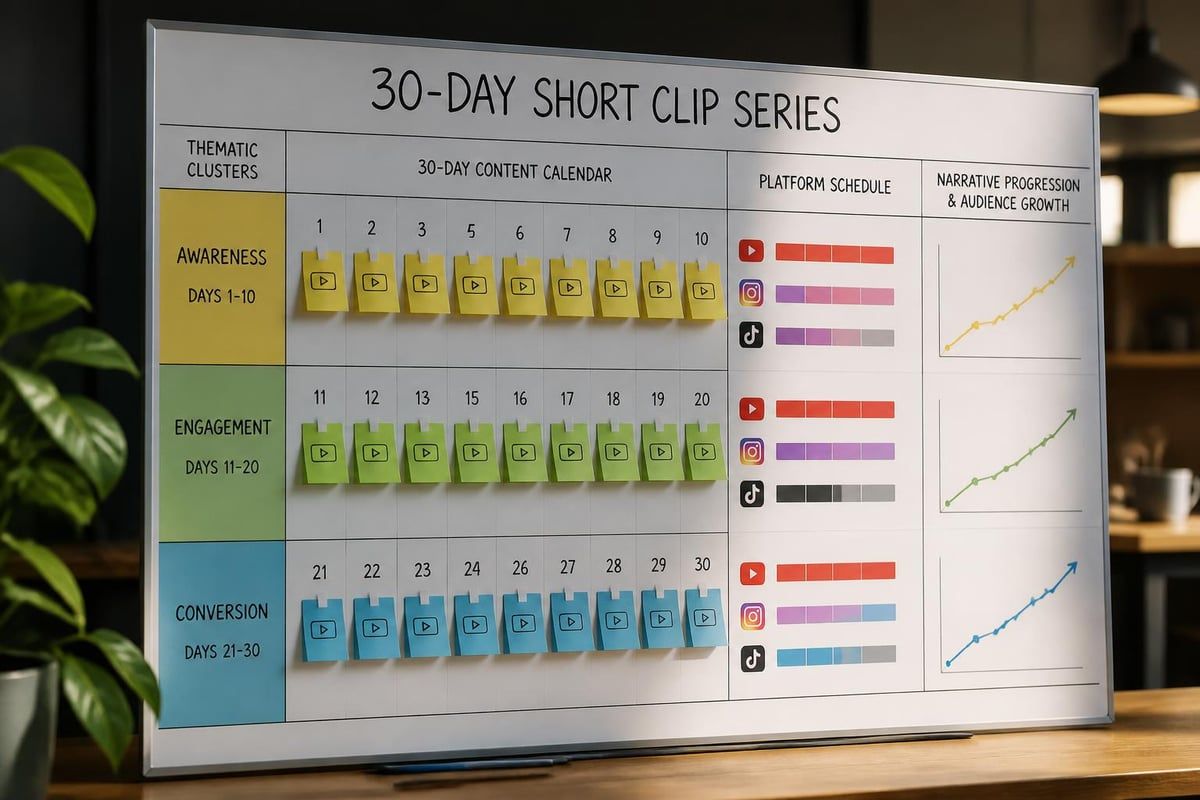
Individual short clips generate impact, but content series build audiences and sustain engagement over time. Strategic series development transforms one-off views into loyal followings by establishing predictable content patterns that audiences anticipate and seek out. This approach works particularly well for educational content, product showcases, customer success stories, and thought leadership positioning.
A well-structured short clip series typically includes:
- Consistent visual branding that makes content instantly recognizable
- Recurring formats that reduce production complexity while building familiarity
- Sequential value delivery where each clip builds on previous content
- Cross-promotion that encourages binge-watching and profile exploration
- Strategic scheduling aligned with platform algorithm preferences
The series approach also improves production efficiency, as templates, assets, and workflows can be reused across multiple pieces of content. This efficiency makes professional video production more accessible for businesses with limited budgets while maintaining the consistency that builds brand recognition.
Cross-Platform Repurposing Strategies
Maximizing the return on short clip production requires strategic repurposing that adapts content for multiple platforms and use cases. A single professionally produced short clip can generate numerous derivative assets, each optimized for specific platforms and audience segments. This multiplication effect dramatically improves content ROI while ensuring consistent messaging across all customer touchpoints.
Effective repurposing extends beyond simple format conversion. It involves strategic editing that accounts for platform-specific consumption contexts, audience expectations, and algorithmic preferences. A 60-second Instagram Reel might be edited into three separate 15-second clips for Stories, reformatted as a square post for LinkedIn, and incorporated into longer-form YouTube content as supporting B-roll.
| Original Asset | Platform Adaptations | Additional Uses |
|---|---|---|
| 60-second product demo | IG Reels, TikTok, YouTube Shorts | Website embed, email marketing, sales presentations |
| Customer testimonial | LinkedIn (professional edit), Facebook (emotional edit) | Case study supplement, trade show displays |
| Behind-the-scenes content | Instagram Stories (casual), corporate site (polished) | Recruitment marketing, investor relations |
This strategic approach to advertising video production ensures that every production dollar generates maximum impact across multiple channels and business objectives.
Integration With Broader Marketing Ecosystems
Short clips achieve their full potential when integrated into comprehensive marketing ecosystems rather than existing as isolated content pieces. The most effective strategies use short clips as entry points that drive audiences toward deeper engagement-email list signups, website visits, product purchases, or consultation requests. This integration requires careful planning of customer journeys and clear alignment between content creation and conversion architecture.
The role of short clips within marketing funnels has evolved significantly. Best practices for short-form video now emphasize creating content for each funnel stage, from awareness-building clips that introduce brand concepts to decision-stage content that addresses specific objections or demonstrates product value. This strategic segmentation ensures that content investment supports business objectives at every stage of the customer journey.
Technical Implementation Considerations
Successfully integrating short clips into marketing ecosystems requires attention to technical details that connect content to measurement and conversion systems:
- UTM parameters embedded in profile links to track traffic sources
- Platform-specific landing pages optimized for mobile visitors from social platforms
- Retargeting pixel integration to build audiences for paid amplification
- CRM connection to attribute revenue to specific content pieces
- A/B testing infrastructure for systematic creative optimization
These technical elements transform short clips from engagement tools into revenue drivers with clear attribution to business outcomes.
Industry-Specific Applications and Case Studies
The application of short clips varies significantly across industries, with each sector developing unique best practices that align with audience expectations and business models. Professional services firms leverage short clips for thought leadership and expertise demonstration, while retail brands focus on product showcases and lifestyle positioning. Understanding industry-specific applications helps businesses develop content strategies that resonate with their particular market segments.
In the professional photography sector, for example, short clips have become essential for showcasing creative processes and final deliverables. Studios like One Big Happy Photo can use short clips to demonstrate newborn photography techniques, share behind-the-scenes moments, and highlight the emotional value of their services. This application builds trust and differentiates specialized services in competitive markets.
B2B companies face unique challenges with short clips, as their sales cycles extend longer and involve multiple decision-makers. Effective B2B short clips focus on problem identification, credibility building, and value articulation rather than direct sales pitches. These clips often serve as conversation starters that lead to longer-form consultations rather than immediate conversions.
Production Resource Allocation and Budget Optimization
Determining appropriate resource allocation for short clip production requires balancing quality standards with production volume demands. The platform algorithms that govern content distribution favor consistent posting frequency, creating pressure to maintain steady content output. However, quality degradation in pursuit of volume typically produces worse results than less frequent, higher-quality content.
Strategic budget allocation for short clips typically follows this framework:
- 30-40%: Core creative development (concept, scripting, storyboarding)
- 25-35%: Production execution (filming, talent, equipment)
- 20-25%: Post-production (editing, sound design, color correction)
- 10-15%: Distribution and promotion (paid amplification, influencer partnerships)
This allocation assumes professional production standards rather than DIY approaches. Businesses must evaluate whether internal production capabilities can meet quality thresholds or whether partnering with specialized production companies delivers better returns.
The question of in-house versus outsourced production depends on several factors: required production volume, quality standards, creative complexity, and total cost of ownership including equipment, software, and personnel. Many businesses find that hybrid models-handling simple content internally while outsourcing complex projects-optimize both quality and efficiency.
Short clips have fundamentally reshaped how businesses communicate value, build audiences, and drive conversions in the digital landscape. Success requires strategic thinking that connects content creation to measurable business outcomes while maintaining the creative excellence that cuts through platform noise. Whether you're launching your first short clip campaign or optimizing existing efforts, Viva Media brings the expertise and strategic perspective to engineer attention-grabbing content that delivers real ROI for Toronto businesses ready to dominate their markets.