

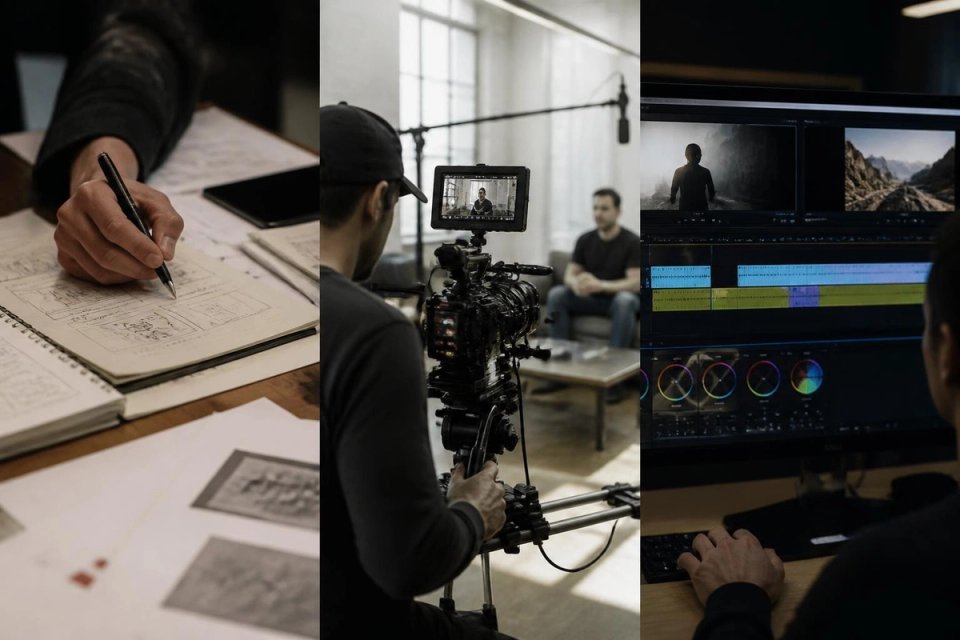
The success of any video project hinges on understanding and executing the three critical phases: pre production production post production. Whether you're developing a commercial for your Toronto-based business or creating corporate content that drives measurable results, mastering each stage ensures your investment delivers maximum return. This comprehensive workflow has become the industry standard because it transforms creative vision into polished, professional content that captures attention and converts viewers into customers.
Understanding the Three-Phase Video Production Workflow
The pre-production to post-production film workflow represents a systematic approach that professional production companies use to guarantee consistent quality and efficiency. Each phase builds upon the previous one, creating a seamless progression from concept to completed content.
Pre production production post production isn't just industry jargon. It's a framework that protects your budget, timeline, and creative objectives. When clients approach video projects without understanding these distinct phases, they often face cost overruns, missed deadlines, and content that fails to achieve business goals.
Why Sequential Phases Matter
Breaking video creation into distinct stages allows teams to focus resources appropriately. Pre-production demands strategic thinking and planning. Production requires technical precision and creative execution. Post-production transforms raw footage into polished, branded content.
The business benefits include:
- Predictable budgets with clearly defined cost centers
- Reduced production days through thorough planning
- Higher quality output with dedicated attention to each phase
- Better alignment between creative vision and final deliverables
- Measurable ROI through strategic content optimization
This structured approach separates amateur content from professional corporate video production that drives business results.
Pre-Production: The Strategic Foundation
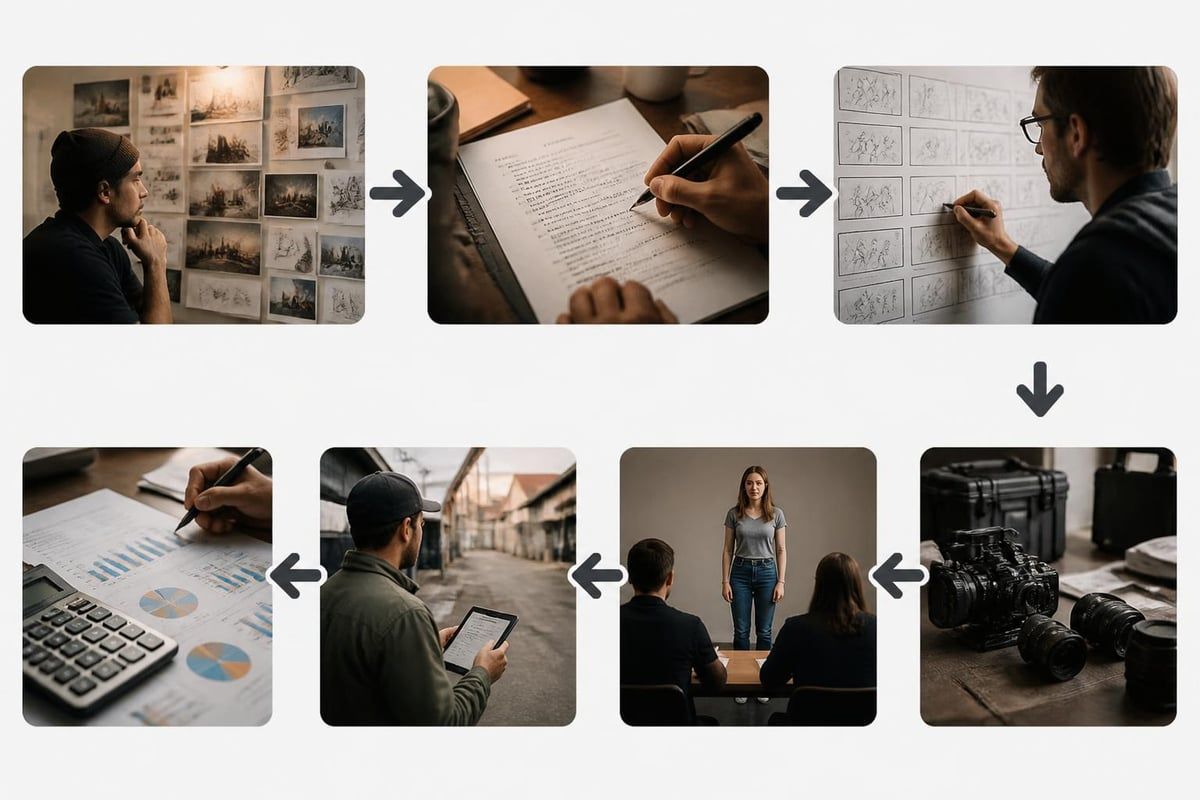
Pre-production determines whether your video project succeeds or struggles. This phase encompasses all planning activities that occur before cameras start recording. According to Wikipedia's detailed explanation, this stage includes scripting, budgeting, scheduling, location scouting, and assembling the production team.
For Toronto businesses investing in video content, pre-production typically consumes 30-40% of the total project timeline. This upfront investment pays dividends by preventing costly mistakes during production.
Essential Pre-Production Components
Strategy Development begins with identifying business objectives. What specific results should this video achieve? Increased brand awareness? Lead generation? Product education? Clear goals inform every subsequent decision.
Script and Storyboard Creation translates strategy into actionable content. Professional scripts balance messaging with engagement, ensuring viewers receive value while advancing toward your call-to-action. Storyboards visualize shot composition, camera angles, and scene transitions.
Budget Planning and Resource Allocation prevents financial surprises. Detailed budgets account for talent fees, location rentals, equipment costs, crew wages, and post-production services. Understanding where marketing video services allocate resources helps businesses make informed investment decisions.
| Pre-Production Task | Purpose | Timeline Impact |
|---|---|---|
| Concept Development | Define message and objectives | 1-2 weeks |
| Scriptwriting | Create dialogue and narration | 1-3 weeks |
| Storyboarding | Visualize shots and sequences | 1-2 weeks |
| Location Scouting | Identify filming venues | 1-2 weeks |
| Talent Casting | Select on-camera performers | 1-3 weeks |
| Equipment Planning | Determine technical requirements | 1 week |
Location Scouting and Permits
Toronto offers diverse filming locations, from corporate offices to urban streetscapes. Location scouting identifies venues that reinforce your brand message while accommodating technical requirements like lighting, sound control, and space for equipment.
Securing permits represents another critical pre-production responsibility. Filming in public spaces throughout the Greater Toronto Area often requires municipal permits, insurance certificates, and coordination with local authorities.
Talent Selection and Crew Assembly
Casting the right talent makes or breaks on-camera content. Whether hiring professional actors, using company executives, or recruiting real customers, talent selection must align with brand personality and audience expectations.
Simultaneously, assembling an experienced crew ensures smooth production days. Professional video teams include directors, cinematographers, sound engineers, lighting technicians, and production assistants who work cohesively to capture your vision.
Production: Executing Your Vision
Production brings planning to life through actual filming. This phase represents the most visible part of pre production production post production, where creative vision meets technical execution. The stages of film production highlight how production days require coordination between multiple departments working simultaneously.
Despite being the most recognized phase, production typically consumes the smallest percentage of total project time. Efficient shoots last one to three days for most commercial and corporate projects, thanks to thorough pre-production planning.
Production Day Workflow
Production days follow structured schedules that maximize efficiency. Call sheets distributed during pre-production outline precise timing for crew arrival, equipment setup, talent call times, and shot sequences.
Morning Setup begins hours before talent arrives. Crews position cameras, configure lighting rigs, establish audio equipment, and prepare sets. This technical preparation ensures filming proceeds without delays once talent steps on camera.
Principal Photography captures all planned footage according to the storyboard. Directors guide talent performance while cinematographers manage visual composition. Sound engineers monitor audio levels, ensuring clean recordings free from unwanted noise.
- First take establishes baseline performance and technical settings
- Multiple takes provide editing options and capture best performances
- Coverage shots from different angles create visual variety
- B-roll footage supports main content with supplementary visuals
- Pickup shots address any missed elements or creative opportunities
Managing On-Set Challenges
Even with meticulous pre-production, production days present unexpected challenges. Weather changes affect outdoor shoots. Talent may struggle with scripted dialogue. Technical equipment occasionally malfunctions. Experienced production teams adapt quickly, maintaining schedules while protecting creative quality.
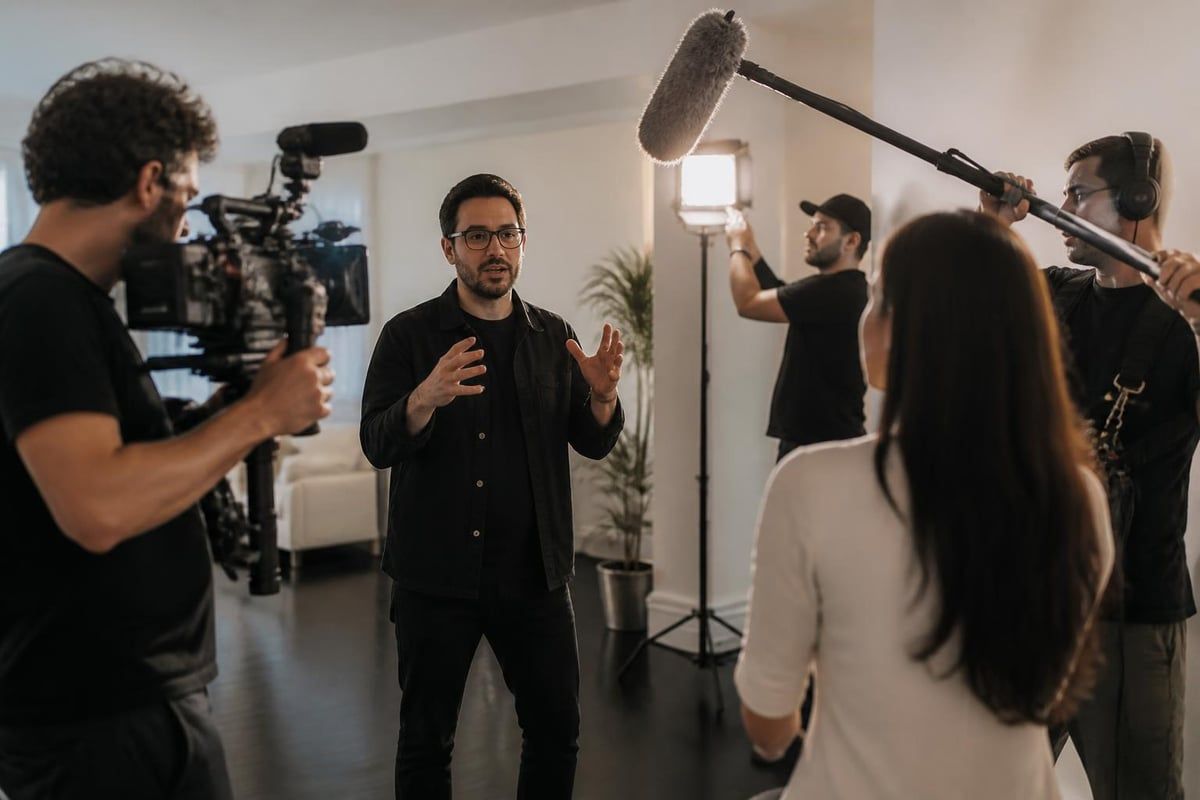
Professional commercial video production teams build contingency time into schedules, anticipating minor delays without jeopardizing overall timelines. This flexibility separates smooth shoots from chaotic productions.
Technical Considerations During Filming
Production quality depends on technical precision across multiple disciplines. Cinematography establishes visual tone through camera selection, lens choices, movement techniques, and composition principles. Lighting creates mood, emphasizes subjects, and ensures proper exposure.
Sound recording captures clean audio essential for professional content. Lavalier microphones record dialogue clearly while boom microphones provide natural sound perspective. Ambient sound recording preserves location atmosphere useful during post-production.
| Production Element | Equipment Used | Quality Impact |
|---|---|---|
| Camera Work | Cinema cameras, lenses, stabilizers | Visual clarity and professionalism |
| Lighting | LED panels, softboxes, reflectors | Mood, depth, subject emphasis |
| Sound Recording | Lavalier mics, boom poles, recorders | Audio clarity and intelligibility |
| Set Design | Props, backdrops, branded elements | Brand consistency and context |
Post-Production: Crafting the Final Product
Post-production transforms raw footage into polished content that achieves business objectives. This phase encompasses editing, color grading, sound design, motion graphics, and final delivery. Wikipedia's post-production overview details the extensive processes involved after filming concludes.
For many projects, post-production represents 40-50% of total timeline and budget. This investment proves essential because editing decisions directly impact viewer engagement, message clarity, and conversion rates.
Editorial Process and Story Construction
Editing begins with organizing footage into a coherent narrative. Editors review all captured material, selecting the strongest takes and assembling them according to the approved script and storyboard.
Rough Cut Development creates the initial edit focusing on story structure, pacing, and message delivery. This version emphasizes content flow over technical polish, allowing stakeholders to evaluate overall effectiveness before investing in final refinements.
Fine Cut Refinement addresses detailed timing, transitions, and shot selection. Editors trim unnecessary footage, tighten pacing, and ensure visual continuity. This stage often involves multiple revision rounds incorporating client feedback.
Color Grading and Visual Enhancement
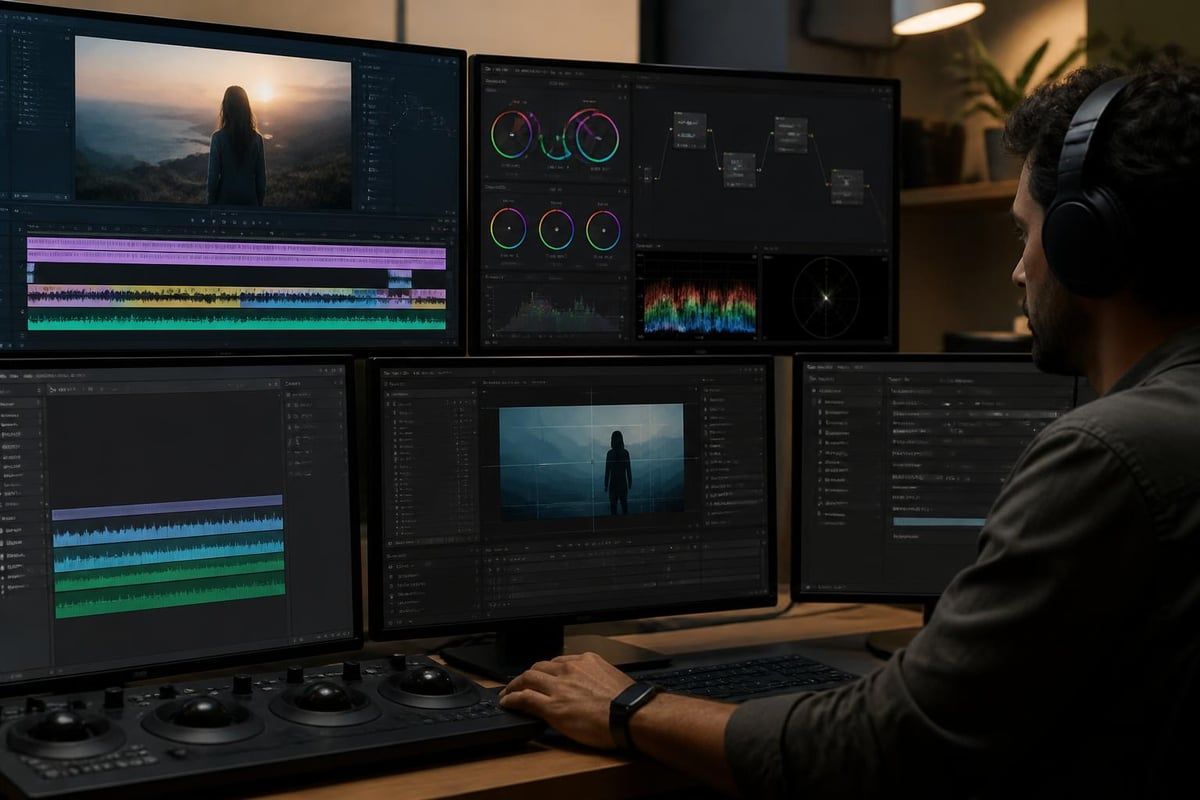
Color grading establishes visual consistency and brand alignment. Colorists adjust exposure, contrast, saturation, and color temperature across all footage, creating a cohesive look that reinforces brand identity.
Advanced color grading transforms standard footage into cinematic content. Techniques like selective color correction draw attention to specific elements while maintaining natural appearance. This process significantly impacts the professional quality of advertising video production.
Sound Design and Audio Post-Production
Audio post-production equals video editing in importance. Poor sound quality undermines even beautifully shot footage. Sound designers layer multiple audio elements including dialogue, music, sound effects, and ambient atmosphere.
Dialogue editing ensures clear, consistent voice recordings throughout the video. Editors remove unwanted noise, balance volume levels, and may apply subtle processing to enhance intelligibility.
Music selection establishes emotional tone and pacing. Licensed music libraries offer thousands of tracks across genres, allowing editors to match musical mood with content objectives. Original compositions provide unique sonic branding for larger campaigns.
Sound effects add realism and impact. From subtle environmental sounds to dramatic emphasis effects, strategic audio layering creates immersive experiences that hold viewer attention.
Motion Graphics and Visual Effects
Motion graphics enhance storytelling through animated text, branded elements, data visualizations, and dynamic transitions. These elements reinforce key messages, improve information retention, and maintain visual interest.
Lower thirds identify speakers and provide context. Animated logos strengthen brand presence. Data visualization transforms statistics into engaging visual content. These motion graphic elements distinguish professional productions from amateur content.
Optimizing Each Phase for Maximum ROI
Understanding pre production production post production enables strategic resource allocation across all three phases. Businesses that invest appropriately in each stage maximize return on investment through higher quality output, reduced revisions, and improved audience engagement.
Budget Distribution Strategy
Strategic budget allocation varies based on project type and objectives. Complex productions requiring extensive location work or specialized talent allocate more resources to pre-production and production. Projects emphasizing sophisticated visual effects or extensive editing allocate more toward post-production.
Recommended budget distribution for commercial content:
- Pre-production: 25-30% (planning, scripting, logistics)
- Production: 30-40% (crew, equipment, talent, locations)
- Post-production: 30-35% (editing, sound, graphics, revisions)
- Contingency: 10% (unexpected expenses, scope changes)
This distribution ensures adequate resources for quality execution while protecting against budget overruns that compromise creative vision.
Timeline Management Across Phases
Realistic timelines prevent rushed work that sacrifices quality. While production days represent the shortest phase, pre-production and post-production demand patience for proper execution.
| Project Complexity | Pre-Production | Production | Post-Production | Total Timeline |
|---|---|---|---|---|
| Simple Corporate | 2-3 weeks | 1-2 days | 2-3 weeks | 6-8 weeks |
| Standard Commercial | 3-4 weeks | 2-3 days | 3-4 weeks | 8-12 weeks |
| Complex Campaign | 6-8 weeks | 3-5 days | 6-8 weeks | 14-20 weeks |
These timelines assume normal revision cycles and standard client approval processes. Rush projects compress these phases but typically incur premium costs without guaranteeing superior results.
Common Mistakes That Undermine Video Projects
Many businesses new to professional video production make predictable mistakes that waste resources and diminish results. Understanding these pitfalls helps organizations invest wisely in content creation.
Inadequate Pre-Production Planning
Rushing into production without thorough planning creates cascading problems. Unclear objectives lead to unfocused content. Incomplete scripts force on-set improvisation that wastes expensive production time. Poor location scouting results in technical challenges or visual disappointment.
Successful projects invest time upfront defining clear goals, developing detailed scripts, and planning every production detail. This preparation pays dividends through smoother shoots and stronger final content.
Underestimating Post-Production Complexity
Clients occasionally view editing as simple assembly work rather than creative craft requiring significant time and expertise. This misconception leads to unrealistic expectations about revision turnaround and scope.
Professional post-production involves technical expertise in editing software, color science, audio engineering, and motion design. Learning to make high-quality videos requires understanding how post-production transforms adequate footage into exceptional content.
Inadequate Stakeholder Alignment
Video projects involving multiple decision-makers often suffer from conflicting feedback and scope creep. When stakeholders haven't aligned on objectives, messaging, and success metrics during pre-production, post-production becomes an endless revision cycle.
Establishing clear approval processes and decision hierarchies during pre-production prevents this common frustration. Single points of contact streamline communication and accelerate project completion.
Measuring Success Across the Production Workflow
Professional video production delivers measurable business results when properly executed across all phases of pre production production post production. Success metrics vary based on objectives but should always connect content performance to business outcomes.
Engagement Metrics
View counts, watch time, and completion rates indicate how effectively content captures and maintains attention. High completion rates suggest compelling storytelling and appropriate length. Drop-off points identify content sections requiring refinement.
Social media platforms provide detailed analytics showing impressions, reach, shares, and comments. These engagement indicators reveal how audiences respond to messaging and creative approach.
Conversion Metrics
Business-focused video content should drive specific actions: website visits, form submissions, product purchases, or sales inquiries. Tracking these conversions demonstrates ROI and justifies continued video investment.
Advanced attribution modeling connects video views to downstream business results, revealing the complete customer journey from initial video exposure to final conversion.
Production Efficiency Metrics
Internal metrics help optimize future projects by analyzing production workflow efficiency. Tracking actual versus budgeted costs, schedule adherence, and revision cycles identifies opportunities for process improvement.
Key efficiency indicators include:
- Pre-production planning accuracy versus actual production needs
- Production day efficiency measured by shots completed per hour
- Post-production revision counts and approval timeline
- Budget variance across all three phases
- Client satisfaction scores and referral likelihood
Industry Trends Shaping Modern Video Production
The video production landscape continues evolving as technology advances and audience preferences shift. Understanding current trends helps businesses create relevant content that resonates with 2026 audiences.
Remote and Hybrid Production Models
Technological advances enable remote collaboration across pre-production, production, and post-production phases. Cloud-based editing platforms allow geographically distributed teams to work simultaneously on projects. Virtual production meetings streamline approvals without requiring in-person gatherings.
This flexibility particularly benefits Toronto businesses coordinating with stakeholders across multiple locations or time zones. Remote capabilities don't eliminate the need for in-person production days but enhance efficiency during planning and finishing phases.
Vertical and Platform-Specific Content
Social media platforms increasingly demand content formatted specifically for their environments. Vertical video optimized for mobile viewing, short-form content for social feeds, and platform-specific features require adapting the pre production production post production workflow.
Strategic content creators now plan multiple deliverables from single shoot days, maximizing production investment by creating versions optimized for YouTube, Instagram, LinkedIn, and other distribution channels.
AI-Enhanced Post-Production Tools
Artificial intelligence accelerates certain post-production tasks without replacing human creativity. AI-powered tools assist with footage organization, rough cut assembly, color matching, and audio cleanup. These technologies reduce tedious technical work, allowing editors to focus on creative storytelling.
However, AI augments rather than replaces skilled post-production professionals. The creative decisions determining which shots to use, how to pace narratives, and where to emphasize key messages still require human judgment informed by business objectives and audience psychology.
Mastering the complete workflow of pre production production post production separates effective video content from wasted marketing budgets. When businesses understand how strategic planning, precise execution, and skilled finishing work together, they create content that delivers measurable results and competitive advantage. Viva Media specializes in guiding Toronto brands through every phase of professional video creation, ensuring your investment generates the attention-grabbing experiences and business outcomes your organization deserves.