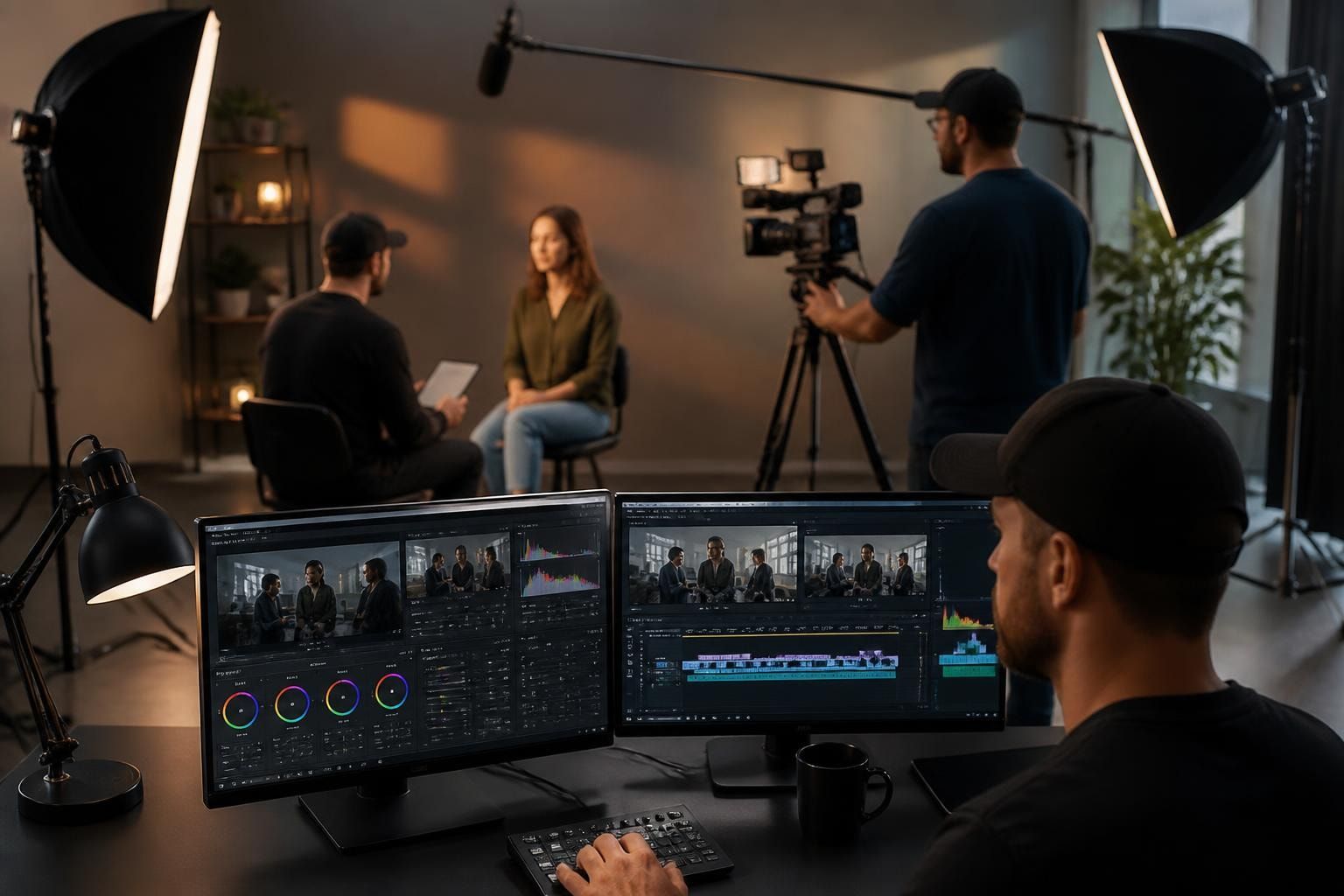


Brands today compete for attention in an increasingly crowded digital landscape where video content dominates consumer engagement. Advertising video production has evolved from simple commercial spots into sophisticated, multi-platform campaigns that demand strategic planning, technical excellence, and measurable performance. Companies that invest in professional video advertising see significantly higher engagement rates, improved brand recall, and stronger conversion metrics compared to static content alternatives. Understanding the full scope of what makes advertising video production successful requires examining the strategic frameworks, production methodologies, and distribution tactics that separate high-performing campaigns from forgettable content.
Strategic Foundations of Effective Video Advertising
Every successful advertising video production begins with clear strategic objectives that align business goals with audience needs. Before cameras roll or scripts get written, brands must define specific, measurable outcomes they expect from their video investment.
Defining Campaign Objectives and Target Audiences
The foundation of any advertising video production starts with answering fundamental questions about purpose and audience. Business objectives might include increasing brand awareness, driving product sales, generating qualified leads, or repositioning brand perception in the market. Each objective demands different creative approaches and distribution strategies.
Target audience definition goes beyond basic demographics. Successful campaigns identify:
- Psychographic characteristics including values, interests, and lifestyle preferences
- Pain points and challenges that your product or service addresses
- Content consumption habits across different platforms and devices
- Decision-making triggers that move prospects toward conversion
- Competitive alternatives they currently consider or use
Understanding these elements shapes everything from messaging tone to visual style to video length. A social media video agency approach differs significantly from traditional broadcast advertising, requiring platform-specific optimizations and content adaptations.

Platform-Specific Content Requirements
Different advertising platforms demand unique technical specifications and creative approaches. According to Amazon's comprehensive video production guide, understanding platform requirements before production prevents costly revisions and ensures optimal performance.
| Platform | Optimal Length | Aspect Ratio | Key Consideration |
|---|---|---|---|
| YouTube Pre-roll | 15-30 seconds | 16:9 | Skippable after 5 seconds |
| Instagram Feed | 30-60 seconds | 1:1 or 4:5 | Mobile-first viewing |
| TikTok | 9-15 seconds | 9:16 | Native, authentic feel |
| 30-90 seconds | 1:1 or 16:9 | Professional context | |
| Facebook In-stream | 15 seconds | 16:9 | Sound-off optimization |
Each platform also has distinct audience expectations. LinkedIn viewers expect professional, informative content that provides business value. TikTok audiences respond to entertainment-first approaches that feel native rather than polished. Instagram users engage with visually striking, lifestyle-oriented content that integrates seamlessly into their feed experience.
Pre-Production Planning and Development
Proper pre-production determines whether advertising video production delivers exceptional results or mediocre performance. This phase encompasses creative development, logistical planning, and resource allocation that sets up production success.
Script Development and Storyboarding
Effective advertising scripts communicate core messages within severely limited timeframes. The Levitate Media guide on professional video production emphasizes that every second must serve a strategic purpose.
Strong advertising scripts follow proven structural frameworks:
- Hook (first 3 seconds): Capture attention immediately with visual intrigue or provocative questions
- Problem identification (seconds 4-8): Establish the pain point your audience experiences
- Solution introduction (seconds 9-15): Present your product or service as the answer
- Proof or demonstration (seconds 16-25): Show how it works or deliver social proof
- Call to action (final 5 seconds): Direct viewers toward the next step
Storyboards translate scripts into visual blueprints. They establish shot composition, camera movements, talent blocking, and transition points. Professional storyboards also identify production requirements including locations, props, equipment needs, and post-production effects.
Location Scouting and Talent Casting
Location selection significantly impacts production efficiency and creative effectiveness. When choosing locations for advertising video production, consider:
Practical factors like accessibility for crew and equipment, available power sources, acoustic properties, natural lighting conditions, and permit requirements. Creative factors including visual appeal, brand alignment, and storytelling support.
Talent casting requires alignment between performer characteristics and target audience identification. Authenticity matters more than polish in 2026 advertising. Audiences increasingly reject overly scripted performances in favor of genuine, relatable presenters who reflect their own experiences and perspectives.
Budget allocation during pre-production prevents surprises. Professional commercial video production in Toronto typically allocates 20-25% of total budget to pre-production activities, ensuring thorough planning that maximizes production day efficiency.
Production Execution and Technical Excellence
The production phase transforms planning into captured footage. Technical excellence during filming ensures high-quality source material that supports effective post-production and final delivery.
Camera Work and Lighting Fundamentals
Professional advertising video production demands technical precision across multiple elements. Camera selection should match distribution requirements. 4K resolution has become standard even for content ultimately delivered at 1080p, providing flexibility in post-production cropping and stabilization.
Lighting design establishes mood, directs attention, and ensures consistent visual quality. Three-point lighting remains fundamental, but modern approaches often incorporate practical sources and motivated lighting that feels natural rather than staged. Hatch Studios emphasizes that lighting quality often distinguishes professional results from amateur attempts.
Camera movement should serve storytelling objectives rather than showcase technical capability. Static shots communicate stability and authority. Slow pushes create intimacy. Dynamic movements generate energy and excitement. Movement choices should align with brand personality and message tone.
Audio Recording and Sound Design
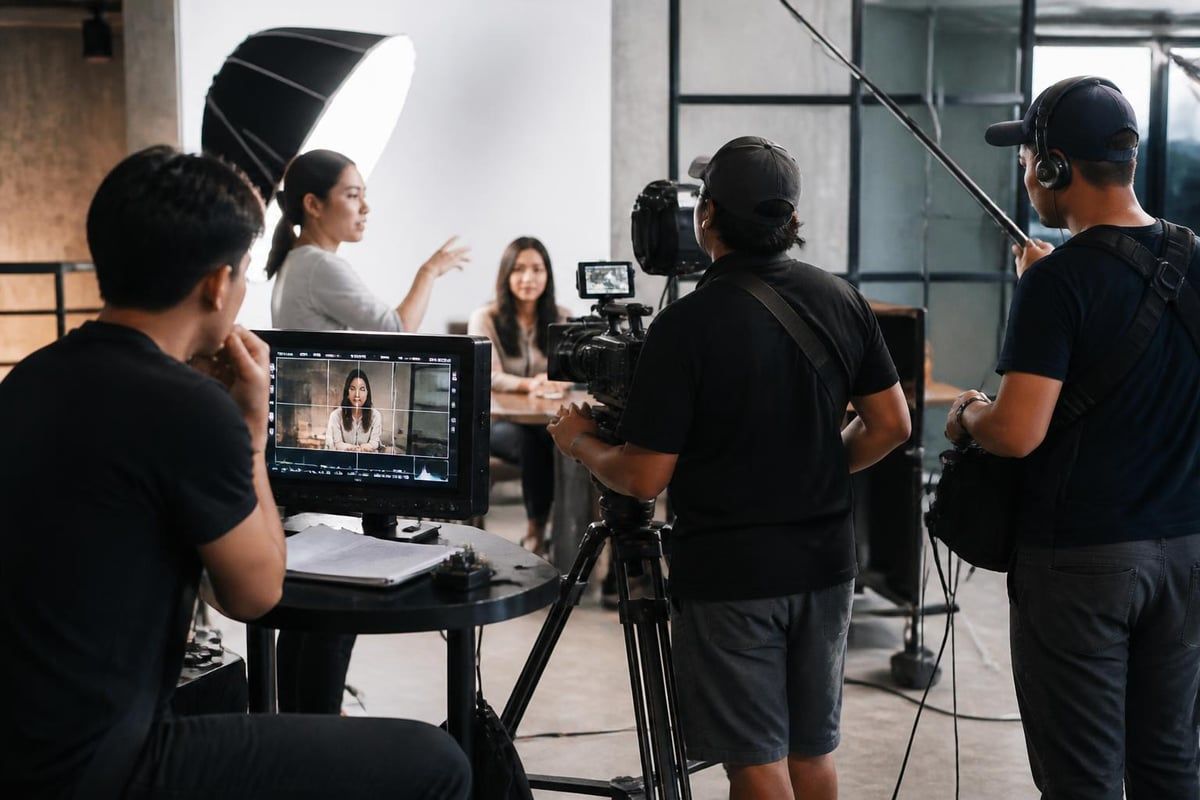
Poor audio quality undermines even beautifully shot footage. Professional advertising video production requires dedicated audio recording with proper microphone selection, boom operation, and monitoring throughout filming.
Different scenarios demand specific audio approaches:
- Dialogue-heavy content requires lavalier microphones for consistent voice capture
- Environmental storytelling benefits from shotgun microphones capturing ambient sound
- Interview setups often use both lavs and boom mics for redundancy and mixing options
- Music-driven pieces may record scratch audio on set and replace with studio tracks
Sound design in post-production includes dialogue cleanup, music selection, sound effects integration, and final mixing. The balance between voice, music, and effects significantly impacts emotional response and message retention.
Post-Production and Performance Optimization
Post-production transforms raw footage into polished advertising assets optimized for performance across distribution channels. This phase includes editing, color grading, graphics integration, and platform-specific versioning.
Editing Strategies for Maximum Impact
Editing pace directly influences viewer retention and message comprehension. Best practices from Shootsta indicate that advertising video production for 2026 requires faster pacing than previous years, reflecting shortened attention spans and platform algorithm preferences.
Strategic editing techniques include:
- Pattern interruption through unexpected cuts or visual changes that re-engage wandering attention
- Visual metaphors that communicate complex concepts quickly without explanation
- Text overlays providing key information for sound-off viewing environments
- Jump cuts maintaining energy in dialogue or demonstration sequences
- B-roll integration illustrating concepts while maintaining narrative momentum
Color grading establishes visual consistency and emotional tone. Advertising videos typically employ more saturated, high-contrast looks compared to documentary or narrative content. Colors should align with brand guidelines while optimizing for platform display characteristics.
Graphics, Motion Design, and Calls to Action
Motion graphics extend creative possibilities beyond what's possible to capture in-camera. Lower thirds identify speakers. Animated statistics emphasize key data points. Transitions maintain visual interest between scenes.
Calls to action require strategic placement and clear design. Research shows viewers are most receptive to CTAs at two points: immediately after the hook (for highly engaged viewers) and at the conclusion (for those who watched the full message). Multiple CTA placements in longer-form content increase conversion opportunities without appearing pushy.
For businesses exploring corporate video production in Toronto, understanding the relationship between production value and perceived brand quality proves essential. Higher production values signal professionalism and investment in customer experience.
Emerging Technologies and Industry Trends
The advertising video production landscape continues evolving rapidly with new technologies reshaping creative possibilities and production workflows.
Artificial Intelligence in Video Production
Generative AI tools are transforming certain aspects of advertising video production. According to recent industry reporting, nearly 90% of advertisers plan to use AI for video ad creation in 2026. Applications include scriptwriting assistance, automated editing suggestions, synthetic voice generation, and background replacement.
However, analysis from Creative Bloq warns that over-reliance on AI-generated content risks creating soulless advertising that fails to connect emotionally. The most effective approach combines AI efficiency tools with human creative direction and authentic brand storytelling.
Practical AI applications that enhance rather than replace human creativity:
- Automated transcription and caption generation reducing post-production time
- Smart content analysis identifying optimal thumbnail frames and engagement points
- Personalization at scale creating multiple versions optimized for audience segments
- Performance prediction modeling likely engagement before distribution investment
Multi-Platform Distribution and Versioning
Single-video campaigns have given way to multi-asset strategies where core content gets optimized for different platforms and audience segments. Professional advertising video production now includes creating multiple versions from a single shoot.
A typical multi-platform package might include:
| Asset Type | Specifications | Primary Use |
|---|---|---|
| Hero video | 60-90 seconds, 16:9 | YouTube, website, presentations |
| Social cutdowns | 15-30 seconds, 1:1 | Instagram, Facebook feeds |
| Stories format | 9-15 seconds, 9:16 | Instagram Stories, TikTok |
| Pre-roll ads | 6 seconds, 16:9 | YouTube non-skippable |
| GIF loops | 3-5 seconds, 1:1 | Email, social comments |
Planning for multi-platform distribution during pre-production ensures efficient shooting that captures necessary footage for all required versions. This approach maximizes content ROI while maintaining message consistency across touchpoints.
Measuring Performance and Optimizing Results
Effective advertising video production extends beyond creation into measurement, analysis, and continuous optimization based on performance data.
Key Performance Indicators and Analytics
Different campaign objectives require different success metrics. Awareness campaigns prioritize reach and view counts. Consideration campaigns focus on engagement rates and watch time. Conversion campaigns measure click-through rates and attributed sales.
Essential metrics to track include:
- View-through rate (VTR): Percentage watching past key milestones (25%, 50%, 75%, 100%)
- Engagement rate: Likes, comments, shares relative to views
- Click-through rate (CTR): Percentage taking desired action
- Cost per view (CPV): Efficiency of paid distribution
- Return on ad spend (ROAS): Revenue generated per dollar invested
Platform analytics provide granular insights into audience behavior. YouTube Analytics reveals exact drop-off points. Facebook Insights show demographic performance variations. This data informs both immediate campaign optimizations and future production decisions.
Testing and Iteration Strategies
Top-performing advertisers treat video campaigns as ongoing experiments rather than one-time productions. ATTN Agency's best practices recommend systematic testing of variables including:
- Hook variations: Testing different opening sequences to maximize retention
- Length optimization: Comparing performance across different durations
- CTA placement: Evaluating early versus late conversion prompts
- Music choices: Assessing emotional impact of soundtrack selections
- Thumbnail designs: Testing imagery that drives initial clicks
A/B testing requires sufficient sample sizes for statistical significance. Rather than testing every variable simultaneously, focus on one element at a time to isolate impact. Successful findings should be documented and incorporated into future production guidelines.

For companies investing in video production services in Toronto, partnering with teams that understand both creative excellence and performance optimization ensures campaigns deliver measurable business impact rather than just attractive content.
Budget Optimization and Resource Allocation
Maximizing advertising video production ROI requires strategic budget allocation across planning, production, and distribution phases.
Cost Components and Investment Priorities
Professional advertising video production costs vary dramatically based on scope, quality requirements, and distribution scale. Typical budget categories include:
Pre-production (20-25% of budget): Strategy development, scriptwriting, storyboarding, location scouting, casting, and planning logistics. Investing adequately here prevents expensive production day inefficiencies.
Production (30-40% of budget): Crew, equipment, locations, talent, props, wardrobe, and craft services. Production day costs are typically the largest single budget component.
Post-production (20-30% of budget): Editing, color grading, sound design, music licensing, graphics, revisions, and final delivery. Complex motion graphics or visual effects increase this allocation.
Distribution (15-30% of budget): Paid media placement, platform fees, and promotional support. Even exceptional creative fails without adequate distribution investment.
The most common budgeting mistake involves allocating disproportionately to production while underfunding distribution. A moderately produced video with strong distribution typically outperforms beautifully shot content that few people see.
In-House Versus Agency Production
Organizations face ongoing decisions about producing advertising video production internally versus partnering with specialized agencies. Each approach offers distinct advantages.
In-house production benefits include greater control over timeline and revisions, deeper brand knowledge, lower per-video costs for high-volume needs, and faster turnaround for timely content. However, limitations include equipment and expertise constraints, potential creative stagnation, and difficulty achieving premium production values.
Agency partnerships provide access to specialized expertise, professional-grade equipment, fresh creative perspectives, and proven production processes. The benefits of working with professional video production companies extend beyond technical execution to strategic guidance and performance optimization.
Hybrid approaches work well for many organizations. In-house teams handle routine, lower-stakes content while agencies tackle flagship campaigns requiring premium production values and strategic sophistication.
Successful advertising video production in 2026 requires balancing creative excellence with strategic rigor and performance measurement. As platforms evolve and audience expectations shift, the brands that thrive are those treating video advertising as an integrated discipline combining storytelling artistry, technical precision, and data-driven optimization. Whether you're launching your first campaign or refining existing video strategies, partnering with experienced professionals who understand both the creative and commercial dimensions of video advertising ensures your investment delivers measurable results. Viva Media specializes in creating high-performance advertising videos that drive real business outcomes for Toronto brands, combining strategic expertise with production excellence to help clients stand out in competitive markets.