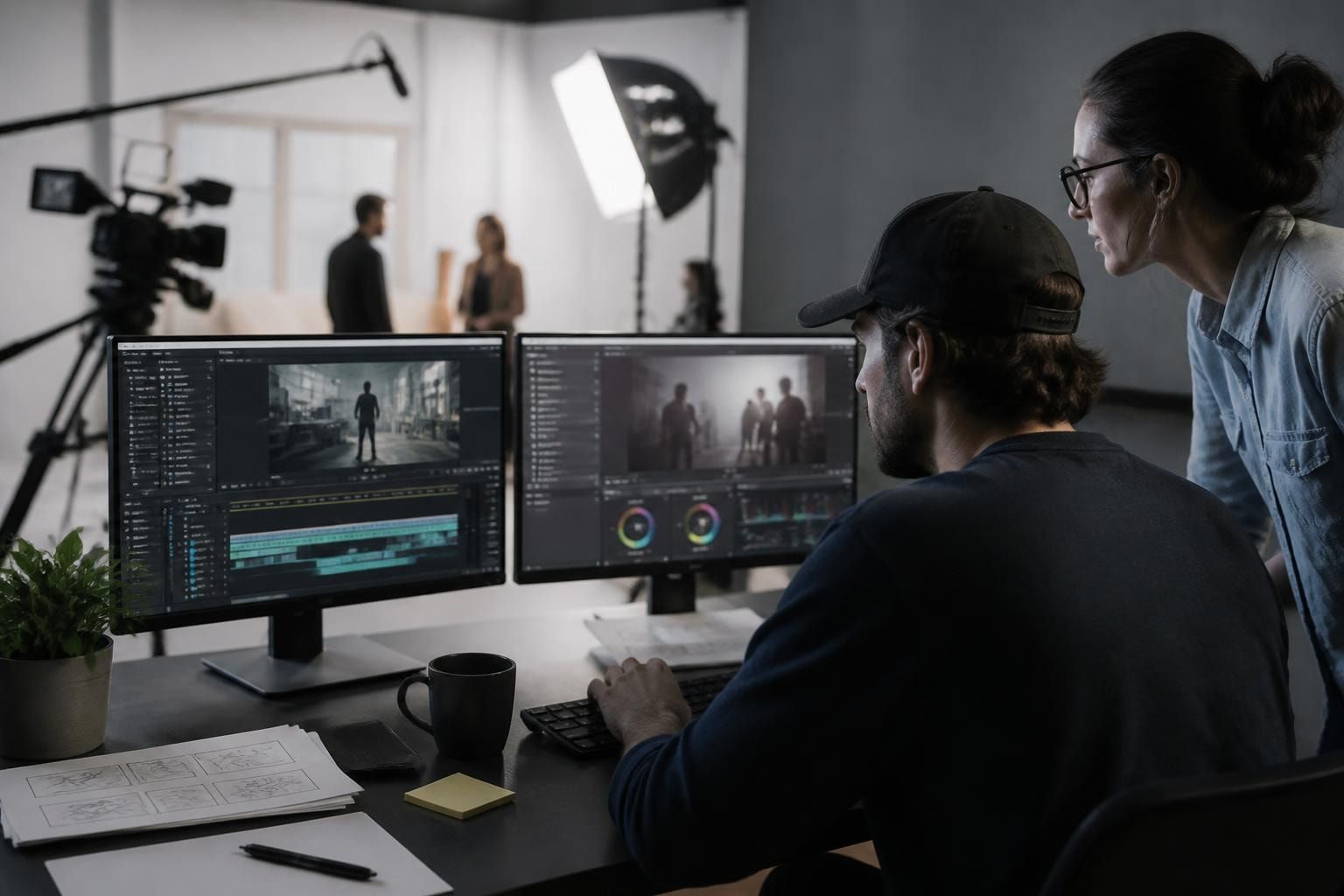

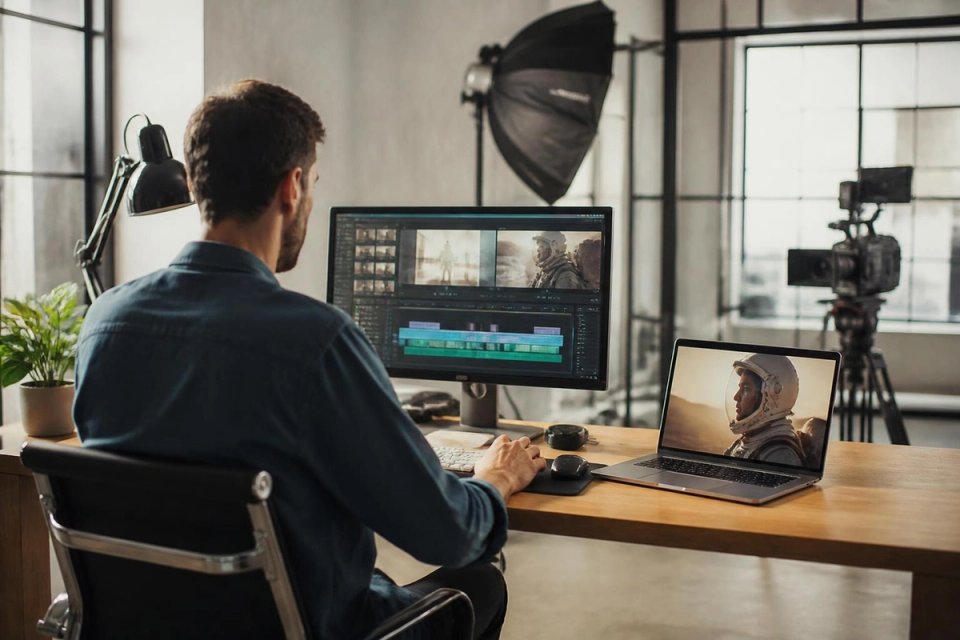
Creating compelling visual content requires more than pointing a camera and hitting record. The ability to make high quality videos separates businesses that capture attention from those lost in the digital noise. In 2026, video quality expectations continue rising as audiences scroll past subpar content within seconds. Whether you're producing corporate video content or social campaigns, understanding the technical and creative foundations transforms your visual storytelling from amateur to exceptional.
Understanding Video Quality Standards
Video quality encompasses multiple technical specifications working together to create professional output. Resolution, frame rate, bitrate, and color accuracy all contribute to the final product viewers experience.
Resolution and Frame Rate Fundamentals
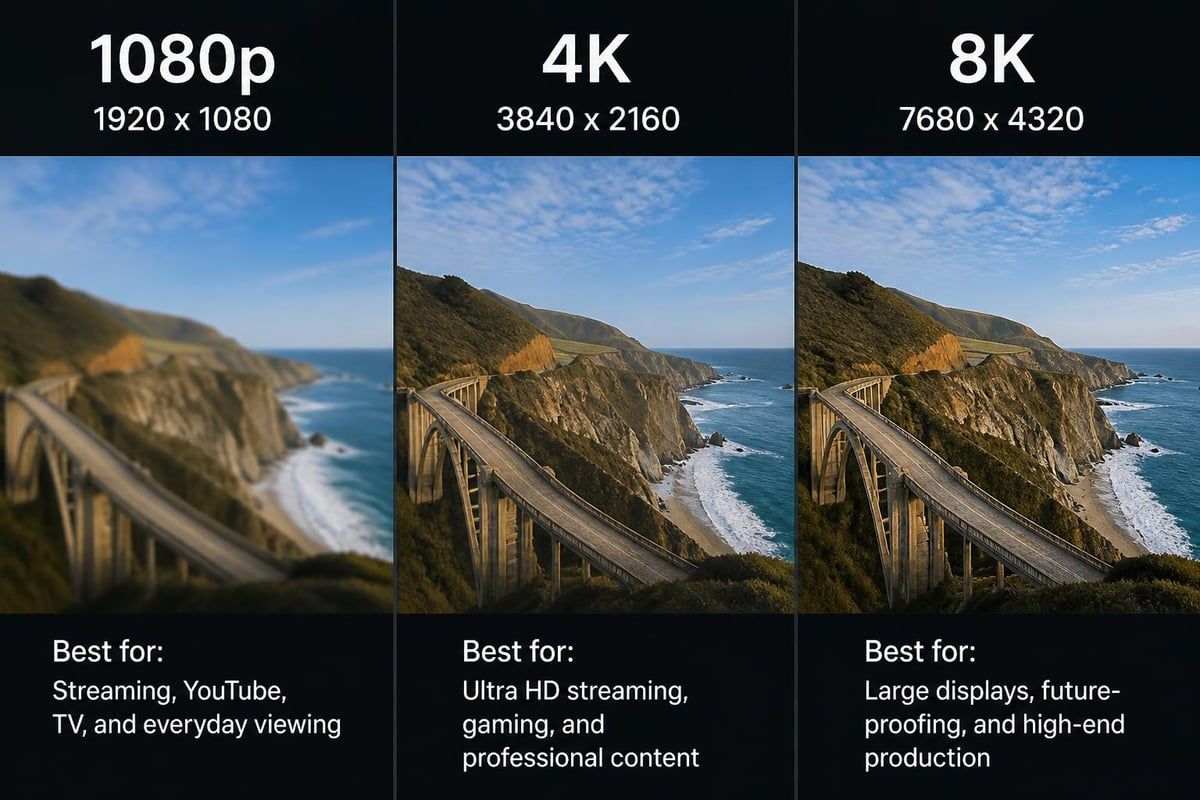
Modern video quality begins with choosing the right resolution for your distribution platform. In 2026, 4K (3840x2160) has become the standard for professional production, while 1080p remains acceptable for certain social media applications. Higher resolutions provide flexibility in post-production cropping and digital stabilization without quality loss.
Frame rate selection impacts how viewers perceive motion. Standard options include:
- 24fps: Cinematic feel, ideal for narrative content
- 30fps: Broadcast standard, natural motion
- 60fps: Smooth action, perfect for sports or product demonstrations
- 120fps or higher: Slow-motion capture capabilities
Research on perceptual video quality and frame rates demonstrates the relationship between frame rate choices and viewer perception, particularly for high-motion content.
Bitrate and Compression Considerations
Bitrate determines how much data your video uses per second, directly affecting quality. Higher bitrates preserve detail but create larger file sizes.
| Resolution | Recommended Bitrate | File Size (10 min) |
|---|---|---|
| 1080p 30fps | 8-12 Mbps | 600-900 MB |
| 4K 30fps | 35-45 Mbps | 2.6-3.4 GB |
| 4K 60fps | 53-68 Mbps | 4.0-5.1 GB |
Smart compression balances quality with practical distribution needs. Platforms like YouTube and Vimeo apply their own compression, so understanding their specifications prevents double-compression artifacts that degrade your footage.
Pre-Production Planning for Quality
Quality videos start long before cameras roll. Strategic planning during pre-production establishes the foundation for technical excellence and creative impact.
Script and Storyboard Development
Every successful video begins with clear messaging objectives. Scripts provide structure, while storyboards visualize how each scene contributes to the narrative flow.
Detailed pre-production planning prevents costly mistakes during filming. When producing commercial video content, aligning scripts with business objectives ensures every second delivers value. Consider these planning elements:
- Define your core message and call-to-action
- Identify your target audience and their preferences
- Outline scene sequences with shot descriptions
- Plan camera angles, movements, and transitions
- Schedule talent, locations, and equipment needs
The British Film Institute's smartphone video tutorial emphasizes planning as the first critical step, even when working with mobile devices.
Location Scouting and Technical Surveys
Location selection impacts multiple quality factors including lighting conditions, acoustics, and visual aesthetics. Professional scouts evaluate locations for technical feasibility before committing.
Visit potential locations at the same time of day you plan to shoot. Natural light changes dramatically throughout the day, affecting exposure, color temperature, and shadow patterns. Document electrical outlet locations, ambient noise levels, and potential background distractions.
Mastering Camera Techniques
Camera operation separates amateur footage from professional results. Proper technique ensures sharp focus, appropriate exposure, and intentional composition that guides viewer attention.
Exposure and White Balance Control
Correct exposure maintains detail in highlights and shadows while preventing blown-out or crushed areas. Modern cameras offer multiple metering modes, but understanding manual exposure provides creative control in challenging lighting situations.
The exposure triangle balances three elements:
- Aperture (f-stop): Controls depth of field and light entry
- Shutter speed: Affects motion blur and light duration
- ISO: Adjusts sensor sensitivity but introduces noise at high values
White balance ensures accurate color reproduction across different lighting conditions. Auto white balance works in consistent lighting, but manual presets or custom white balance deliver superior results when you make high quality videos.
Composition and Framing Strategies
Compositional choices direct viewer attention and create visual interest. The rule of thirds remains fundamental, placing subjects at intersecting gridlines rather than center frame for dynamic compositions.
Leading lines, negative space, and depth layering add sophistication to your framing. When filming interviews or corporate content, consider headroom (space above subject), look space (direction subject faces), and background separation that distinguishes subjects from their environment.

Lighting for Professional Results
Lighting transforms ordinary scenes into visually compelling content. Professional lighting setups control shadows, highlights, and mood while revealing texture and dimension.
Three-Point Lighting Fundamentals
The classic three-point setup provides flattering, dimensional lighting suitable for interviews and product videos:
- Key light: Primary light source, positioned 45 degrees from subject
- Fill light: Softer light reducing shadows created by key light
- Back light: Separates subject from background, adds depth
Modifying light quality proves equally important as quantity. Soft, diffused light creates flattering results for people, while hard light emphasizes texture and creates dramatic shadows. Diffusion materials, softboxes, and bounce cards control light characteristics.
Natural Light Optimization
Natural light provides beautiful, free illumination when used strategically. Golden hour (first hour after sunrise and last hour before sunset) offers warm, directional light ideal for outdoor filming.
Window light serves as an excellent key light for indoor scenes. Position subjects perpendicular to windows rather than facing them directly to prevent squinting and maintain catchlights in eyes. Reflectors bounce window light to fill shadows without additional equipment.
The Church of England's smartphone video guide demonstrates effective natural light techniques accessible to any production level.
Audio Excellence in Video Production
Poor audio ruins otherwise excellent video content. Audiences tolerate moderate visual imperfections but abandon videos with distracting or unintelligible audio within seconds.
Microphone Selection and Placement
Different scenarios demand specific microphone types for optimal results. Lavalier (lapel) microphones provide consistent audio for interviews while remaining invisible. Shotgun microphones mounted on cameras or booms capture directional audio while rejecting off-axis noise.
| Microphone Type | Best Use Cases | Pickup Pattern |
|---|---|---|
| Lavalier | Interviews, presentations | Omnidirectional |
| Shotgun | Film/video production | Highly directional |
| Handheld | Events, on-camera talent | Cardioid |
| Boundary | Conference rooms | Hemispherical |
Distance between microphone and sound source dramatically affects audio quality. Following the inverse square law, doubling the distance reduces volume by approximately 6 decibels while increasing room reverberation and background noise.
Recording Levels and Monitoring
Professional audio recording maintains peaks between -12dB and -6dB, providing headroom for unexpected volume spikes while avoiding noise from recording too quietly.
Always monitor audio through headphones during recording. Built-in camera meters show levels but don't reveal actual sound quality. Headphones expose issues like RF interference, handling noise, or clothing rustling against lavalier microphones.
Post-Production and Editing Workflow
Editing transforms raw footage into polished content that maintains viewer engagement. Professional editing creates rhythm, eliminates distractions, and enhances your message through strategic cuts and transitions.
Color Grading and Correction
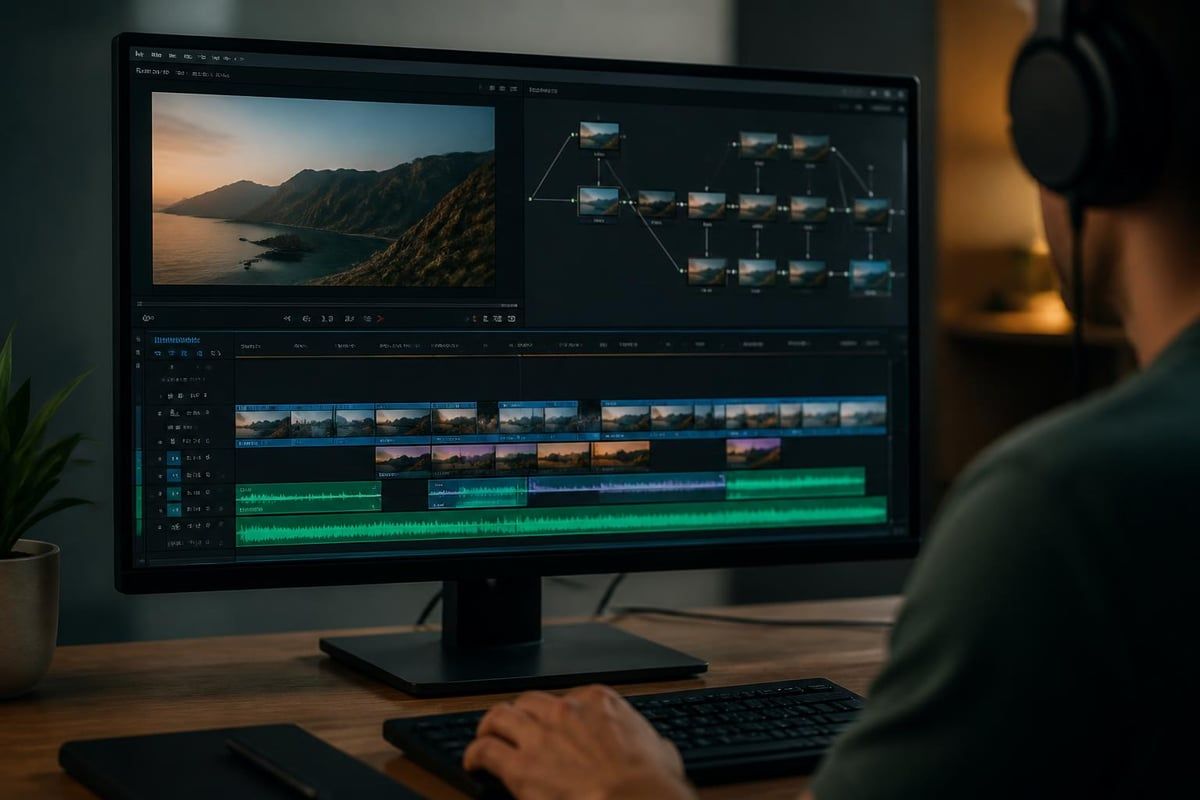
Color correction establishes consistent, accurate colors across all footage, while color grading applies creative looks that enhance mood. Modern cameras often record in flat or log profiles preserving maximum dynamic range for post-production flexibility.
Professional color workflows proceed in this sequence:
- Balance exposure across clips
- Correct white balance for neutral grays
- Match shots within scenes for continuity
- Apply creative grades enhancing mood
- Deliver final color in appropriate format
Tools for enhancing video quality during post-production continue advancing, offering sophisticated options for improving footage captured in suboptimal conditions.
Audio Post-Production Techniques
Professional audio post requires multiple passes addressing different elements. Dialog editing removes unwanted sounds, balances levels, and ensures intelligibility. Music and sound effects add production value when mixed appropriately.
Essential audio post-production steps include:
- Noise reduction removing hum, hiss, or environmental sounds
- Compression evening out volume fluctuations
- Equalization enhancing clarity and removing muddy frequencies
- Limiting preventing clipping and maintaining broadcast standards
The comprehensive guide on making good videos covers editing fundamentals that elevate production quality.
Platform-Specific Optimization
Different distribution platforms require tailored specifications and formatting to make high quality videos that perform optimally in each environment.
Social Media Platform Requirements
Each social platform has unique technical specifications and audience expectations. Videos optimized for one platform often underperform when repurposed elsewhere without modification.
Instagram prioritizes vertical and square formats, while YouTube favors widescreen horizontal content. TikTok audiences expect quick cuts and trending audio, whereas LinkedIn viewers engage with professional, information-dense content.
Platform-specific considerations include:
- Aspect ratio: Vertical (9:16), square (1:1), or horizontal (16:9)
- Duration: Platform maximum lengths and optimal engagement windows
- Caption requirements: Auto-play muting necessitates burned-in captions
- Thumbnail optimization: Click-through rates depend on compelling thumbnails
When developing social media video content, understanding these nuances ensures maximum reach and engagement.
File Format and Codec Selection
Modern distribution favors H.264 codec in MP4 containers for broad compatibility and efficient compression. This combination plays reliably across devices while maintaining excellent quality-to-filesize ratios.
For highest quality archival or further editing, consider these formats:
- ProRes: Professional intermediate codec, large files, minimal compression
- DNxHR: Avid's professional codec, similar to ProRes
- H.265 (HEVC): Newer codec, better compression than H.264, limited compatibility
Before export, confirm the file requirements for each intended placement with the publishing team. Include the necessary versions and finishing tasks in the editing brief, then check the delivered files against that list.
Equipment Investment Strategy
Building a production toolkit requires balancing quality aspirations with budget realities. Strategic equipment investments prioritize items delivering maximum quality improvement per dollar spent.
Essential vs. Nice-to-Have Equipment
Audio equipment deserves higher priority than camera upgrades for most productions. Viewers forgive slightly soft images far more readily than poor audio quality.
Priority equipment hierarchy:
- Quality microphones and audio recorders
- Stable tripod or stabilization system
- Lighting kit with modifiers
- Camera body with manual controls
- Prime lenses for low-light performance
- Additional cameras for multi-angle coverage
The YouTube video quality guide emphasizes investing in fundamentals before expensive specialty equipment.
Rental vs. Purchase Decisions
Specialized equipment used occasionally makes more financial sense to rent than purchase. Drones, cinema cameras, and exotic lenses deliver professional results without capital investment for infrequent needs.
Calculate break-even points comparing rental costs against purchase prices. Equipment used monthly often justifies purchase, while annual needs favor rental relationships with professional houses.
Maintaining Consistency Across Projects
Brand consistency requires standardized approaches to technical specifications, visual aesthetics, and storytelling approaches across all video content.
Developing Style Guides
Visual style guides document technical standards, color palettes, font choices, and compositional preferences that define your brand's video identity. These references ensure consistency whether you produce content in-house or work with external production partners.
Essential style guide elements include:
- Camera movement guidelines (handheld vs. stabilized, zoom usage)
- Color grading reference images and LUT specifications
- Typography standards for titles and lower thirds
- Music and sound design preferences
- Transition and effects usage parameters
Professional advertising video production maintains brand consistency while adapting creative approaches for different campaign objectives.
Quality Control Processes
Implementing review protocols catches technical and creative issues before distribution. Multi-stage reviews address different quality aspects, from technical specifications to message alignment with strategic objectives.
Establish review checkpoints at:
- Script approval before production begins
- Rough cut review for pacing and structure
- Fine cut approval for final adjustments
- Technical quality check before export
- Platform-specific preview before publication
Measuring Video Performance
Understanding how audiences engage with your content informs future production decisions and continuous quality improvement.
Key Performance Metrics
View count alone provides limited insight into video effectiveness. Engagement metrics reveal how content resonates with audiences and drives desired actions.
Critical metrics to monitor:
| Metric | What It Reveals | Action Threshold |
|---|---|---|
| Watch time | Engagement depth | >50% completion |
| Click-through rate | Thumbnail/title effectiveness | >4% for organic |
| Conversion rate | Business impact | Varies by goal |
| Shares | Audience advocacy | >2% of views |
Benefits of tracking video performance extend beyond individual projects, creating data foundations for strategic decisions about marketing video services and resource allocation.
Iterative Improvement Processes
Data from previous videos should inform technical and creative decisions for future productions. Analyze which formats, lengths, topics, and styles generate strongest performance within your specific audience.
Test variables systematically to make high quality videos that continuously improve results. A/B testing different thumbnails, introductions, or calls-to-action reveals what resonates with your audience, allowing refinement based on evidence rather than assumptions.
Making high quality videos requires mastering technical fundamentals while developing creative vision that connects with audiences. From pre-production planning through post-production refinement, every decision impacts whether your content captures attention and drives measurable results. If you're ready to elevate your video content with professional production that delivers real business impact, Viva Media brings Toronto-based expertise and proven processes to transform your vision into compelling visual experiences that engage audiences and generate ROI.