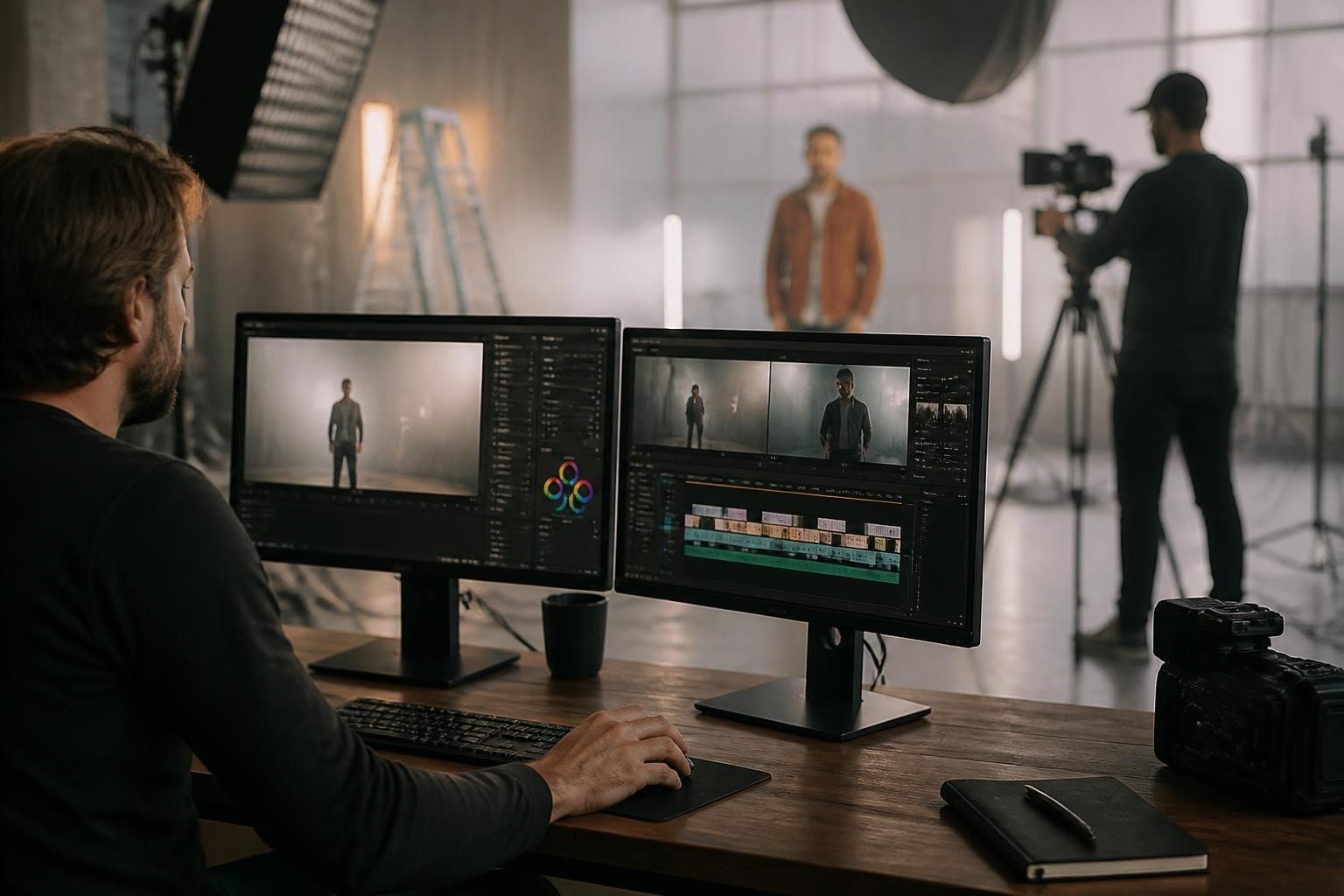


The digital landscape has fundamentally transformed how businesses communicate with their audiences, and video content stands at the forefront of this revolution. As attention spans contract and consumption habits evolve, organizations across industries are discovering that strategic video production delivers measurable results that traditional media cannot match. Companies investing in professional video content are experiencing higher engagement rates, improved brand recall, and stronger conversion metrics. Understanding how to leverage this powerful medium effectively separates industry leaders from those struggling to maintain relevance in an increasingly competitive marketplace.
The Business Case for Strategic Video Production
Video content has evolved from a nice-to-have marketing asset to an essential component of comprehensive business strategy. Research consistently demonstrates that audiences retain 95% of a message when delivered through video compared to just 10% when reading text. This retention advantage translates directly into business outcomes.
Organizations implementing structured video content strategies report significant improvements across multiple performance indicators. Website visitors who watch product videos are 85% more likely to convert than those who do not. Email campaigns incorporating video generate click-through rates up to 300% higher than text-only alternatives. Social media posts featuring video receive 48% more views and drive engagement rates that dwarf static imagery.
The financial justification becomes even clearer when examining return on investment. Professional marketing video services consistently deliver measurable ROI through increased lead generation, shortened sales cycles, and improved customer lifetime value. Businesses that have embraced video content report average increases of 49% in revenue growth compared to competitors who have not.
Platform-Specific Content Optimization
Different platforms demand distinct approaches to video content creation and distribution. Understanding these nuances ensures maximum impact for every production dollar invested.
YouTube remains the second-largest search engine globally, making it indispensable for long-form educational content and product demonstrations. Following YouTube content best practices ensures optimal discoverability through proper descriptions, chapters, and metadata optimization. Videos between 7-15 minutes perform exceptionally well for tutorial content, while product reviews typically achieve peak engagement at 5-8 minutes.
LinkedIn has emerged as the premier platform for B2B video content, with native videos generating 5 times more engagement than external links. Professional audiences on this platform prefer concise, value-driven content addressing specific business challenges. Videos under 90 seconds achieve completion rates above 70%, making brevity essential for corporate messaging.
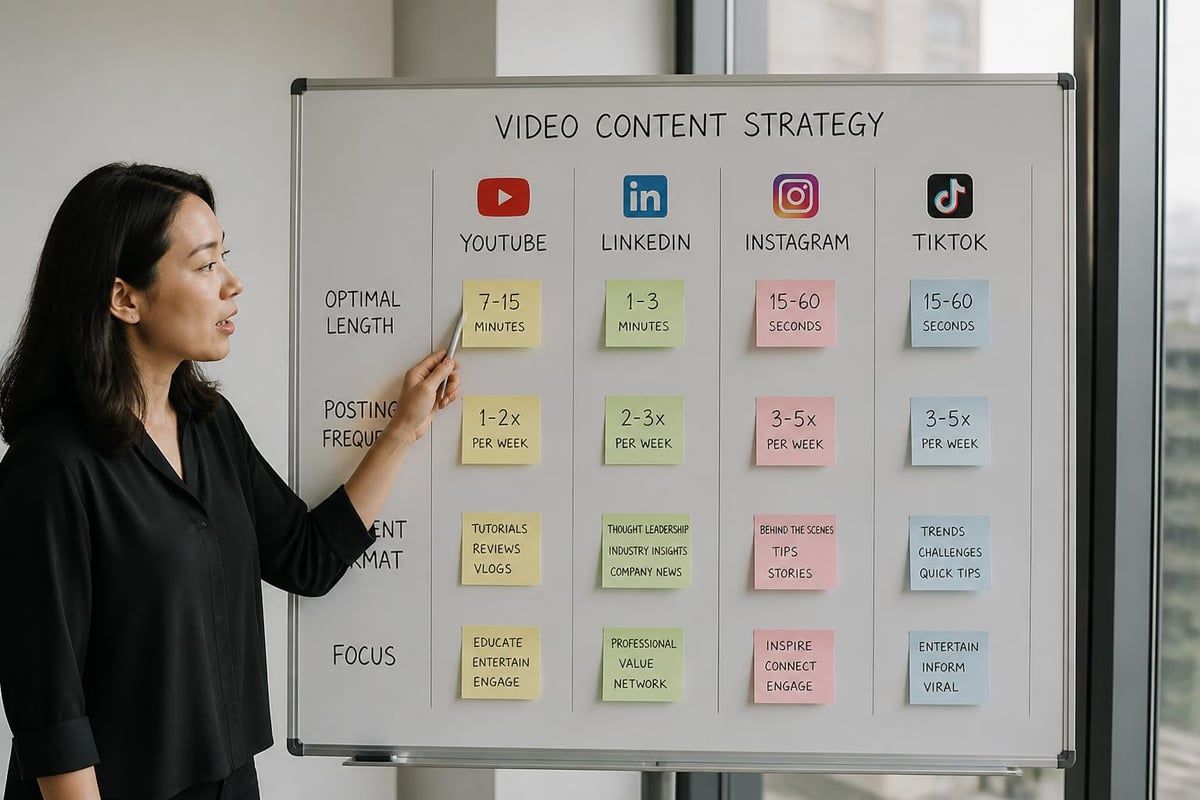
Instagram and TikTok dominate the short-form landscape, where the rise of short-form video clips has fundamentally altered content consumption patterns. Instagram Reels and TikTok videos between 15-30 seconds generate the highest engagement, while content exceeding 60 seconds experiences dramatic drop-off rates.
| Platform | Optimal Length | Best Content Type | Peak Posting Time |
|---|---|---|---|
| YouTube | 7-15 minutes | Tutorials, demonstrations | Tuesday-Wednesday 2-4 PM |
| 30-90 seconds | Thought leadership, case studies | Tuesday-Thursday 8-10 AM | |
| 15-30 seconds | Behind-scenes, product showcases | Monday-Friday 11 AM-1 PM | |
| TikTok | 21-34 seconds | Authentic, entertaining content | Tuesday-Thursday 6-9 PM |
Production Quality Standards That Drive Results
The technical quality of video content directly impacts audience perception and brand credibility. Viewers make instant judgments about organizational professionalism based on production values, making quality non-negotiable for businesses serious about results.
Audio clarity ranks as the most critical quality factor, even surpassing visual elements in importance. Poor audio quality causes 80% of viewers to abandon videos within the first 10 seconds. Professional microphone systems, proper acoustic treatment, and expert sound mixing separate amateur productions from high-quality videos that command attention.
Lighting establishes mood, directs viewer focus, and ensures visual consistency across productions. Three-point lighting configurations remain the industry standard, providing dimensional depth and eliminating unflattering shadows. Modern LED panels offer color temperature control, enabling creators to match ambient conditions or establish specific emotional tones.
Camera Work and Composition Principles
Strategic camera selection and movement patterns significantly impact viewer engagement and message retention. Understanding fundamental composition principles ensures every frame serves the content strategy.
The rule of thirds guides subject placement within the frame, creating visual interest and natural eye movement patterns. Positioning key elements along intersection points rather than dead center produces more dynamic, professional-looking footage. This principle applies equally to talking-head interviews and B-roll sequences.
Camera movement should always serve a purpose rather than existing for its own sake. Subtle movements like slow push-ins during emotional moments or gentle reveals of new environments enhance storytelling without distracting from core messages. Unmotivated movement creates viewer discomfort and undermines content credibility.
Depth of field manipulation directs viewer attention by controlling focus planes. Shallow depth of field isolates subjects against softened backgrounds, particularly effective for testimonials and product close-ups. Deeper focus works better for environmental context and group interactions where multiple elements require sharpness.
Content Strategy Development and Execution
Effective video content requires strategic planning that aligns production efforts with specific business objectives. Random video creation rarely delivers meaningful results, while structured approaches consistently outperform ad-hoc efforts.
Audience research forms the foundation of successful content strategy. Understanding viewer demographics, psychographics, pain points, and consumption preferences enables creators to develop content that resonates deeply. Detailed buyer personas guide decisions about tone, pacing, technical depth, and call-to-action placement.
Content calendars ensure consistent publishing schedules while maintaining topical relevance. Planning 60-90 days ahead allows adequate production time while preserving flexibility for timely responses to industry developments. Seasonal considerations, product launches, and industry events should inform calendar development.
Performance measurement closes the strategic loop by providing data-driven insights for continuous improvement. Key metrics vary by objective but typically include:
- View counts and completion rates
- Engagement metrics (likes, comments, shares)
- Click-through rates on embedded calls-to-action
- Conversion rates for specific business goals
- Cost per acquisition compared to other channels
Emerging Technologies Reshaping Video Production
The video production landscape is experiencing rapid technological transformation, creating both opportunities and challenges for businesses investing in content creation. Understanding these shifts enables organizations to make informed decisions about production approaches and resource allocation.
Artificial intelligence integration into video production workflows has accelerated dramatically, with business demand for AI video creation surging throughout 2026. Automated editing tools now handle routine tasks like color correction, audio leveling, and rough cut assembly. While AI cannot replace human creativity and strategic thinking, it significantly reduces production timelines for certain content types.

The question of whether AI videos will disrupt social media remains actively debated among industry professionals. AI-generated avatars and synthetic voices offer cost-effective solutions for certain content types, particularly high-volume educational material or multilingual versions. However, audiences increasingly value authenticity, creating tension between efficiency and genuine connection.
Short-Form Versus Long-Form Content Dynamics
The ongoing evolution of content consumption patterns has created interesting dynamics between short-form and long-form video content. Recent research examining YouTube Shorts' impact on long-form content reveals significant challenges for traditional video formats, with long-form view counts decreasing as audiences shift attention to bite-sized content.
This trend aligns with broader observations about current video marketing trends, where short-form content continues dominating engagement metrics across platforms. However, dismissing long-form content entirely would be strategically shortsighted. Different content objectives require different formats.
Short-form video excels at:
- Building brand awareness through viral potential
- Driving social engagement and shares
- Capturing attention in crowded feeds
- Delivering quick tips and entertainment
- Supporting top-of-funnel marketing objectives
Long-form video remains superior for:
- Establishing thought leadership and expertise
- Explaining complex products or services
- Building deeper emotional connections
- Supporting mid-to-bottom funnel conversion
- Creating educational resources with lasting value
Strategic content programs incorporate both formats, using short-form content to attract attention while long-form pieces nurture relationships and drive conversions. This integrated approach maximizes reach while maintaining the depth necessary for meaningful business outcomes.
Geographic and Cultural Considerations
Video content strategies must account for geographic and cultural factors to maximize effectiveness, particularly for businesses serving diverse markets. What resonates in one region may fall flat or even offend in another.
The growing consumption of local content demonstrates viewers' preference for regionally relevant material. Businesses serving specific geographic areas benefit significantly from incorporating local landmarks, cultural references, and community-specific concerns into their video content. For Toronto-based businesses, featuring recognizable locations and addressing regional business challenges creates immediate rapport with local audiences.
Language considerations extend beyond simple translation. Professional advertising video production for multilingual markets requires cultural adaptation that preserves message integrity while respecting local customs and communication preferences. Visual elements, music choices, and even color palettes carry different meanings across cultures.
Distribution and Promotion Strategies
Creating exceptional video content represents only half the success equation. Strategic distribution and promotion ensure content reaches intended audiences and achieves business objectives.
Owned media channels provide direct audience access without algorithm dependence. Company websites, email lists, and proprietary platforms offer control and deeper analytics. Embedding video content on service pages increases time-on-site and improves search engine optimization through enhanced user engagement signals.
Paid promotion accelerates reach and enables precise audience targeting. Platform-specific advertising on YouTube, LinkedIn, and Facebook allows businesses to define audiences by demographics, interests, behaviors, and previous interactions. Retargeting campaigns using video content typically generate 2-3 times higher conversion rates than standard display advertising.
Organic social distribution builds communities and encourages authentic engagement. Implementing best practices for video content maximizes organic reach through platform-optimized formatting, strategic posting times, and engagement-driving captions. Consistent posting schedules train audiences to anticipate new content while satisfying platform algorithms that reward regular activity.
Email Integration and Website Optimization
Email marketing campaigns incorporating video content consistently outperform text-only alternatives across all measured metrics. Including video thumbnails with play buttons in email templates increases click-through rates by 200-300%. The key lies in hosting videos externally and using compelling thumbnail images that communicate value instantly.
Website integration requires strategic placement that enhances user experience without creating technical burden. Auto-play videos with sound damage user experience and increase bounce rates. Instead, prominent placement with clear value propositions encourages intentional viewing. Page load speed remains critical, making proper compression and lazy-loading implementation essential technical considerations.

Industry-Specific Applications and Best Practices
Different industries face unique challenges and opportunities when developing video content strategies. Tailoring approaches to industry-specific requirements maximizes relevance and impact.
Professional services firms benefit tremendously from thought leadership content demonstrating expertise. Educational videos addressing common client questions establish credibility while pre-qualifying leads. Case study videos featuring satisfied clients provide powerful social proof that accelerates decision-making processes.
Retail and e-commerce businesses drive conversions through product demonstration videos showing items in use. User-generated content featuring real customers creates authenticity that polished marketing cannot match. Live shopping events combining entertainment with purchasing opportunities represent the fastest-growing video format for retail applications.
Manufacturing and industrial companies use video content to simplify complex processes and showcase capabilities. Facility tours, equipment demonstrations, and quality control procedures build trust with B2B buyers. Safety training videos reduce onboarding time while ensuring consistent knowledge transfer across distributed workforces.
Specialized sectors like energy utilities require distinct approaches that balance technical accuracy with accessibility. Regulated industries face additional compliance considerations that must be addressed during planning phases rather than treated as afterthoughts during production.
Measuring Success and Optimizing Performance
Comprehensive measurement frameworks enable continuous improvement and demonstrate video content's contribution to business objectives. Vanity metrics like view counts provide limited insight without connection to actual business outcomes.
Engagement metrics reveal how audiences interact with content beyond passive viewing. Average view duration indicates content quality and audience interest. High drop-off rates at specific timestamps identify problematic sections requiring refinement. Comment sentiment analysis provides qualitative insights into audience perceptions and concerns.
Conversion tracking connects video content directly to business results. Unique URLs, UTM parameters, and platform-specific tracking pixels attribute leads and sales to specific videos. Comparing customer acquisition costs across channels reveals video content's relative efficiency and guides budget allocation decisions.
Attribution modeling addresses the complex reality that purchase decisions rarely result from single touchpoints. Multi-touch attribution recognizes video content's role throughout customer journeys, from initial awareness through final conversion. Assisted conversion metrics capture value created even when video content does not receive last-click credit.
| Metric Category | Key Indicators | Business Value |
|---|---|---|
| Awareness | Views, impressions, reach | Top-of-funnel visibility |
| Engagement | Watch time, completion rate, interactions | Audience interest and content quality |
| Consideration | Click-through rates, landing page visits | Mid-funnel movement |
| Conversion | Leads generated, sales attributed | Bottom-line business impact |
| Advocacy | Shares, user-generated responses | Organic amplification and loyalty |
Establishing baseline performance metrics before launching new initiatives enables accurate impact assessment. A/B testing different video styles, lengths, and calls-to-action identifies optimal approaches for specific audiences and objectives. Quarterly performance reviews ensure strategies evolve alongside changing market conditions and audience preferences.
Strategic video content has transitioned from optional marketing tactic to essential business asset, driving measurable results across awareness, engagement, and conversion metrics. Organizations that invest in professional production, platform-optimized distribution, and data-driven optimization consistently outperform competitors relying on outdated approaches. If your business is ready to harness video content's full potential and achieve measurable growth, Viva Media delivers the strategic expertise and production excellence that Toronto's forward-thinking brands trust to engineer attention-grabbing experiences that generate real ROI.