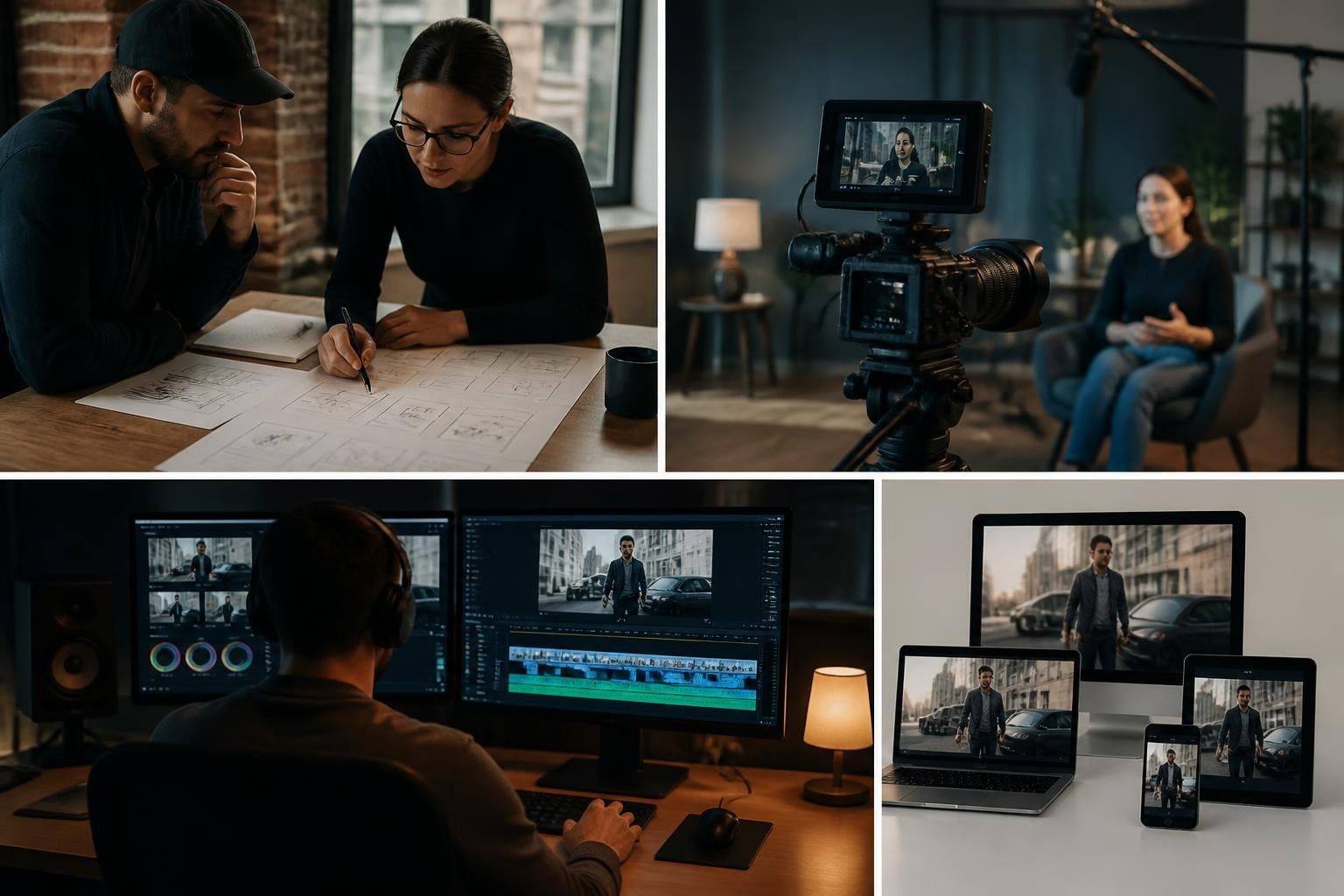


When Your In-House Team Hits Its Ceiling
Your in-house video team is slammed, sales is begging for more content, and the CEO is asking if those glossy brand films are actually doing anything for revenue. That is the CMO showdown: keep pushing the same small team harder, or bring in an external video production agency in Toronto without blowing up the budget or losing control.
The comfort of in-house is real. You know the people, the process, and the brand rules. But comfort has a ceiling. At some point, you need fresh creative pressure, bigger crews, and a partner that speaks the same language as your revenue ops team, not just your brand team.
We want to unpack where in-house shines, where an external partner becomes a force multiplier, and how a hybrid model can give you scale without chaos. Mid-year is a good time to look back at what shipped, what actually moved pipeline, and what needs to change before Q4 pressure hits.
The Real Cost of “Free” In-House Video
In-house often feels “free” because salaries are already in the budget. But that is only part of the bill your team is paying.
Hidden costs stack up fast:
- Salaries and benefits for people you then park on low-impact content
- Ongoing training as formats, platforms, and tools change
- Gear upgrades that never really end
- Time lost when senior creatives are stuck fixing basic edits
Then there is capacity. Many enterprise teams are powered by two or three stars who are expected to handle everything: product launch videos, event recaps, customer content, employer brand, internal messages, and sales enablement clips. At that pace, something gives. Quality drops, timelines stretch, or your best people burn out and go quiet in meetings.
Creative myopia is another tax. When the same team solves every brief, they start repeating themselves. Safe formats, familiar shots, the same interview style over and over. That might be on brand, but it is not always effective in crowded feeds or long, complex buying cycles.
There is also risk. Rushed, inconsistent production around high-stakes content can bleed into how the C-suite, investors, and top customers see your brand. A shaky town hall video or a flat case study feels small, and small is not what you want when you are selling seven-figure deals.
What a Strategic Toronto Video Partner Actually Changes
A strong video production agency in Toronto should not act like a vendor waiting for a script. The right partner sits with you at the planning stage and asks the same questions you get from the board: What is the impact on pipeline? How does this help win rates? Where will this shorten the sales cycle?
Here is what changes with a strategic partner:
- Strategy first, then format, tied to KPIs you already track
- Concepts built for specific funnel stages, not just for views
- Alignment with sales so content is built to be used, not archived
You also get access to specialist crews on demand. Think of it like a film strike team you can spin up around a big moment: directors, DPs, art directors, editors, animators, and producers who are used to high-stakes, enterprise-grade work. You are not hiring all those roles full-time; you are deploying them when the project truly warrants that level of craft.
Enterprise brands also need operational maturity. That means serious pre-production, clear risk management, compliance workflows, and security awareness. A seasoned partner will be comfortable with legal reviews, brand approvals across regions, and tight timelines tied to events or earnings calls.
Being based in Toronto adds a few quiet advantages too. The city has deep creative talent, diverse casting options, and visually rich locations that can stand in for many markets. That local base can still support content built for North America or global use, without feeling generic.
ROI Showdown: In-House Bench vs. External A-Team
If the scoreboard is just views and likes, in-house can look fine. The moment you switch to business metrics, the picture changes. CMOs care about sourced and influenced pipeline, MQL to SQL conversion, demo requests, deal velocity, expansion revenue, and how all of that feeds sales efficiency.
Think about three scenarios:
• In-house only
- Great for: quick FAQ videos, product tips, internal comms, and low-lift social content.
- Weak on: complex shoots, multi-location brand films, and integrated campaigns that have to support sales across markets.
• Agency-led
- Great for: major launches, big category statements, hero brand pieces with clear revenue goals, and multi-channel campaigns built around a central creative idea.
- Weak if: you try to run every single content request through the agency, which usually slows you down and frustrates your internal team.
• Hybrid
- Great for: using in-house talent to keep content always-on and personalised while a partner handles big swings, builds templates, and sets performance frameworks. Your team then reuses that toolkit across the year.
Often, shifting just one or two high-stakes projects to an external partner can change outcomes across the funnel. For example, a strong flagship customer film can help sales book more first meetings, support account expansion, and give leadership content they want to share instead of content they feel obligated to share.
To keep this honest, you need measurement discipline. Agree on KPIs up front, define attribution rules with your ops team, and build simple dashboards that map content to revenue motion. That way, you walk into the boardroom with hard numbers, not vague sentiment.
Industry Playbooks: One Size Will Absolutely Not Fit All
Enterprise video is not generic. The stakes, risks, and needs change by industry, which is why a copy-paste approach rarely works.
Here is how needs shift:
• Tech and SaaS
You need more than product tours. Video has to connect features to business impact and help sales reps explain value quickly. Launch films, demos, and customer content should be built so sales can pull short segments for calls, decks, and outbound.
• Financial services and insurance
Compliance matters, but that does not mean boring. You want human, clear, and cinematic content that builds trust around complex products while staying safely inside regulatory lines. That requires a team that knows how to plan, script, and clear content without draining all emotion.
• Healthcare and life sciences
You are working with sensitive topics, patient and clinician perspectives, and serious data. Video here has to be accurate, respectful, and often versioned for different languages or regions. That adds layers of planning and review that casual production teams are not ready for.
• Manufacturing, energy, and industrial
You have safety rules, hard-to-access sites, and tight production windows. An experienced partner knows how to plan around gear, permits, and long days, while still creating bold visuals that make complex processes feel simple and powerful.
Across all of this, global enterprise nuance matters. Regional versioning, stakeholder alignment, and modular assets that can be reused and re-edited save time and reduce chaos. That is hard to maintain with a small in-house crew doing everything from scratch each time.
Building Your 12‑Month Hybrid Video Game Plan
Start with an honest audit. Pull the last year of video work and sort it by revenue impact, not by how polished it looked or how loud the internal praise was. Which pieces helped generate or accelerate deals? Which ones made zero difference beyond internal perception?
From Here, Split Content Into Two Buckets:
- In-house owned: fast-turn updates, internal comms, FAQ clips, basic social, and smaller assets your team can handle in stride
- Partner-owned: flagship launches, high-stakes customer content, campaign anchors, and any content that must feel cinematic and aligned with clear KPIs
Then build your budget around that split. Give your in-house team space and tools for ongoing content and rapid response. Set up a planned relationship with a video production agency in Toronto for the higher-impact work and for building reusable playbooks, templates, and creative systems your team can run with.
Finally, define governance so everyone stays sane. Set clear rules on who briefs what, how approvals work, where brand guardrails sit, and which KPIs are shared. When internal and external teams are pulling toward the same revenue goals instead of fighting for territory, video stops being a constant fire drill and starts acting like a real growth engine.
Get Started With Your Project Today
If you are ready to turn your ideas into compelling visuals, our team at Viva Media is here to help you plan the right approach from the first concept to final delivery. Explore how our video production agency in Toronto can support your goals with strategic storytelling, polished production, and thoughtful distribution. Tell us about your timeline, budget, and objectives, and we will recommend a tailored plan that fits your needs. Reach out through our contact us page to start the conversation.