

The landscape of advertising has fundamentally shifted over the past decade, with digital commercials now commanding the majority of marketing budgets across industries. Unlike traditional broadcast spots, these targeted video assets live across multiple platforms, adapt to different audience segments, and provide measurable results that inform business decisions. For brands operating in competitive markets like Toronto and beyond, understanding how to create, distribute, and optimize digital commercials has become essential to maintaining market relevance and driving sustainable growth.
The Evolution of Digital Commercials in Modern Marketing
Digital commercials have transformed from simple banner ads and pre-roll videos into sophisticated, multi-format content experiences that engage audiences across every digital touchpoint. This evolution reflects broader changes in consumer behavior, technology capabilities, and advertising platform development.
Today's digital advertising environment demands versatility. A single campaign might include 15-second Instagram stories, 30-second YouTube pre-rolls, 6-second bumper ads, and longer-form content for LinkedIn or Facebook. Each format serves distinct purposes within the customer journey, from awareness-building to conversion optimization.
Platform-Specific Requirements and Opportunities
Different platforms impose unique technical specifications and audience expectations that shape how digital commercials perform:
| Platform | Optimal Length | Key Features | Best Use Cases |
|---|---|---|---|
| YouTube | 15-30 seconds | Skippable ads, targeting options | Brand awareness, consideration |
| 6-15 seconds | Stories, Reels, Feed ads | Engagement, direct response | |
| 30-60 seconds | Professional context, B2B focus | Lead generation, thought leadership | |
| TikTok | 9-15 seconds | Native feel, trending sounds | Viral potential, younger demographics |
| 15-30 seconds | Detailed targeting, retargeting | Multi-objective campaigns |
The best practices for creating ads on digital platforms emphasize the importance of tailoring content to each channel's unique characteristics rather than simply repurposing the same asset across all touchpoints.

Production Strategies for High-Performance Digital Commercials
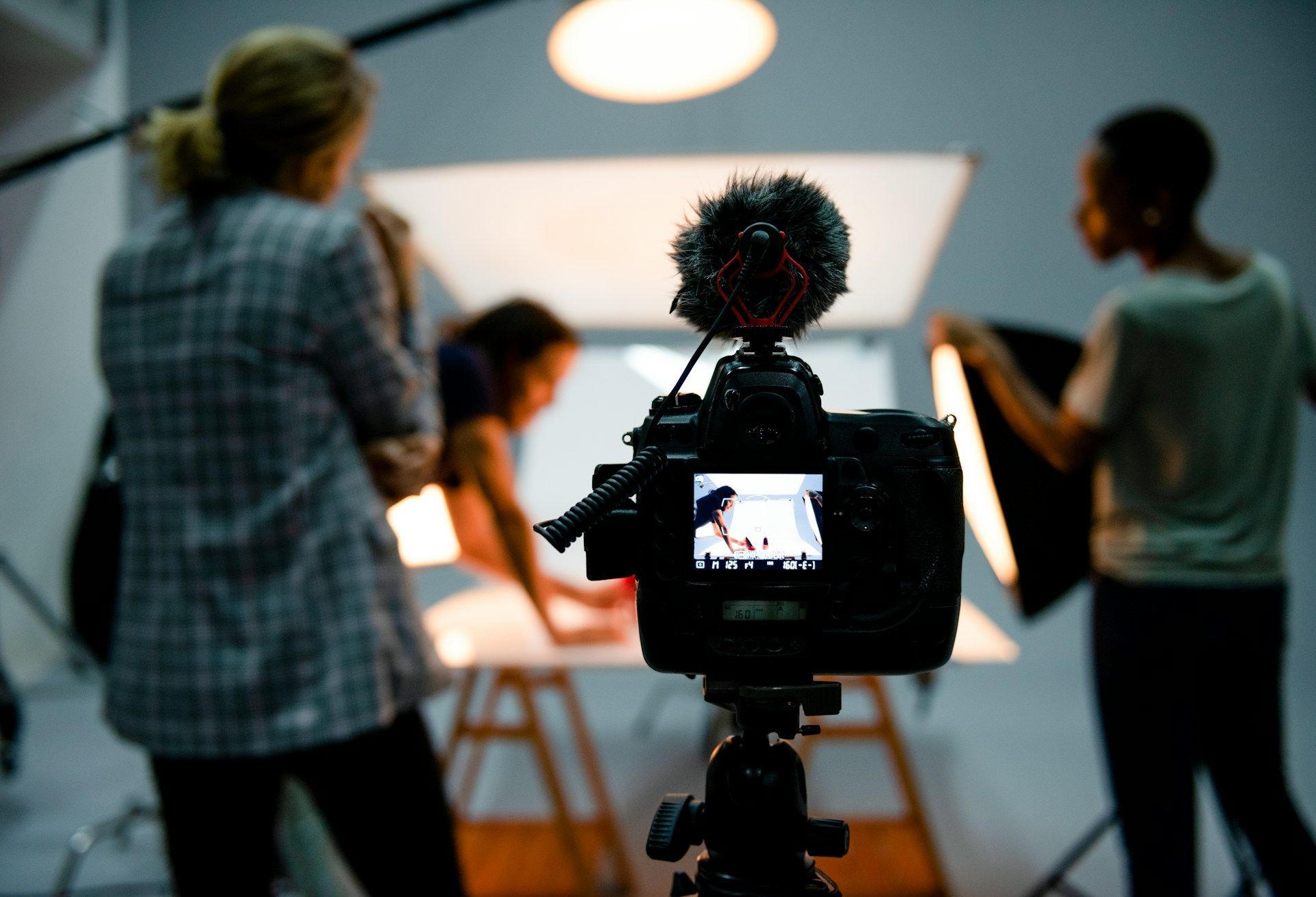
Creating effective digital commercials requires a strategic approach that balances creative excellence with performance optimization. The production process differs significantly from traditional commercial work, with greater emphasis on testing, iteration, and data-driven refinement.
Pre-Production Planning and Strategy Development
Successful digital commercials begin with comprehensive planning that addresses business objectives, audience insights, and distribution strategies simultaneously. This integrated approach ensures that creative decisions align with measurable outcomes from the project's inception.
Critical pre-production elements include:
- Audience research and persona development to identify specific pain points, preferences, and behavioral triggers
- Platform selection based on campaign objectives and where target audiences actually spend time
- Message architecture that prioritizes clarity within compressed timeframes
- Creative testing frameworks to validate concepts before full production investment
- Technical specifications planning to ensure deliverables meet platform requirements
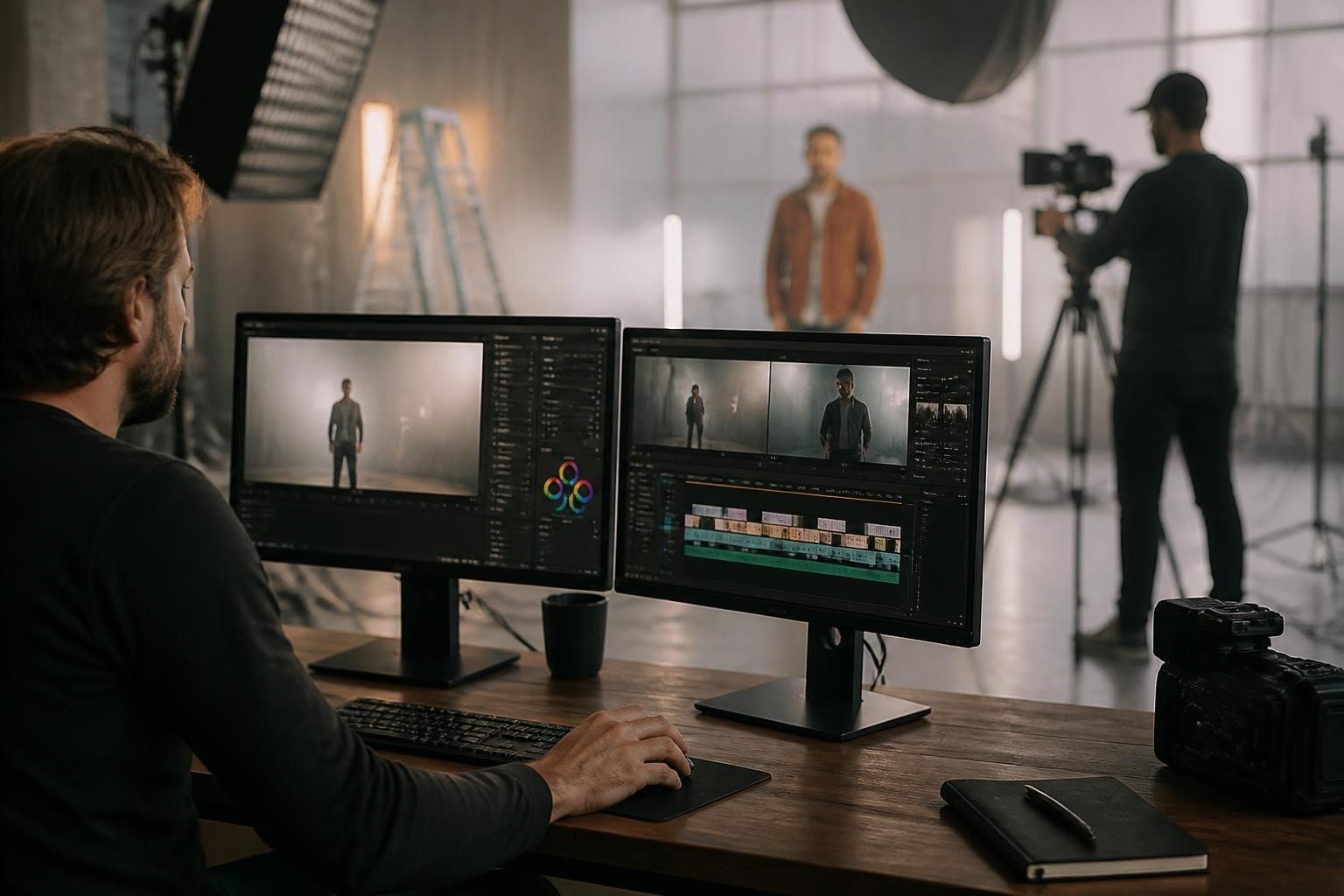
The shift toward advertising video production that prioritizes performance metrics has fundamentally changed how agencies approach creative development. Data insights now inform creative decisions at every stage, from scriptwriting to final editing.
Production Techniques That Maximize Engagement
Digital commercials must capture attention within the first three seconds or risk being skipped entirely. This reality demands production techniques specifically engineered for digital environments.
Hook development represents the single most critical element. Successful digital commercials open with visual or narrative hooks that immediately signal relevance to the target audience. These might include problem statements, surprising statistics, compelling questions, or visually arresting imagery that stops the scroll.
Pacing and information density differ dramatically from broadcast commercials. Digital formats require faster cuts, tighter framing, and more efficient storytelling. Every second must advance the narrative or reinforce the message.
Audio considerations have become more nuanced. While some platforms auto-play with sound off, others present audio-first experiences. Professional production teams now create commercials that work effectively both with and without sound, using captions, visual storytelling, and strategic audio design.
When learning how to make high-quality videos, production teams must balance technical excellence with platform-appropriate aesthetics. Overly polished content can feel disconnected on platforms like TikTok, while lower-production-value assets may underperform on LinkedIn or YouTube.
The Role of AI and Automation in Digital Commercial Production
Artificial intelligence has rapidly transformed digital commercial creation, with nearly 90 percent of advertisers projected to use generative AI for building video ads in 2026. This technological shift presents both opportunities and challenges for brands and production companies.
AI-Enhanced Production Workflows
Modern digital commercial production increasingly incorporates AI tools across multiple stages:
- Script development and copywriting using natural language models that generate variations for A/B testing
- Storyboard creation through AI-powered visualization tools that rapidly prototype concepts
- Editing automation that identifies optimal cut points and suggests pacing improvements
- Voiceover synthesis producing natural-sounding narration in multiple languages and accents
- Visual effects and color grading accelerated through machine learning algorithms
However, as discussed in analysis of AI video commercials and audience trust, fully synthetic content faces significant skepticism. Audiences respond poorly to uncanny valley effects where AI-generated humans appear almost, but not quite, realistic.

Balancing Automation with Authentic Creativity
The most effective approach combines AI efficiency with human creativity and strategic oversight. AI excels at generating variations, optimizing technical elements, and accelerating repetitive tasks. Human creators provide strategic direction, emotional intelligence, and brand authenticity that algorithms cannot replicate.
Professional commercial video production services now integrate these technologies while maintaining the creative vision and authentic storytelling that drives genuine audience connection.
Distribution and Optimization Strategies
Creating compelling digital commercials represents only half the equation. Strategic distribution and continuous optimization determine whether these assets deliver meaningful business results.
Multi-Platform Distribution Architecture
Sophisticated campaigns deploy digital commercials across integrated channel ecosystems rather than relying on single-platform approaches. This distribution architecture might include:
- Paid social media campaigns across Facebook, Instagram, LinkedIn, and TikTok with platform-specific creative variations
- Programmatic video advertising that places commercials across premium publisher networks
- YouTube advertising leveraging both TrueView and bumper ad formats
- Connected TV (CTV) placements reaching audiences through streaming platforms
- Digital out-of-home (DOOH) integrations in high-traffic physical locations
Understanding where digital ad budgets are being allocated helps inform strategic channel selection based on industry trends and competitive positioning.
Performance Measurement and Iterative Refinement
Digital commercials provide unprecedented measurement capabilities that inform ongoing optimization:
| Metric Category | Key Indicators | Optimization Applications |
|---|---|---|
| Engagement | View rate, completion rate, engagement rate | Creative effectiveness, audience relevance |
| Awareness | Reach, impressions, frequency | Budget allocation, audience expansion |
| Consideration | Click-through rate, website visits, time on site | Call-to-action effectiveness, landing page alignment |
| Conversion | Conversion rate, cost per acquisition, ROAS | Audience targeting, offer optimization |
| Brand Impact | Brand lift, ad recall, purchase intent | Message resonance, creative direction |
This data enables rapid iteration. Underperforming commercials can be revised or replaced within days rather than waiting for campaign completion. High-performing elements can be amplified and replicated across additional formats and platforms.
Creative Approaches That Drive Results
While technical optimization matters enormously, creative excellence remains the foundation of effective digital commercials. Certain creative approaches consistently outperform others across platforms and industries.
Storytelling Frameworks for Compressed Formats
Traditional narrative arcs don't translate effectively to 15-second formats. Successful digital commercials employ alternative storytelling structures:
Problem-Solution-Benefit presents a relatable challenge, introduces the product or service as the solution, and quickly articulates the transformation or outcome. This framework works particularly well for B2B and service-based offerings.
Curiosity-Payoff opens with an intriguing question, unexpected statement, or surprising visual that creates information gaps. The commercial then delivers the payoff, often incorporating the brand as the answer or enabler.
Testimonial-Driven approaches leverage authentic customer stories told with immediacy and emotional resonance. These work especially effectively when targeting audiences in consideration or decision stages.
Demonstration-Focused commercials show the product or service in action, emphasizing unique features, ease of use, or tangible outcomes. This approach aligns well with direct response objectives.
Visual and Audio Design Principles
Bold, simple compositions outperform complex visuals in digital environments. Limited color palettes, clear focal points, and generous use of contrast ensure commercials read effectively on mobile devices.
Text overlay strategy has become essential. Commercials should communicate core messages through on-screen text for sound-off viewing while maintaining natural audio design for sound-on experiences.
Brand integration must occur early and often. Unlike traditional commercials that might save brand reveals for closing frames, digital formats require earlier brand presence to ensure message attribution even when viewers don't complete the full ad.
The principles of creating short clips that maintain attention apply directly to digital commercial production, where every frame must justify its inclusion.
Budget Considerations and ROI Optimization
Digital commercials span an enormous budget range, from modest productions shot on smartphones to elaborate multi-location shoots with full production crews. Understanding how to allocate resources effectively determines campaign profitability.
Production Budget Allocation
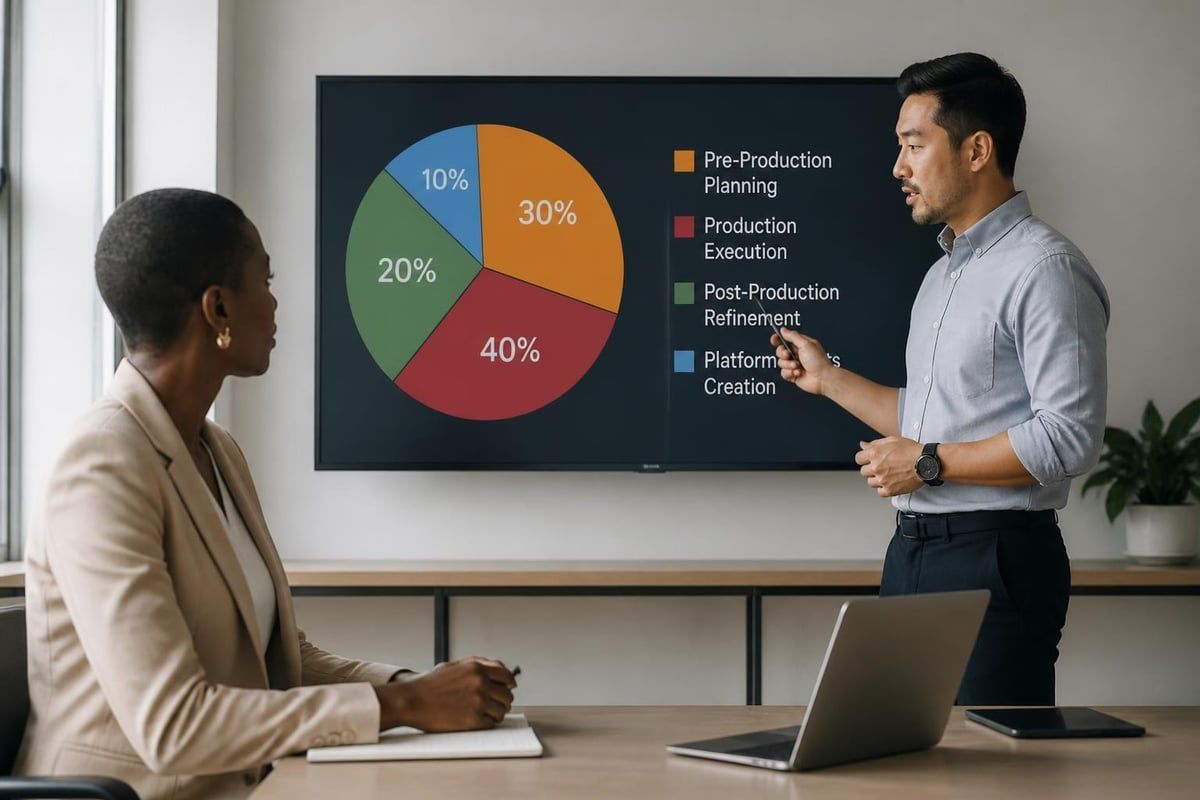
Efficient digital commercial production typically allocates budgets as follows:
- Pre-production (20-25%): Strategy development, scriptwriting, storyboarding, casting, location scouting, and logistics planning
- Production (35-40%): Filming, crew, talent, equipment, locations, and production insurance
- Post-production (25-30%): Editing, color grading, audio mixing, motion graphics, and revisions
- Asset creation (10-15%): Platform-specific versioning, caption creation, and deliverable preparation
Higher-end productions might invest more heavily in talent, locations, or visual effects, while lean approaches emphasize creative efficiency and strategic post-production.
Media Budget Optimization
The relationship between production quality and media spend requires careful consideration. Investing significantly in media distribution while using low-quality creative wastes budget on ineffective content. Conversely, excellent creative without adequate media support limits reach and impact.
General guidelines suggest:
- Media budgets should be at least 3-5x production costs for adequate testing and optimization
- Higher production values justify larger media investments by improving performance metrics
- Platform-specific creative variations improve performance enough to warrant the additional production investment
- Continuous creative refreshment prevents audience fatigue and maintains performance levels
Emerging trends in digital advertising for 2026 and beyond emphasize AI-driven automation and evolving privacy regulations that will continue reshaping budget allocation strategies.
Industry-Specific Applications and Case Studies
Digital commercials serve diverse business objectives across industries, with specific approaches proving more effective in different sectors.
B2B Technology and Professional Services
Technology companies and professional service providers face unique challenges in digital commercial creation. Complex offerings, longer sales cycles, and multiple decision-makers require educational content that builds credibility while maintaining engagement.
Successful B2B digital commercials often emphasize thought leadership, customer success stories, and clear articulation of business value. These commercials typically run longer (30-60 seconds) and appear on platforms like LinkedIn where professional audiences actively seek industry insights.
E-commerce and Direct-to-Consumer Brands
DTC brands leverage digital commercials for direct response, with creative specifically engineered to drive immediate purchases. These commercials emphasize product benefits, limited-time offers, and strong calls-to-action with minimal friction between viewing and purchasing.
Platform selection skews heavily toward Instagram and Facebook, where shopping integrations enable seamless transaction completion. Creative testing occurs at high velocity, with successful variants scaled rapidly and underperformers eliminated within days.
Healthcare and Wellness
Healthcare advertisers navigate strict regulatory requirements while building trust and communicating complex information. Digital commercials in this sector balance educational content with emotional storytelling, often incorporating patient testimonials and healthcare professional endorsements.
Real Estate and Property Development
Real estate marketing increasingly relies on digital commercials that showcase properties through immersive video experiences. These commercials leverage drone footage, virtual tours, and neighborhood highlights to generate qualified inquiries from potential buyers or renters.
Future Trends Shaping Digital Commercial Production
The digital commercial landscape continues evolving rapidly, with several trends poised to reshape production approaches and distribution strategies throughout 2026 and beyond.
Interactive and Shoppable Video Experiences
Static video commercials are giving way to interactive formats that enable viewer participation, product exploration, and direct purchasing without leaving the video player. These enhanced experiences improve engagement metrics and conversion rates while providing richer data about viewer preferences and behaviors.
Personalization at Scale
Advances in dynamic creative optimization enable personalization that extends beyond audience targeting to individualized creative variations. Digital commercials can now adapt messaging, visuals, offers, and calls-to-action based on viewer demographics, behaviors, interests, and position within the customer journey.
Sustainability and Authentic Storytelling
Audiences increasingly demand transparency and authenticity from brands. Digital commercials that embrace genuine storytelling, acknowledge challenges, and demonstrate meaningful commitments to social and environmental responsibility resonate more strongly than traditional advertising approaches.
Vertical and Mobile-First Formats
The dominance of mobile viewing has permanently shifted creative orientation from horizontal to vertical formats. Productions now shoot vertical-first rather than repurposing horizontal content, ensuring optimal composition and visual impact on the devices where most viewing occurs.
Digital commercials have become the cornerstone of effective marketing in 2026, combining creative excellence with data-driven optimization to deliver measurable business results across every industry and audience segment. By understanding platform-specific requirements, leveraging emerging technologies strategically, and maintaining authentic storytelling at the core of every production, brands can create video content that captures attention, builds meaningful connections, and drives sustainable growth. Whether you're launching a new product, building brand awareness, or driving direct response, partnering with experienced professionals ensures your digital commercials achieve their full potential. Viva Media specializes in creating high-performance digital commercials for forward-thinking Toronto brands, combining strategic insight with production excellence to deliver video content that generates real ROI.