


Video content dominates the digital landscape, but its reach extends far beyond initial views. Converting video to blog format unlocks additional channels, improves search visibility, and maximizes the return on your content investment. This approach transforms hours of production work into multiple content assets that serve different audience preferences and search behaviors. For businesses investing in professional video production, repurposing that content into written formats represents a strategic opportunity to compound results without proportional increases in budget.
The Strategic Value of Converting Video to Blog Content
Repurposing video content into blog articles creates a multiplier effect for your marketing efforts. Every video represents significant investment in planning, production, and post-production. When you convert video to blog format, you extract additional value from that same investment while reaching audiences who prefer reading over watching.
Search engines can crawl and index text far more effectively than they can interpret video content alone. While Google's video SEO capabilities continue to improve, written content still provides the clearest signals for search algorithms. A well-optimized blog post derived from your video gives search engines comprehensive context about your content's value and relevance.
Multiple Audience Touchpoints
Different audiences consume content in different ways. Some prefer watching videos during commutes or workouts. Others prefer scanning written content at their desks. By offering both formats, you accommodate these varying preferences and capture a broader audience segment.
Key benefits of dual-format content:
- Increased total reach across different consumption preferences
- Higher search engine visibility through text-based indexing
- Extended content lifespan as blog posts continue generating traffic
- Improved accessibility for users with hearing impairments
- Enhanced ability to update and refresh content over time
The video to blog conversion process also creates opportunities for internal linking, which strengthens your overall content marketing strategy and improves site architecture.
Methods for Converting Video to Blog Format
Several approaches exist for transforming video content into written articles, each with distinct advantages depending on your resources, timeline, and quality requirements. The right method balances efficiency with the need for polished, valuable content that serves your audience.
Manual Transcription and Editing
Watching your video and manually writing the blog post provides maximum control over tone, structure, and messaging. This approach works particularly well for commercial video content where brand voice consistency matters significantly.
The manual process involves:
- Watching the complete video while taking detailed notes
- Identifying key points, quotes, and valuable insights
- Organizing content into logical sections with clear headings
- Expanding on visual elements that require written description
- Adding context, data, and supporting resources
- Optimizing for target keywords and search intent
While time-intensive, this method produces the highest quality output and allows you to restructure content specifically for written consumption rather than simply transcribing spoken words.
AI-Powered Transcription Tools
Modern transcription services use artificial intelligence to convert spoken audio into text with impressive accuracy. Tools like Otter.ai, Descript, and Rev provide automated transcription that serves as a foundation for your blog post.
Using AI to convert YouTube videos into blog posts has become increasingly sophisticated, with some platforms offering formatting suggestions and content organization features. However, raw transcripts require substantial editing to transform conversational speech into compelling written content.
| Method | Time Required | Quality Level | Best For |
|---|---|---|---|
| Manual transcription | 4-6 hours per video | Highest | Brand-critical content |
| AI transcription + heavy editing | 2-3 hours per video | High | Regular content production |
| AI transcription + light editing | 1-2 hours per video | Medium | High-volume publishing |
| Hybrid approach | 2-4 hours per video | High | Balanced efficiency and quality |
The hybrid approach combines AI transcription for the initial draft with strategic manual editing to refine structure, add context, and ensure brand alignment.
Professional Content Services
Outsourcing video to blog conversion to specialized content teams provides scalability when you're managing multiple video projects. Professional writers experienced in this transformation understand how to capture the essence of visual content while crafting engaging written narratives.
This approach works particularly well when you're producing corporate video content at scale and need consistent quality across all repurposed materials.
Optimizing Blog Posts Derived from Video Content
Converting video to blog format requires more than simple transcription. The written version should stand as valuable content in its own right while complementing and enhancing the original video's impact.
Structuring Your Video-Based Blog Post
Effective structure makes your content scannable and valuable for readers who may never watch the embedded video. Begin with a strong introduction that establishes the topic's relevance and previews the key insights readers will gain.
Essential structural elements:
- Compelling headline optimized for search and click-through
- Brief introduction establishing context and value proposition
- Logical section organization with descriptive subheadings
- Strategic placement of the embedded video at natural break points
- Bullet points and numbered lists for key takeaways
- Visual elements like screenshots or supplementary images
- Clear calls-to-action guiding next steps
Remember that video content can significantly improve SEO rankings when properly integrated into blog posts, creating a symbiotic relationship between both formats.
Enhancing Text with Context and Resources
The blog version should expand beyond what appears in the video. Add statistics, links to relevant research, and connections to related topics that provide additional value for readers seeking comprehensive information.

When transforming corporate video services content into blog format, include relevant case studies, implementation frameworks, or technical details that would slow down video pacing but enrich written content.
Keyword Integration and SEO Optimization
Written content provides superior opportunities for keyword optimization compared to video alone. Research the specific terms your audience uses when searching for solutions, then naturally incorporate these throughout your blog post.
The process involves:
- Identifying primary and secondary keywords related to your video topic
- Incorporating keywords in headlines, subheadings, and introduction
- Using semantic variations and related terms throughout the body
- Optimizing meta descriptions and title tags
- Creating descriptive alt text for embedded images
- Building internal links to related content on your site
According to comprehensive SEO optimization guides, proper metadata and structured data significantly improve how search engines interpret and rank your content.
Technical Considerations for Video to Blog Conversion
Beyond content quality, technical implementation affects how effectively your video-to-blog strategy performs in search results and user experience metrics.
Video Embedding and Page Performance
Embedding your video directly in the blog post creates a richer user experience, but implementation matters for page load speed. Host videos on platforms like YouTube, Vimeo, or Wistia rather than directly on your server to maintain fast page performance.
Lazy loading techniques ensure videos only load when users scroll to that section, preventing them from slowing initial page render. This consideration becomes particularly important when you're showcasing animation video production or other high-resolution content.
Transcript Inclusion Strategies
Including the full video transcript on the page provides accessibility benefits and gives search engines additional content to index. However, lengthy transcripts can overwhelm readers if not properly formatted.
Effective transcript presentation options:
- Expandable accordion sections that hide transcript by default
- Separate transcript pages linked from the main article
- Timestamps linking transcript sections to specific video moments
- Edited transcripts that improve readability while maintaining accuracy
Turning videos into high-value blog content using AI transcription requires balancing completeness with usability to serve both human readers and search crawlers.
Schema Markup and Structured Data
Implementing proper schema markup helps search engines understand your content's structure and may earn rich snippets in search results. VideoObject schema identifies embedded videos, while Article schema provides context about the blog post itself.
Combining both types of structured data signals that your content offers multiple formats, potentially improving visibility in both video and traditional search results. Video SEO optimization best practices emphasize the importance of comprehensive metadata implementation.
Measuring Success of Your Video to Blog Strategy
Tracking performance metrics reveals whether your video to blog conversion efforts deliver meaningful business results. The right metrics depend on your specific goals, whether that's increased organic traffic, improved engagement, or enhanced lead generation.
Key Performance Indicators
Different metrics indicate different types of success. Organic search traffic measures your content's discoverability, while time on page and scroll depth reveal engagement quality. Conversion metrics like form submissions or contact requests demonstrate business impact.
| Metric Category | Specific KPIs | What It Reveals |
|---|---|---|
| Discovery | Organic impressions, keyword rankings | Search visibility effectiveness |
| Engagement | Time on page, scroll depth, video play rate | Content quality and relevance |
| Conversion | Form fills, demo requests, consultation bookings | Business impact and ROI |
| Distribution | Social shares, backlinks, referral traffic | Content reach and authority |
Understanding video production ROI beyond surface metrics helps you identify which conversion strategies generate the most value for your business.
Comparative Analysis
Compare performance between standalone videos and their accompanying blog posts to understand which format drives specific outcomes. You may discover that blog posts generate more organic traffic while videos create higher engagement rates among visitors who arrive through other channels.
This analysis informs future content strategy decisions. If blog posts consistently outperform videos for certain topics, you might prioritize written content for those subjects while maintaining video production for topics where visual demonstration provides clear advantages.
Iterative Improvement
Use performance data to refine your video to blog conversion process. Test different structural approaches, heading strategies, and content depths to identify what resonates with your audience.
A/B testing elements like video placement (beginning vs. middle of post), transcript presentation (visible vs. hidden), and call-to-action positioning reveals optimization opportunities that compound over time as you apply learnings across multiple pieces of content.
Content Distribution and Amplification Strategies
Creating excellent video-to-blog content represents only half the equation. Strategic distribution ensures your repurposed content reaches the audiences who will find it most valuable.
Multi-Channel Publishing
Distribute blog content across multiple platforms to maximize reach. Publish the complete article on your primary website, then create platform-specific adaptations for LinkedIn articles, Medium, or industry publications that accept contributed content.
Each distribution channel introduces your content to different audience segments while building backlinks that strengthen your domain authority. When sharing social media video content, include links back to the comprehensive blog post for viewers seeking additional depth.
Email Marketing Integration
Your email subscribers represent a highly engaged audience segment. Feature video-to-blog content in newsletters, providing context about why this topic matters and how the content serves their needs.
Segment your email list based on topic interests or customer journey stage to deliver the most relevant content to each group. Someone researching solutions appreciates educational content, while existing customers value advanced strategies and industry insights.
Social Media Optimization
Transform blog content into social media snippets that drive traffic back to your comprehensive post. Pull quotable insights, create visual graphics highlighting key statistics, and share behind-the-scenes production content that builds interest in both the video and written formats.
Short video clips extracted from the original production serve as native social content while promoting the full video and blog post. This approach, detailed in strategies for converting YouTube videos to SEO blog posts, creates a content ecosystem where each format supports the others.

Building a Sustainable Video to Blog Workflow
Consistency matters more than perfection when establishing your video to blog conversion practice. A repeatable workflow ensures you maintain quality while managing the process efficiently as your content volume grows.
Workflow Documentation
Document each step of your conversion process, including tools used, quality standards, and approval requirements. This documentation enables you to delegate tasks, train team members, or work with freelancers while maintaining consistent output quality.
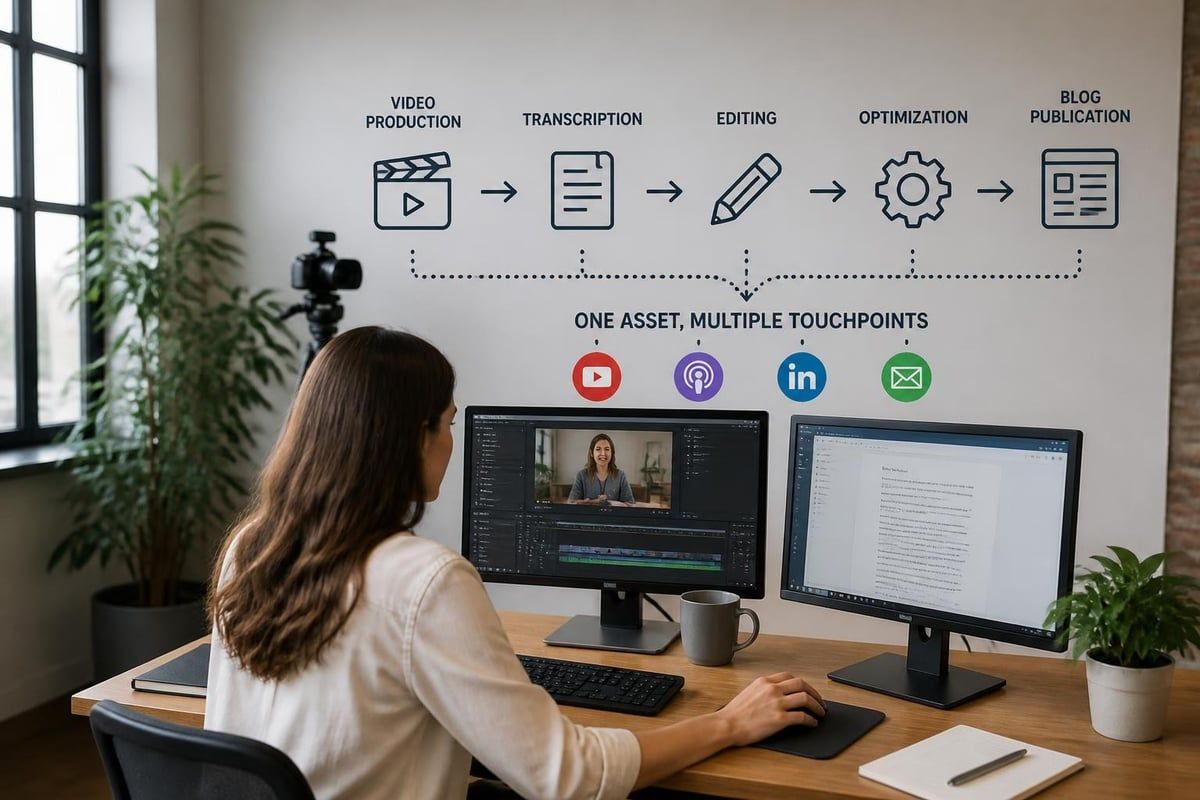
Standard workflow stages:
- Video production and publication on primary platform
- Transcript generation using chosen method
- Content editing and structure optimization
- SEO keyword research and implementation
- Visual asset creation and embedding
- Technical optimization and schema implementation
- Internal and external link addition
- Quality review and approval
- Publication and distribution
- Performance tracking setup
Building this systematic approach transforms video to blog conversion from an occasional project into a reliable content multiplication strategy.
Team Roles and Responsibilities
Clearly defined roles prevent bottlenecks and ensure accountability. Depending on your team size, you might assign dedicated specialists for transcription, editing, SEO optimization, and technical implementation, or one person might handle multiple stages.
Regular communication between video producers and content writers ensures the blog version accurately represents the video's intent while serving the unique needs of written content consumers. This collaboration works particularly well when creating corporate video content designed for multiple distribution channels from inception.
Quality Control Checkpoints
Establish review checkpoints at critical stages to catch issues before publication. Verify factual accuracy, ensure brand voice consistency, confirm technical implementation, and validate that SEO best practices are properly applied.
Quality control becomes especially important when scaling your video to blog operation. As volume increases, systematic checks maintain standards that protect your brand reputation and content effectiveness.
Advanced Strategies for Maximum Impact
Once your basic video to blog conversion workflow runs smoothly, advanced techniques can further amplify results and differentiate your content in competitive markets.
Content Clustering and Topic Authority
Organize related video-to-blog content into comprehensive topic clusters that establish your authority on specific subjects. Create pillar pages that provide broad overviews, then link to detailed blog posts derived from individual videos that explore subtopics in depth.
This structure signals topical expertise to search engines while providing intuitive navigation for human visitors. Someone researching corporate video production might discover your pillar page, then explore multiple related blog posts and videos that address their specific questions.
Interactive Elements and Engagement Features
Enhance blog posts with interactive elements that encourage engagement and provide additional value. Embed polls asking readers about their challenges, include calculators that help quantify potential ROI, or add comment sections that facilitate community discussion.
These features increase time on page and create opportunities for readers to signal their interests, providing valuable data about which topics resonate most strongly with your audience.
Continuous Content Updates
Unlike videos, which require substantial effort to update, blog posts can be easily refreshed with new information, updated statistics, or additional resources. Schedule regular content audits to identify opportunities for enhancement.
Updated publish dates signal freshness to search engines while ensuring readers access current, accurate information. This maintenance approach, combined with proper video SEO best practices, keeps your content competitive over extended periods.
Multimedia Integration
Expand beyond simple video embedding by incorporating screenshots, infographics, charts, and supplementary images that reinforce key points. Visual variety breaks up text blocks and accommodates different learning styles.
When converting animation video production content to blog format, still frames from the animation can illustrate processes or concepts that benefit from visual representation alongside written explanation.
Transforming video to blog format multiplies the value of your content investment, reaching diverse audiences while strengthening your search presence and establishing topical authority. The strategies outlined here provide a framework for building a systematic approach that scales with your content production volume. Viva Media helps Toronto businesses create high-performance video content designed for multi-channel distribution, ensuring every production dollar works harder through strategic repurposing and optimization. Whether you're ready to launch your first video project or seeking to maximize existing content, our team engineers experiences that deliver measurable results across all formats.