


Social media video advertising has evolved from a supplementary marketing tactic to an essential component of digital strategy. With over 50% of U.S. consumers using social media as their primary method to discover new brands, businesses can no longer afford to treat video content as optional. The landscape in 2026 demands sophisticated approaches that blend creative storytelling with data-driven optimization, requiring brands to understand platform-specific nuances while maintaining consistent messaging across channels. For companies in competitive markets like Toronto, where attention spans are fragmented across multiple platforms, mastering social media video advertising represents the difference between market leadership and irrelevance.
Understanding the Current Social Media Video Landscape
The social media video advertising ecosystem has transformed dramatically over the past several years. Short-form vertical content dominates user preferences, with platforms prioritizing videos under 60 seconds in their algorithms. This shift reflects fundamental changes in how audiences consume information, moving away from passive viewing toward active engagement.
Platform distribution has become increasingly fragmented, requiring advertisers to develop platform-specific strategies rather than one-size-fits-all approaches. According to comprehensive social media video statistics, engagement rates vary significantly across platforms, with TikTok achieving average completion rates of 68% compared to Facebook's 47% for similar content types.
The production landscape has also evolved considerably. Nearly 90% of advertisers now leverage generative AI to build video ads, allowing for rapid iteration and testing while maintaining quality standards. This technological shift democratizes aspects of production while simultaneously raising the bar for creative excellence.
Key Platform Specifications and Requirements
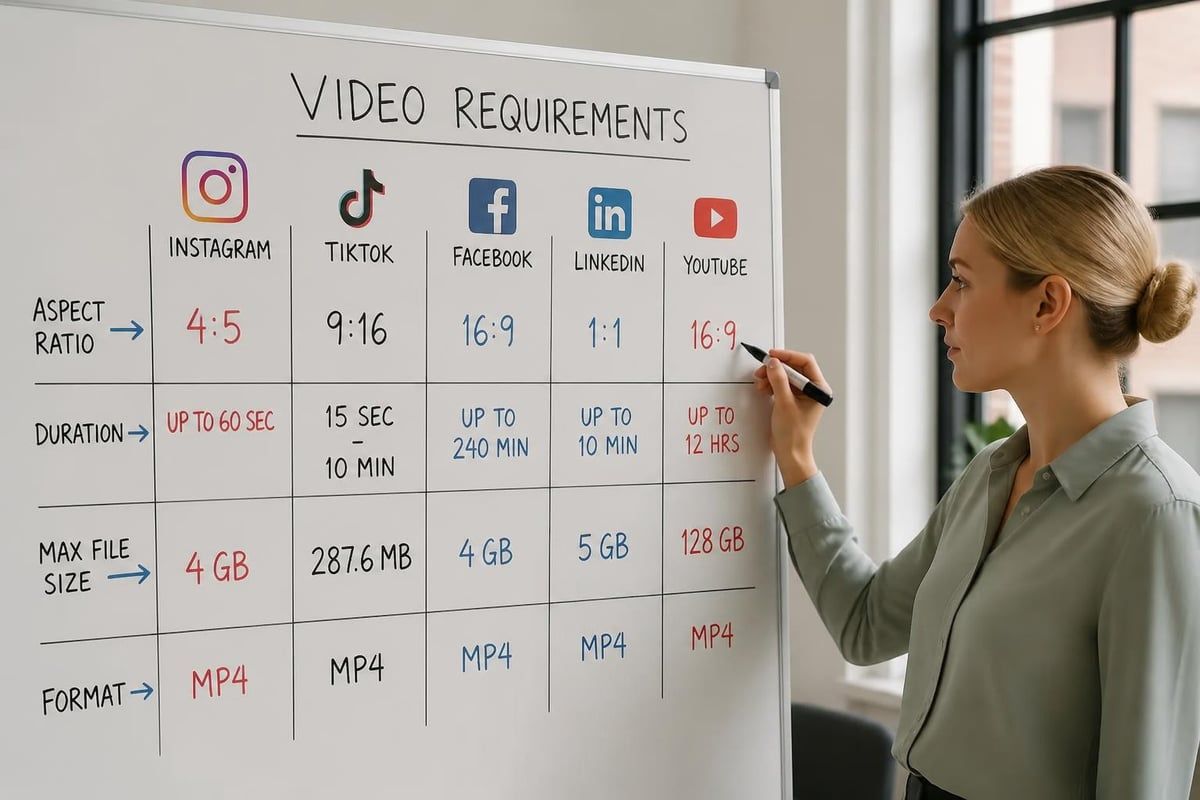
Understanding technical requirements forms the foundation of effective social media video advertising. Each platform maintains specific guidelines that directly impact performance:
| Platform | Optimal Length | Aspect Ratio | File Size Limit | Resolution |
|---|---|---|---|---|
| Instagram Feed | 30-60 seconds | 1:1, 4:5 | 4GB | 1080x1080px |
| Instagram Stories | 15 seconds | 9:16 | 4GB | 1080x1920px |
| Facebook Feed | 15-30 seconds | 1:1, 16:9 | 4GB | 1080x1080px |
| TikTok | 21-34 seconds | 9:16 | 287MB | 1080x1920px |
| 30-90 seconds | 1:1, 16:9 | 5GB | 1920x1080px | |
| YouTube Shorts | 15-60 seconds | 9:16 | 256GB | 1080x1920px |
These specifications represent more than technical constraints. They reflect how users engage with content on each platform, informing both production choices and creative strategy.
Strategic Approaches to Platform-Specific Advertising
Different platforms require distinct strategic frameworks. The differences between social video and PPC video strategies highlight how conversion-focused approaches must adapt to each environment's unique characteristics.
Instagram Video Advertising Strategy
Instagram's dual nature as both a discovery and engagement platform creates unique opportunities. Feed videos prioritize polished, aspirational content that aligns with brand aesthetics, while Stories and Reels demand authenticity and immediacy.
Successful Instagram video advertising campaigns typically incorporate:
- First-frame hooks that capture attention within 0.3 seconds
- Clear value propositions delivered within the first three seconds
- Mobile-optimized text overlays that remain legible without sound
- Strategic CTAs positioned at natural engagement points
- Brand integration that feels organic rather than intrusive
The platform's shopping features enable direct product tagging within videos, creating seamless purchase pathways. This functionality transforms social media video advertising from awareness-building into direct revenue generation, particularly for e-commerce brands.
TikTok Advertising Dynamics
TikTok represents a fundamental shift in social media video advertising philosophy. The platform rewards content that entertains first and sells second, requiring advertisers to embrace native creative styles rather than importing traditional advertising formats.
High-performing TikTok ads often blur the line between organic content and paid promotion. User-generated content styles, trending audio integration, and participation in platform-wide challenges generate significantly higher engagement than polished corporate videos. This doesn't mean sacrificing production quality but rather adapting it to platform expectations.
The For You Page algorithm prioritizes completion rates and engagement metrics over follower counts, giving even new advertisers opportunities to reach massive audiences if creative execution resonates. Businesses working with social media video production specialists can leverage this democratization while maintaining brand consistency.
LinkedIn Video for B2B Marketing
LinkedIn video advertising serves fundamentally different objectives than consumer-focused platforms. The professional context demands thought leadership, industry expertise, and clear business value rather than entertainment-driven hooks.
Effective LinkedIn video strategies emphasize:
- Executive-level insights delivered by credible company representatives
- Case studies demonstrating measurable business outcomes
- Industry trend analysis positioning the brand as a forward-thinking authority
- Educational content addressing specific professional pain points
- Recruitment-focused videos showcasing company culture and opportunities
Video completion rates on LinkedIn average 42% higher for content under 90 seconds, with engagement dropping sharply beyond two minutes. This constraint requires disciplined messaging that delivers value efficiently without sacrificing depth.
Creative Best Practices for Maximum Engagement
Creative execution determines whether social media video advertising achieves business objectives or disappears into endless content streams. Facebook video ads best practices emphasize several principles that translate across platforms with appropriate adaptations.
The First Three Seconds Principle
Attention capture occurs within an impossibly brief window. Videos must communicate value, establish relevance, or trigger emotion before viewers scroll past. This doesn't necessarily mean shock tactics or clickbait approaches, but rather strategic clarity about why viewers should invest time.
Movement, color contrast, and unexpected visual elements all contribute to stopping scroll behavior. However, these attention mechanisms must connect logically to the core message rather than functioning as disconnected hooks. Understanding how to create video for business objectives ensures creative choices serve strategic goals.

Sound-Off Optimization
Between 85-92% of social media videos play without sound initially, requiring visual storytelling that functions independently of audio. Text overlays, visual metaphors, and kinetic typography transform spoken content into readable formats without diminishing aesthetic appeal.
This constraint actually strengthens creative work by forcing clarity and visual communication. Videos designed for sound-off viewing typically maintain engagement even when audio plays, while sound-dependent content loses effectiveness when muted.
Sound-off optimization techniques include:
- Burned-in captions synced to dialogue rhythms
- On-screen graphics highlighting key statistics or claims
- Visual demonstrations replacing verbal explanations
- Strategic emoji use for emotional context
- Clear visual CTAs that function without audio reinforcement
Mobile-First Design Philosophy
Over 94% of social media video consumption occurs on mobile devices, making mobile optimization mandatory rather than optional. This extends beyond aspect ratio selection to encompass readability, touch-target sizing, and vertical space utilization.
Text must remain legible on screens as small as 5.5 inches, requiring larger fonts and higher contrast ratios than desktop-optimized content. Important information shouldn't cluster near screen edges where thumbs naturally rest, potentially obscuring crucial details. Testing across multiple device sizes ensures consistent experiences regardless of viewer technology.
Measurement and Performance Optimization
Social media video advertising generates extensive performance data, but meaningful optimization requires focusing on metrics aligned with business objectives rather than vanity statistics. Businesses must understand how to identify video production ROI blind spots that obscure true campaign effectiveness.
Key Performance Indicators by Campaign Objective
Different campaign goals demand different measurement frameworks:
| Campaign Objective | Primary KPIs | Secondary KPIs | Success Threshold |
|---|---|---|---|
| Brand Awareness | Impressions, Reach | ThruPlay Rate, Video Views | 3-second view rate >45% |
| Engagement | Comments, Shares, Saves | Likes, Click-Through Rate | Engagement rate >4% |
| Traffic Generation | Link Clicks, Landing Page Views | Cost Per Click | CPC <$1.50 (varies by industry) |
| Conversions | Purchases, Leads, Sign-ups | Add to Cart, View Content | ROAS >3:1 |
| Video Views | 3-second, 10-second, Complete | Average Watch Time | Completion rate >30% |
These benchmarks vary significantly by industry, audience demographics, and competitive landscape. Establishing baseline performance through initial campaigns enables meaningful optimization rather than arbitrary comparisons to industry averages that may not reflect specific circumstances.
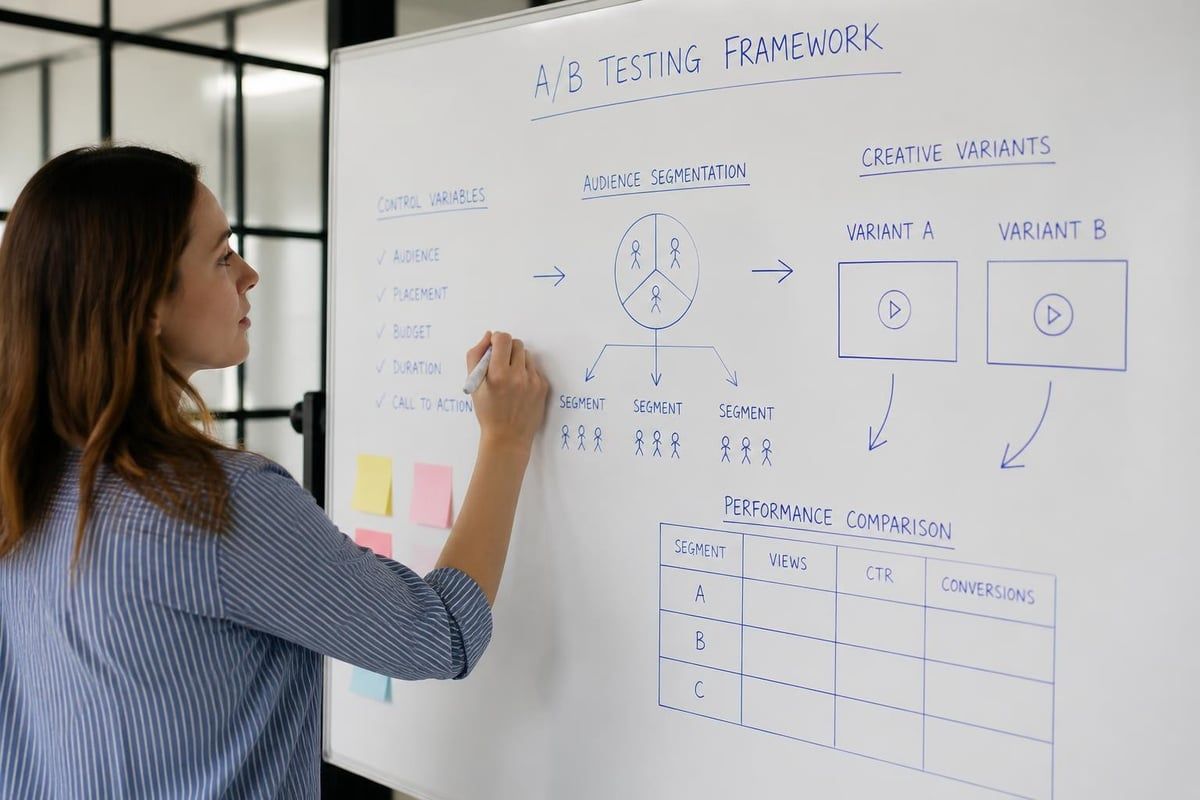
A/B Testing Frameworks
Systematic testing separates high-performing creative from assumptions about what should work. Social media video advertising platforms enable testing variables including:
- Hook variations in the first three seconds
- CTA placement and phrasing
- Video length (15s vs 30s vs 60s)
- Audio tracks and sound design choices
- Thumbnail selection for in-feed placements
- Aspect ratio performance across placements
Testing should isolate single variables to generate actionable insights. Changing multiple elements simultaneously makes it impossible to determine which modification drove performance changes. Statistical significance requires adequate sample sizes, typically 1,000+ impressions per variation before drawing conclusions.
Production Efficiency and Scalability
Maintaining consistent social media video advertising output requires production systems that balance quality with efficiency. The demand for fresh content across multiple platforms creates unsustainable workloads without strategic approaches to content creation and repurposing.
Content Atomization Strategy
A single professionally produced video asset can generate dozens of platform-specific variations through strategic editing and reformatting. This atomization process maximizes production investments while maintaining platform-appropriate formats.
Core content atomization approaches include:
- Extracting highlight clips from longer form content for Stories and Reels
- Creating quote cards from interview segments for static feed posts
- Reformatting horizontal footage into vertical compositions through strategic cropping
- Generating multiple CTAs from a single creative execution
- Testing different opening hooks while maintaining consistent body content
Professional commercial video production should anticipate atomization requirements during filming, capturing additional angles and compositions that facilitate reformatting without quality degradation.
Template-Based Production Systems
Establishing consistent visual systems accelerates production while strengthening brand recognition. Template-based approaches don't mean cookie-cutter sameness but rather strategic frameworks that reduce decision fatigue around repetitive elements.
Motion graphics templates, lower-third designs, transition styles, and color grading presets maintain visual consistency while allowing creative flexibility in storytelling. This systematic approach enables delegation to production teams with confidence that outputs will maintain brand standards regardless of individual contributor.
Emerging Trends Shaping 2026 and Beyond
The social media video advertising landscape continues evolving rapidly, with several trends fundamentally reshaping strategic approaches. Analysis of short-form content popularity indicates this format's expansion beyond social platforms into broader digital ecosystems.
AI-Assisted Creative Development
Generative AI tools now handle tasks from script generation to preliminary editing, dramatically compressing production timelines. However, AI excels as an enhancement tool rather than replacement for human creativity and strategic thinking.
Current AI applications in social media video advertising include:
- Automated caption generation with timing synchronization
- Background removal and replacement without green screens
- Voice synthesis for multilingual content versions
- Rough cut assembly based on script inputs
- Predictive performance scoring for creative variations
The most effective implementations combine AI efficiency with human oversight, using technology to eliminate tedious tasks while preserving creative judgment for strategic decisions. Understanding the intersection of animated corporate video production and AI capabilities positions businesses to leverage these tools effectively.
Interactive and Shoppable Video Formats
The evolution toward frictionless commerce directly within video experiences eliminates traditional barriers between discovery and purchase. Instagram Shopping, TikTok Shop, and Facebook Marketplace integrations transform social media video advertising from top-of-funnel awareness into complete conversion pathways.
Interactive elements including polls, quizzes, and choose-your-own-adventure narratives increase engagement while generating valuable audience insights. These formats particularly excel for product demonstrations, allowing viewers to explore specific features matching their interests rather than passive linear viewing.
Privacy-First Targeting Adaptations
Deprecation of third-party cookies and platform privacy restrictions fundamentally alter audience targeting capabilities. Social media video advertising increasingly relies on contextual targeting, first-party data integration, and creative excellence rather than granular demographic precision.
This shift actually benefits advertisers willing to develop truly engaging content. As targeting precision decreases, creative quality becomes the primary differentiator in competitive auctions. Broader audience exposure rewards videos that resonate across demographic segments rather than narrow personalization.
Budget Allocation and Resource Planning
Strategic budget distribution across platforms maximizes overall campaign effectiveness while managing financial constraints. Many businesses struggle with optimal allocation, either spreading resources too thin across excessive platforms or over-concentrating on single channels.
Platform Budget Distribution Framework
Effective allocation considers audience concentration, platform costs, and strategic priorities rather than equal distribution:
Recommended starting allocation for B2C brands:
- Instagram (Stories/Reels): 35-40%
- TikTok: 25-30%
- Facebook: 20-25%
- YouTube Shorts: 10-15%
Recommended starting allocation for B2B brands:
- LinkedIn: 50-60%
- Facebook: 20-25%
- Instagram: 15-20%
- YouTube: 5-10%
These frameworks should adapt based on performance data, with quarterly rebalancing toward highest-performing platforms. Minimum viable budgets typically start around $1,500-2,000 monthly per platform to generate statistically significant data for optimization decisions.
Production Investment Considerations
Production quality standards vary by platform and campaign objective. Businesses must balance professional polish with authentic, relatable content that performs well in social environments. Detailed understanding of commercial video advertising requirements helps determine appropriate production investments.
High-production-value content serves brand building and consideration stages, while user-generated aesthetics often outperform polished content for engagement and conversion objectives. Strategic production planning allocates budgets across this spectrum based on campaign goals rather than assuming higher production costs always generate better results.
Social media video advertising in 2026 demands sophisticated strategies that balance platform-specific optimization with consistent brand messaging while leveraging emerging technologies without sacrificing authentic human connection. Success requires ongoing testing, measurement, and adaptation as platforms evolve and audience preferences shift. Viva Media helps Toronto-area businesses navigate this complex landscape through data-driven video production that delivers measurable results, combining strategic expertise with technical excellence to transform social media presence into revenue-generating assets.