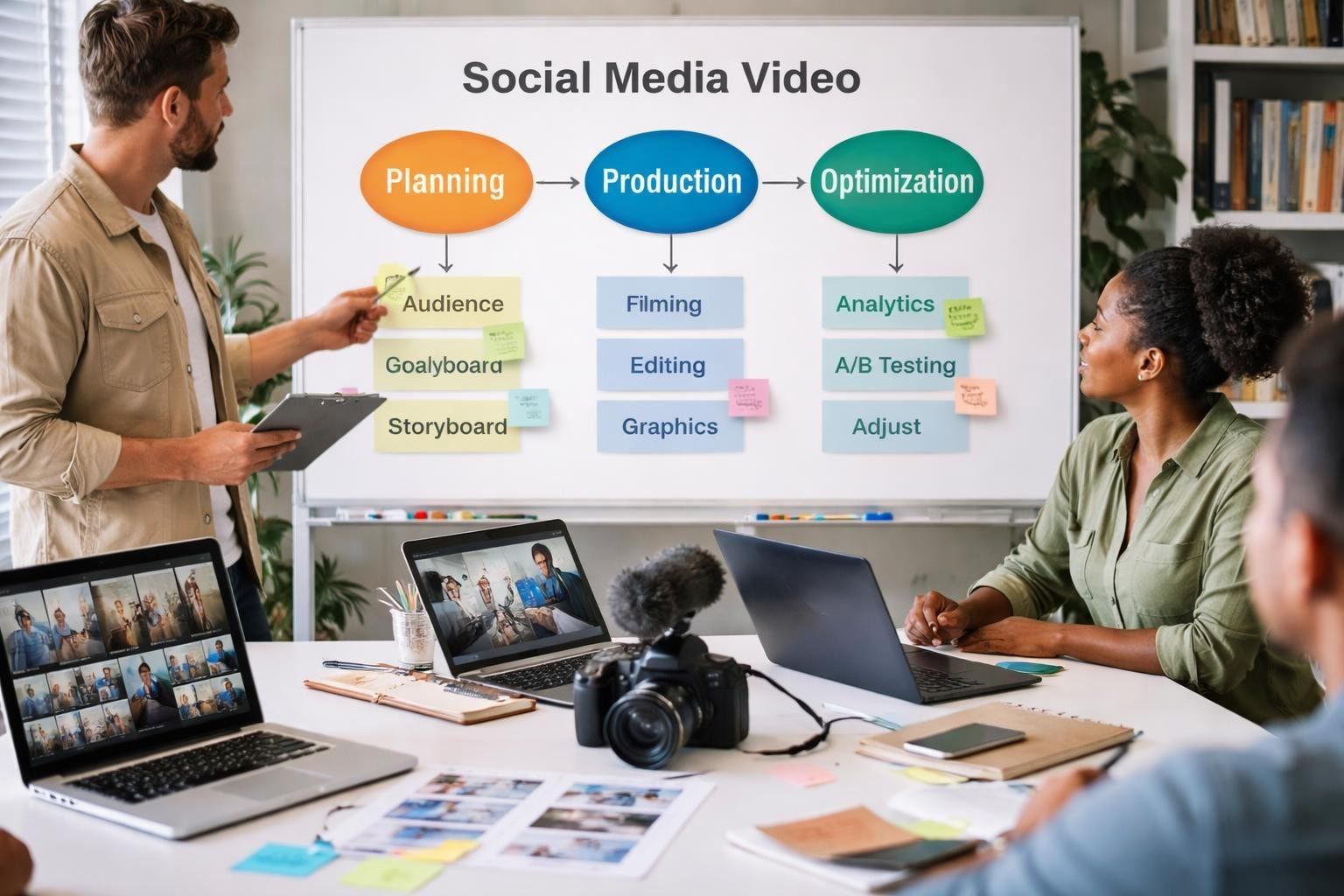


The landscape of social media has fundamentally transformed into a video-first ecosystem where brands must produce compelling visual content to maintain relevance and drive business outcomes. As platforms continue prioritizing video in their algorithms and user feeds, companies throughout the Greater Toronto Area and beyond need strategic approaches to creating video content for social media that captures attention, builds communities, and generates measurable returns on investment. Understanding platform-specific requirements, audience preferences, and production best practices has become essential for businesses seeking to compete in 2026's saturated digital marketplace.
The Dominance of Video in Social Media Marketing
Social media platforms have evolved into primary video consumption channels, with social video now accounting for 20% of all TV viewing time. This dramatic shift represents a fundamental change in how audiences consume content and discover brands.
The numbers tell a compelling story. Recent data reveals that video content generates 1200% more shares than text and images combined, while posts containing video receive 48% more views on average. For businesses investing in corporate video production, these statistics translate directly into expanded reach and enhanced engagement metrics.
Why Video Content Dominates Engagement
Several factors contribute to video's supremacy on social platforms:
- Algorithm preference: Most social networks prioritize video in user feeds and recommendation engines
- Attention capture: Moving visuals stop scrolling behavior more effectively than static content
- Information density: Video communicates complex ideas faster than text-based alternatives
- Emotional connection: Visual storytelling creates stronger brand affinity and recall
- Mobile optimization: Video formats align perfectly with smartphone consumption patterns
According to research, 50% of U.S. consumers now consider social media their primary way to learn about brands, making video content for social media an essential component of any comprehensive marketing strategy.

Platform-Specific Video Requirements and Strategies
Each social platform demands unique approaches to video content for social media. Understanding these distinctions separates effective campaigns from wasted production budgets.
Instagram Video Formats
Instagram offers multiple video options, each serving distinct strategic purposes:
| Format | Maximum Length | Ideal Use Case | Aspect Ratio |
|---|---|---|---|
| Reels | 90 seconds | Viral content, trends, discovery | 9:16 vertical |
| Stories | 60 seconds | Behind-the-scenes, limited offers | 9:16 vertical |
| Feed Videos | 60 seconds | Polished brand content | 1:1 or 4:5 |
| IGTV/Long-form | 60 minutes | Tutorials, interviews, deep dives | 9:16 or 16:9 |
Success on Instagram requires optimizing for mobile-first viewing. Learning how to make Instagram Reels that stand out can significantly boost your brand's visibility on the platform.
TikTok Content Dynamics
TikTok has revolutionized short-form video consumption. The platform's algorithm rewards authentic, entertaining content over polished production values, though professional creators maintain quality standards while appearing spontaneous.
Key TikTok strategies include:
- Opening with a hook in the first 2-3 seconds
- Using trending audio and effects strategically
- Posting consistently (1-3 times daily for maximum growth)
- Engaging directly with comments through video replies
- Participating in relevant challenges and trends
LinkedIn Professional Video
LinkedIn's professional audience demands different content approaches. Video content for social media on this platform should emphasize:
- Thought leadership through expert insights and industry analysis
- Company culture showcasing team expertise and values
- Product demonstrations highlighting business solutions
- Client success stories proving tangible business outcomes
- Educational content addressing professional challenges
LinkedIn videos between 30-90 seconds achieve optimal completion rates, though longer educational content performs well when delivering genuine value.
YouTube Long-Form Strategy
YouTube remains the dominant platform for comprehensive video content. Understanding popular YouTube genres in 2026 helps inform content strategy decisions.
YouTube's recommendation algorithm favors watch time and viewer satisfaction, making content quality paramount. Successful strategies involve creating series that encourage binge-watching, optimizing titles and thumbnails for click-through rates, and maintaining consistent upload schedules.
Production Techniques for High-Performance Social Video
Creating effective video content for social media requires balancing production quality with platform-specific best practices. The U.S. Chamber of Commerce outlines essential practices that apply across industries and platforms.
Essential Production Elements
Professional social video production involves several non-negotiable components:
Captions and subtitles have become mandatory rather than optional. Research indicates 85% of Facebook videos are watched without sound, making text overlays critical for message delivery. Proper captioning also expands accessibility and improves SEO performance.
Vertical video formatting acknowledges mobile consumption patterns. While horizontal 16:9 remains standard for YouTube, platforms like TikTok, Instagram Reels, and Stories demand 9:16 vertical content that fills smartphone screens without requiring rotation.
Thumbnail optimization drives click-through rates across platforms that display preview images. Custom thumbnails should feature clear text, vibrant colors, and compelling visuals that communicate value propositions instantly.

Technical Quality Standards
While authenticity often trumps polish on platforms like TikTok, maintaining baseline quality standards remains essential:
- 4K resolution for platform versatility and future-proofing
- Proper lighting ensuring faces and products appear clearly
- Clean audio free from background noise and echo
- Steady footage using stabilizers or tripods when appropriate
- Color consistency maintaining brand identity across content
Investing in professional commercial video production ensures content meets technical standards while maintaining authentic appeal.
Storytelling Architecture
Effective video content for social media follows proven narrative structures:
- Hook (0-3 seconds): Capture attention with compelling visuals or questions
- Context (3-10 seconds): Establish the topic and viewer value proposition
- Content (10-45 seconds): Deliver core message with clear structure
- Call-to-action (final 5 seconds): Direct viewers toward desired next steps
This architecture adapts across video lengths and platforms while maintaining engagement throughout the viewer journey.
Content Strategy and Planning
Strategic planning separates consistent performers from sporadic creators. Successful video content for social media requires systematic approaches to ideation, production, and distribution.
Content Pillars and Themes
Establishing 3-5 content pillars creates structure while allowing creative flexibility:
- Educational content answering common customer questions
- Behind-the-scenes humanizing your brand and team
- Customer testimonials providing social proof
- Product showcases highlighting features and benefits
- Industry insights positioning your company as a thought leader
These pillars inform content calendars while ensuring consistent brand messaging across platforms. For businesses exploring video marketing strategies, this framework provides actionable structure.
Batch Production Efficiency
Professional creators maximize efficiency through batch production:
| Production Phase | Time Investment | Content Output |
|---|---|---|
| Planning & scripting | 4 hours | 1 month calendar |
| Filming session | 6-8 hours | 12-16 videos |
| Editing | 1-2 hours per video | Polished deliverables |
| Platform optimization | 30 minutes per video | Multi-platform versions |
This approach reduces production costs while maintaining consistent publishing schedules essential for algorithm favor and audience retention.
Analytics and Optimization
Data-driven refinement improves performance over time. Key metrics for video content for social media include:
- View-through rate: Percentage watching beyond first 3 seconds
- Average watch time: Duration viewers engage with content
- Engagement rate: Likes, comments, shares relative to reach
- Click-through rate: Actions taken from call-to-action prompts
- Follower growth: New audience members attracted by content
Platforms provide native analytics, while third-party tools offer deeper insights. According to comprehensive social media video statistics, businesses tracking these metrics see 34% better ROI than those relying on vanity metrics alone.
Emerging Trends Shaping 2026
The video content landscape continues evolving rapidly. Understanding emerging trends helps businesses stay competitive and capture attention in crowded feeds.
Short-Form Vertical Video Expansion
Short-form vertical content is moving beyond social media into traditional publishing and broadcasting. This expansion creates new opportunities for repurposing video content for social media across multiple distribution channels.
Mini-Drama Format Growth
Mini-dramas are attracting mega audiences with scripted episodes under 10 minutes. This format offers businesses creative opportunities to deliver brand messages through entertaining narratives rather than traditional advertising approaches.
Live Video Renaissance
Live streaming has matured beyond early adoption phases. Platforms now offer sophisticated tools for professional broadcasts, including multi-camera switching, graphic overlays, and real-time audience interaction features.
Benefits of live video include:
- Authentic engagement through unedited, real-time interaction
- Algorithm preference with platforms notifying followers of live broadcasts
- Extended watch time as viewers stay longer than pre-recorded content
- Repurposing opportunities creating multiple assets from single productions
AI-Assisted Production
Artificial intelligence tools are transforming video production workflows. From automated caption generation to AI-powered editing suggestions, these technologies reduce production time while maintaining quality standards. However, human creativity and strategic thinking remain irreplaceable for effective storytelling.
Budget Considerations and ROI
Understanding video pricing structures helps businesses allocate resources effectively while maximizing returns on video content for social media investments.
Production Investment Levels
Different content types require varying investment levels:
In-house smartphone production ($0-500 per video): Suitable for authentic, behind-the-scenes content where polish matters less than frequency and authenticity.
Semi-professional production ($1,000-5,000 per video): Combines professional equipment with streamlined workflows, ideal for regular content requiring quality above smartphone capabilities.
Full professional production ($5,000-25,000+ per video): Commercial video production delivering broadcast-quality content for campaigns requiring maximum impact and longevity.
Calculating Video Content ROI
Measuring return on investment for video content for social media involves tracking multiple metrics:
- Direct conversions: Sales, leads, or sign-ups attributed to video campaigns
- Brand awareness: Reach, impressions, and share of voice improvements
- Engagement quality: Time spent, interaction rates, and sentiment analysis
- Content longevity: Ongoing performance beyond initial posting period
- Production efficiency: Cost per engagement compared to other marketing channels
Businesses using systematic measurement approaches report average ROI of 87% on social video investments, with top performers achieving returns exceeding 300%.
Distribution and Amplification Strategies
Creating excellent video content for social media represents only half the equation. Strategic distribution determines actual business impact.
Organic Reach Optimization
Maximizing organic reach requires understanding platform algorithms:
- Post timing: Publishing when target audiences actively browse
- Hashtag strategy: Using 3-5 relevant tags on Instagram, trending tags on TikTok
- Cross-posting adaptation: Reformatting content for each platform rather than duplicate posting
- Community engagement: Responding to comments within first hour of posting
- Collaboration: Partnering with complementary brands or creators
Paid Amplification Tactics
Strategic paid promotion extends content reach beyond organic limitations:
| Platform | Minimum Budget | Best Use Case | Targeting Precision |
|---|---|---|---|
| Facebook/Instagram | $5/day | Detailed demographic targeting | Excellent |
| TikTok | $20/day | Reaching younger demographics | Good |
| $10/day | B2B professional audiences | Excellent | |
| YouTube | $10/day | Long-form content promotion | Very good |
Combining organic and paid approaches creates compounding effects, with paid promotion introducing content to new audiences who then engage organically with subsequent posts.
Repurposing and Content Maximization
Single video shoots can generate multiple content pieces through strategic repurposing. For businesses exploring effective video solutions, this approach maximizes production investments.
A 10-minute interview can yield:
- One YouTube long-form video
- Five Instagram Reels highlighting key moments
- Ten social media story slides with pull quotes
- Three LinkedIn posts with professional insights
- Podcast audio version for additional distribution
This multiplication strategy reduces effective cost-per-asset while maintaining consistent messaging across platforms.

Best Practices from Industry Leaders
Examining successful implementations provides actionable insights for businesses developing video content for social media strategies. According to Rev's comprehensive guide, several consistent patterns emerge among top-performing brands.
Late-night television shows have mastered social distribution, with billions of views accumulated in 2025 through strategic clip distribution. Their approach involves identifying self-contained segments that work independently of full episodes, optimizing for platform-specific viewing patterns.
Brand consistency with platform adaptation separates sophisticated marketers from amateurs. Successful companies maintain recognizable visual identity while adapting tone, pacing, and format to each platform's unique culture and expectations.
Community-building focus transforms one-way broadcasting into engaged audiences. Brands encouraging user-generated content, responding authentically to comments, and featuring community members in official content build loyal followings that amplify reach organically.
Common Mistakes to Avoid
Even experienced marketers make avoidable errors:
- Ignoring platform-specific aspect ratios and formatting requirements
- Neglecting captions for sound-off viewing environments
- Prioritizing production polish over authentic connection
- Inconsistent posting schedules that confuse algorithms and audiences
- Failing to include clear calls-to-action guiding viewer behavior
- Repurposing content identically across platforms without adaptation
Awareness of these pitfalls helps businesses allocate resources toward high-impact activities while avoiding wasted effort.
Integration with Broader Marketing Strategies
Video content for social media achieves maximum impact when integrated with comprehensive marketing ecosystems rather than existing in isolation.
Cross-Channel Consistency
Successful integration requires:
- Message alignment ensuring video content reinforces email, website, and advertising campaigns
- Visual consistency maintaining brand guidelines across all customer touchpoints
- Strategic timing coordinating video releases with product launches, events, or seasonal campaigns
- Data sharing using insights from social video to inform broader marketing decisions
- Funnel progression creating video content for each customer journey stage
Email Marketing Enhancement
Embedding video in email campaigns increases click-through rates by 200-300%. Strategic approaches include using video thumbnails linking to landing pages, creating email-exclusive video content, and personalizing video messages for segmented audiences.
Website Traffic Generation
Social video serves as powerful traffic driver when incorporating strategic calls-to-action. Directing engaged viewers to blog content, product pages, or lead magnets converts attention into measurable business outcomes. For Toronto-based businesses, integrating social video with comprehensive digital video production creates cohesive customer experiences.
Mastering video content for social media in 2026 requires balancing creative storytelling with platform-specific technical requirements, consistent production with strategic distribution, and authentic engagement with measurable business outcomes. The companies achieving exceptional results treat social video as essential infrastructure rather than experimental tactics, investing in systematic approaches that compound over time. Whether you're launching your first campaign or refining existing strategies, Viva Media brings Toronto-based expertise in creating high-performance video content engineered for attention, engagement, and measurable ROI across all social platforms.