

Businesses across industries are turning to animated video content to capture attention, explain complex concepts, and drive measurable results. A video animation company specializes in transforming ideas into compelling visual stories that resonate with audiences and support business objectives. Whether you need an explainer video, product demonstration, or social media content, understanding what these companies offer and how to select the right partner can significantly impact your marketing success. In 2026, the animation landscape continues to evolve with new technologies, styles, and applications that make this medium more accessible and effective than ever before.
What a Video Animation Company Does
A video animation company creates animated video content for businesses, organizations, and brands looking to communicate messages through visual storytelling. These companies employ teams of animators, designers, writers, scriptwriters, and project managers who collaborate to bring concepts to life.
Core Services Offered
Most video animation companies provide a comprehensive suite of services that cover the entire production process. Explainer videos remain one of the most requested formats, distilling complex products or services into digestible 60-90 second animations that follow best practices for clarity and engagement.
- 2D character animation for brand storytelling
- 3D product visualization and demonstrations
- Motion graphics for data visualization
- Whiteboard animation for educational content
- Kinetic typography for text-based messaging
Beyond creating the animation itself, professional companies handle scriptwriting, voiceover recording, sound design, and music licensing. This end-to-end approach ensures consistency across all elements and relieves clients from coordinating multiple vendors.
Industry Applications
Animation serves diverse business purposes across multiple sectors. Technology companies use animated demos to showcase software functionality without requiring actual product screenshots. Healthcare organizations explain medical procedures or pharmaceutical benefits through clear visual narratives. Financial services firms simplify complex investment strategies or insurance products.
The growth of video animation in e-learning has opened significant opportunities in corporate training and educational markets. Companies increasingly recognize that animated training materials improve knowledge retention while reducing production costs compared to live-action alternatives.
Types of Animation Styles Available
Understanding different animation styles helps businesses select the approach that best matches their brand identity and communication goals. Each style carries distinct visual characteristics and production requirements.
| Animation Style | Best For | Typical Timeline | Relative Cost |
|---|---|---|---|
| 2D Character Animation | Brand storytelling, mascots | 4-6 weeks | Medium-High |
| Motion Graphics | Data visualization, tech demos | 2-4 weeks | Medium |
| 3D Animation | Product showcases, architecture | 6-8 weeks | High |
| Whiteboard Animation | Educational content, processes | 2-3 weeks | Low-Medium |
| Kinetic Typography | Quotes, testimonials, text-heavy | 1-2 weeks | Low |
Emerging Visual Trends
The animation trends for 2026 reflect broader shifts in design aesthetics and technological capabilities. Minimalist design continues gaining traction, with clean lines and simplified color palettes creating sophisticated yet accessible visuals. Conversely, some brands embrace maximalist approaches with rich textures, complex scenes, and vibrant color schemes to stand out in crowded markets.
Hybrid animation combining 2D and 3D elements has become increasingly popular. This approach leverages the approachability of 2D characters within three-dimensional environments, creating depth while maintaining visual warmth. The blending of 2D and 3D techniques represents one of the most significant developments in contemporary animation practice.
Fluid, organic motion has replaced the rigid movements of earlier animation eras. Modern video animation companies study the 12 principles of animation established by Disney animators, adapting these foundational concepts to create movements that feel natural and engaging regardless of style.
How to Choose the Right Video Animation Company
Selecting an animation partner requires careful evaluation of capabilities, process, and cultural fit. The wrong choice can result in wasted budgets, missed deadlines, and content that fails to achieve business objectives.
Portfolio Assessment
A company's portfolio reveals more than technical skill. Look for diversity in styles, industries, and project types. Does the work demonstrate strategic thinking beyond mere aesthetic appeal? Strong portfolios showcase animations that clearly communicate specific messages to defined audiences.
Pay attention to storytelling quality. Beautiful visuals matter less if the narrative feels confusing or unfocused. Effective animations guide viewers through a logical progression that builds understanding and motivates action. When reviewing samples, consider whether you remained engaged throughout or lost interest partway through.
Production Process and Communication
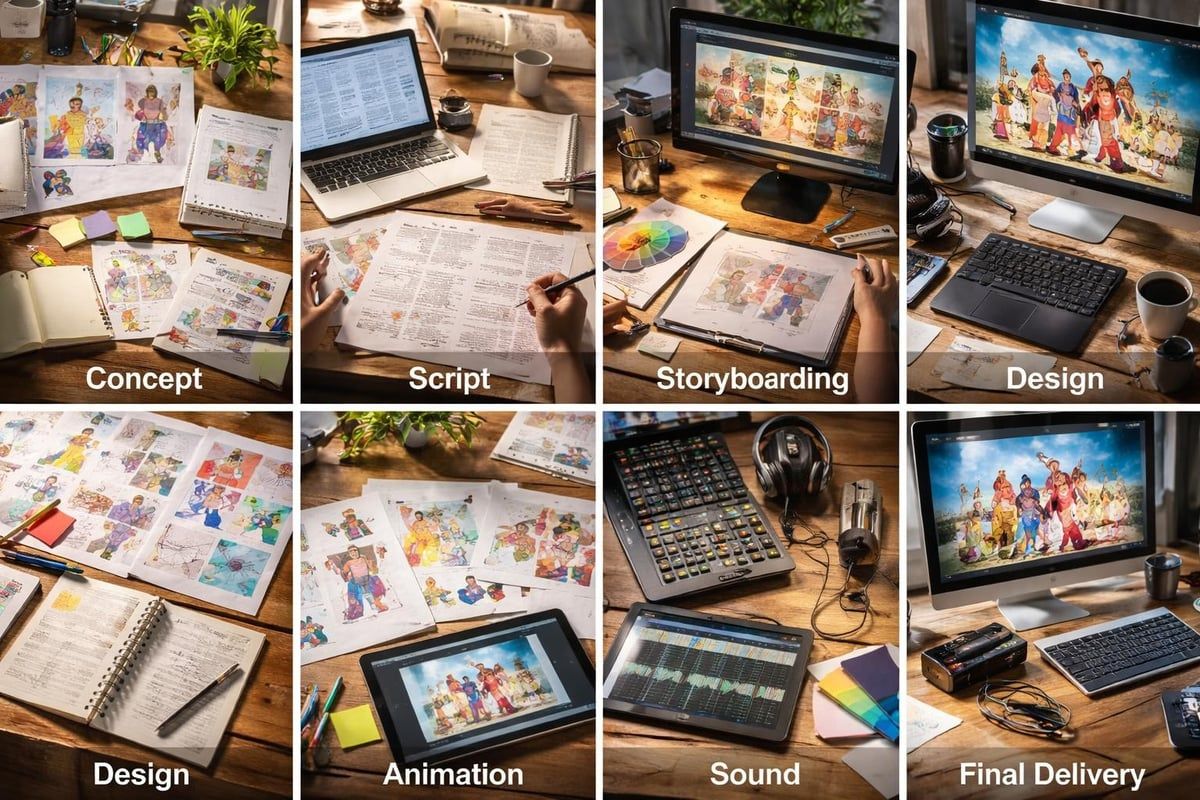
Transparency in workflow separates professional video animation companies from mediocre ones. Reputable firms outline clear production stages with defined deliverables and approval points. Typical phases include:
- Discovery and creative brief development
- Script and storyboard creation
- Style frame design and approval
- Animation production
- Revision rounds
- Final delivery and file formats
Ask potential partners how they handle revisions. Unlimited changes sound appealing but often result in scope creep and timeline delays. Most companies include two to three revision rounds per production phase, with additional changes available at predetermined rates.
Communication cadence matters significantly for project success. Weekly check-ins keep projects moving forward while preventing surprises. Understanding whether you'll work with a dedicated project manager or communicate directly with animators helps set appropriate expectations.

Pricing Models and Budget Considerations
Animation costs vary dramatically based on style, length, complexity, and company expertise. Understanding pricing structures helps businesses budget appropriately and avoid costly surprises.
Common Pricing Approaches
Video animation companies typically use one of three pricing models. Per-second rates charge based on final video length, with prices ranging from $150 to $1,000+ per finished second depending on complexity. Simple motion graphics might cost $150-300 per second, while detailed 3D animation can exceed $1,000 per second.
Project-based pricing bundles all costs into a single fee covering the complete production from concept through delivery. This approach provides budget certainty but requires detailed scope definition upfront. Changes mid-project typically incur additional charges.
Retainer arrangements work well for businesses needing ongoing animation support. Monthly retainers provide allocated hours or deliverables at reduced per-project rates. This model benefits companies producing regular social media video content or frequent product updates.
For businesses exploring video production options, understanding video pricing structures across different formats helps establish realistic expectations and compare proposals effectively.
Cost-Influencing Factors
Several variables significantly impact final animation costs beyond basic per-second rates. Custom illustration and character design add expense compared to using template-based assets. Voice talent fees vary from $300 for basic narration to several thousand dollars for celebrity voices or union talent.
- Complexity of scenes: Detailed backgrounds, multiple characters, and intricate movements increase production time
- Customization level: Original designs versus template modifications
- Revision rounds: Additional changes beyond standard allowances
- Rush fees: Accelerated timelines typically add 25-50% premiums
- Licensing: Stock music costs less than custom composition
Music and sound design represent often-overlooked budget items. Stock music libraries offer tracks from $50-200, while custom composition starts around $1,500-3,000 for short pieces. Professional sound design enhancing the viewing experience through ambient sounds and effects typically adds $500-1,500 to project budgets.
Integration with Broader Video Marketing Strategies
Animation works most effectively when integrated within comprehensive video marketing approaches rather than existing as isolated content. A strategic video animation company helps clients understand how animated content fits within larger digital video production initiatives.
Content Distribution Planning
Creating compelling animation represents only half the challenge. Distribution strategy determines whether target audiences actually see the content. Different platforms demand specific technical specifications and viewing behaviors.
Social media platforms each favor particular formats and lengths. Instagram Reels and TikTok prioritize vertical 9:16 videos under 60 seconds. YouTube accepts longer-form content in horizontal 16:9 format. LinkedIn favors professional, educational content between 30-90 seconds. Working with professionals who understand video marketing for small businesses ensures animations optimize for intended distribution channels.
Website integration requires different considerations. Homepage hero sections often feature short, impactful animations establishing brand identity. Product pages benefit from detailed demonstrations showing features and benefits. Landing pages converting prospects need focused messaging addressing specific pain points.
Performance Measurement
Effective video animation companies discuss success metrics during initial planning rather than treating them as afterthoughts. Different business objectives require different measurement approaches.
| Business Goal | Primary Metrics | Secondary Metrics |
|---|---|---|
| Brand Awareness | Views, reach, impressions | Social shares, completion rate |
| Lead Generation | Click-through rate, form submissions | View-through rate, engagement |
| Product Education | Watch time, completion rate | Replay rate, drop-off points |
| Customer Retention | Engagement rate, support ticket reduction | Customer satisfaction scores |
Advanced video animation companies provide guidance on A/B testing different versions to optimize performance. Testing variations in messaging, call-to-action placement, or visual style reveals which approaches resonate most strongly with specific audience segments.
Technology and Tools Shaping the Industry
The video animation company landscape continues evolving as new technologies reshape production workflows and creative possibilities. Understanding these technological shifts helps businesses select partners positioned for future success.
AI-Assisted Animation
Artificial intelligence has begun transforming animation production in 2026, though human creativity remains essential. AI tools now assist with time-consuming tasks like in-betweening (creating transition frames between keyframes), lip-syncing character dialogue, and generating background elements. The shift towards AI-generated media in entertainment indicates broader industry changes affecting animation companies.
Progressive video animation companies leverage AI to increase efficiency rather than replace human animators. This technology allows teams to focus creative energy on storytelling, character development, and strategic messaging while automating repetitive technical tasks.
Style transfer capabilities enable animators to apply consistent visual aesthetics across projects more efficiently. Machine learning models trained on a brand's existing assets can suggest color palettes, typography, and design elements matching established guidelines.
Real-Time Rendering
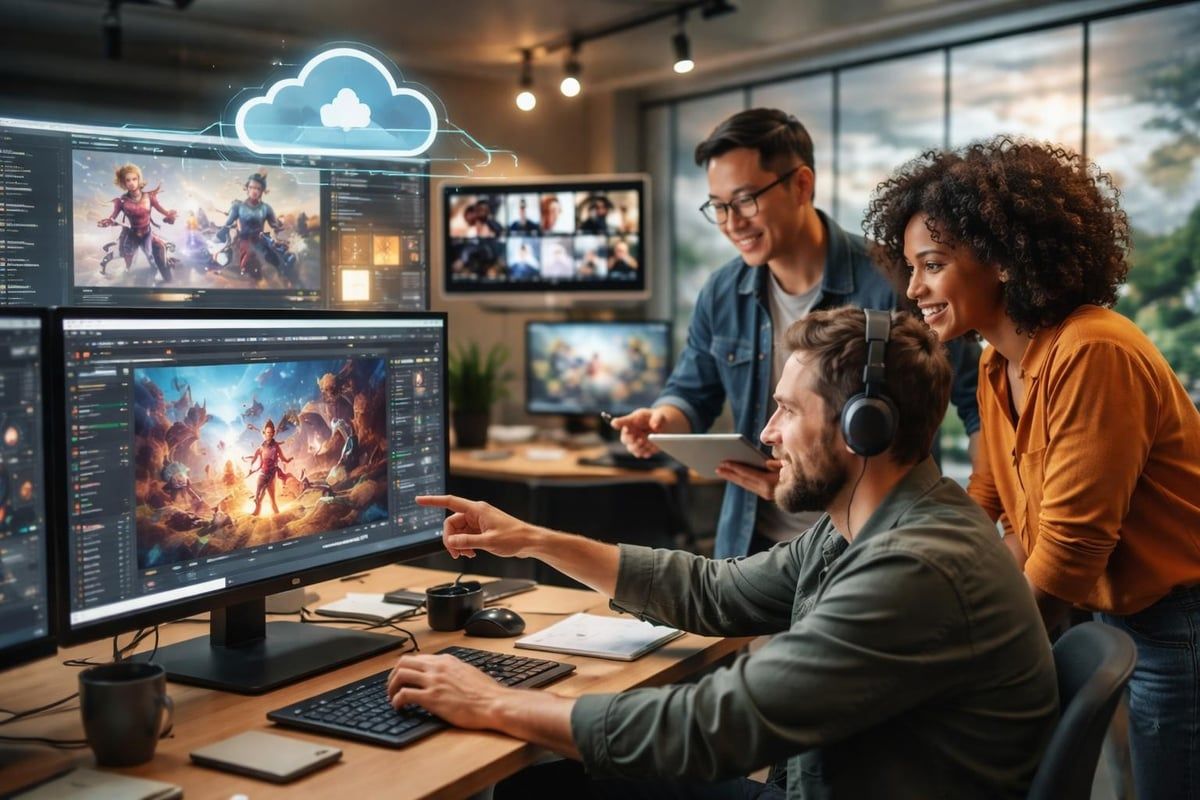
Real-time rendering engines originally developed for gaming now enable video animation companies to provide clients with immediate visual feedback during production. Traditional 3D animation required hours or days to render final-quality frames. Modern engines deliver near-final quality instantly, allowing for iterative refinement during client review sessions.
This technology particularly benefits complex projects requiring frequent stakeholder input. Rather than describing how changes will look, animators demonstrate adjustments in real-time, accelerating approval cycles and reducing miscommunication.
Specialized Animation Applications
Beyond standard explainer videos, video animation companies increasingly serve niche applications requiring specialized expertise and industry knowledge.
Technical and Medical Animation
Highly technical subjects demand animators who understand complex processes and can visualize them accurately. Medical animation explaining surgical procedures, pharmaceutical mechanisms, or anatomical systems requires collaboration with subject matter experts ensuring scientific accuracy.
Technical animations for engineering, manufacturing, or construction projects illustrate processes impossible to capture through traditional video. Cutaway views showing internal mechanisms, exploded diagrams demonstrating assembly sequences, or visualizations of microscopic phenomena all rely on specialized 3D animation capabilities.
Architectural Visualization
Real estate developers and architects use animated walkthroughs showcasing properties before construction completion. These animations allow potential buyers or investors to experience spaces, understand flow between rooms, and visualize design features in ways static renderings cannot achieve.
Sophisticated architectural animations incorporate lighting studies showing how natural light moves through spaces throughout the day, seasonal landscaping variations, and different material finish options. This level of detail helps stakeholders make informed decisions during planning phases.
Training and Educational Content
Corporate training increasingly relies on animated content that employees can consume at their own pace. Animated scenarios demonstrate proper procedures, illustrate potential hazards, or explain company policies more engagingly than text-based materials.
The advantage of animation for training content lies in repeatability and consistency. Every viewer receives identical information presented identically, eliminating variability introduced by different instructors or live demonstrations. Updates to procedures require updating the animation rather than retraining entire instructor pools.
Working Effectively with Your Animation Partner
Successful client-company relationships depend on clear communication, realistic expectations, and collaborative problem-solving. Businesses investing in animation should understand their role in the production process.
Providing Effective Creative Direction
Video animation companies need specific information to create effective content. Vague direction like "make it look cool" or "we want something viral" provides insufficient guidance. Strong creative briefs include:
- Specific business objectives and success metrics
- Detailed audience demographics and psychographics
- Key messages ranked by priority
- Brand guidelines including logo usage, color palettes, and tone
- Competitive examples (with clear explanation of what to emulate or avoid)
- Technical requirements and distribution channels
The more context companies provide about their business challenges, competitive landscape, and customer pain points, the better animators can craft strategic solutions rather than merely decorative visuals.
Managing the Approval Process
Multiple stakeholders often complicate animation projects when each person provides conflicting feedback. Designate a single point of contact with authority to approve creative decisions and consolidate team input into coherent direction.
Provide feedback at appropriate production stages rather than waiting until near completion to raise fundamental concerns. Requesting major script changes after animation begins wastes resources and delays timelines. Each production phase has an ideal feedback window where changes remain relatively simple to implement.
When providing revision notes, be specific about desired changes and the reasoning behind them. "The character feels off" helps less than "The character's formal attire doesn't match our casual brand personality." Context allows animators to address underlying concerns rather than guessing at solutions.
Companies seeking guidance on working effectively with production partners can benefit from exploring tips for collaborating with video production companies that apply equally to animation projects.
Quality Indicators of Professional Animation Companies
Distinguishing exceptional video animation companies from adequate ones requires understanding subtle quality indicators beyond surface-level portfolio appeal.
Attention to Detail
Professional animators obsess over details casual viewers might not consciously notice but subconsciously register. Proper weight and physics in object movements, consistent lighting across scenes, natural timing in character gestures, and seamless transitions between shots all contribute to perceived quality.
Watch for secondary motion in portfolio pieces. When a character turns their head, do their hair and clothing react appropriately? When objects move quickly, do they include motion blur matching real-world physics? These refinements separate polished professional work from amateur efforts.
Strategic Thinking
The best video animation companies function as strategic partners rather than mere execution vendors. During initial consultations, strong firms ask probing questions about business goals, audience challenges, and desired outcomes. They might push back on client assumptions if their experience suggests alternative approaches would prove more effective.
Look for companies that discuss content performance and optimization rather than focusing exclusively on aesthetic decisions. Questions about distribution strategy, calls-to-action, and measurement frameworks indicate business-minded thinking aligned with client success.
Production Values
Certain production elements immediately signal professional quality. Voice talent should sound polished and appropriate for brand positioning. Sound design should enhance the viewing experience without overwhelming the message. Music should complement the pacing and emotional tone without distracting from narration.
Color grading across scenes should appear consistent and intentional. Professional companies maintain detailed style guides ensuring that specific blue shade in scene one matches exactly in scene fifteen. This consistency reinforces brand identity and demonstrates production discipline.
Future Directions for Video Animation Companies
The animation industry continues evolving rapidly as new technologies, distribution channels, and audience expectations emerge. Forward-thinking video animation companies position themselves for these changes.
Interactive and Immersive Experiences
Traditional linear animations are expanding into interactive formats allowing viewers to choose their own journey through content. Educational animations might let users select which topic to explore first. Product demonstrations could enable viewers to rotate 3D models or toggle between different feature sets.
Augmented reality applications bring animations into physical spaces through mobile devices. Retailers use AR animations showing how furniture fits in rooms or how products look on users. Trade show exhibitors create animated experiences activated through smartphone cameras pointed at physical displays.
Personalization at Scale
Dynamic animation templates enable video animation companies to create hundreds or thousands of personalized variations from single master projects. A real estate company might generate unique property tour animations for every listing. A financial services firm could produce personalized investment performance summaries for each client.
This scalability transforms animation from occasional marquee content into regular communication tools supporting ongoing customer relationships. The technology underlying advertising clips increasingly enables cost-effective personalization previously impossible at reasonable budgets.
Sustainability Considerations
Environmental concerns increasingly influence production decisions. Cloud-based rendering distributes computational load across energy-efficient data centers rather than requiring local workstations running continuously. Some video animation companies now tout carbon-neutral production processes and commitments to sustainable business practices.
Clients increasingly ask about environmental impacts during vendor selection. Forward-thinking companies document their sustainability initiatives and carbon footprint reduction efforts as differentiators in competitive proposals.
Selecting the right video animation company requires evaluating technical capabilities, strategic thinking, and collaborative approach alongside portfolio quality and pricing. The most effective partnerships emerge when businesses clearly articulate their objectives and animation companies bring both creative excellence and business acumen to the relationship. Whether you need explainer videos, product demonstrations, or ongoing content for social platforms, Viva Media combines animation expertise with strategic marketing knowledge to create video content that drives measurable results for businesses throughout the Greater Toronto Area.