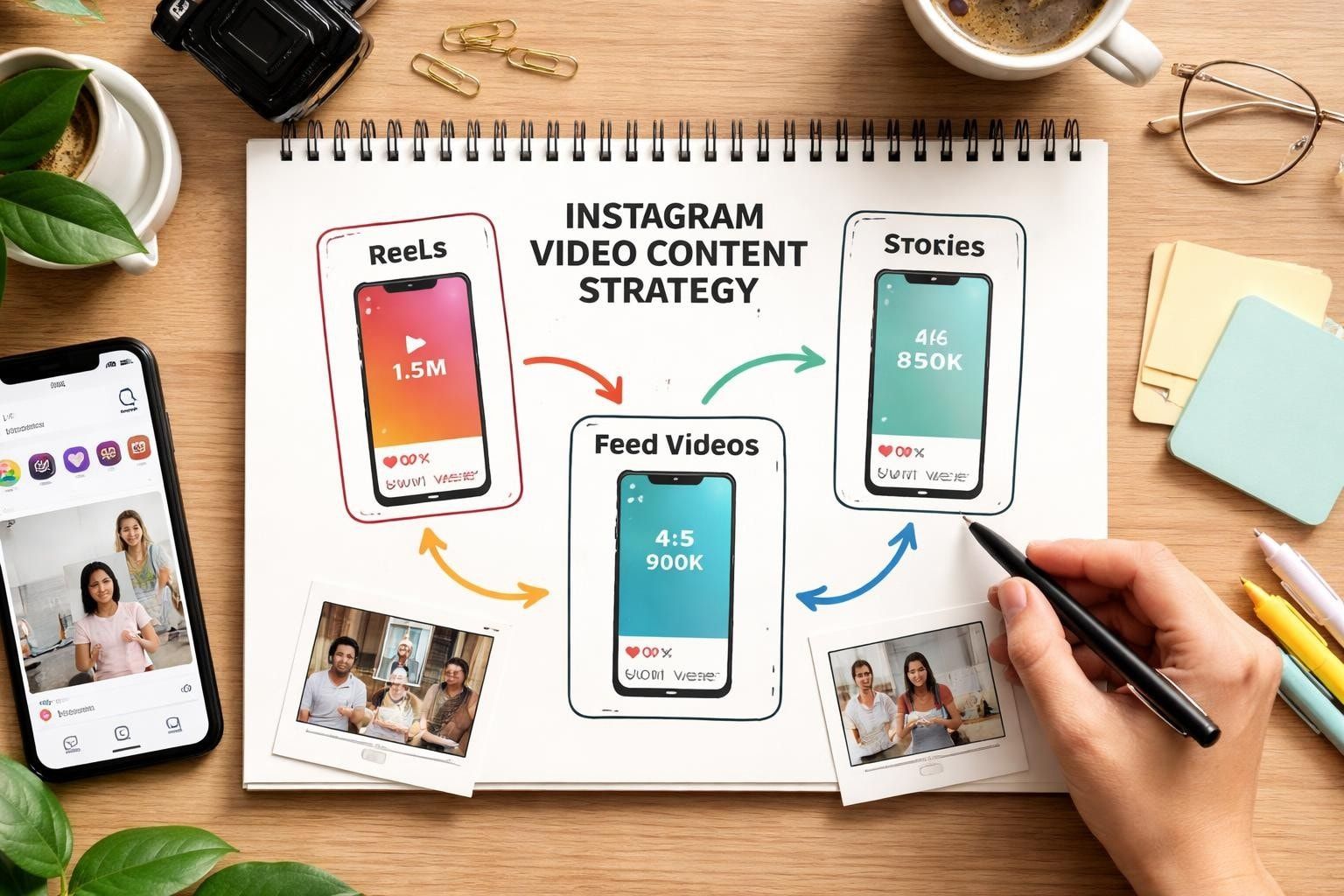

Businesses today face an unprecedented challenge: capturing attention in a landscape where consumers scroll past thousands of pieces of content daily. A motion graphics video company offers a powerful solution, transforming complex messages into visually compelling stories that stop thumbs mid-scroll and drive measurable results. As the motion graphics market continues its robust expansion in 2026, understanding how to select and work with the right production partner has become essential for brands seeking to stand out in crowded digital spaces.
Understanding Motion Graphics Video Production
Motion graphics represent the intersection of graphic design, animation, and strategic storytelling. Unlike traditional video production that relies primarily on live-action footage, motion graphics leverage animated elements, typography, shapes, and visual effects to communicate messages with clarity and impact.
The fundamental difference lies in the creation process. A motion graphics video company builds content from the ground up using digital tools, allowing for complete creative control over every visual element. This approach excels when explaining abstract concepts, visualizing data, or creating branded content that needs to maintain perfect consistency across multiple platforms.
Core Capabilities of Professional Studios
Professional motion graphics studios offer specialized expertise that extends far beyond basic animation skills. They combine technical proficiency with strategic thinking to deliver content that achieves specific business objectives.
Essential services include:
- Explainer video production for complex products or services
- Brand identity animation and logo reveals
- Data visualization and infographic animation
- Social media content optimized for platform-specific formats
- Product demonstration videos without physical filming
- Educational content that simplifies technical subjects
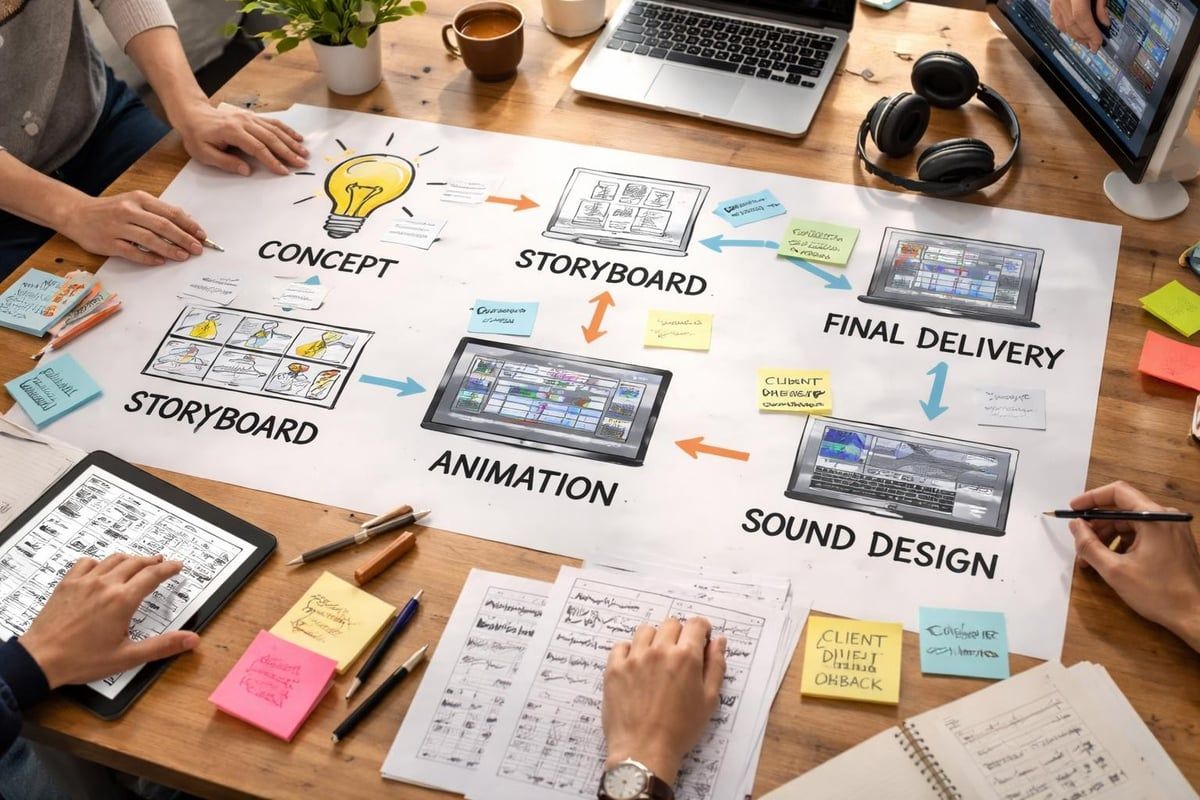
The production process typically spans several phases, each requiring distinct skill sets. Concept development demands creative strategists who understand brand positioning and audience psychology. Storyboarding requires visual thinkers who can translate abstract ideas into concrete visual sequences. Animation itself demands technical mastery of industry-standard software and an understanding of the 12 principles of animation that create convincing movement and maintain viewer engagement.
Evaluating Motion Graphics Video Company Capabilities
Selecting the right production partner requires careful assessment of both technical capabilities and strategic fit. The most polished portfolio means little if the company cannot deliver on time, stay within budget, or understand your specific business challenges.
Technical Expertise and Software Proficiency
A competent motion graphics video company maintains current expertise across industry-standard platforms including Adobe After Effects, Cinema 4D, and emerging tools that leverage artificial intelligence for enhanced efficiency. The 3D art trends influencing 2026 demonstrate how rapidly the technical landscape evolves, requiring studios to invest continuously in skill development.
Beyond software proficiency, look for teams that demonstrate mastery of design fundamentals. Color theory, typography, composition, and pacing all contribute to whether a video achieves its intended impact. Studios that follow best practices for creating effective motion graphics deliver work that not only looks impressive but also drives viewer action.
| Evaluation Criteria | What to Look For | Red Flags |
|---|---|---|
| Portfolio Quality | Diverse styles, clear messaging, smooth animation | Single style, choppy movement, unclear purpose |
| Industry Experience | Relevant sector knowledge, understanding of your audience | Generic work without strategic context |
| Process Transparency | Clear timelines, defined milestones, collaborative approach | Vague deliverables, poor communication |
| Technical Capabilities | Modern tools, efficiency with revisions, format flexibility | Outdated methods, inflexible workflows |
Strategic Thinking and Business Alignment
The best motion graphics video company functions as a strategic partner rather than simply an execution vendor. They should ask probing questions about your business objectives, target audience, and success metrics before proposing creative solutions.
This strategic approach manifests in several ways. First, the initial discovery process should explore not just what you want to say, but why it matters to your specific audience. Second, creative recommendations should connect directly to measurable outcomes, whether those are increased conversions, improved brand awareness, or enhanced customer understanding.
When working with video production services, expect partners who can articulate how specific creative decisions support business goals. For instance, a studio might recommend a particular animation style because it resonates with your demographic, or suggest a specific video length based on platform performance data.
Motion Graphics Applications Across Business Functions
Motion graphics serve diverse business needs across multiple departments and objectives. Understanding these applications helps organizations maximize their investment and identify opportunities where animated content delivers superior results compared to alternatives.
Marketing and Brand Building
Marketing teams leverage motion graphics to create memorable brand experiences that traditional advertising cannot match. Animated brand videos maintain perfect visual consistency while allowing for creative flexibility that live-action footage constrains.
Common marketing applications include:
- Product launch videos that generate excitement without requiring physical prototypes
- Social media content designed for platform-specific aspect ratios and attention spans
- Email marketing assets that increase click-through rates
- Website hero sections that communicate value propositions within seconds
- Trade show presentations that attract booth visitors from across crowded floors
The commercial video production landscape increasingly favors motion graphics for their ability to be quickly updated, easily localized, and seamlessly integrated across digital touchpoints.
Internal Communications and Training
Corporate communications represent another area where motion graphics excel. When explaining company policies, training procedures, or organizational changes, animated content reduces cognitive load and improves information retention compared to text-heavy alternatives.
Research on motion graphics in educational videos confirms that well-designed animation improves comprehension by directing attention to key information and providing visual metaphors for abstract concepts. This makes motion graphics particularly valuable for onboarding new employees, explaining complex processes, or communicating safety procedures.

Companies investing in corporate video production often discover that animated content generates higher completion rates for mandatory training modules compared to traditional video or document-based approaches.
Pricing Models and Budget Considerations
Understanding motion graphics pricing requires recognizing the factors that influence production costs and the different pricing structures studios employ. Unlike commoditized services with standardized pricing, motion graphics rates vary significantly based on complexity, timeline, and studio capabilities.
Factors Influencing Production Costs
Several variables determine the final cost of motion graphics projects. Animation complexity stands as the most significant factor, with simple 2D graphics requiring substantially less time than complex 3D environments or character animation.
Project duration affects pricing in two ways. First, longer videos simply require more animation work. Second, the intended use influences production standards, with broadcast-quality work demanding higher resolution and more rigorous quality control than social media content.
| Cost Factor | Low-End Impact | High-End Impact |
|---|---|---|
| Animation Complexity | Simple shapes, limited movement | 3D environments, character animation |
| Video Length | 30-60 seconds | 3-5 minutes |
| Revision Rounds | 2-3 rounds included | Extensive iteration |
| Timeline | 4-6 weeks | Rush delivery (1-2 weeks) |
| Audio Production | Stock music | Original composition, professional voiceover |
| Deliverable Formats | Single format | Multiple aspect ratios, languages |
Turnaround time significantly impacts cost, with rush projects requiring studios to reassign resources or work extended hours. Custom audio production, including original music composition and professional voice talent, adds additional expense but substantially enhances the final product's impact.
Choosing the Right Pricing Structure
Motion graphics video company pricing typically follows one of three models, each with distinct advantages depending on project scope and client needs.
Project-based pricing offers a fixed cost for defined deliverables, providing budget certainty and clear scope boundaries. This model works well for one-off projects with clearly defined requirements but can lead to disputes when scope expands beyond initial agreements.
Hourly rates provide flexibility for exploratory projects or ongoing relationships where requirements evolve over time. This approach requires trust and transparency, as clients pay for actual time invested rather than predetermined deliverables.
Retainer arrangements suit businesses requiring regular content production, offering predictable monthly costs and priority access to studio resources. This model typically delivers the best per-video value for organizations producing consistent volumes of motion graphics content.
When evaluating pricing for video production services, consider total cost of ownership beyond initial production fees. Include revision costs, licensing fees for music or stock assets, and potential localization expenses for multi-market campaigns.
Production Process and Timeline Expectations
A professional motion graphics video company follows a structured production process that balances creative exploration with efficient execution. Understanding this workflow helps clients prepare appropriate inputs and set realistic timeline expectations.
Pre-Production Planning
Every successful motion graphics project begins with thorough planning that establishes creative direction and technical requirements. The discovery phase explores business objectives, target audience characteristics, key messages, and success metrics. This foundation ensures creative decisions support strategic goals rather than simply showcasing animation capabilities.
Script development translates business requirements into compelling narrative structure. For motion graphics specifically, scripts must consider how visual elements will carry meaning, allowing for shorter, punchier copy than traditional video requires. The best scripts leave room for visual storytelling while providing clear direction for voiceover or on-screen text.
Storyboarding transforms scripts into visual blueprints, establishing composition, pacing, and the relationship between visual and audio elements. Detailed storyboards minimize costly revisions during animation by securing stakeholder alignment before production begins. Following motion graphics pre-recording tips ensures all necessary elements are properly prepared before animation work commences.
Production and Post-Production
The animation phase represents where motion graphics video company expertise becomes most visible. Animators create visual assets, apply movement principles, and refine timing to achieve the desired emotional impact and message clarity.
Typical production milestones include:
- Style frame creation establishing visual direction
- Rough animation showing timing and movement
- Detailed animation with polished graphics and effects
- Sound design and music integration
- Color grading and final refinement
- Rendering and delivery in specified formats
Review cycles occur at key milestones, allowing for course correction before too much work proceeds in an incorrect direction. Professional studios build structured feedback processes that gather stakeholder input efficiently while maintaining creative momentum.
Post-production encompasses sound mixing, color correction, and format optimization. A video that looks perfect on a desktop monitor might appear too dark on mobile devices or lose critical details when compressed for social media. Experienced studios anticipate these challenges and deliver assets optimized for their intended distribution channels.
Industry Trends Shaping Motion Graphics in 2026
The motion graphics landscape evolves rapidly as new technologies emerge and audience expectations shift. Understanding current trends helps businesses make informed decisions about style, distribution, and production approaches.
Technological Advancements
Artificial intelligence increasingly influences motion graphics production, automating repetitive tasks and enabling new creative possibilities. AI-driven tools assist with rotoscoping, color matching, and even generating initial animation based on text prompts. These capabilities allow motion graphics video company teams to focus more energy on creative strategy and less on technical execution.
Real-time rendering technologies borrowed from the gaming industry enable faster iteration and more complex visuals within traditional budgets. What once required overnight rendering can now be previewed instantly, allowing for more experimental approaches and client collaboration during the animation process itself.
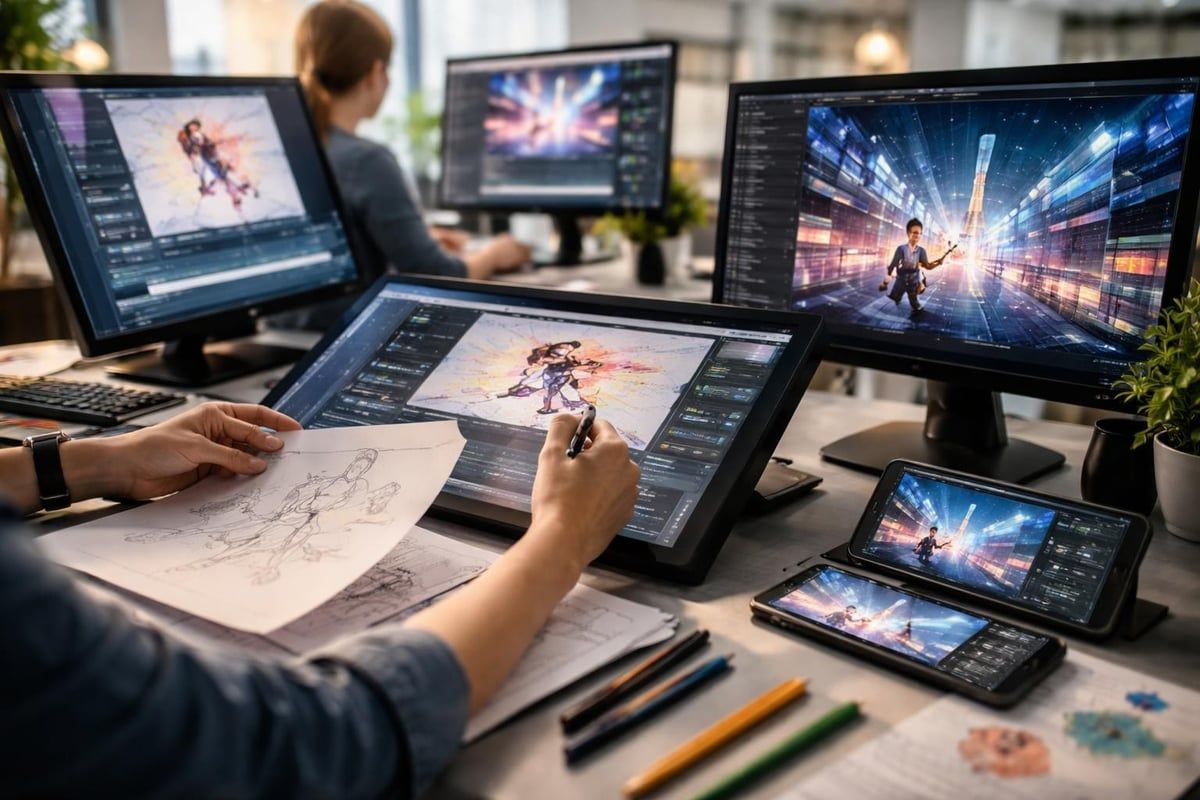
The integration of 2D and 3D techniques creates hybrid styles that combine the accessibility of flat design with the depth and realism of dimensional animation. This trend addresses audience fatigue with purely flat design while avoiding the uncanny valley challenges of photorealistic 3D animation.
Market Growth and Opportunities
The motion graphics market demonstrates substantial expansion driven by increasing digital content consumption and brand recognition of video's effectiveness. According to industry analysis, robust growth continues as businesses across sectors recognize motion graphics' ability to communicate complex information efficiently and memorably.
This growth creates opportunities for businesses to differentiate through high-quality animated content while competition remains relatively fragmented. Organizations investing in consistent, professionally produced motion graphics build recognizable visual identities that compound in value over time.
Platforms continue evolving their algorithms to favor video content, particularly short-form animated pieces optimized for mobile consumption. Social media video production increasingly centers on motion graphics designed specifically for platform requirements, from Instagram Reels to LinkedIn native video.
Selection Criteria for Your Motion Graphics Partner
Choosing a motion graphics video company requires evaluating factors beyond portfolio quality and pricing. The right partner brings creative excellence, operational reliability, and strategic thinking that enhances your brand rather than simply executing your vision.
Portfolio Assessment
Examine portfolios with a critical eye toward relevance and results rather than pure aesthetics. Beautiful work that fails to achieve business objectives provides little value. Look for case studies that demonstrate measurable outcomes, whether increased engagement, improved comprehension, or direct conversion impact.
Diversity within a portfolio signals adaptability and creative range, but also assess whether the studio has relevant experience in your industry or with your target audience. A motion graphics video company specializing in technology explainers brings different strengths than one focused on consumer brand storytelling.
Pay attention to consistency of quality across portfolio pieces. A handful of exceptional examples mixed with mediocre work suggests inconsistent creative direction or resource allocation. The best studios maintain high standards across all deliverables regardless of budget or timeline.
Communication and Collaboration Style
The production process requires frequent communication and collaborative decision-making. Assess whether a studio's communication style aligns with your preferences and organizational culture during initial conversations.
Responsive communication during the sales process typically indicates similar responsiveness during production. Studios that take days to answer simple questions before securing your business rarely improve once the contract is signed.
Request references from clients with similar project types or organizational structures. Ask specifically about how the studio handles disagreements, manages scope changes, and responds to feedback. These operational realities matter as much as creative capabilities when determining partnership success.
Maximizing ROI From Motion Graphics Investment
Investing in professional motion graphics delivers returns that extend far beyond a single campaign or initiative. Strategic approaches to production, distribution, and measurement ensure maximum value from your investment.
Content Longevity and Repurposing
Well-designed motion graphics maintain relevance longer than time-sensitive content tied to specific events or promotions. Evergreen explainer videos continue generating value years after initial production, making them among the most cost-effective content investments.
Plan for repurposing during initial production by creating modular content that can be recombined for different purposes. A single comprehensive animation can be segmented into social media snippets, email assets, and presentation elements, multiplying effective impressions without proportional cost increases.
Request source files and usage rights that allow for future updates or localization. The ability to refresh dates, statistics, or branding elements extends content lifespan and protects your investment as business needs evolve.
Distribution Strategy
Even exceptional motion graphics deliver limited ROI without strategic distribution. Develop distribution plans before production begins, ensuring content specifications align with primary distribution channels.
Effective distribution approaches include:
- Platform-specific optimization for YouTube, LinkedIn, Instagram, and Facebook
- Integration into email marketing campaigns with thumbnail optimization
- Website placement on high-traffic landing pages
- Sales enablement tools for team presentations
- Paid promotion to targeted audience segments
Track performance across channels to identify where your motion graphics generate greatest impact. This data informs future production decisions and distribution investment allocation.
Measurement and Optimization
Establish clear success metrics aligned with business objectives before production begins. Vanity metrics like view counts provide limited insight compared to engagement rates, completion percentages, and conversion actions.
Working with a creative video agency that understands performance measurement ensures production decisions consider not just aesthetic appeal but behavioral response. Elements like pacing, call-to-action placement, and visual hierarchy all influence whether viewers take desired actions after watching.
Test different versions when possible, using A/B testing to optimize thumbnails, video length, or opening hooks. Small refinements based on actual viewer behavior often generate substantial performance improvements without requiring complete reproduction.
Motion graphics video production represents a strategic investment in communicating complex ideas with clarity and impact that drives measurable business results. Success requires partnering with studios that combine technical excellence, strategic thinking, and operational reliability to deliver content that achieves specific objectives within realistic budgets and timelines. Whether you need explainer videos, brand stories, or social media content, Viva Media brings Toronto-based expertise in creating high-performance motion graphics that transform viewer attention into tangible business outcomes.