
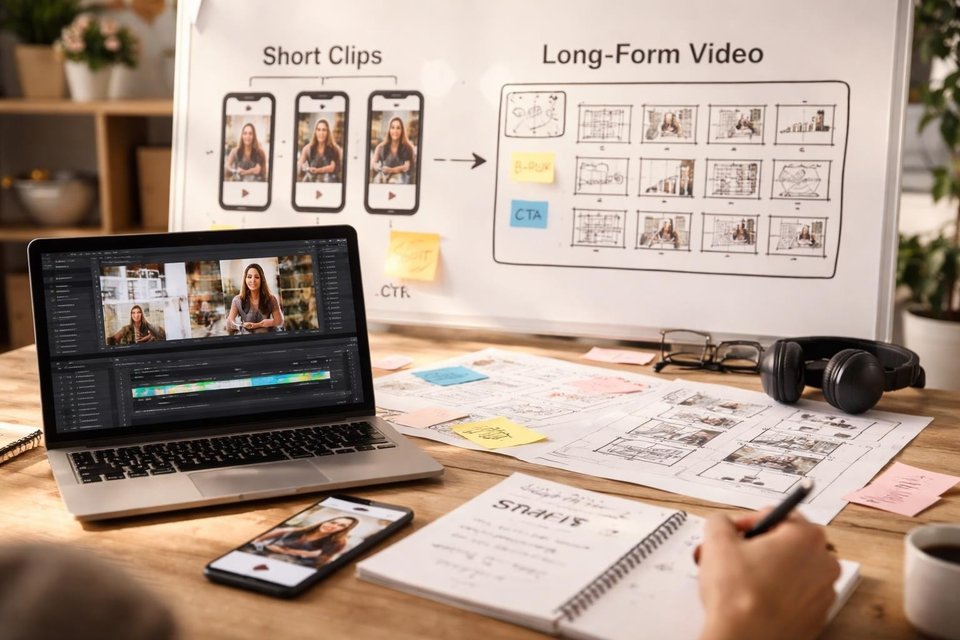
The digital landscape has witnessed an explosion of short-form content across platforms like TikTok, Instagram Reels, and YouTube Shorts. However, businesses increasingly recognize that converting short video to long video formats creates strategic advantages for audience engagement, SEO performance, and comprehensive storytelling. This transformation isn't simply about extending runtime-it requires strategic planning, content architecture, and production expertise to maintain viewer attention while delivering measurable business outcomes.
Understanding the Strategic Value of Video Length Diversification
Modern content strategies require flexibility across multiple video formats. While short-form content has gained tremendous popularity due to decreasing attention spans, long-form videos serve distinct business objectives that brief clips cannot accomplish.
Why Businesses Need Both Short and Long-Form Content
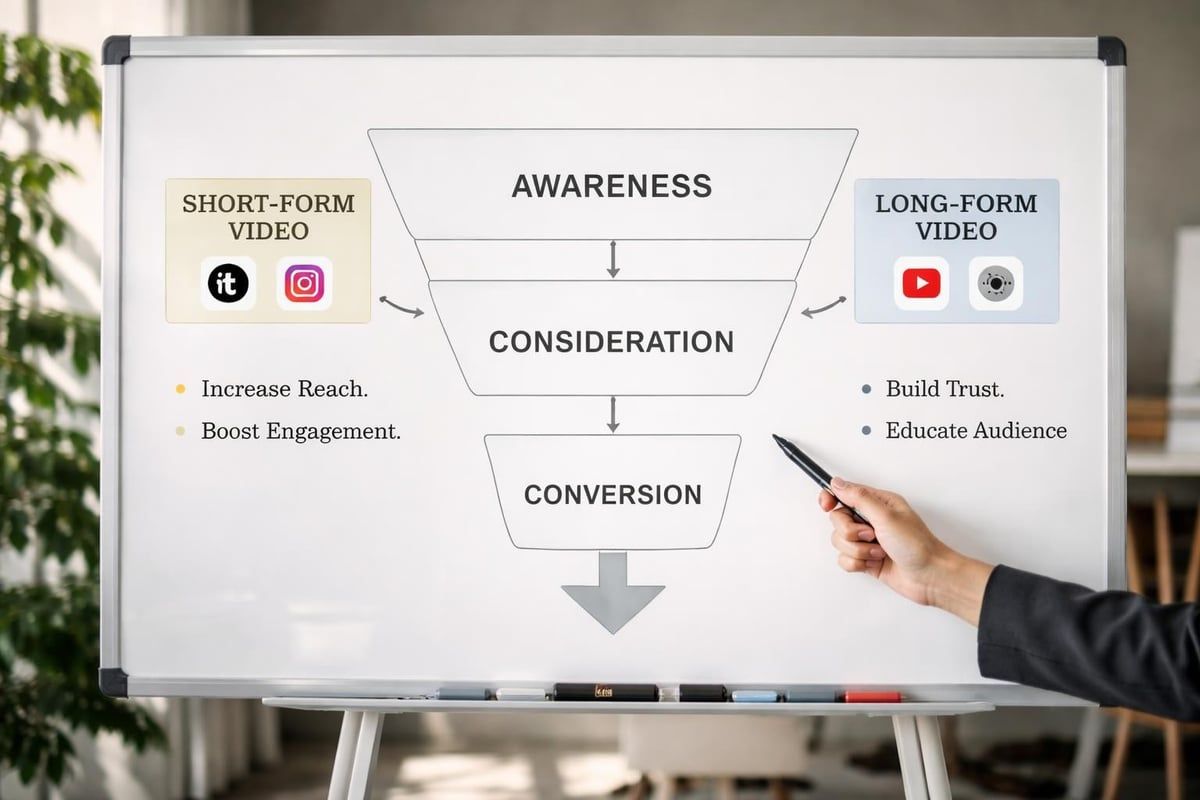
The most successful brands maintain a balanced video ecosystem. Short-form videos excel at capturing immediate attention and driving social media virality, while extended content builds authority, educates audiences, and nurtures customer relationships through detailed exploration.
Strategic advantages of maintaining both formats:
- Algorithmic diversity: Different platforms prioritize different lengths, maximizing your reach across channels
- Audience segmentation: Various customer segments prefer different consumption patterns
- Conversion funnel optimization: Short videos attract awareness; long videos drive consideration and conversion
- Content ROI multiplication: Repurposing existing assets reduces production costs while expanding distribution
Research demonstrates that incorporating short-form videos into content strategies addresses changing consumption habits, but businesses that exclusively focus on brief content miss opportunities for deeper engagement. The Greater Toronto Area market particularly values comprehensive video content that demonstrates expertise and builds trust.
Planning Your Short Video to Long Video Transformation
Successful conversion from short video to long video begins with strategic planning rather than simple concatenation. Professional production teams analyze existing content libraries to identify expansion opportunities that align with business goals.
Content Audit and Selection Criteria
Not every short video merits extension. The selection process requires evaluating performance metrics, audience engagement patterns, and topic depth potential.
| Selection Factor | Evaluation Criteria | Priority Level |
|---|---|---|
| Engagement Rate | Comments, shares, saves above benchmark | High |
| Topic Complexity | Subject allows 5+ minutes of valuable content | High |
| Audience Questions | Viewers requesting more information | Medium |
| Business Impact | Aligns with conversion objectives | High |
| Production Assets | Additional footage or resources available | Medium |
Begin by identifying your best-performing short videos across social platforms. Videos generating significant engagement, questions, or shares signal audience appetite for deeper exploration. Corporate video production projects often benefit from this approach, transforming testimonial clips into comprehensive case studies.
Developing Extended Content Architecture
Converting short video to long video requires architectural planning. The extended format needs clear structure, pacing variation, and strategic information delivery to maintain viewer retention throughout increased runtime.
Essential structural elements for extended videos:
- Hook retention: Incorporate the original short video's compelling opening
- Promise articulation: Clearly state what viewers will learn or gain
- Chapter segmentation: Break extended content into digestible sections
- Visual variety: Introduce B-roll, graphics, and format changes every 30-60 seconds
- Strategic repetition: Reinforce key messages without redundancy
- Actionable takeaways: Provide practical applications throughout
The transition from brief social clips to educational or commercial video production formats demands understanding how information density affects viewer retention. Professional producers balance comprehensive coverage with engagement maintenance through dynamic pacing and visual storytelling techniques.
Production Techniques for Quality Video Extension
Transforming short video to long video content requires specific production methodologies that differ from creating standalone long-form pieces or simple short clips.
Leveraging Existing Assets Strategically
The most cost-effective approach utilizes footage already captured during original production. Many businesses discover that initial shooting sessions generate far more material than used in short edits.
Asset inventory checklist:
- Unedited interview footage with extended responses
- Alternative camera angles from multi-camera setups
- B-roll sequences trimmed from short versions
- Behind-the-scenes content showing process or preparation
- Screen recordings, product demonstrations, or detailed walkthroughs
- Related content from previous projects addressing similar topics
Professional video production companies typically capture extensive footage anticipating multiple deliverables. When planning shoots with long-form expansion in mind, directors allocate time for comprehensive coverage beyond immediate short-form needs.
Filming Supplementary Content
When existing assets prove insufficient, strategic supplementary filming extends your short video to long video efficiently. Rather than complete re-shoots, targeted additions bridge gaps and enhance narrative flow.

Supplementary content categories:
- Expert interviews: Extended conversations with subject matter authorities
- Detailed demonstrations: Step-by-step processes referenced but not shown in short versions
- Case study deep-dives: Customer success stories with metrics and outcomes
- Comparative analysis: Side-by-side evaluations or before/after sequences
- Environmental context: Location footage establishing credibility and authenticity
When working with creative video agencies, communicate your long-form intentions during initial planning. This foresight enables efficient shooting schedules that capture both immediate short-form deliverables and future expansion material without duplicating production costs.
Editorial Approaches for Effective Content Extension
The editing phase determines whether your short video to long video transformation feels intentional or padded. Professional editors employ specific techniques that create cohesive extended narratives.
Pacing and Rhythm Management
Extended videos require deliberate pacing variation to maintain engagement across increased runtime. Unlike short-form content's constant intensity, long-form videos strategically alternate between high-energy sequences and contemplative moments.
| Runtime Section | Pacing Strategy | Viewer Experience |
|---|---|---|
| 0:00-0:30 | High intensity hook | Immediate engagement |
| 0:30-2:00 | Moderate pace with structure preview | Orientation and commitment |
| 2:00-7:00 | Varied rhythm with chapter transitions | Information absorption |
| 7:00-9:00 | Increased energy for key messages | Retention and memorability |
| 9:00-10:00+ | Strong conclusion with clear CTA | Action motivation |
The strategic video length selection depends on platform, audience, and objectives. Understanding these factors ensures your extended content meets viewer expectations while achieving business goals.
Narrative Structure and Information Layering
Professional editors structure information progressively, beginning with foundational concepts before advancing to complex details. This layered approach differentiates educational long-form content from repetitive extended clips.
Effective information architecture:
- Foundation layer: Core concepts accessible to all viewers
- Development layer: Practical applications with specific examples
- Advanced layer: Nuanced insights for experienced audiences
- Integration layer: Connections between concepts building comprehensive understanding
When repurposing content, maintain topic coherence throughout extended runtime. Each segment should clearly connect to overarching themes while contributing unique value. This intentional structure transforms short video to long video content that justifies increased viewer time investment.
Platform-Specific Optimization for Extended Content
Different platforms reward different video lengths, requiring strategic adaptation when converting short video to long video formats for distribution.
YouTube Long-Form Strategies
YouTube's algorithm increasingly favors watch time, making extended content particularly valuable. Videos exceeding ten minutes enable mid-roll advertising, creating additional revenue opportunities while serving educational purposes.
YouTube optimization tactics:
- Chapter markers enabling viewers to navigate extended content
- Keyword-rich descriptions referencing both short and long versions
- Cards and end screens linking related content within your ecosystem
- Thumbnail designs communicating comprehensive value propositions
- Playlists organizing related short and long videos thematically
The platform's search functionality makes it ideal for educational content addressing specific business challenges. Benefits of video production services often materialize through YouTube's discoverability, where comprehensive content ranks for competitive search terms.
LinkedIn and Facebook Extended Video
Professional networks like LinkedIn demonstrate growing appetite for substantive video content. The popularity of online short-form content is moving beyond social media, with platforms accommodating longer formats as audiences seek deeper insights.
LinkedIn native video performs exceptionally well when addressing industry-specific challenges, thought leadership topics, or detailed case studies. Videos ranging from three to ten minutes generate strong engagement among professional audiences seeking actionable intelligence rather than entertainment.
Facebook accommodates various lengths, but engagement patterns favor videos delivering value quickly while providing depth for interested viewers. Auto-play environments require compelling openings from short versions while offering extended viewing for engaged audiences.
Repurposing Strategies That Multiply Content Value
Strategic repurposing transforms short video to long video content while simultaneously generating derivative assets maximizing production ROI.
The Content Pyramid Methodology
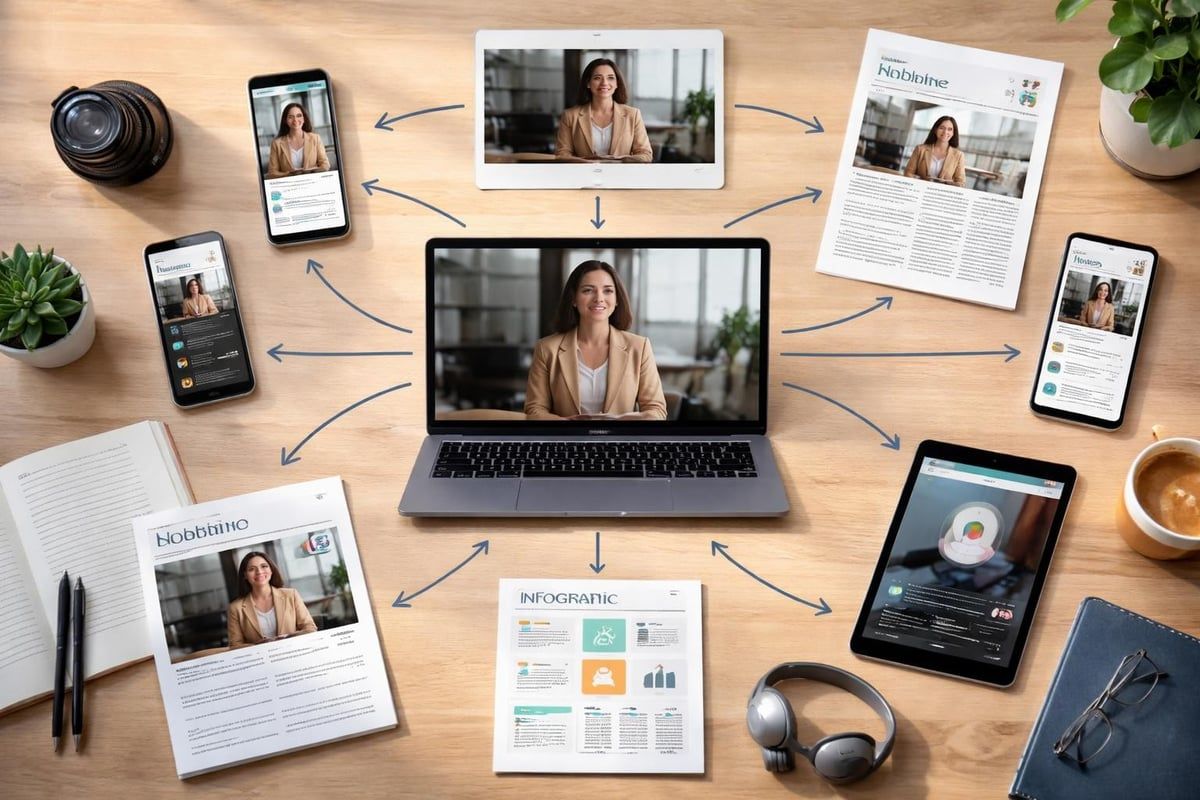
Professional content strategies employ pyramid structures where comprehensive long-form videos anchor derivative short-form clips, social media snippets, blog content, and email marketing assets.
Content pyramid from long-form foundation:
- Apex: Comprehensive 10-15 minute educational or case study video
- Upper tier: 3-5 minute platform-specific versions highlighting key sections
- Middle tier: 60-90 second social media clips featuring specific insights
- Base tier: 15-30 second teaser clips, quote graphics, and audiograms
- Supporting content: Blog transcriptions, email sequences, and presentation slides
This inverted approach-creating comprehensive content first-ensures depth and substance throughout derivative pieces. While counterintuitive to social-first strategies, it guarantees short clips genuinely represent valuable comprehensive content rather than standalone fragments.
Cross-Platform Distribution Planning
Effective short video to long video strategies include distribution planning ensuring each format reaches appropriate audiences through optimal channels.
| Content Format | Primary Platform | Secondary Platforms | Audience Type |
|---|---|---|---|
| Comprehensive (10-15 min) | YouTube, Website | LinkedIn (native) | Research-phase prospects |
| Educational (5-8 min) | YouTube, Facebook | LinkedIn, Email | Consideration-stage leads |
| Highlights (2-3 min) | LinkedIn, Facebook | YouTube Community | Professional networks |
| Social Clips (60-90 sec) | Instagram, TikTok | Twitter, LinkedIn | Awareness audiences |
| Micro-content (15-30 sec) | Instagram Stories, Reels | TikTok, YouTube Shorts | Broad reach |
Distribution timing also affects performance. Publishing comprehensive long-form content first establishes authority and provides conversion destinations for short-form traffic. Subsequent release of derivative clips drives audiences toward comprehensive resources where deeper engagement occurs.
Measuring Success Across Video Formats
Converting short video to long video content requires performance measurement across both formats to optimize ongoing strategy.
Key Performance Indicators by Format
Different video lengths serve distinct objectives requiring format-appropriate metrics rather than universal KPIs.
Short-form video metrics:
- Reach and impressions indicating awareness generation
- Engagement rate (likes, comments, shares) demonstrating resonance
- Profile visits and follows showing audience development
- Click-through rates to long-form content or landing pages
Long-form video metrics:
- Average view duration revealing content quality and relevance
- Audience retention graphs identifying strong and weak segments
- Conversion actions including form submissions and purchases
- SEO performance for target keywords and search visibility
Professional video production services implement comprehensive analytics tracking both immediate engagement and long-term business impact. This data-driven approach identifies which topics merit extension and which formats drive measurable ROI.
A/B Testing and Iteration
Systematic testing reveals optimal approaches for your specific audience and business objectives. Testing variables include content structure, visual style, pacing, information density, and call-to-action placement.
Testing framework elements:
- Hypothesis formation: Specific, measurable predictions about performance factors
- Variable isolation: Testing one element while controlling others
- Sample size consideration: Ensuring statistical significance before conclusions
- Performance documentation: Recording results enabling pattern identification
- Implementation iteration: Applying learnings to subsequent productions
The insights from choosing the right video length strategy emerge through testing rather than assumptions. What works for one business or audience may underperform for another, making empirical validation essential.
Technical Considerations for Multi-Format Production
Professional short video to long video production requires technical planning ensuring quality consistency across formats.
Resolution and Aspect Ratio Planning
Modern multi-platform distribution demands shooting in formats accommodating both horizontal long-form and vertical short-form derivatives without quality compromise.
Technical specifications by platform:
- YouTube long-form: 16:9 aspect ratio, minimum 1080p resolution
- LinkedIn video: 16:9 or 1:1, 1080p recommended
- Instagram Reels: 9:16 vertical, 1080x1920 pixels
- TikTok: 9:16 vertical, 1080x1920 pixels
- Facebook: 16:9, 1:1, or 9:16 depending on placement
Professional productions shoot in 4K resolution enabling flexible cropping for various aspect ratios without quality degradation. When budget permits, multi-camera setups include both horizontal and vertical-oriented cameras capturing simultaneous coverage.
Audio Quality and Accessibility
Extended video content demands superior audio quality maintaining clarity throughout increased runtime. Poor audio causes viewer abandonment faster than visual imperfections, particularly in educational or business contexts.
Audio production standards:
- Professional lavalier or shotgun microphones for all speaking segments
- Acoustic treatment or location scouting minimizing ambient noise
- Consistent audio levels throughout extended runtime
- Background music mixed 20-25dB below dialogue
- Captions and transcripts improving accessibility and SEO
Accessibility features like captions benefit both user experience and search optimization. Comprehensive video production equipment guides detail technical requirements for professional multi-format production.
Industry Applications and Use Cases
Different industries leverage short video to long video transformation for sector-specific objectives requiring tailored approaches.
Professional Services and B2B Applications
Professional service firms utilize extended video content demonstrating expertise, explaining complex solutions, and building client confidence through comprehensive education.
Effective B2B applications:
- Case study videos extending client testimonial clips with detailed project breakdowns
- Thought leadership content transforming social media observations into comprehensive industry analysis
- Educational series converting product feature highlights into implementation training
- Behind-the-scenes content showing process, methodology, and team expertise
These applications align with longer B2B sales cycles where prospects invest significant time researching solutions before engagement. The benefits of diversifying content formats include meeting prospects wherever they are in research processes with appropriate content depth.
Retail and E-commerce Strategies
Retail businesses transform product highlight clips into comprehensive buying guides, styling tutorials, or comparative reviews building consumer confidence.
Product demonstration videos particularly benefit from extension. Brief social clips showcase results while extended versions detail features, applications, and use cases. This approach serves both impulse buyers attracted to quick clips and research-oriented shoppers seeking comprehensive information.
Nonprofit and Educational Organizations
Mission-driven organizations leverage short video to long video strategies telling complete stories that brief clips can only introduce. Impact videos transform emotional moments into comprehensive narratives including context, methodology, and measurable outcomes.
Educational content benefits significantly from format flexibility. Effective video marketing strategies for nonprofits often include both viral-optimized short clips and substantive long-form content educating supporters and stakeholders about complex issues.
Budget Optimization for Multi-Format Production
Strategic planning maximizes production budgets by capturing assets supporting both immediate short-form deliverables and future long-form extensions.
Production Efficiency Techniques
Experienced production teams structure shooting schedules capturing comprehensive coverage during single sessions rather than multiple costly productions.
Efficiency maximization strategies:
- Extended interview protocols: Allocating 45-60 minutes per subject rather than 15-20 minutes
- Comprehensive B-roll capture: Shooting extensive supplementary footage during location access
- Multiple setup variations: Capturing different framings, angles, and lighting setups simultaneously
- Modular segment recording: Structuring content in self-contained segments enabling flexible assembly
- Asset library development: Organizing footage for future repurposing across projects
These approaches transform short video to long video production from separate projects into integrated content ecosystems. Initial investments in comprehensive capture reduce long-term production costs while expanding content output.
When to Invest in Long-Form Production
Not every business objective requires extended video content. Strategic investment decisions consider audience preferences, platform priorities, and conversion funnel positioning.
Understanding when to use long-form videos depends on whether your objectives include detailed education, complex solution explanation, or authority building. Businesses selling high-consideration products or services benefit more from extended content than impulse-purchase brands.
Future-Proofing Your Video Content Strategy
The digital landscape continues evolving, requiring adaptable approaches balancing current trends with sustainable long-term strategies.
Platform Evolution and Algorithm Changes
Social platforms regularly adjust algorithms affecting video length performance. The evolution of video content strategy demonstrates shifting platform priorities requiring flexible production approaches.
Building owned distribution channels like email lists and website traffic reduces platform dependency. While optimizing for current algorithm preferences, sustainable strategies maintain control over audience relationships regardless of platform changes.
Emerging Technologies and Production Methods
Artificial intelligence, automated editing tools, and improved mobile production capabilities continue democratizing video creation. However, strategic thinking, storytelling expertise, and audience understanding remain irreplaceable human contributions determining content effectiveness.
Technology integration opportunities:
- AI-assisted editing identifying optimal clips for short-form extraction
- Automated caption generation improving accessibility and reducing production time
- Template-based graphics systems maintaining visual consistency across formats
- Analytics platforms correlating video performance with business outcomes
These technologies augment rather than replace professional production expertise. The strategic transformation of short video to long video content requires understanding audience psychology, narrative structure, and business objectives that technology supports but cannot determine independently.
Mastering the transformation from short video to long video content creates strategic advantages across audience engagement, platform optimization, and measurable business results. Whether extending viral social clips into comprehensive resources or architecting content pyramids from foundational long-form videos, success requires intentional planning, professional production expertise, and continuous performance optimization. Viva Media specializes in engineering high-performance video content across all formats, helping Toronto-area businesses develop integrated video strategies that deliver measurable ROI. Contact our team to discuss how strategic multi-format video production can accelerate your business growth.