

The landscape of creative agency video production has evolved dramatically over the past few years, transforming from a luxury marketing expenditure into a critical business investment that drives measurable returns. Modern brands face unprecedented competition for audience attention, and video content has emerged as the most powerful medium for cutting through the noise. When executed strategically, creative agency video production delivers compelling narratives that resonate with target audiences while advancing specific business objectives. The difference between video content that merely exists and video content that converts lies in the strategic approach, production quality, and deep understanding of audience psychology that professional creative agencies bring to every project.
The Strategic Foundation of Creative Agency Video Production
Every successful video project begins long before cameras start rolling. The strategic planning phase separates mediocre content from campaigns that deliver exceptional returns on investment.
Strategic video production encompasses several critical components:
- Comprehensive audience research and persona development
- Clear objective definition with measurable success metrics
- Competitive landscape analysis and differentiation strategy
- Message architecture that aligns with brand positioning
- Distribution planning across owned, earned, and paid channels
The foundation of effective creative agency video production rests on understanding that video is not just a creative exercise but a business tool designed to achieve specific outcomes. Whether the goal is increasing brand awareness, driving lead generation, or improving customer retention, the creative approach must align with these business imperatives from the initial concept stage.

Modern creative agencies leverage data-driven insights to inform creative decisions. This approach combines the art of storytelling with the science of audience behavior analysis. Research from AI-powered advertising campaigns demonstrates how technology now enables unprecedented precision in targeting and message optimization.
Defining Success Metrics Before Production
Establishing clear key performance indicators before production begins ensures that every creative decision supports measurable business outcomes. Different video objectives require different measurement frameworks.
| Video Objective | Primary Metrics | Secondary Metrics |
|---|---|---|
| Brand Awareness | Reach, Impressions, View Rate | Share Rate, Brand Lift Studies |
| Lead Generation | Conversion Rate, Cost Per Lead | Click-Through Rate, Form Completions |
| Customer Education | Watch Time, Completion Rate | Support Ticket Reduction, Product Adoption |
| Sales Enablement | Sales Cycle Length, Win Rate | Content Engagement, Follow-up Meetings |
Understanding video production ROI blind spots helps businesses identify which metrics truly matter for their specific goals. Many organizations focus exclusively on vanity metrics like view counts while overlooking more meaningful indicators of business impact.
Production Excellence in Creative Agency Work
The execution phase of creative agency video production demands technical expertise, creative vision, and meticulous attention to detail. Professional production separates amateur content from polished, high-impact videos that reflect positively on brand reputation.
Quality production encompasses multiple disciplines working in concert. Cinematography, lighting, sound design, art direction, and post-production all contribute to the final product's effectiveness. Each element must be executed at a professional standard to maintain audience engagement and credibility.
Pre-Production Planning and Coordination
Thorough pre-production planning prevents costly mistakes and ensures efficient shoot days. This phase includes location scouting, talent casting, shot list development, and logistics coordination.
Essential pre-production deliverables include:
- Detailed creative brief with visual references
- Comprehensive shooting script or storyboard
- Production schedule with contingency planning
- Technical specifications and equipment requirements
- Talent agreements and location permits
- Shot list organized by location and setup
Following established video production best practices during pre-production minimizes surprises during filming and post-production. Professional creative agencies invest significant time in this phase because proper planning directly correlates with production efficiency and final product quality.
The coordination required for commercial video production often involves multiple stakeholders, locations, and creative elements. Managing these complex moving parts requires experience, systematic processes, and clear communication protocols.
Production Day Excellence
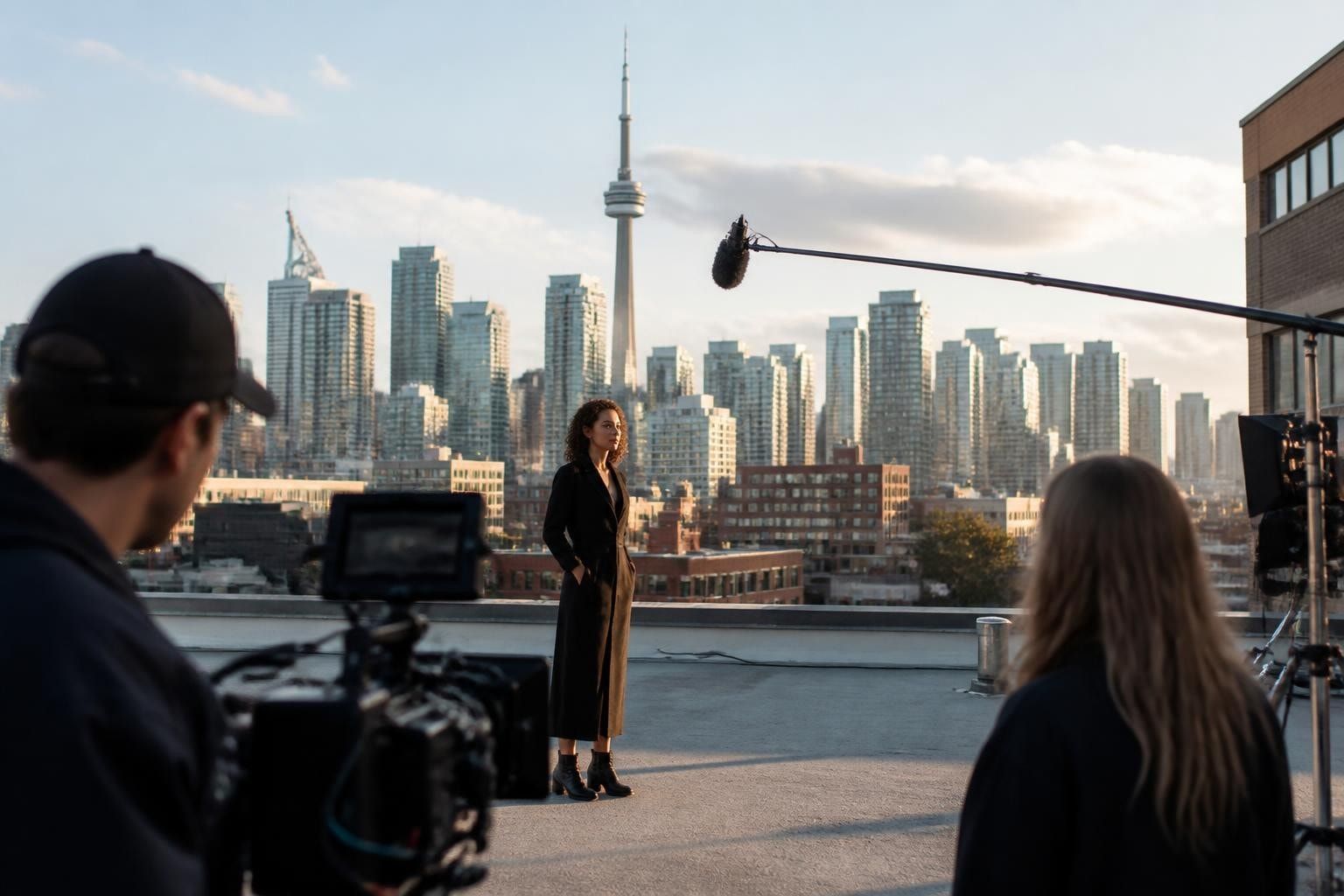
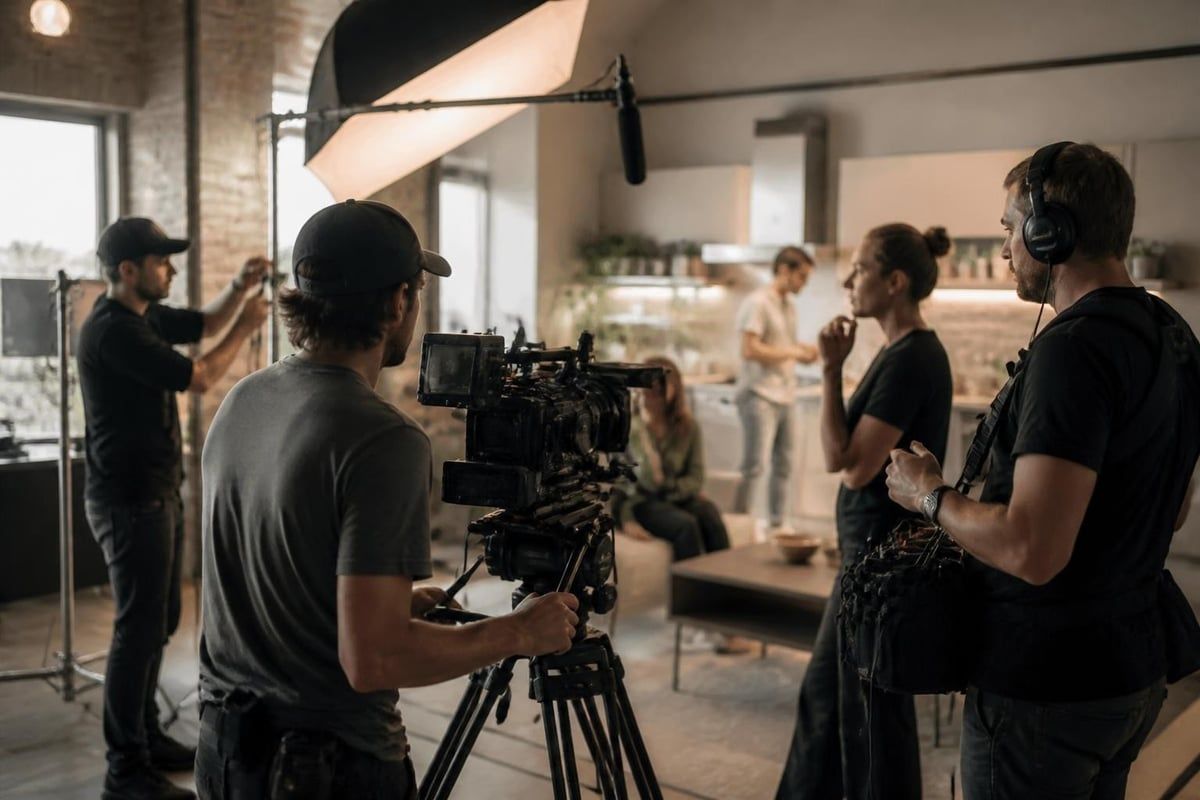
On-set execution requires both technical proficiency and creative flexibility. Professional crews maintain high standards while adapting to unexpected challenges that inevitably arise during production.
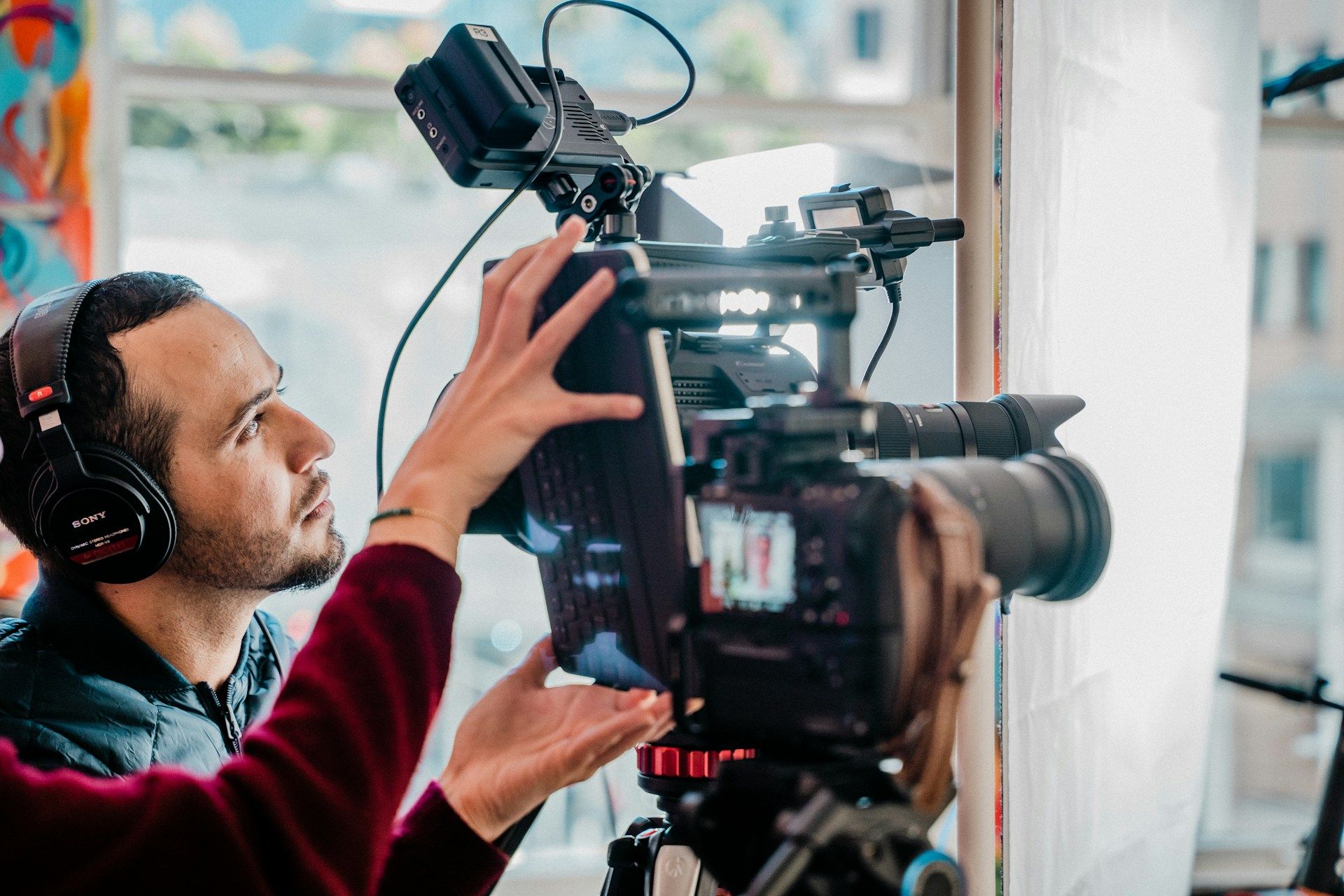
The production environment influences creative outcomes significantly. Professional lighting transforms ordinary spaces into visually compelling environments. Sound quality often separates professional content from amateur productions, as poor audio immediately diminishes perceived production value regardless of visual quality.
Directors of photography bring artistic vision to life through camera movement, framing, and composition choices. These creative decisions communicate subtext and emotion that reinforce the verbal message. The visual language of video communicates meaning beyond the spoken words, creating layered experiences that resonate with audiences on multiple levels.
Post-Production Craft and Storytelling
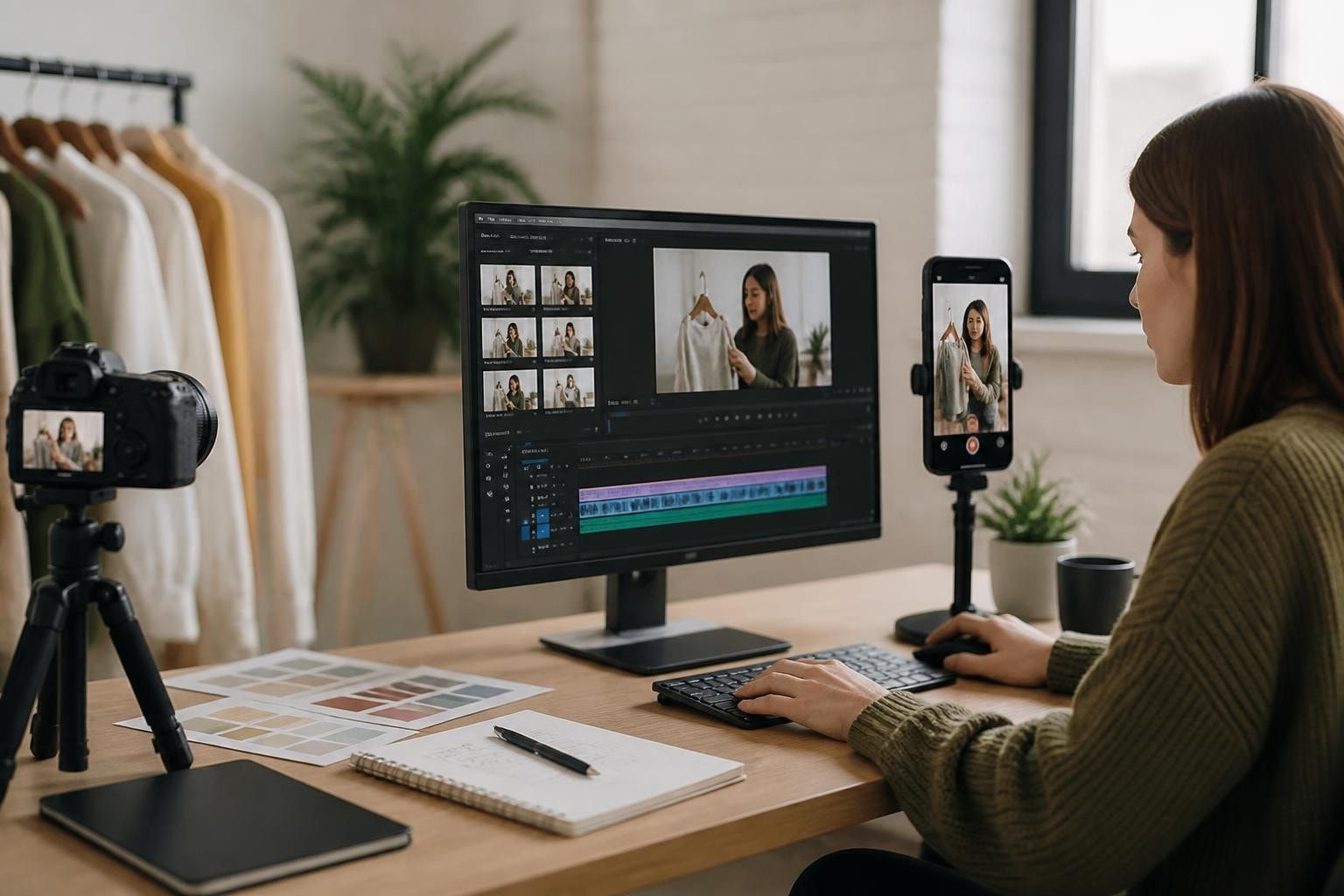
The editing suite is where raw footage transforms into compelling narratives. Post-production represents approximately 60-70% of the total production timeline for most projects, reflecting its critical importance in the creative agency video production process.
Editors shape story rhythm, pacing, and emotional impact through countless micro-decisions about timing, shot selection, and transition choices. Color grading establishes mood and visual consistency while reinforcing brand identity through carefully chosen color palettes.
Advanced Post-Production Techniques
Modern post-production capabilities extend far beyond basic cutting and trimming. Visual effects, motion graphics, and sophisticated audio mixing create polished final products that meet contemporary audience expectations.
Key post-production elements include:
- Multi-layer color correction and grading
- Motion graphics and lower thirds design
- Sound mixing with music, dialogue, and effects
- Visual effects and compositing when required
- Format optimization for various distribution platforms
Research into AI-assisted video production frameworks reveals how technology now augments human creativity during post-production. These tools accelerate certain technical processes while preserving the artistic judgment that separates exceptional work from merely competent execution.
The iterative refinement process during post-production ensures that final deliverables precisely match client vision and strategic objectives. Professional agencies typically conduct multiple review cycles, incorporating feedback while maintaining creative integrity and strategic focus.
Distribution Strategy and Platform Optimization
Creating exceptional video content represents only half the equation. Strategic distribution ensures that content reaches target audiences through the most effective channels and formats.
Different platforms require different technical specifications and creative approaches. A single master video often requires multiple versions optimized for various distribution channels.
| Platform | Optimal Length | Aspect Ratio | Key Considerations |
|---|---|---|---|
| 30-90 seconds | 1:1 or 16:9 | Professional tone, captions essential | |
| Instagram Feed | 30-60 seconds | 1:1 or 4:5 | Visual hooks in first 3 seconds |
| Instagram Stories | 15 seconds | 9:16 | Vertical-first creative approach |
| YouTube | 2-10 minutes | 16:9 | SEO optimization, compelling thumbnails |
| 30-90 seconds | 1:1 or 16:9 | Native captions, silent autoplay optimization |
Understanding social media video production requirements ensures content performs optimally on each platform. The same core message may require significantly different creative executions depending on where audiences will encounter the content.
Maximizing Content Lifespan Through Repurposing
Strategic content repurposing extends the return on production investment. A single comprehensive video shoot can generate months of content across multiple formats and platforms.
Short-form clips extracted from longer interviews create social media content libraries. Behind-the-scenes footage provides authentic brand storytelling opportunities. Transcript content supports SEO and accessibility while providing raw material for blog posts and articles.
Corporate Video Production Specialization
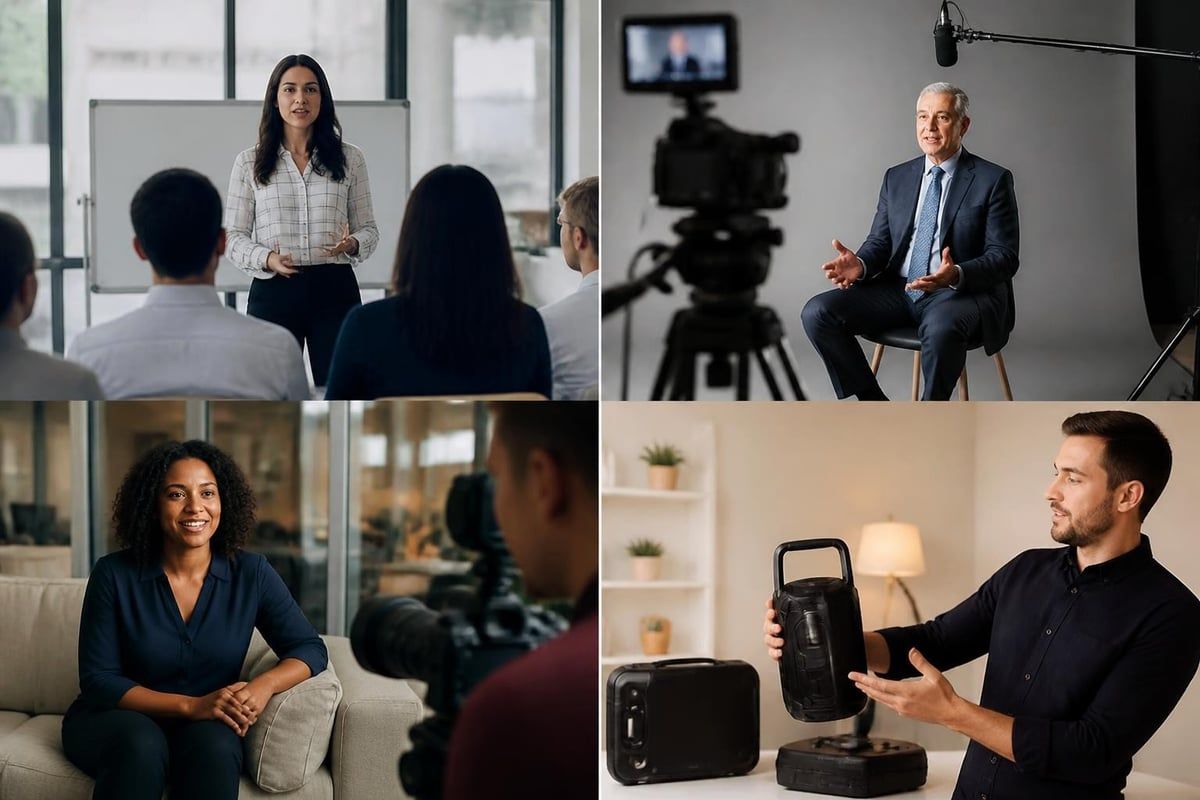
Corporate video production represents a specialized discipline within creative agency work, requiring understanding of business communication, internal culture, and stakeholder management.
Corporate videos serve diverse internal and external purposes. Employee onboarding videos accelerate new hire integration. Executive communications maintain organizational alignment during periods of change. Customer testimonials provide social proof that influences purchasing decisions.
The tone and approach for corporate content differs significantly from consumer-facing campaigns. Authenticity matters more than polish in many corporate contexts. Employees and stakeholders respond to genuine communication rather than overly produced marketing messages.
Common corporate video applications include:
- Leadership messages and company updates
- Training and educational content
- Recruitment and employer branding
- Case studies and customer success stories
- Product demonstrations and tutorials
- Event coverage and highlight reels
Case studies from high-end B2B video production demonstrate how creative storytelling elevates corporate content beyond dry information delivery. The challenge lies in making necessary business information engaging and memorable.
Animation and Motion Graphics in Agency Production
Animated corporate video production offers unique advantages for explaining complex concepts, visualizing abstract ideas, and maintaining brand consistency across content libraries.
Animation eliminates logistical constraints that limit live-action production. Impossible scenarios become feasible. Product features invisible to cameras can be clearly illustrated. Brand mascots and characters create memorable touchpoints that reinforce identity.
When Animation Outperforms Live Action
Certain creative challenges favor animated solutions over traditional filming. Technical product explanations benefit from animated diagrams and visualizations. Data-driven stories come alive through motion graphics and information design.
Animation also provides budget advantages in specific scenarios. Creating consistent visual environments through animation often costs less than location fees, set construction, and travel logistics required for live-action equivalents. Updates and revisions require less investment than reshooting live footage.
The style range available through animation spans from simple whiteboard explanations to sophisticated 3D rendered environments. Each approach communicates different brand attributes and connects with audiences in unique ways.
Budget Considerations and Production Value
Understanding video pricing structures helps businesses make informed decisions about production investments. Creative agency video production costs vary dramatically based on project scope, production complexity, and deliverable requirements.
Production value extends beyond raw budget numbers. Strategic creative direction, experienced crews, and efficient processes often deliver superior results compared to larger budgets without proper planning and expertise.
Factors influencing production budgets:
- Crew size and experience level required
- Equipment needs (cameras, lighting, specialty gear)
- Location requirements and associated fees
- Talent costs (actors, voiceover artists, specialists)
- Post-production complexity and timeline
- Number of deliverable versions and formats
Transparent discussions about budget parameters during initial consultations ensure realistic scope definition. Professional agencies work within client budgets to maximize production value rather than proposing inflexible solutions.
The Role of Human-AI Collaboration
Emerging human-AI co-creation frameworks represent the frontier of creative agency video production. These technologies augment human creativity rather than replacing it, enabling faster iteration and expanded creative exploration.
AI tools now assist with script generation, rough cut assembly, color matching, and audio cleanup. These capabilities accelerate production workflows while preserving the human judgment essential for truly compelling creative work.
The balance between technological efficiency and human artistry defines the next evolution of creative agency work. Tools that remove technical barriers allow creative professionals to focus more energy on strategic thinking and emotional storytelling.
Quality Control and Client Collaboration
Professional creative agencies maintain rigorous quality control processes throughout production. Multiple review stages catch errors, ensure brand compliance, and refine creative execution.
Client collaboration frameworks vary by agency but typically include structured feedback opportunities at key milestones. Creative briefs, script approvals, rough cut reviews, and final delivery checkpoints create transparency while maintaining production momentum.
Effective collaboration requires clear communication protocols and mutual respect for expertise. Clients provide essential business context and brand knowledge. Agencies contribute creative vision and production expertise. The partnership between these perspectives produces the strongest outcomes.
Best practices for productive client-agency collaboration include:
- Establishing single points of contact on both sides
- Defining approval processes and decision-making authority
- Setting realistic timelines with buffer for revision cycles
- Consolidating feedback to avoid conflicting direction
- Maintaining focus on strategic objectives during creative discussions
Research into collaborative co-creation processes reveals patterns that lead to superior creative outcomes. These insights inform how progressive agencies structure their client partnerships.
Measuring Impact and Optimizing Performance
The final phase of strategic creative agency video production involves performance measurement and optimization. Analyzing how audiences engage with content reveals insights that inform future creative decisions.
Modern analytics platforms track granular engagement data. Drop-off points indicate where content loses audience attention. Replay sections suggest particularly compelling moments. Click-through rates measure call-to-action effectiveness.
This performance data transforms video production from subjective creative exercise into an iterative optimization process. Each campaign generates learnings that improve subsequent productions. Over time, organizations develop deep understanding of what resonates with their specific audiences.
Comparing performance across video variations identifies which creative elements drive results. A/B testing different opening hooks, music choices, or messaging frameworks provides empirical evidence for creative decision-making.
| Test Variable | Metric Impact | Optimization Opportunity |
|---|---|---|
| Opening Hook Style | 23% difference in completion rate | Lead with questions vs. statements |
| Video Length | 18% difference in conversion rate | Optimal duration varies by platform |
| Music Presence | 31% difference in share rate | Emotional vs. corporate soundtracks |
| Caption Style | 42% difference in watch time | Animated vs. static text overlays |
These insights enable continuous improvement in creative agency video production effectiveness. Data-informed creativity produces better business results than pure artistic intuition alone.
Creative agency video production in 2026 requires balancing artistic vision with strategic business thinking, technical excellence with authentic storytelling, and human creativity with technological capabilities. The agencies that deliver exceptional results understand that every production decision should advance measurable business objectives while creating genuine emotional connections with audiences. Viva Media specializes in this strategic approach to video production, partnering with Toronto-area brands to create high-performance content that drives real business results through compelling storytelling and meticulous execution.