

The digital landscape has fundamentally changed how businesses communicate with their audiences, and video content has emerged as the dominant medium for engagement. A media production company serves as the strategic partner that transforms business objectives into compelling visual narratives designed to drive measurable results. Whether creating commercial advertisements, corporate communications, or social media content, these specialized firms combine technical expertise with creative vision to produce content that resonates with target audiences and delivers tangible business outcomes. Understanding what separates exceptional production partners from basic service providers requires examining their strategic approach, technical capabilities, and commitment to measurable performance.
Strategic Foundation: Why Partner with a Media Production Company
Choosing to work with a professional media production company represents a strategic investment in your brand's visual communication infrastructure. The decision goes beyond simple content creation and centers on building a sustainable competitive advantage through high-performance video assets.
Business Outcome Alignment
Professional production companies begin every project by understanding your specific business goals. This outcome-focused approach ensures that creative decisions serve strategic objectives rather than existing as artistic expressions without purpose.
Key business outcomes include:
- Increased conversion rates on landing pages
- Enhanced brand awareness within target demographics
- Improved customer education and support efficiency
- Stronger employee engagement and recruitment success
- Measurable social media reach and engagement growth
When evaluating video pricing, consider the relationship between investment and expected returns. A media production company worth its fee structure builds campaigns around performance metrics that matter to your bottom line.

Resource Efficiency and Expertise
Internal video production requires significant capital investment in equipment, software, and specialized talent. A media production company provides immediate access to professional-grade resources without the overhead costs of maintaining them year-round.
| Internal Production | Production Company Partnership |
|---|---|
| Equipment depreciation and maintenance | Access to latest technology |
| Full-time salaries for specialized roles | Pay for expertise when needed |
| Learning curve on new techniques | Established best practices |
| Limited creative perspectives | Diverse creative team input |
| Time diverted from core business | Focus maintained on primary operations |
This resource model allows businesses to scale their video production efforts up or down based on campaign needs and budget cycles without committing to permanent infrastructure costs.
Production Capabilities: Services That Drive Results
A comprehensive media production company offers diverse service capabilities designed to address different business communication needs. Understanding these service categories helps businesses select the right production approach for each objective.
Commercial Video Production
Commercial production focuses on driving direct business outcomes through persuasive storytelling and strategic messaging. These high-stakes projects require exceptional creative vision combined with deep understanding of consumer psychology and market dynamics.
Professional commercial video production teams employ sophisticated techniques to capture attention in crowded marketplaces. They understand that modern audiences scroll past hundreds of video ads daily, making the first three seconds absolutely critical for engagement.
Best practices for commercial production include:
- Hook development that stops scrolling behavior immediately
- Benefit-first messaging that addresses viewer pain points
- Visual storytelling that communicates without sound
- Clear calls-to-action that guide viewer behavior
- Multi-platform optimization for various distribution channels
The investment in commercial production pays dividends when campaigns generate measurable increases in brand consideration, website traffic, and conversion rates. According to industry research from Trade.gov's media and entertainment overview, the sector continues expanding as businesses recognize video's effectiveness in driving consumer action.
Corporate Communication Excellence
Corporate video serves internal and external stakeholders with information, inspiration, and institutional knowledge. A media production company specializing in corporate video production understands the unique requirements of business communications.
Corporate video applications include:
- Leadership messaging and company announcements
- Training and onboarding programs
- Product demonstrations and technical explanations
- Investor relations and shareholder communications
- Company culture and recruitment content
These projects demand different creative approaches than consumer-facing commercials. The focus shifts toward clarity, credibility, and comprehensive information delivery while maintaining viewer engagement.
Implementing production best practices ensures corporate content maintains professional standards across all deliverables. Consistent visual branding, clear audio quality, and accessible formatting create cohesive communication systems that reinforce organizational identity.
Social Media Content Strategy
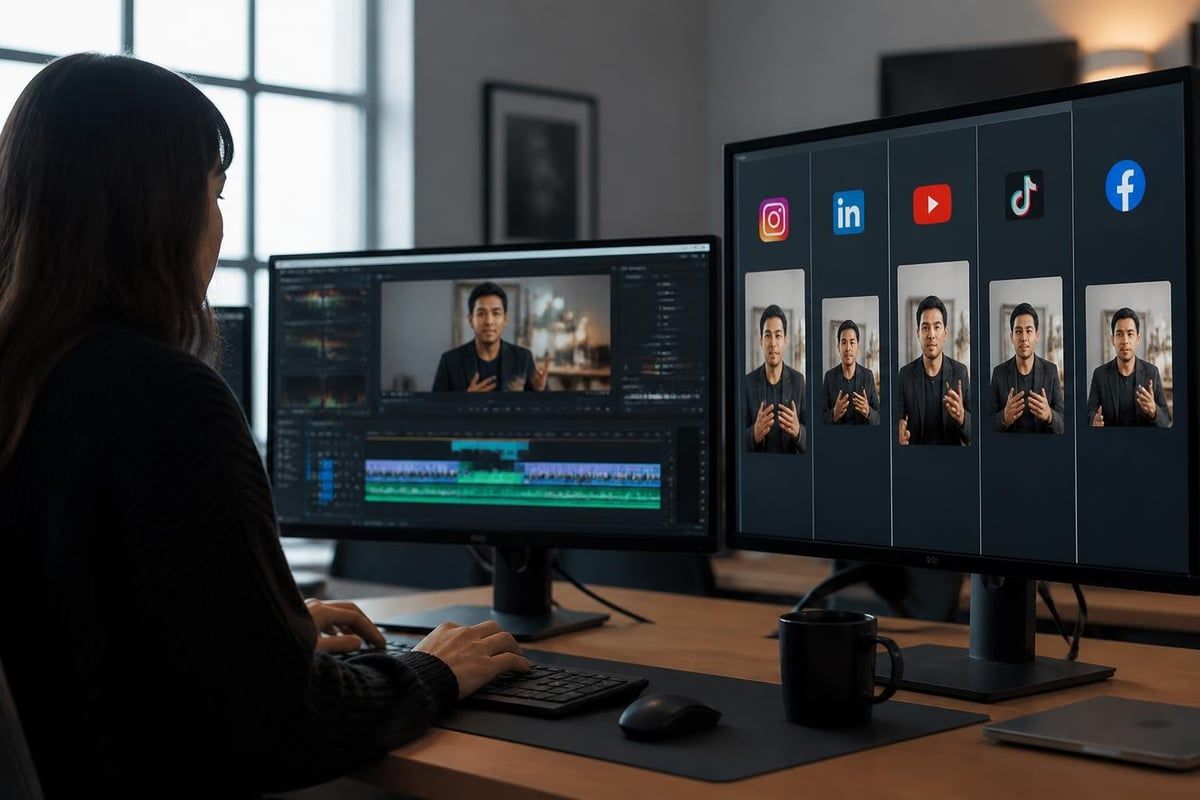
Social platforms have evolved into primary distribution channels for video content, requiring specialized production approaches. A media production company with social media expertise understands platform-specific requirements and audience behaviors.
Platform optimization considerations:
| Platform | Optimal Length | Format Priority | Engagement Driver |
|---|---|---|---|
| Instagram Reels | 15-30 seconds | Vertical 9:16 | Trending audio/effects |
| 30-90 seconds | Square or horizontal | Professional value | |
| YouTube | 8-12 minutes | Horizontal 16:9 | Search optimization |
| TikTok | 15-60 seconds | Vertical 9:16 | Entertainment value |
| 1-3 minutes | Square 1:1 | Shareability factor |
Social content production operates at higher volume with faster turnaround requirements compared to traditional commercial work. Effective production companies establish efficient workflows that maintain quality while meeting the demanding publication schedules social strategies require.
Technical Excellence: Production Standards That Matter
Quality differentiation in video production comes from mastering technical fundamentals that casual creators often overlook. A professional media production company maintains rigorous standards across every production phase.
Pre-Production Planning
Successful projects begin long before cameras start recording. Strategic pre-production planning establishes creative direction, logistical coordination, and resource allocation that determine final output quality.
The pre-production phase includes:
- Creative development and scripting aligned with business objectives
- Storyboard creation visualizing key scenes and transitions
- Location scouting identifying optimal filming environments
- Talent casting selecting on-screen personalities
- Equipment and crew scheduling coordinating technical resources
- Shot list preparation maximizing filming efficiency
Following established dailies best practices from industry leaders ensures thorough planning and cross-departmental communication. This preparation prevents costly production delays and ensures filming days capture all necessary footage.
Production Day Excellence
On-set execution separates professional media production companies from amateur operations. Technical mastery in cinematography, lighting, and audio capture creates the raw materials that editors transform into final deliverables.
Critical production elements:
- Lighting design that flatters subjects and sets mood
- Camera movement that adds visual interest without distraction
- Audio capture using professional microphones and recording equipment
- Director guidance that draws authentic performances from talent
- Continuity management ensuring shots match across takes
Professional crews bring specialized expertise to each role. The cinematographer understands how lens selection affects emotional tone. The gaffer knows lighting ratios that create dimension. The sound mixer captures clean audio in challenging environments.
When reviewing video production best practices for high-quality results, the emphasis on lighting, camera work, and sound reflects their fundamental importance to perceived production value.
Post-Production Craftsmanship
Raw footage transforms into compelling content through skilled editing, color grading, sound design, and motion graphics. Post-production represents where creative vision fully materializes.
Modern post-production workflows require:
- Organized media management with consistent file naming and folder structures
- Efficient editing that maintains pacing and narrative flow
- Color correction and grading establishing visual consistency
- Sound design and mixing creating immersive audio experiences
- Motion graphics and animation enhancing information delivery
- Format optimization for multiple distribution channels
Following media management best practices for post-production teams ensures efficient workflows and protects valuable project assets. Proper organization prevents lost files, speeds collaborative review, and enables future content repurposing.
Measuring Success: ROI-Focused Production
The most sophisticated media production companies approach every project as a measurable business investment. They establish clear performance indicators and track results against baseline metrics.
Performance Metrics Framework
Different video types require different success measurements. Commercial content focuses on conversion metrics, while corporate communications emphasize comprehension and retention.
Commercial video metrics:
- View-through rates and average watch time
- Click-through rates to landing pages
- Conversion rates and cost per acquisition
- Social sharing and engagement rates
- Brand lift and aided awareness studies
Corporate video metrics:
- Completion rates for training content
- Knowledge retention assessment scores
- Employee satisfaction and engagement surveys
- Recruitment application quality and volume
- Stakeholder comprehension and feedback
Understanding these video production ROI blind spots helps businesses avoid vanity metrics that don't correlate with actual business outcomes. Professional production partners guide clients toward meaningful measurement frameworks.
Iterative Optimization
Performance data should inform future production decisions. A strategic media production company analyzes campaign results to refine creative approaches and improve subsequent project outcomes.
The optimization cycle includes:
- Baseline performance documentation from initial campaigns
- A/B testing of creative variations and messaging approaches
- Audience feedback collection through surveys and focus groups
- Platform analytics review identifying high-performing content patterns
- Strategic refinement incorporating learnings into future projects
This data-driven approach transforms video production from creative guesswork into scientific optimization. Each project builds knowledge that improves efficiency and effectiveness.

Selecting Your Production Partner
Choosing the right media production company requires evaluating capabilities beyond showreels and pricing proposals. The ideal partner combines technical excellence with strategic thinking and collaborative communication.
Evaluation Criteria
When assessing potential production partners, consider these critical factors:
Portfolio relevance: Do their previous projects demonstrate experience in your industry and content type? Generic experience matters less than relevant expertise.
Strategic approach: Does the company lead with questions about your business objectives, or jump straight to creative concepts? Strategy should precede creativity.
Communication style: Do they explain technical concepts clearly? Can they translate your business goals into production requirements?
Production capabilities: Do they maintain in-house resources or rely entirely on freelance crews? Consistency often correlates with internal teams.
Performance focus: Do they discuss measurement and optimization, or only deliverable specifications?
Reading through considerations on what to expect when hiring a video production company provides valuable context for these partnership conversations.
Questions That Reveal Capability
The right questions expose whether a media production company truly understands business-focused video production:
- How do you approach projects where the target audience differs significantly from our existing customer base?
- What performance benchmarks have similar projects achieved for other clients?
- How does your production process incorporate feedback without compromising timelines?
- What happens when filming reveals opportunities not included in the original plan?
- How do you handle video assets after project completion for future repurposing?
Thoughtful answers to these questions reveal strategic depth and client-focused service models. Surface-level responses suggest transactional relationships rather than strategic partnerships.
Understanding Investment Structures
Video production pricing varies dramatically based on project scope, production complexity, and deliverable requirements. Transparent media production companies explain cost drivers clearly and help clients understand value relationships.
Primary cost factors include:
- Pre-production planning hours and creative development
- Production day crew size and equipment requirements
- Filming location needs and associated fees
- Talent costs for on-screen personalities
- Post-production hours for editing and finishing
- Licensing fees for music, stock footage, and graphics
- Distribution format variations and platform optimization
Exploring questions to ask before hiring a video production company helps businesses understand how different approaches affect final investment levels.
Industry Evolution: Adapting to Change
The media production landscape continues evolving rapidly as technology advances and audience preferences shift. Forward-thinking production companies invest in emerging capabilities that serve changing client needs.
Technology Integration
Modern production increasingly incorporates sophisticated technology that expands creative possibilities and improves efficiency. Understanding live media workflows in IP-based facilities reflects how production infrastructure itself transforms.
Emerging production technologies:
- Virtual production and LED volume stages
- Remote collaboration tools for distributed teams
- AI-assisted editing and post-production workflows
- Cloud-based asset management and review platforms
- Advanced motion capture and performance tracking
- Computational cinematography and enhanced imaging
A media production company that invests in these capabilities brings expanded creative options to client projects while maintaining competitive efficiency.
Audience Behavior Shifts
Consumer viewing habits evolve constantly as platforms introduce new formats and features. Production companies must adapt content strategies to match these behavioral changes.
Current viewing trends include:
- Increasing preference for vertical video formats
- Declining tolerance for slow-paced content openings
- Growing consumption on mobile devices
- Rising expectations for production quality
- Preference for authentic, unpolished aesthetics in certain contexts
- Increased engagement with interactive and shoppable video
These shifts require flexible production approaches that balance timeless quality standards with format-specific optimization.
Building Long-Term Partnerships
The most valuable relationships between businesses and media production companies extend beyond individual projects into strategic partnerships. These ongoing collaborations deliver compounding benefits as both parties develop deep mutual understanding.
Advantages of Continuity
Working repeatedly with the same production partner creates multiple efficiencies:
Reduced onboarding time: The production team already understands your brand voice, visual identity, and strategic objectives.
Accumulated brand assets: Previous projects create libraries of b-roll footage, graphics, and other elements that reduce future production costs.
Strategic consistency: Ongoing collaboration ensures visual communication maintains cohesive branding across all touchpoints.
Performance optimization: Continuous measurement and refinement improve results over time as the team learns what resonates with your specific audience.
Resource efficiency: Established workflows and mutual understanding reduce coordination overhead and minimize miscommunication.
Retainer Models and Annual Planning
Many businesses benefit from retainer relationships with their media production company. These structures provide predictable capacity allocation and often deliver better value than project-by-project engagement.
| Project-Based Engagement | Retainer Partnership |
|---|---|
| Variable availability | Guaranteed capacity allocation |
| Per-project pricing | Volume-based rate advantages |
| Repeated onboarding | Continuous brand knowledge |
| Reactive content creation | Proactive strategic planning |
| Isolated campaign focus | Integrated annual strategy |
Annual content planning sessions align video production with broader marketing calendars, product launches, and business milestones. This forward-looking approach prevents last-minute rushes and enables more strategic creative development.
A media production company transforms business communication challenges into strategic opportunities through compelling video content that drives measurable results. The partnership between brands and production experts works best when built on shared commitment to performance, transparent communication, and continuous optimization. Ready to transform your video strategy into a measurable business advantage? Viva Media brings Toronto-based expertise in commercial, corporate, and social media production designed specifically for brands that demand real ROI from their content investments.