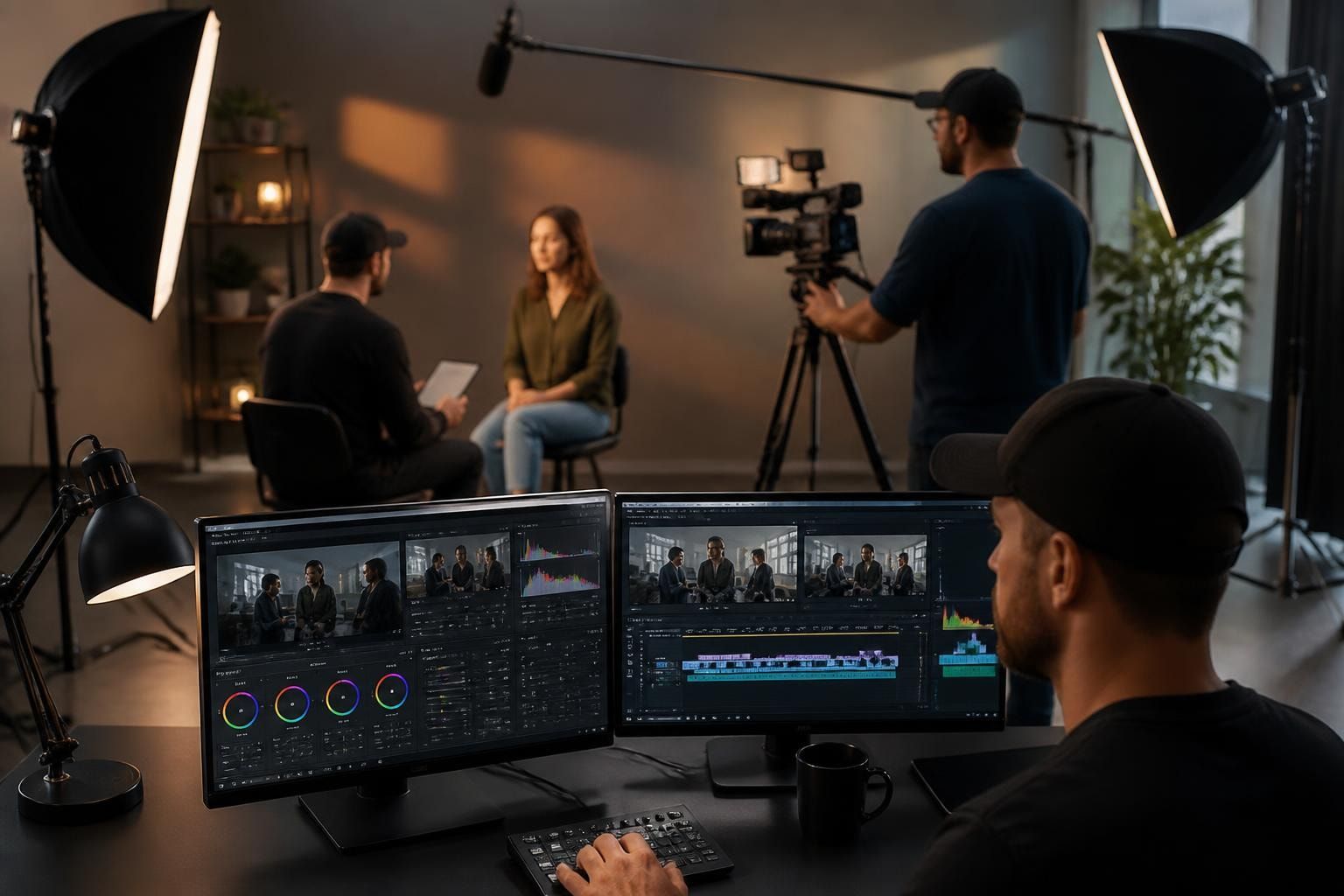


When executives, marketing directors, or business owners think "i need a video," they're recognizing a fundamental shift in how audiences consume information and make purchasing decisions. This realization marks the beginning of a strategic journey that requires careful planning, resource allocation, and a clear understanding of business objectives. The decision to invest in video content goes beyond simply following trends-it's about creating measurable impact through visual storytelling that resonates with target audiences and drives specific business outcomes.
Understanding Why You Need Video Content
The phrase "i need a video" often emerges from observing competitors, reviewing analytics, or recognizing declining engagement with traditional content formats. Modern consumers spend significant portions of their day watching video content across multiple platforms, making it essential for businesses to meet audiences where they already spend their attention.
Recent video marketing statistics reveal compelling data about video's effectiveness in 2026. Businesses leveraging video content report higher engagement rates, improved conversion metrics, and stronger brand recall compared to those relying solely on text or static imagery. These numbers validate the instinct that prompts business leaders to say "i need a video" when planning their marketing strategies.
The Business Case for Video Investment
Video content serves multiple business functions simultaneously. A single well-produced piece can educate prospects, build brand authority, showcase products, and drive conversions through one cohesive narrative.
Primary business objectives that video addresses:
- Increasing brand awareness across target demographics
- Explaining complex products or services efficiently
- Building trust through authentic storytelling
- Generating qualified leads through engaging content
- Improving search engine visibility and organic traffic
- Reducing customer support burden through tutorial content
Companies that recognize "i need a video" as a strategic imperative rather than a tactical checkbox approach their investment differently. They allocate appropriate budgets, establish clear success metrics, and integrate video into broader marketing ecosystems rather than treating it as an isolated campaign element.

Identifying the Right Type of Video Content
Not all videos serve the same purpose, and saying "i need a video" without specifying the content type leads to misaligned expectations and wasted resources. Commercial video production in Toronto encompasses diverse formats, each designed to achieve specific business outcomes.
Commercial and Promotional Videos
These videos focus on driving direct business results through persuasive storytelling. They showcase products, highlight unique value propositions, and include clear calls to action that guide viewers toward conversion points.
| Video Type | Primary Purpose | Typical Length | Best Platforms |
|---|---|---|---|
| Brand Story | Build emotional connection | 60-120 seconds | Website, YouTube, LinkedIn |
| Product Demo | Showcase features and benefits | 90-180 seconds | Landing pages, email campaigns |
| Customer Testimonial | Establish social proof | 45-90 seconds | Website, social media |
| Explainer Video | Simplify complex concepts | 60-90 seconds | Homepage, sales presentations |
Corporate Video Production
When internal stakeholders say "i need a video" for corporate communications, they typically require content that serves organizational objectives rather than direct marketing purposes. Corporate video production services address internal communications, recruitment, training, and stakeholder relations.
Corporate videos maintain professional tone while engaging employees, investors, or partners. They communicate company culture, document processes, onboard new team members, or share quarterly results in digestible formats.
Social Media Video Content
Platform-specific video requirements demand tailored approaches. Social media video production considers platform algorithms, audience behaviors, and technical specifications that differ significantly from traditional video formats.
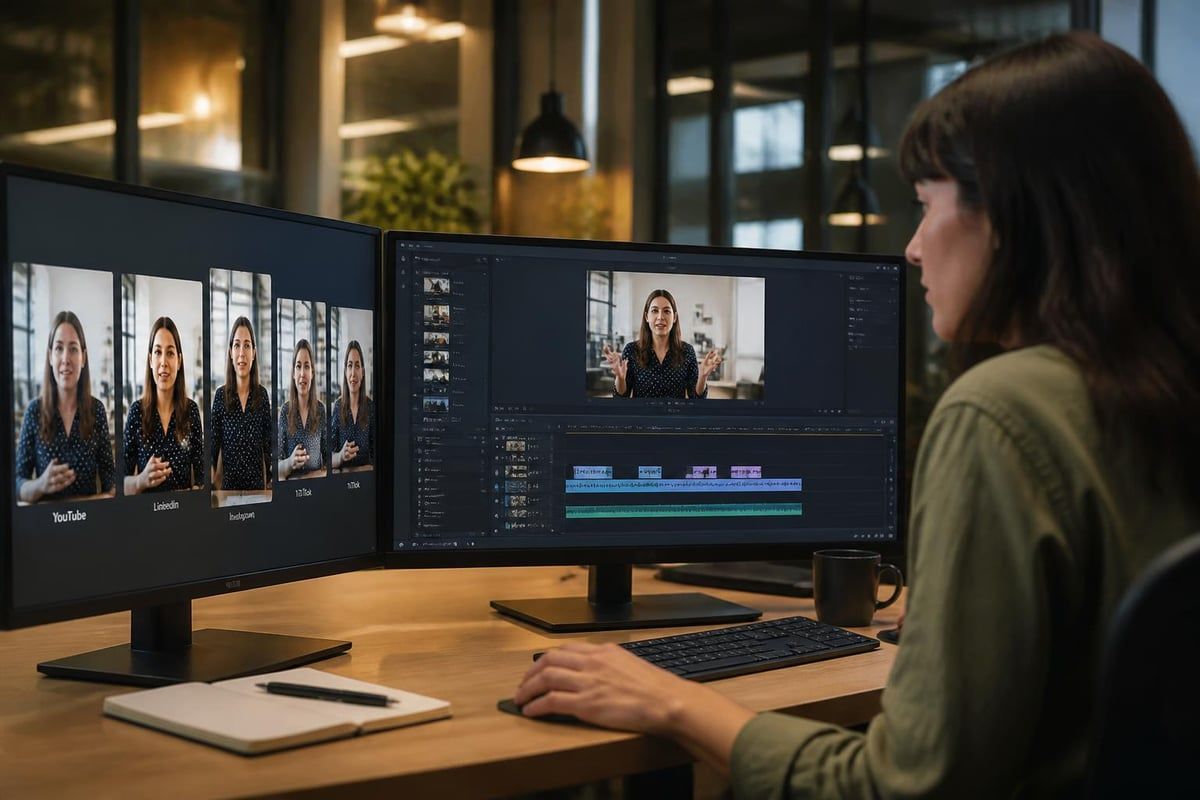
Short-form content dominates social platforms in 2026, with vertical formats and attention-grabbing opening sequences proving essential for performance. When you think "i need a video" for social distribution, consider creating multiple versions optimized for each platform rather than repurposing a single asset.
Planning Your Video Production Strategy
The gap between recognizing "i need a video" and actually producing effective content involves strategic planning that aligns creative vision with business objectives and available resources.
Defining Clear Objectives and Success Metrics
Vague goals produce vague results. Before engaging production resources, establish specific, measurable objectives that video content should achieve.
Essential planning questions:
- What specific business problem does this video solve?
- Who exactly needs to see this content?
- What action should viewers take after watching?
- How will we measure success quantitatively?
- Where will this video live and how will it be distributed?
- What budget and timeline constraints exist?
Answering these questions transforms "i need a video" from a general desire into a concrete project brief that guides production decisions and creative development.
Understanding the Video Production Process
The three stages of video production provide structure for planning timelines and allocating resources appropriately. Pre-production, production, and post-production each require specific expertise and contribute differently to final output quality.
Pre-production involves concept development, scriptwriting, storyboarding, location scouting, talent casting, and logistics coordination. This phase determines creative direction and establishes the foundation for efficient shooting schedules.
Production encompasses actual filming, including lighting setup, audio recording, camera operation, and performance direction. Professional video production services in Toronto bring technical expertise and equipment that significantly impact visual quality.
Post-production transforms raw footage into polished content through editing, color grading, sound design, motion graphics, and final delivery formatting. This stage often consumes more time than actual filming but determines whether content achieves professional standards.

Budgeting for Professional Video Production
When business leaders say "i need a video," they often underestimate the investment required for content that performs at professional standards. Understanding cost factors helps establish realistic budgets and prevents disappointment with final deliverables.
Cost Variables in Video Production
Multiple factors influence production costs, from crew size and equipment complexity to shooting locations and talent requirements. Comprehensive video production guides outline these variables in detail, helping businesses plan appropriate budgets.
Major cost components:
- Creative development: Scriptwriting, storyboarding, creative direction
- Production crew: Director, cinematographer, audio technician, assistants
- Equipment: Camera packages, lighting, audio gear, specialized rigs
- Talent: On-camera presenters, voice actors, extras
- Location fees: Studio rental, location permits, set design
- Post-production: Editing, color grading, sound design, motion graphics
- Revisions: Client feedback rounds and content adjustments
- Distribution: Format conversions, platform optimization, hosting
Transparent pricing structures help businesses understand what different budget levels deliver and make informed decisions about scope versus investment.
ROI Considerations and Performance Metrics
Video represents a significant investment that demands accountability. Establishing measurement frameworks before production ensures you capture data needed to evaluate performance against business objectives.
Track metrics aligned with stated objectives-view counts matter less than conversion rates, engagement duration, or qualified lead generation depending on video purpose. Marketing teams should implement proper tracking through UTM parameters, conversion pixels, and attribution modeling that connects video exposure to business outcomes.
Leveraging Emerging Technologies in Video Production
The landscape of video creation continues evolving rapidly. Generative AI adoption in video advertising demonstrates how technology reshapes production workflows and creative possibilities.
AI-Enhanced Production Workflows
Artificial intelligence now supports multiple production phases, from script generation and shot planning to automated editing and dynamic content personalization. When you think "i need a video" in 2026, consider how AI tools can accelerate timelines or reduce costs without sacrificing quality.
AI excels at repetitive tasks like color matching across shots, generating subtitle files, creating multiple video versions for different platforms, or producing localized content variations. Human creativity remains essential for strategic direction, emotional storytelling, and brand authenticity.
Animation and Motion Graphics
Animation video production offers unique advantages when explaining abstract concepts, visualizing data, or creating content impossible to film practically. Animation bypasses location constraints, weather dependencies, and talent scheduling challenges.
Motion graphics enhance live-action footage by adding visual interest, highlighting key information, or creating branded transitions that reinforce visual identity. Hybrid approaches combining live-action and animation often deliver optimal results for complex business messaging.
Distribution Strategies That Maximize Video Impact
Creating excellent content represents only half the equation. When you say "i need a video," you're really saying you need video content that reaches target audiences and drives desired actions.
Multi-Platform Distribution Planning
Each distribution channel demands specific technical specifications and content strategies. Insights into video-first platform trends highlight how platforms continue evolving their video features and algorithm priorities.
| Platform | Optimal Length | Aspect Ratio | Content Style |
|---|---|---|---|
| YouTube | 7-15 minutes | 16:9 | Educational, entertaining |
| Instagram Feed | 60 seconds | 1:1 or 4:5 | Polished, branded |
| Instagram Reels | 15-90 seconds | 9:16 | Engaging, trend-aware |
| 30-90 seconds | 16:9 or 1:1 | Professional, value-driven | |
| TikTok | 15-60 seconds | 9:16 | Authentic, entertaining |
| Website | 60-120 seconds | 16:9 | Conversion-focused |
Successful distribution requires more than uploading the same file everywhere. Adapt messaging, pacing, and calls-to-action for each platform's unique audience expectations and consumption behaviors.
SEO Optimization for Video Content
Video enhances search engine visibility when properly optimized. Include keyword-rich titles, detailed descriptions, accurate transcripts, and relevant tags that help search algorithms understand content context and relevance.
Hosting video on your own domain using schema markup signals quality content to search engines while keeping viewers on your website longer-a ranking factor that improves overall site authority. Supplementing YouTube distribution with website-hosted versions creates multiple discovery pathways for target audiences.
Partnering With Professional Production Companies
Recognizing "i need a video" often leads to the crucial decision between in-house production and professional partnership. This choice significantly impacts content quality, production efficiency, and ultimately business results.
Benefits of Professional Expertise
Professional production companies bring specialized skills, proven processes, and quality equipment that justify their investment. They understand how corporate videos deliver business value and structure projects to maximize ROI rather than simply creating visually appealing content.
Experienced teams anticipate challenges before they arise, suggest creative solutions aligned with business objectives, and deliver polished content that reflects positively on brand reputation. They also maintain efficiency through established workflows that prevent common amateur mistakes that waste time and budget.
Selecting the Right Production Partner
Not all video production companies serve the same markets or deliver the same quality levels. Questions to ask before hiring a video production company help evaluate whether potential partners understand your industry, audience, and business objectives.
Review portfolios of completed work to assess creative style, production quality, and industry experience. Strong partners demonstrate versatility across different content types while maintaining consistent quality standards.
Discuss communication processes, revision policies, timeline expectations, and deliverable specifications upfront. Clear agreements prevent misunderstandings that derail projects or strain working relationships.
Measuring Video Performance and Iterating Strategy
The work doesn't end when video production wraps. Ongoing performance analysis informs future content strategy and helps optimize distribution tactics for better results.
Key Performance Indicators by Video Type
Different video objectives demand different measurement approaches. Brand awareness videos track reach and impression metrics, while conversion-focused content measures click-through rates and attributed sales.
Metrics framework by objective:
- Awareness: View count, impressions, unique viewers, share rate
- Engagement: Watch time, completion rate, interaction rate, comment sentiment
- Consideration: Click-through rate, website traffic, content downloads, email signups
- Conversion: Form submissions, purchase attribution, cost per acquisition, revenue impact
- Retention: Return visitor rate, customer lifetime value, churn reduction
Establish baseline metrics before launching video campaigns to accurately measure incremental impact rather than attributing organic performance to video efforts.
Continuous Improvement Through Testing
Video marketing evolves through systematic testing and refinement. A/B test thumbnails, titles, opening sequences, calls-to-action, and video lengths to identify what resonates most with target audiences.
Platform analytics provide valuable insights into viewer behavior-where audiences drop off reveals pacing issues or content mismatches, while engagement peaks highlight particularly compelling moments that inform future creative decisions.
Scaling Video Content Production
Once initial video projects prove successful, businesses often want to scale production to serve more marketing functions, product lines, or audience segments. The thought "i need a video" transforms into "I need a sustainable video content system."
Building Content Libraries and Asset Management
Strategic businesses develop content libraries that serve multiple purposes over extended timeframes. Modular content creation produces components that remix into various formats, extending initial investment value.
Professional social media video agencies structure production for scalability, creating core assets that adapt across platforms, campaigns, and timeframes rather than producing single-use content that quickly becomes outdated.
Implement digital asset management systems that organize footage, completed videos, scripts, and supporting materials for easy retrieval and repurposing. Well-organized libraries transform into valuable business assets that compound returns over time.
Establishing Ongoing Production Partnerships
Regular content needs benefit from ongoing production relationships rather than one-off projects. Retainer arrangements with production companies provide cost predictability, faster turnaround times, and partners who deeply understand your brand, audience, and messaging priorities.
Long-term partnerships enable producers to suggest proactive content ideas aligned with business cycles, industry trends, or competitive movements rather than simply responding to reactive requests when stakeholders say "i need a video" under deadline pressure.
Successfully navigating the journey from recognizing "i need a video" to deploying high-performance video content requires strategic planning, appropriate resource allocation, and partnership with professionals who understand both creative storytelling and business results. When you're ready to transform video ideas into measurable business impact, Viva Media brings specialized expertise in creating video content that drives real ROI for forward-thinking brands throughout the Greater Toronto Area.