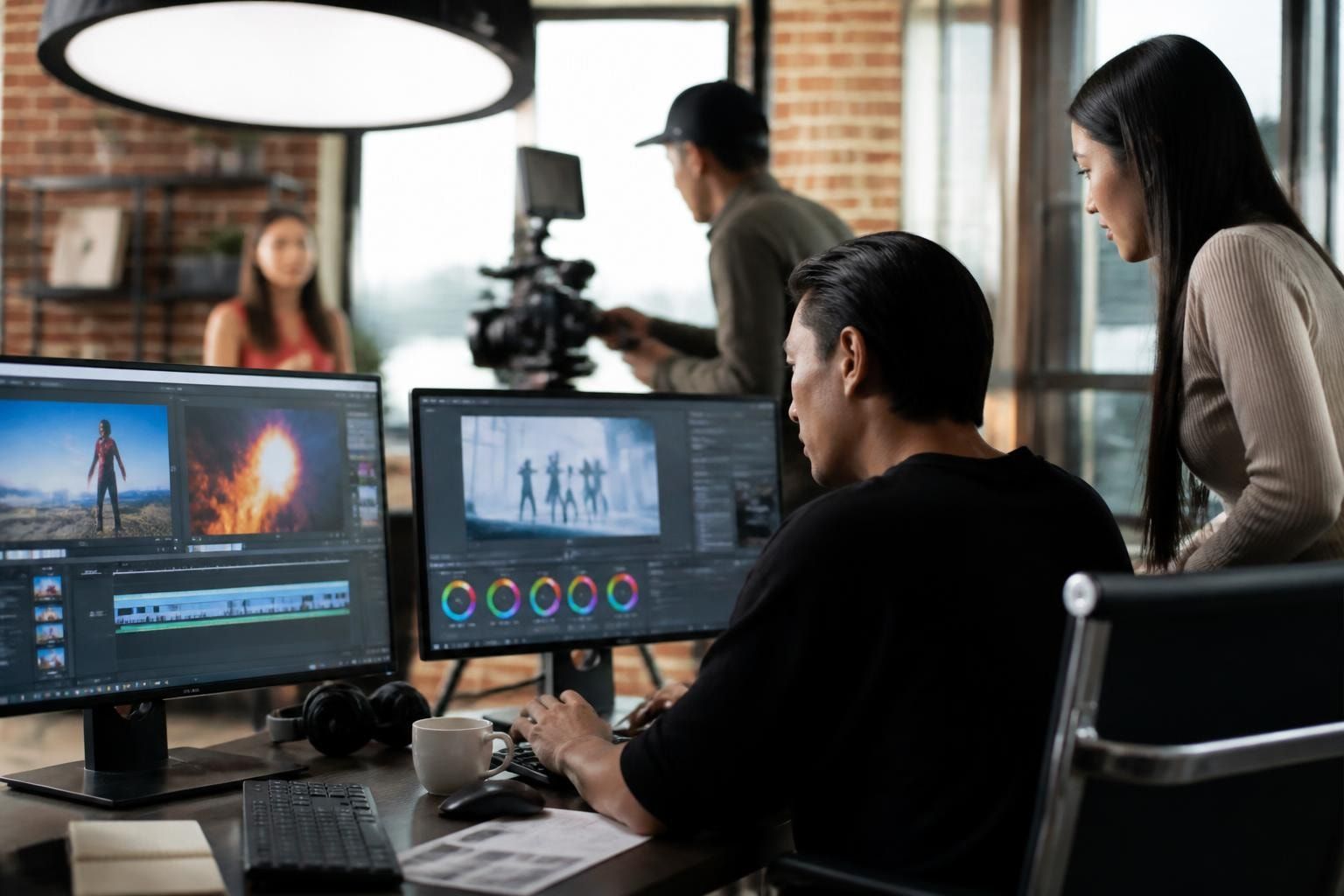


Creating professional video content has become a critical competitive advantage for businesses navigating the digital landscape in 2026. As attention spans shrink and consumer expectations rise, the quality gap between amateur and professionally produced content has widened dramatically. Organizations that invest in professional video production position themselves to capture attention, communicate complex messages efficiently, and generate measurable returns on their marketing investments. Understanding what separates truly professional work from superficial attempts requires examining the technical standards, strategic frameworks, and production methodologies that drive results in today's marketplace.
The Strategic Foundation of Professional Video Production
Professional video creation begins long before cameras start rolling. The strategic planning phase determines whether a video will generate business outcomes or simply consume budget without meaningful return.
Defining Clear Objectives and Success Metrics
Every professional video project must answer fundamental questions about purpose, audience, and measurement. What specific business problem does this video solve? The answer shapes every subsequent decision from scriptwriting to distribution strategy.
Smart organizations establish concrete metrics before production begins:
- Lead generation targets with specific conversion benchmarks
- Brand awareness goals measured through reach and engagement
- Sales enablement objectives tracked via deal velocity
- Customer education outcomes assessed through support ticket reduction
- Employee engagement improvements quantified through retention rates
This measurement-first approach ensures that professional video content delivers ROI rather than merely existing as creative artifacts. Companies that skip this strategic foundation typically produce videos that look polished but fail to move business needles.
Audience Research and Message Architecture
Understanding your target audience at a granular level separates professional productions from vanity projects. Detailed audience research reveals pain points, communication preferences, consumption patterns, and decision-making triggers that inform script development and creative direction.

Professional teams construct message architectures that align with the buyer's journey. Awareness-stage content requires different messaging, pacing, and calls-to-action than consideration-stage or decision-stage videos. Content planning strategies emphasize matching video type to audience readiness.
Technical Excellence: Production Standards That Define Professional Work
The technical execution of professional video separates competent work from exceptional results. While equipment matters, understanding how to leverage tools properly matters more.
Cinematography and Visual Composition
Professional cinematography extends beyond simply keeping subjects in focus. It involves deliberate choices about camera movement, framing, depth of field, and visual storytelling that guide viewer attention and reinforce key messages.
| Technical Element | Professional Standard | Business Impact |
|---|---|---|
| Resolution | 4K minimum for commercial work | Future-proofing and platform flexibility |
| Frame Rate | 24fps for cinematic, 60fps for action | Appropriate emotional tone and motion |
| Color Depth | 10-bit minimum | Professional color grading capability |
| Dynamic Range | Log profiles for maximum flexibility | Superior highlight and shadow detail |
Camera support systems represent another differentiator. While handheld footage has creative applications, professional stabilization equipment ensures intentional camera movement rather than distracting shake. Gimbals, sliders, and quality tripods enable the smooth, controlled motion that viewers associate with professional content.
Lighting Design and Control
Professional lighting transforms ordinary spaces into compelling visual environments. The three-point lighting system-key light, fill light, and backlight-remains foundational, but professionals understand when to break these rules for creative effect.
Natural light presents both opportunities and challenges. Professional crews control ambient light rather than accepting whatever conditions exist. Diffusion materials, reflectors, negative fill, and supplemental lighting ensure consistent quality regardless of shooting location.
Light quality matters as much as quantity. Hard light creates drama and definition. Soft light flatters subjects and reduces contrast. Professional lighting designers select appropriate qualities based on message and brand alignment.
Audio Engineering: The Overlooked Critical Component
Poor audio quality destroys professional credibility faster than any visual shortcoming. Viewers tolerate modest visual imperfections but immediately disengage from content with distracting audio issues.
Professional audio capture requires:
- Dedicated audio recording equipment beyond camera-mounted microphones
- Acoustic treatment of recording environments or strategic location selection
- Multiple audio sources for redundancy and mixing flexibility
- Proper gain staging to maximize signal-to-noise ratio
- Monitoring during capture to catch issues before post-production
Best practices for audio capture emphasize getting clean source recordings that provide maximum flexibility during the mixing process. Professional mixers balance dialogue, music, and sound effects to create immersive experiences that enhance rather than distract from core messages.
Production Workflow: The Process Behind Professional Results
Professional video production follows structured workflows that balance creative exploration with efficient execution. Understanding these processes helps clients set realistic expectations and production teams deliver consistent quality.
Pre-Production Planning and Preparation
The pre-production phase determines whether shooting days run smoothly or devolve into expensive chaos. Professional teams invest significant time in planning that pays dividends during execution.
- Creative development translates business objectives into compelling narratives
- Script finalization establishes the verbal and visual blueprint
- Storyboarding visualizes shot sequences and identifies production requirements
- Location scouting ensures spaces support creative vision and technical needs
- Casting and talent management secures on-screen presence aligned with brand values
- Equipment preparation guarantees all necessary tools arrive ready for immediate use
- Shot list creation maximizes shooting efficiency through logical sequence planning
- Team coordination aligns all contributors around shared creative vision
Columbia University's video production guidelines emphasize thorough preparation as the foundation for successful outcomes. Professional crews arrive on set with documented plans that keep productions on schedule and on budget.
Production Day Execution Standards
Professional shooting days balance artistic vision with operational efficiency. Call sheets, detailed shot lists, and clear communication protocols keep productions moving forward while maintaining quality standards.
Time management separates professionals from amateurs. Experienced directors understand how long specific setups require and sequence shots to minimize lighting and equipment changes. This efficiency respects both client budgets and team member schedules.

Quality control happens continuously during production. Professional directors and cinematographers review footage regularly, ensuring captured material meets technical specifications and creative standards before moving to the next setup. This real-time verification prevents expensive reshoots.
Post-Production: Where Good Footage Becomes Great Content
Post-production transforms raw footage into polished professional video that achieves business objectives. The editing process involves far more than simply removing mistakes.
Professional editors construct narrative flow that guides viewer attention, builds emotional engagement, and delivers key messages at psychologically optimal moments. Pacing varies based on content type-corporate videos typically adopt measured pacing that allows information absorption, while social media content demands rapid cuts that match platform consumption patterns.
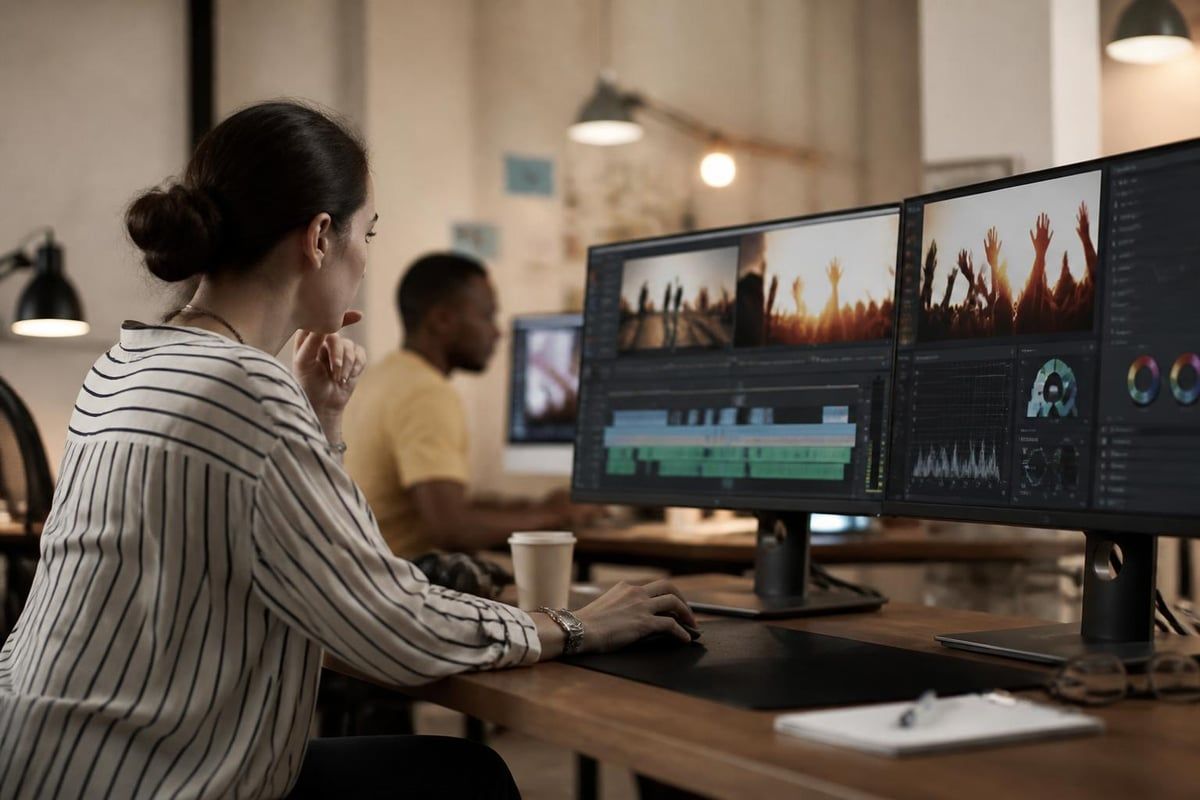
Color grading establishes visual consistency and emotional tone. Professional colorists use calibrated monitors and industry-standard software to ensure footage maintains intended appearance across viewing devices. This technical precision separates professional work from content that looks great on one device but shifts dramatically on others.
Sound design and mixing complete the professional package. Dialogue clarity, music integration, sound effect placement, and overall mix balance create immersive experiences that hold attention and reinforce messages.
Format Optimization and Distribution Strategy
Creating excellent professional video represents only half the equation. Professional producers understand platform requirements and optimize content accordingly.
Platform-Specific Technical Requirements
Different distribution platforms impose varying technical specifications that impact quality and performance. Professional teams master these requirements to ensure optimal presentation.
| Platform | Aspect Ratio | Recommended Length | Key Optimization |
|---|---|---|---|
| YouTube | 16:9 | 7-15 minutes | SEO optimization, chapters |
| Instagram Feed | 1:1 or 4:5 | 60 seconds max | Immediate hook, captions |
| Instagram Stories | 9:16 | 15 seconds per segment | Vertical framing, text overlays |
| 16:9 or 1:1 | 30-90 seconds | Professional tone, value focus | |
| TikTok | 9:16 | 15-60 seconds | Trend alignment, native editing |
B2B video content strategies emphasize adapting core messages to platform-specific expectations rather than simply uploading identical content everywhere. This tailored approach maximizes performance across channels.
Accessibility and Inclusive Design
Professional video production in 2026 incorporates accessibility from initial planning rather than treating it as an afterthought. Inclusive design expands audience reach while demonstrating corporate social responsibility.
Essential accessibility features include:
- Accurate closed captions that capture spoken content and relevant audio information
- Audio descriptions for visually impaired viewers
- Sufficient color contrast that remains visible for color-blind viewers
- Clear on-screen text with readable fonts and appropriate sizing
- Logical visual hierarchy that guides attention even without audio
These considerations align with content quality best practices that emphasize universal design principles benefiting all viewers.
Measuring Performance and Iterating for Improvement
Professional video production extends beyond delivery to include performance analysis and continuous improvement. Data-driven optimization separates organizations that maximize video ROI from those that treat production as one-time expenses.
Key Performance Indicators and Analytics
Tracking the right metrics reveals whether professional video investments generate intended returns. Surface-level vanity metrics like view counts provide limited insight compared to engagement and conversion data.
Meaningful metrics include:
- Completion rates indicating content relevance and pacing effectiveness
- Engagement actions such as likes, shares, and comments showing audience resonance
- Click-through rates measuring call-to-action effectiveness
- Conversion rates connecting video views to desired business outcomes
- Watch time patterns revealing optimal video length and content structure
Professional teams establish measurement frameworks before production begins, then analyze performance data to inform future projects. This iterative approach generates compounding improvements over time.
A/B Testing and Optimization Strategies
Sophisticated organizations treat professional video as testable hypotheses rather than static creative products. A/B testing different thumbnails, titles, opening hooks, calls-to-action, and video lengths generates empirical evidence about audience preferences.
Video production techniques increasingly incorporate testing frameworks that allow rapid iteration. Professional producers create modular content architectures enabling efficient variation testing without complete reproductions.
Investment Considerations and Budget Allocation
Understanding professional video pricing helps organizations allocate budgets effectively and set realistic expectations. Video production costs vary dramatically based on project scope, technical requirements, and creative complexity.
Cost Drivers in Professional Production
Several factors influence professional video budgets beyond simple per-minute calculations. Smart buyers understand these variables when evaluating proposals and comparing options.
Pre-production complexity significantly impacts costs. Simple talking-head videos require minimal planning, while narrative productions involving multiple locations, talent, and complex storylines demand extensive development time. Script revisions, location scouting, casting, and storyboarding all consume resources that appear in professional quotes.
Production scale drives day-of costs through crew size, equipment requirements, and shooting duration. A single-camera interview setup costs far less than multi-camera productions with specialized equipment like drones, jibs, or tracking systems.
Post-production intensity varies based on editing complexity, graphics requirements, color grading depth, and sound design sophistication. Simple cuts cost less than complex narratives requiring extensive motion graphics, visual effects, or custom music composition.
Value Assessment Beyond Price
Professional video represents an investment in business outcomes rather than a commodity purchase. The cheapest option rarely delivers optimal return on investment.
Evaluation criteria should include:
- Strategic alignment between production approach and business objectives
- Portfolio quality demonstrating consistent professional standards
- Process transparency revealing how teams translate goals into finished products
- Performance track record showing measurable results from previous projects
- Collaborative approach indicating genuine partnership versus transactional service
Organizations exploring commercial video production benefit from understanding how different investment levels enable varying creative approaches and technical quality standards.
Building Long-Term Video Production Partnerships
The most successful organizations treat professional video production as an ongoing capability rather than isolated transactions. Long-term partnerships generate compounding advantages over one-off project approaches.
Benefits of Consistent Creative Relationships
Working with the same professional video team across multiple projects creates efficiency gains and quality improvements. Production partners who understand your brand, audience, and objectives deliver better results faster than teams starting from scratch each project.
Institutional knowledge accumulation means production partners learn what works for your specific audience through empirical testing across projects. This learning compounds over time, generating continuously improving performance.
Streamlined processes emerge as teams develop shorthand communication and established workflows. Pre-production planning becomes more efficient. Production days run smoother. Post-production revisions decrease as teams internalize preferences.
Creative evolution happens naturally when creative teams stay engaged with brands over extended periods. Fresh ideas emerge from deep familiarity rather than generic template approaches that characterize transactional relationships.
Understanding what to expect when hiring professional video teams helps organizations establish productive long-term partnerships that maximize video marketing effectiveness.
Establishing Effective Collaboration Frameworks
Professional video partnerships thrive when both parties understand roles, responsibilities, and communication protocols. Clear frameworks prevent misunderstandings that derail projects and damage relationships.
Successful collaboration requires:
- Defined decision-making authority clarifying who approves creative direction, casting, and final edits
- Realistic timeline expectations acknowledging that quality work requires adequate time
- Constructive feedback processes enabling efficient revision cycles without endless iterations
- Budget transparency ensuring all parties understand financial parameters and trade-offs
- Performance expectations establishing how success will be measured and evaluated
These frameworks create productive working relationships where creative teams focus energy on delivering results rather than navigating unclear expectations. Organizations benefit from accessing professional expertise while maintaining appropriate oversight and alignment with business objectives.
Professional video production delivers measurable business results when strategic planning, technical excellence, and performance optimization work together systematically. Organizations that approach video as a strategic capability rather than tactical expense generate superior returns through content that captures attention, communicates effectively, and drives desired actions. Whether you're exploring video marketing for the first time or looking to elevate existing efforts, partnering with experienced professionals who understand both creative storytelling and business outcomes makes the difference between content that performs and budget that disappears. Viva Media specializes in engineering high-performance video content that generates real ROI for forward-thinking brands throughout the Greater Toronto Area.