

Understanding video production fee structures is essential for businesses looking to invest in professional video content in 2026. Whether you're planning a commercial campaign, corporate training video, or social media series, knowing what goes into pricing helps you budget effectively and make informed decisions. The video production fee encompasses multiple components across different production phases, and transparency in this pricing model benefits both clients and production companies. This comprehensive guide breaks down the elements that determine production costs, helping you navigate the investment required to create video content that delivers measurable business results.
What Determines a Video Production Fee
The video production fee reflects the complexity, scope, and quality standards of your project. Multiple variables influence the final cost, from the creative concept to the technical execution. Production companies structure their fees based on deliverable specifications, timeline requirements, and the resources needed to bring your vision to life.
Project complexity stands as one of the primary cost drivers. A simple talking-head interview with minimal editing requires significantly less investment than a multi-location commercial with motion graphics, professional actors, and elaborate post-production effects. The video length also impacts pricing, though not always linearly, since a 30-second commercial may require the same production effort as a two-minute piece if the creative demands are similar.
Key factors influencing your video production fee:
- Crew size and expertise level
- Equipment requirements and technology
- Location needs and travel logistics
- Talent costs including actors and voice-over artists
- Pre-production planning and scripting
- Post-production complexity and revision rounds
- Licensing fees for music and stock footage
- Project timeline and turnaround speed
Understanding how video production costs are calculated helps businesses align their expectations with budget realities. The Greater Toronto Area market offers diverse pricing options, from boutique agencies to full-service production houses, each positioning their fees according to their value proposition and specialization.

Breaking Down the Three Production Phases
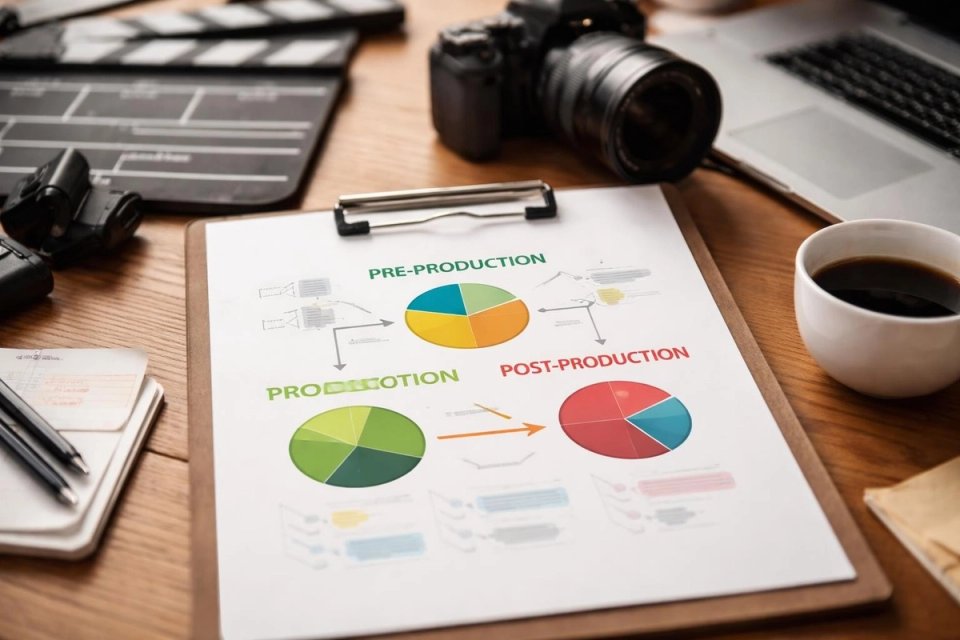
Every video production fee allocates resources across three distinct phases: pre-production, production, and post-production. Each phase carries specific costs and plays a critical role in the final product's success. Proper budget allocation ensures quality throughout the entire process rather than overinvesting in one area while compromising another.
Pre-Production Investment
Pre-production represents the planning foundation that determines project efficiency. This phase typically accounts for 15-25% of the total video production fee. During pre-production, your team develops the creative concept, writes scripts, creates storyboards, scouts locations, and coordinates logistics. Skimping on this phase often leads to expensive problems during filming.
The planning stage includes creative development meetings, location scouting, talent casting, equipment planning, and permit acquisition. For corporate projects, this phase also involves stakeholder interviews and brand alignment sessions to ensure the final video reflects company values and messaging accurately.
Production Day Expenses
The production phase represents the actual filming and typically consumes 40-50% of the total budget. This is when the crew, equipment, locations, and talent come together to capture your footage. Production day expenses include crew wages, equipment rentals, location fees, talent payments, catering, and transportation.
Crew composition varies based on project scope. A basic corporate interview might require just a director/camera operator and audio technician, while commercial video production often demands a full team including director, director of photography, camera operators, gaffers, grips, audio engineers, and production assistants.
| Production Element | Basic Project | Standard Project | Premium Project |
|---|---|---|---|
| Crew Size | 2-3 people | 4-7 people | 8-15+ people |
| Equipment Level | DSLR/Mirrorless | Cinema Camera | High-End Cinema |
| Lighting Setup | Natural/Basic | Professional Kit | Advanced Rigging |
| Location Count | 1 location | 2-3 locations | Multiple locations |
Post-Production Refinement
Post-production encompasses editing, color correction, sound design, motion graphics, and revisions. This phase typically accounts for 30-40% of the video production fee. Modern audiences expect polished content, making professional post-production essential for brand credibility.
Editing complexity significantly impacts costs. Simple cuts and transitions require less time than complex sequences with motion graphics, visual effects, and advanced color grading. Audio post-production including mixing, sound effects, and music licensing adds additional layers to the budget. Many production companies include a specific number of revision rounds in their base fee, with additional changes incurring extra costs.
Pricing Models Used by Production Companies
Video production companies employ various pricing structures to accommodate different client needs and project types. Understanding these models helps you evaluate proposals and choose the approach that best fits your budget and project requirements.
Flat-rate project pricing offers a single comprehensive fee covering all production phases. This model works well for clearly defined projects with specific deliverables. Clients appreciate the predictability, knowing exactly what they'll pay without surprises. However, significant scope changes mid-project may require contract amendments.
Day-rate pricing charges for each production day plus pre and post-production time. This flexible approach suits projects where the full scope isn't defined upfront. Production companies typically quote separate rates for pre-production days, filming days, and editing days. While this model offers flexibility, final costs can exceed initial estimates if the project requires more time than anticipated.
Retainer arrangements benefit businesses producing regular video content. Monthly retainers provide predictable budgeting while often reducing the per-video cost compared to one-off projects. This model works particularly well for social media video campaigns requiring consistent content output throughout the year.
Budget Planning for Different Video Types
Different video formats carry distinct production requirements that influence the overall video production fee. Aligning your budget expectations with industry standards prevents disappointment and ensures you allocate sufficient resources for quality results.
Commercial and advertising videos typically require the highest production values. A professional commercial for broadcast or digital advertising often ranges from $15,000 to $100,000+ depending on creative complexity, production quality, and distribution plans. These projects demand premium equipment, experienced crews, professional talent, and sophisticated post-production to compete for viewer attention in saturated markets.
Corporate videos including company overviews, training materials, and internal communications generally fall into a moderate budget range. Professional corporate video production typically costs between $5,000 and $25,000 depending on length, location requirements, and production complexity. These videos prioritize clear messaging and professional presentation while often working with company personnel rather than professional actors.
Social media content operates across a broad spectrum. Short-form vertical videos for Instagram or TikTok might cost $1,500-$5,000 per piece when produced professionally, while more elaborate social campaigns with multiple deliverables can reach $10,000-$30,000. The key is matching production quality to platform expectations and audience standards while maintaining cost efficiency for regular content output.
Estimated budget ranges for common video types:
- Product demonstrations: $3,000 - $12,000
- Customer testimonials: $2,500 - $8,000
- Event coverage: $4,000 - $15,000
- Animated explainer videos: $5,000 - $20,000
- Brand documentaries: $15,000 - $50,000+
- Television commercials: $25,000 - $150,000+

Hidden Costs and Additional Expenses
Beyond the base video production fee, several potential additional costs can impact your total investment. Awareness of these expenses during planning prevents budget surprises later in the project lifecycle.
Music licensing represents a common additional expense. While some production companies include royalty-free music in their base fee, premium tracks or custom composition add costs. Licensing fees vary dramatically based on the music's popularity, usage rights, and distribution scope. A corporate video shown internally might require minimal licensing fees, while a commercial airing nationally demands substantially higher investments.
Location fees can escalate quickly, particularly in urban markets like Toronto. While some locations offer free access, premium venues, private properties, and commercial spaces often charge rental fees ranging from a few hundred to several thousand dollars per day. Travel expenses including transportation, accommodations, and per diems apply when filming requires crews to work outside their home base.
Talent costs extend beyond on-camera performers. Professional voice-over artists charge separate fees based on their experience level and the project's usage rights. Union talent requires specific contracts and payment structures that differ from non-union performers. When planning your budget, factor in casting time, talent fees, and potential residuals for commercial work.
How to Evaluate Production Company Proposals
When reviewing video production fee proposals, look beyond the bottom-line number. The most comprehensive understanding of video production pricing helps you compare proposals accurately and select the partner offering the best value for your specific needs.
Request detailed breakdowns showing how costs distribute across production phases. Transparent companies willingly explain their pricing structure, itemizing major expense categories. This transparency allows you to understand where your money goes and identify potential areas for adjustment if budget constraints exist.
Compare deliverable specifications carefully. One company's $10,000 proposal might include two revision rounds and a single final video, while another's includes unlimited revisions and multiple format variations optimized for different platforms. Understanding exactly what you receive for the quoted video production fee ensures apple-to-apple comparisons.
Evaluate the team's experience and portfolio relevance. A higher video production fee from an experienced team with proven results in your industry often delivers better ROI than a lower quote from generalists. Review their previous work, particularly projects similar to yours, to assess whether their creative style and production quality align with your brand standards.
Questions to ask when evaluating proposals:
- What specific deliverables are included in the quoted fee?
- How many revision rounds does the price include?
- What happens if the project scope changes during production?
- Are travel expenses, permits, and location fees included or additional?
- What is the expected timeline from project kickoff to final delivery?
- Who owns the final footage and raw files?
- What usage rights are included for music and other licensed materials?
Maximizing ROI on Your Video Investment
Understanding the video production fee is just one aspect of video marketing success. Smart businesses focus equally on maximizing the return from their investment through strategic planning and content optimization. Proper planning ensures your video budget delivers measurable business impact rather than just attractive content.
Start by defining clear objectives before approaching production companies. Videos designed to generate leads require different creative approaches than those building brand awareness or explaining complex products. Your production partner can align the creative strategy with these goals, ensuring every production dollar contributes to measurable outcomes.
Repurposing content across multiple platforms maximizes your video production fee investment. A single production day can yield multiple deliverables: a full-length video for your website, shortened versions for social media, teaser clips for advertising campaigns, and behind-the-scenes content for employee engagement. Planning these variations upfront often costs less than producing separate projects later.
Distribution strategy matters as much as production quality. The most beautifully produced video delivers zero ROI if your target audience never sees it. Allocate budget not just for production but for promotion, whether through paid advertising, SEO optimization, email marketing, or social media campaigns. Some businesses find that allocating 60% to production and 40% to distribution and promotion yields better results than spending everything on production alone.

Working Within Budget Constraints
Not every business can allocate premium budgets to video production, but strategic choices allow you to produce effective content within financial constraints. Understanding which elements most impact quality versus cost helps you make smart tradeoffs without compromising your brand integrity.
Prioritize spending on elements most visible to your audience. Professional camera work, clean audio, and polished editing create stronger impressions than expensive locations or elaborate lighting setups. A simple setting with excellent production fundamentals outperforms a premium location with amateur execution. Focus your video production fee allocation on core technical quality rather than expensive extras.
Consider phased production approaches. Rather than producing one expensive comprehensive video, create a series of smaller focused pieces that collectively tell your story. This strategy provides more content touchpoints with your audience while spreading costs across multiple budget cycles. The approach works particularly well for businesses developing ongoing content libraries for employee training or customer education.
Leverage existing resources strategically. If your company has suitable locations, on-camera talent willing to participate, or equipment that can supplement professional gear, communicate these assets to your production partner. Many companies reduce their video production fee when clients contribute resources, though ensure any compromises don't undermine the professional quality your brand requires.
| Cost-Saving Strategy | Potential Savings | Quality Impact | Best For |
|---|---|---|---|
| Simplified locations | 15-25% | Low | Corporate, testimonial |
| Reduced crew size | 10-20% | Medium | Small-scale projects |
| Employee talent | 10-30% | Low-Medium | Internal, B2B content |
| Fewer deliverables | 20-40% | None | Single-platform focus |
| Extended timeline | 5-15% | None | Non-urgent projects |
Industry Standards and Market Rates in 2026
Video production fee expectations vary by market, with major metropolitan areas like Toronto typically commanding higher rates than smaller markets. However, geographic pricing differences have compressed somewhat as remote collaboration technology enables businesses to work with production companies regardless of location.
Use a written brief to compare Toronto production estimates. List the deliverables, filming requirements, editing scope and review stages, then ask each supplier to explain what is included. Our video production pricing guide covers the scope decisions that make quotes easier to compare.
Day rates for freelance crew members provide context for understanding overall production costs. Experienced directors of photography command $800-$1,500 per day, while camera operators range from $500-$900. Audio technicians typically charge $400-$700 daily, with specialized roles like gaffers and grips falling in similar ranges. Editor rates vary between $500-$1,000 per day depending on expertise and project complexity.
Understanding these component costs helps you evaluate whether a quoted video production fee represents fair market value or outlier pricing. While the cheapest option rarely delivers the best results, extremely high quotes should come with clear justification through specialized expertise, premium equipment, or unique creative capabilities.
Planning for Long-Term Video Strategy
Rather than viewing each video as an isolated expense, forward-thinking businesses develop comprehensive video strategies that optimize their overall production investment. This approach often reduces the effective per-video cost while building a valuable content library that serves multiple business objectives over time.
Annual content planning allows you to negotiate better rates with production partners. Many companies offer package pricing or retainer discounts when committing to multiple projects throughout the year. This arrangement provides production companies with predictable revenue while giving clients reduced rates and priority scheduling.
Building relationships with production partners yields benefits beyond immediate cost savings. Teams familiar with your brand, messaging, and preferences work more efficiently, reducing the time required for briefings, revisions, and approvals. This efficiency translates to lower costs per project while maintaining consistent quality and brand alignment across your video library.
Template-based approaches further optimize video production fee efficiency for certain content types. If you regularly produce similar video formats, such as monthly employee updates or product releases, developing a production template allows teams to replicate successful approaches efficiently. After investing in the initial template development, subsequent videos cost significantly less while maintaining professional quality and brand consistency.
Understanding the components and considerations behind video production fee structures empowers businesses to make informed investment decisions that align creative vision with budgetary realities. Whether you're producing your first corporate video or expanding an established content library, transparent pricing knowledge ensures you receive fair value while achieving your marketing and communication objectives. Viva Media specializes in creating high-performance video content throughout the Greater Toronto Area, working transparently with clients to develop production approaches that deliver measurable business results within realistic budgets.