

The video advert has evolved from a simple marketing tool into a sophisticated business asset that drives measurable results across digital platforms. In 2026, brands are investing more than ever in video advertising, with streaming platforms and social media channels becoming primary venues for reaching targeted audiences. Understanding how to craft compelling video adverts that capture attention, communicate value, and convert viewers into customers has become essential for businesses seeking competitive advantage in the Greater Toronto Area and beyond.
The Business Case for Video Advertising
Video advertising spending continues to surge as brands recognize the format's unmatched ability to engage audiences and drive conversions. Digital video advertising has become the fastest-growing segment in marketing budgets, with companies allocating significant resources to create content that resonates across multiple platforms.
The rise of ad-supported streaming services has fundamentally changed how audiences consume video content. According to recent data, hours spent on major ad-supported streaming services spiked by 43 percent in 2025, creating unprecedented opportunities for brands to reach engaged viewers. This shift represents a massive opportunity for businesses willing to invest in high-quality video adverts.
When planning your video advertising strategy, consider these fundamental advantages:
- Higher engagement rates compared to static content across all platforms
- Improved brand recall through visual and auditory storytelling
- Enhanced conversion metrics when campaigns are properly targeted
- Stronger emotional connections with your target audience
- Greater shareability on social media channels

Strategic Planning for Video Advert Success
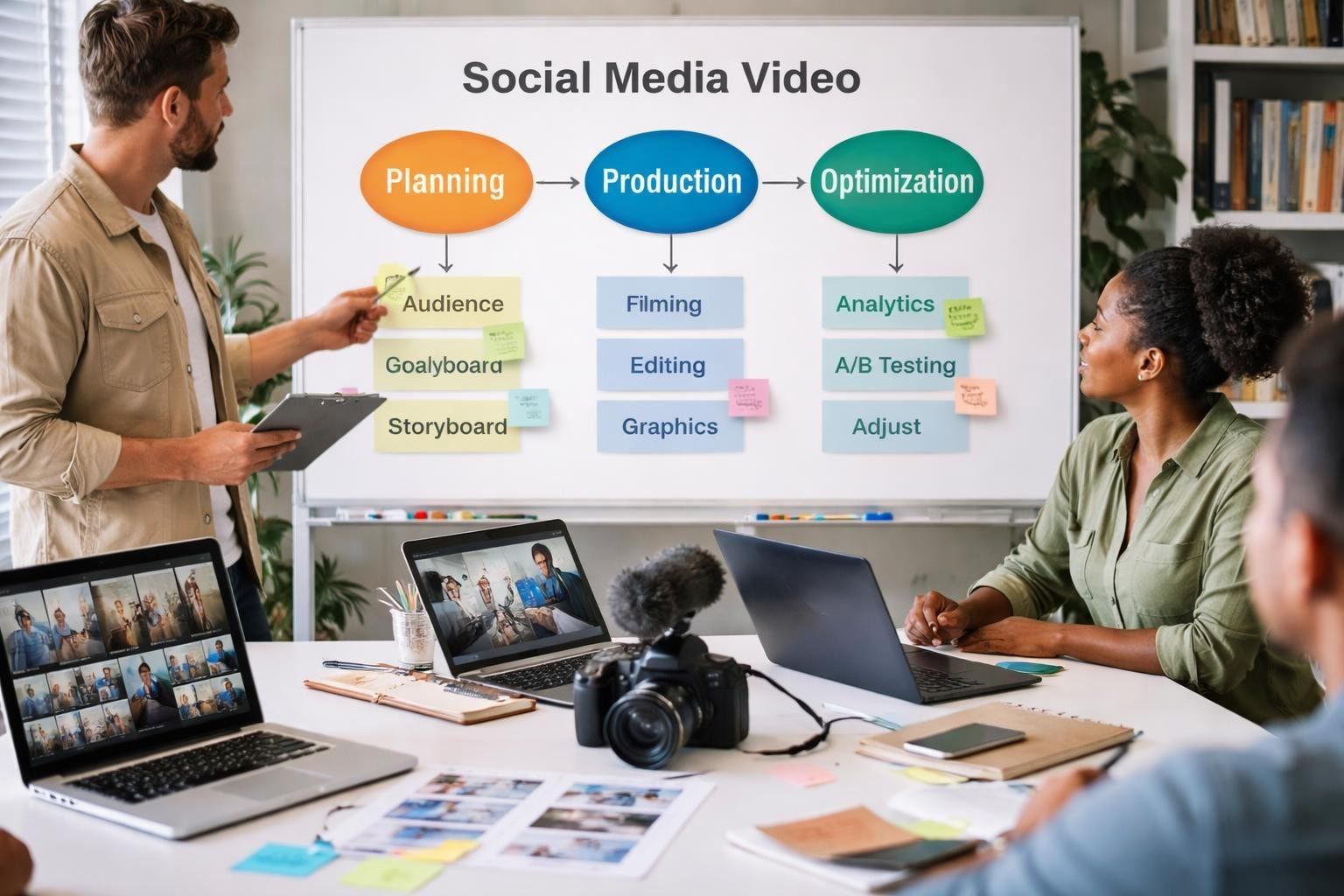
Creating an effective video advert begins long before cameras start rolling. Strategic planning ensures your investment delivers measurable business results rather than just vanity metrics.
Defining Clear Objectives
Every successful video advert campaign starts with specific, measurable goals. Performance-driven video production requires clarity about what you're trying to achieve, whether that's brand awareness, lead generation, product launches, or direct sales.
Your objectives should align with broader business goals and include specific KPIs such as view-through rates, click-through rates, conversion percentages, and return on ad spend. Commercial video production that delivers real ROI requires this level of strategic thinking from the outset.
Understanding Your Target Audience
Audience research determines everything from your video's messaging to its visual style and distribution channels. Consider these critical audience factors:
- Demographics: Age, location, income, education level
- Psychographics: Values, interests, lifestyle preferences
- Viewing habits: Preferred platforms, device usage, viewing times
- Pain points: Problems your product or service solves
- Decision-making triggers: What motivates them to take action
Platform Selection and Format Optimization
Different platforms require different approaches to video advertising. Social media video statistics reveal significant variations in how audiences engage with content across channels.
| Platform | Optimal Length | Key Format Considerations |
|---|---|---|
| YouTube | 15-30 seconds (skippable), 6 seconds (bumper) | Pre-roll, mid-roll, or post-roll placement |
| 15 seconds or less | Square or vertical format, mobile-first | |
| 15-30 seconds | Stories, Reels, or Feed placement variations | |
| 30-60 seconds | Professional tone, B2B messaging | |
| TikTok | 9-15 seconds | Native feel, trending audio integration |
Production Excellence in Video Advertising
The quality of your video advert directly impacts audience perception of your brand. Professional production values signal credibility and trustworthiness, while poor quality can damage brand reputation regardless of message strength.
Scripting and Storyboarding
Effective video adverts communicate their core message within the first three seconds. Your script should follow a proven structure that captures attention immediately, builds interest through compelling storytelling, and concludes with a clear call to action.
Storyboarding transforms your script into a visual blueprint, allowing you to identify potential production challenges before they become expensive problems. This planning phase ensures every shot serves a specific purpose in your overall narrative.
When developing your script, remember that viewers often watch with sound off. Visual storytelling must carry your message even without audio, while captions and text overlays reinforce key points.
Visual and Audio Excellence
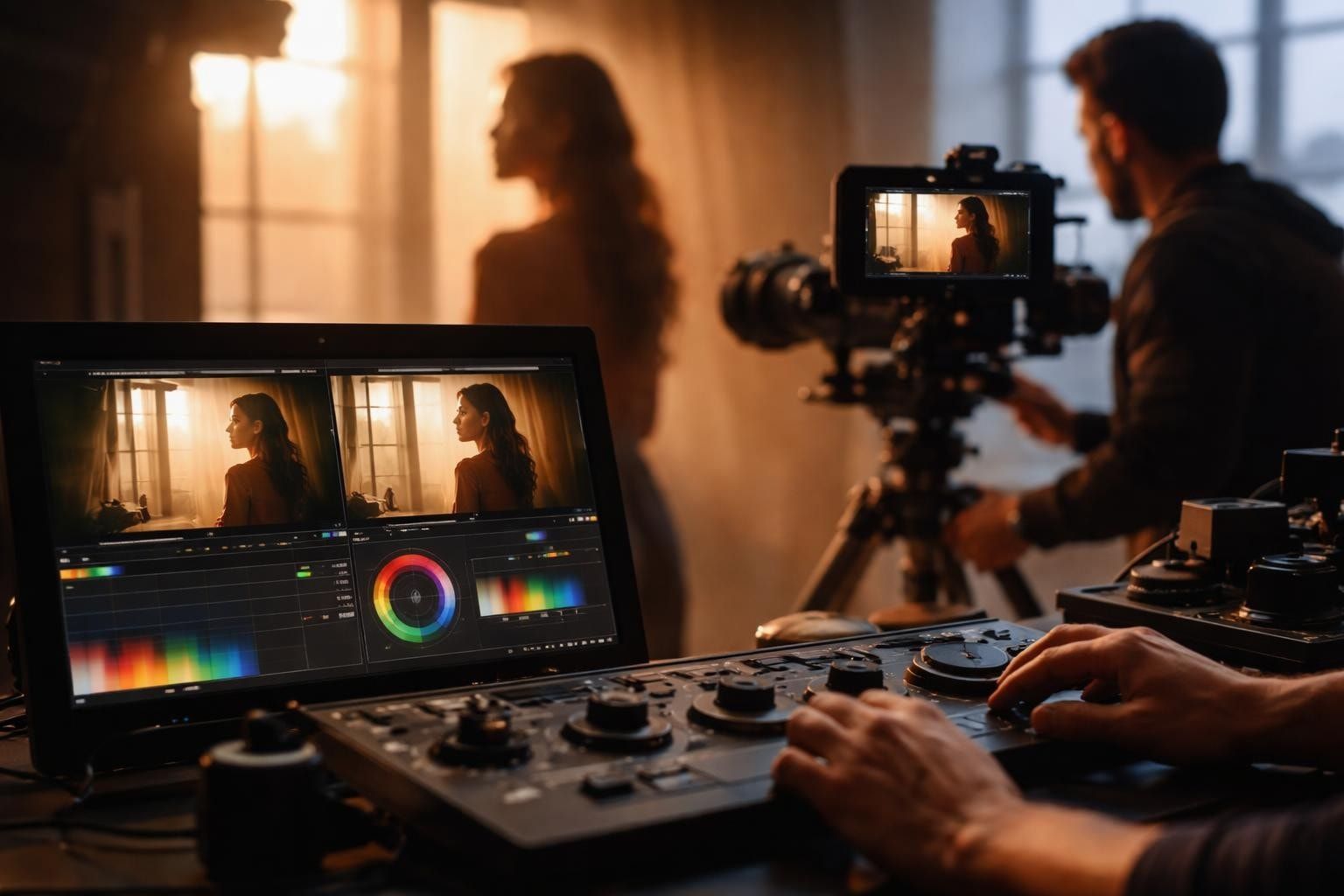
Professional video production requires attention to both visual and audio elements. Investing in quality video production equipment ensures your video advert meets the technical standards audiences expect in 2026.
Key production considerations include:
- Lighting: Properly lit scenes create professional appearance and guide viewer attention
- Composition: Strategic framing emphasizes your message and maintains visual interest
- Color grading: Consistent color treatment reinforces brand identity
- Audio quality: Clear dialogue, appropriate music, and professional sound mixing
- Motion graphics: Animated elements that enhance rather than distract from your message
The Role of AI in Video Production
The adoption of artificial intelligence in video advertising continues to accelerate. Research indicates that nearly 90 percent of advertisers will use generative AI to build video ads by 2026, representing a fundamental shift in how video adverts are conceptualized and produced.
AI tools now assist with script generation, video editing, personalization at scale, and performance prediction. However, human creativity and strategic thinking remain essential for creating video adverts that truly resonate with audiences and drive business results.

Distribution and Amplification Strategies
Creating an exceptional video advert represents only half the equation. Strategic distribution ensures your content reaches the right audiences at the right times across the most effective channels.
Paid Advertising Platforms
Paid distribution allows precise targeting and scalable reach. Each platform offers unique advantages for video adverts:
YouTube Advertising provides extensive reach and sophisticated targeting options including demographics, interests, and search behavior. Video discovery ads and TrueView formats allow businesses to pay only for engaged viewers.
Social Media Advertising enables hyper-targeted campaigns based on detailed user data. Facebook and Instagram ads manager provides powerful tools for audience segmentation and campaign optimization.
Programmatic Display automates ad buying across thousands of websites and apps, using real-time bidding to maximize efficiency. This approach works particularly well for retargeting campaigns that nurture prospects through the sales funnel.
Organic Distribution Channels
While paid advertising drives immediate results, organic distribution builds sustainable audience relationships. Corporate video production should include strategies for maximizing organic reach through owned channels.
Your organic distribution strategy should include:
- Website integration: Embedding video adverts on high-traffic pages
- Email marketing: Including video content in newsletter campaigns
- Social media posting: Sharing across company profiles with strategic timing
- Employee advocacy: Leveraging team networks for extended reach
- Press releases: Incorporating video into public relations efforts
Cross-Platform Optimization
Each distribution channel requires format-specific optimization. The same video advert needs different aspect ratios, lengths, and even messaging emphasis depending on where it appears.
Smart marketers create multiple versions from a single shoot, adapting content for platform-specific requirements while maintaining consistent branding and messaging. This approach, often called "atomization," maximizes ROI from your video production investment.
Measuring Video Advert Performance
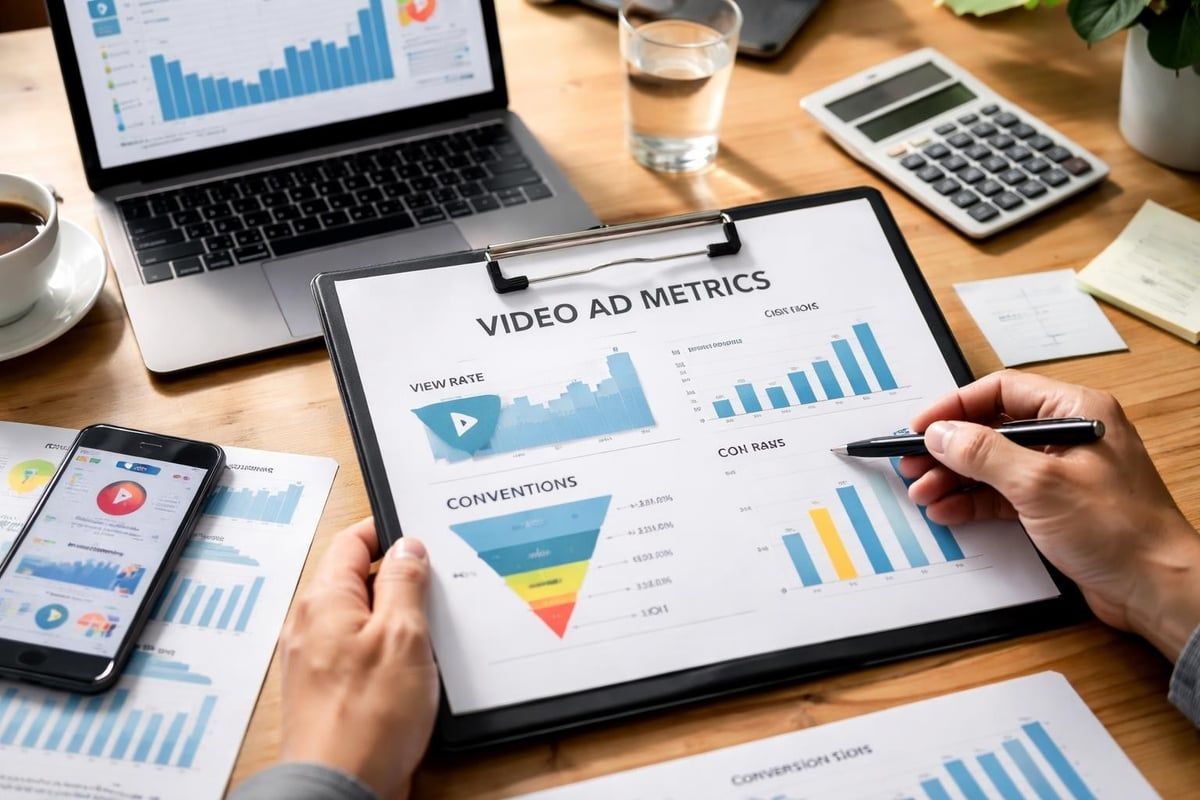
Data-driven optimization separates high-performing video adverts from those that drain budgets without delivering results. Implementing robust measurement frameworks from campaign launch enables continuous improvement and demonstrates marketing ROI to stakeholders.
Essential Metrics and KPIs
Different campaign objectives require different measurement approaches. Understanding which metrics matter for your specific goals prevents getting lost in vanity metrics that look impressive but don't correlate with business outcomes.
| Objective | Primary Metrics | Secondary Metrics |
|---|---|---|
| Brand Awareness | Impressions, Reach, View Rate | Share Rate, Brand Lift Studies |
| Engagement | Watch Time, Completion Rate, Engagement Rate | Comments, Shares, Saves |
| Consideration | Click-Through Rate, Website Traffic | Time on Site, Pages per Session |
| Conversion | Conversion Rate, Cost per Acquisition | Return on Ad Spend, Customer Lifetime Value |
View-through rate measures how many people watched your video advert to completion, providing insight into content quality and audience relevance. Low completion rates signal problems with targeting, creative execution, or length.
Engagement metrics reveal how audiences interact with your content beyond passive viewing. Likes, comments, shares, and saves indicate emotional resonance and social proof that amplifies your message.
A/B Testing and Optimization
Systematic testing identifies what works and what doesn't in your video advertising. Testing variables like thumbnails, opening hooks, calls to action, and video length provides data-driven insights for continuous improvement.
Professional video marketing strategies incorporate ongoing testing cycles that refine campaigns based on performance data rather than assumptions.
Creative Best Practices for 2026
The video advertising landscape evolves constantly, with audience expectations and platform algorithms shifting based on user behavior and technological advancement. Staying current with video ad creative best practices ensures your campaigns remain competitive.
Hook Viewers Immediately
The first three seconds determine whether viewers continue watching or scroll past your video advert. Leading with your strongest visual, most compelling benefit, or most intriguing question maximizes retention.
Pattern interruption techniques that break expected scrolling behavior include unexpected visuals, provocative questions, or bold statements that demand attention. However, these techniques must connect authentically to your message rather than relying on clickbait tactics that damage brand trust.
Tell Stories That Connect
Human brains are wired for storytelling. Video adverts that present information as narrative rather than feature lists create emotional connections that drive action.
Effective stories in advertising typically follow proven structures:
- Problem-Solution: Present a relatable challenge your product solves
- Transformation: Show the journey from current state to desired outcome
- Customer Success: Let satisfied customers tell authentic stories
- Behind-the-Scenes: Build trust through transparency about your process
Optimize for Mobile Viewing
Mobile devices account for the majority of video consumption in 2026. Your video advert must work flawlessly on small screens with potentially limited audio.
Mobile optimization includes vertical or square aspect ratios that maximize screen real estate, large text that remains readable on small displays, and visual storytelling that communicates without sound. Testing your video on actual mobile devices before launch prevents costly mistakes.
Include Clear Calls to Action
Every video advert should guide viewers toward a specific next step. Vague endings waste the attention you've earned, while clear calls to action convert interest into measurable results.
Effective CTAs specify exactly what action to take, explain the benefit of taking that action, and create urgency through limited-time offers or scarcity messaging. Visual and verbal CTAs reinforce each other for maximum impact.
Budget Considerations and ROI Maximization
Video advertising budgets vary dramatically based on production quality, distribution spend, and campaign scale. Understanding where to allocate resources ensures maximum return on investment.
Production Budget Allocation
Professional video production involves multiple cost centers that impact final quality. Typical budget breakdowns include:
- Pre-production (15-20%): Strategy, scripting, storyboarding, casting, location scouting
- Production (30-40%): Crew, equipment, talent, locations, props
- Post-production (25-35%): Editing, color correction, sound design, motion graphics
- Distribution (10-20%): Platform fees, paid promotion, optimization
Advertising clips that deliver strong ROI balance production quality with strategic distribution, avoiding the trap of overspending on production while underfunding promotion.
Extending Video Value
Smart marketers extract maximum value from every video production by creating multiple assets from single shoots. A comprehensive video advert project might yield:
- Full-length commercial for website and YouTube
- Short-form cutdowns for social media platforms
- Testimonial clips for sales presentations
- Behind-the-scenes content for engagement building
- Still images for print and display advertising
This approach, often called "content atomization," dramatically improves ROI by spreading production costs across multiple deliverables.
Industry-Specific Applications
Different industries leverage video adverts in unique ways that reflect their specific customer journeys and decision-making processes.
Real estate professionals use video adverts to showcase properties through virtual tours, highlight neighborhood amenities, and build agent credibility through personal branding content.
Healthcare providers create video adverts that explain complex procedures in accessible language, introduce medical teams to build trust, and share patient success stories that demonstrate outcomes.
Technology companies leverage video to simplify complex products through demonstrations, compare features against competitors, and showcase integration possibilities with existing systems.
Retail brands drive sales through product demonstrations, limited-time offer announcements, and lifestyle content that positions products within aspirational contexts.
Understanding how video adverts function within your specific industry ensures messaging resonates with audience expectations and decision-making patterns.
Mastering video advert creation requires strategic planning, production excellence, and data-driven optimization that continuously improves campaign performance. As Toronto businesses navigate the increasingly competitive digital landscape of 2026, professional video advertising becomes not just an advantage but a necessity for sustainable growth. Viva Media specializes in creating high-performance video adverts that deliver measurable business results for forward-thinking brands throughout the Greater Toronto Area, combining strategic insight with production expertise to engineer attention-grabbing campaigns that drive real ROI.