

Making videos for social media has become essential for brands looking to cut through digital noise and connect with audiences in meaningful ways. In 2026, video content continues to dominate engagement metrics across every platform, with algorithms favoring dynamic visual content over static posts. The challenge isn't just creating videos anymore; it's engineering content that delivers measurable business results while adapting to the unique requirements of each social platform. Understanding how to strategically approach social media video production can transform your marketing outcomes and build authentic connections with your target audience.
Understanding Platform-Specific Video Requirements
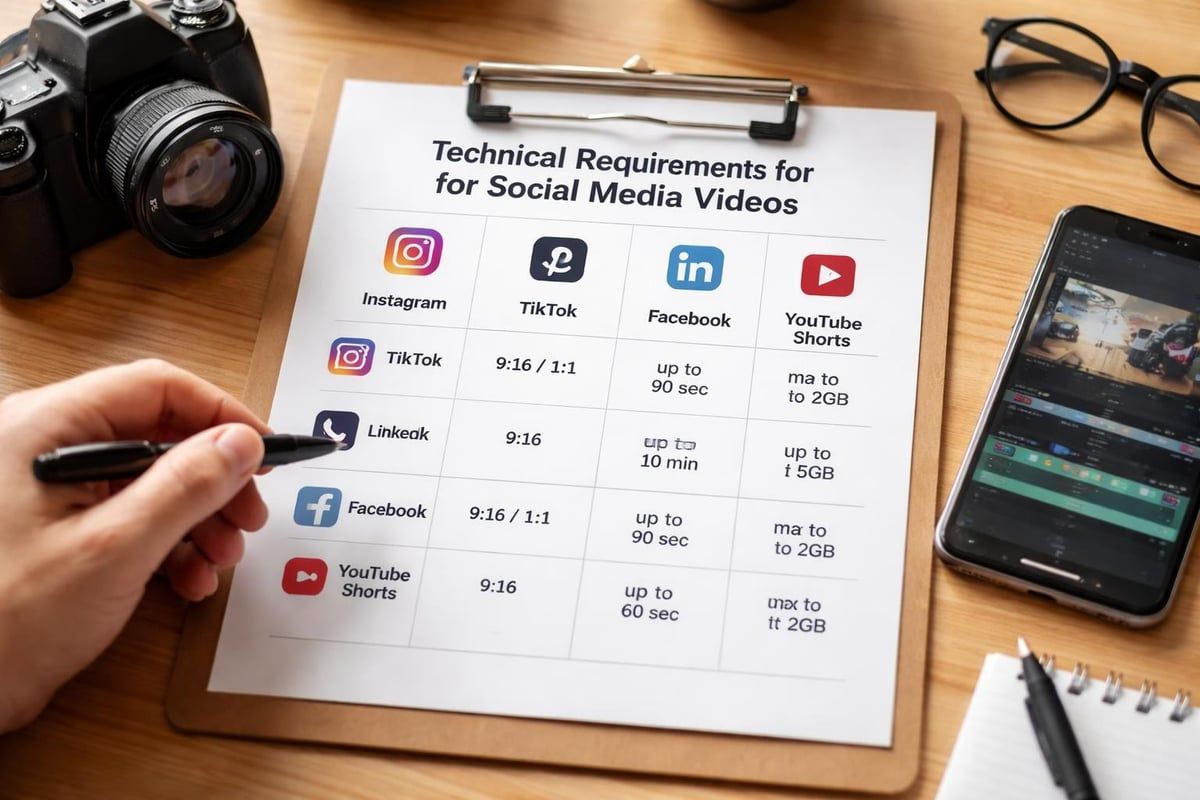
Different social platforms have distinct technical specifications and audience expectations that directly impact video performance. Instagram prioritizes vertical 9:16 videos for Reels and Stories, while LinkedIn audiences respond better to horizontal 16:9 formats that maintain professional production values. TikTok demands fast-paced editing with hooks in the first three seconds, whereas Facebook users engage with longer-form content when it delivers genuine value.
Technical Specifications That Matter
Each platform enforces specific video requirements that affect reach and engagement. Creating effective social media videos requires understanding these technical constraints before production begins.
| Platform | Ideal Duration | Aspect Ratio | File Size Limit | Resolution |
|---|---|---|---|---|
| Instagram Reels | 15-90 seconds | 9:16 | 4GB | 1080 x 1920 |
| TikTok | 15-60 seconds | 9:16 | 287MB | 1080 x 1920 |
| 30-120 seconds | 16:9 or 1:1 | 5GB | 1920 x 1080 | |
| 60-120 seconds | 1:1 or 16:9 | 4GB | 1920 x 1080 | |
| YouTube Shorts | 15-60 seconds | 9:16 | 256GB | 1080 x 1920 |
Planning your video dimensions and duration during pre-production saves significant time and budget. Many Toronto businesses make the mistake of creating horizontal videos first, then attempting vertical crops that lose critical visual information. Starting with a vertical-first or square approach allows for easier adaptation across platforms.
Audio Considerations for Silent Viewing
Research shows that 85% of social media videos are watched without sound, making captions and visual storytelling non-negotiable elements. When making videos for social media, design content that communicates your message effectively even on mute. This means incorporating bold text overlays, dynamic graphics, and visual cues that guide viewers through your narrative without relying on dialogue alone.
Crafting Content That Stops the Scroll
The average social media user spends less than two seconds deciding whether to engage with content or keep scrolling. Your opening frame must immediately communicate value, trigger curiosity, or evoke emotion to capture attention in this critical window.
Hook Strategies That Work in 2026
Pattern interrupts work exceptionally well for commercial video production targeting business audiences. These include unexpected visual elements, provocative questions, or bold statements that contradict common assumptions. Movement in the first frame also increases watch time significantly compared to static opening shots.
Consider these proven hook approaches:
- Start with the most compelling moment from later in the video
- Open with a direct question that addresses viewer pain points
- Use text overlays that make bold claims requiring proof
- Show a before/after transformation immediately
- Feature recognizable locations or scenarios that trigger familiarity
The Toronto market responds particularly well to locally-relevant content that references familiar landmarks, weather patterns, or cultural touchstones. A corporate video production opening with a recognizable CN Tower shot or Distillery District location immediately creates connection with regional audiences.
Storytelling Structure for Short-Form Video
Even 30-second videos need narrative structure to maintain engagement and drive action. The most effective structure for making videos for social media follows a modified three-act format: hook (first 3 seconds), value delivery (middle section), and call-to-action (final 5 seconds).
Act One grabs attention and promises specific value. Act Two delivers on that promise through education, entertainment, or emotional connection. Act Three directs viewers toward a clear next step, whether that's visiting your website, commenting, or following for more content.
Production Quality vs. Authenticity Balance
One of the most common misconceptions about making videos for social media is that professional production values alienate audiences seeking authentic content. The reality is more nuanced: audiences expect production quality appropriate to your brand positioning while maintaining genuine human connection.
When to Invest in Professional Production
Understanding video pricing helps brands allocate resources strategically across their content calendar. High-stakes content like product launches, brand campaigns, and cornerstone marketing pieces demand professional production. These videos represent your brand for months or years and justify investment in proper lighting, sound, talent, and post-production.
Professional production delivers:
- Consistent brand presentation across all touchpoints
- Technical excellence that builds credibility
- Creative expertise that maximizes message impact
- Scalable content systems that improve efficiency
- Equipment and skills most businesses lack in-house
According to strategies for creating viral social media videos, production value should enhance rather than overshadow your core message. A beautifully shot video with weak messaging underperforms compared to authentic content with strategic substance.
Strategic Use of User-Generated Content
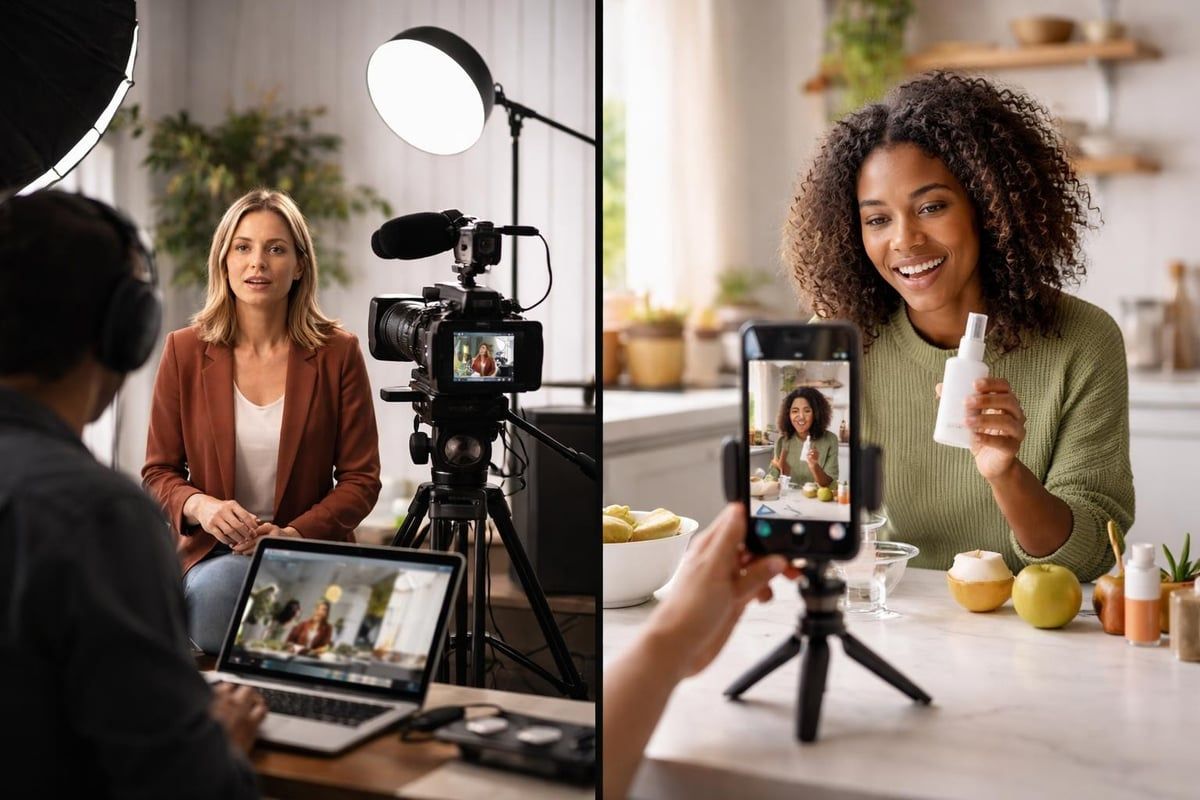
Lower-production content filmed on smartphones creates opportunities for frequent posting and authentic audience connection. Behind-the-scenes footage, team member takeovers, and customer testimonials shot on mobile devices humanize brands and fill content calendars between major production releases.
The key is maintaining consistent visual standards even with simpler production. Use consistent lighting, stabilization tools, and editing templates that keep brand identity recognizable regardless of production level.
Optimizing for Algorithm Performance
Platform algorithms determine which videos reach audiences beyond your immediate followers. Understanding how these algorithms evaluate content allows you to engineer videos that algorithms promote rather than suppress.
Key Algorithm Ranking Factors
Watch time percentage matters more than total views. A 30-second video with 80% completion rate outperforms a 60-second video with 40% completion. This metric alone should influence every decision about video length and pacing when making videos for social media.
| Ranking Factor | Impact Level | Optimization Strategy |
|---|---|---|
| Watch Time % | Critical | Front-load value, trim ruthlessly |
| Saves/Shares | High | Create reference-worthy content |
| Comments | High | Ask specific questions, respond quickly |
| Profile Visits | Medium | Strong CTA to view profile/bio |
| Repeat Views | Medium | Design content worth rewatching |
| Posting Frequency | Medium | Maintain consistent schedule |
Engagement velocity (how quickly a video generates interactions after posting) signals content quality to algorithms. Videos that immediately receive saves, shares, and comments get pushed to broader audiences. This makes the first hour after posting critical for success.
Thumbnail Strategy for Click-Through Optimization
Even though many videos autoplay, thumbnails still influence click decisions on platforms like LinkedIn and YouTube. Mastering thumbnail design requires testing different approaches to identify what resonates with your specific audience.
Effective thumbnails feature high contrast, minimal text (3-5 words maximum), and human faces showing clear emotions. Avoid generic stock imagery in favor of specific moments from your actual video that tease valuable content without giving everything away.
Content Planning and Batch Production
Sustainable social media video strategies require systematic production approaches rather than reactive one-off creation. Planning content themes monthly and batching production creates efficiency and consistency that algorithms reward.
Building a Content Framework
Successful brands organize video content into repeating categories that serve different audience needs. This framework might include educational tutorials, customer stories, product features, industry insights, and entertainment content that reinforces brand personality.
Educational content positions your expertise while providing genuine value. Social proof content leverages customer results to build credibility. Culture content humanizes your brand and attracts talent. Product content drives direct conversions. Balancing these categories keeps your feed diverse and engaging.
When planning corporate video services, map content to customer journey stages. Awareness-stage content addresses broad pain points, consideration-stage content compares solutions, and decision-stage content removes final objections.
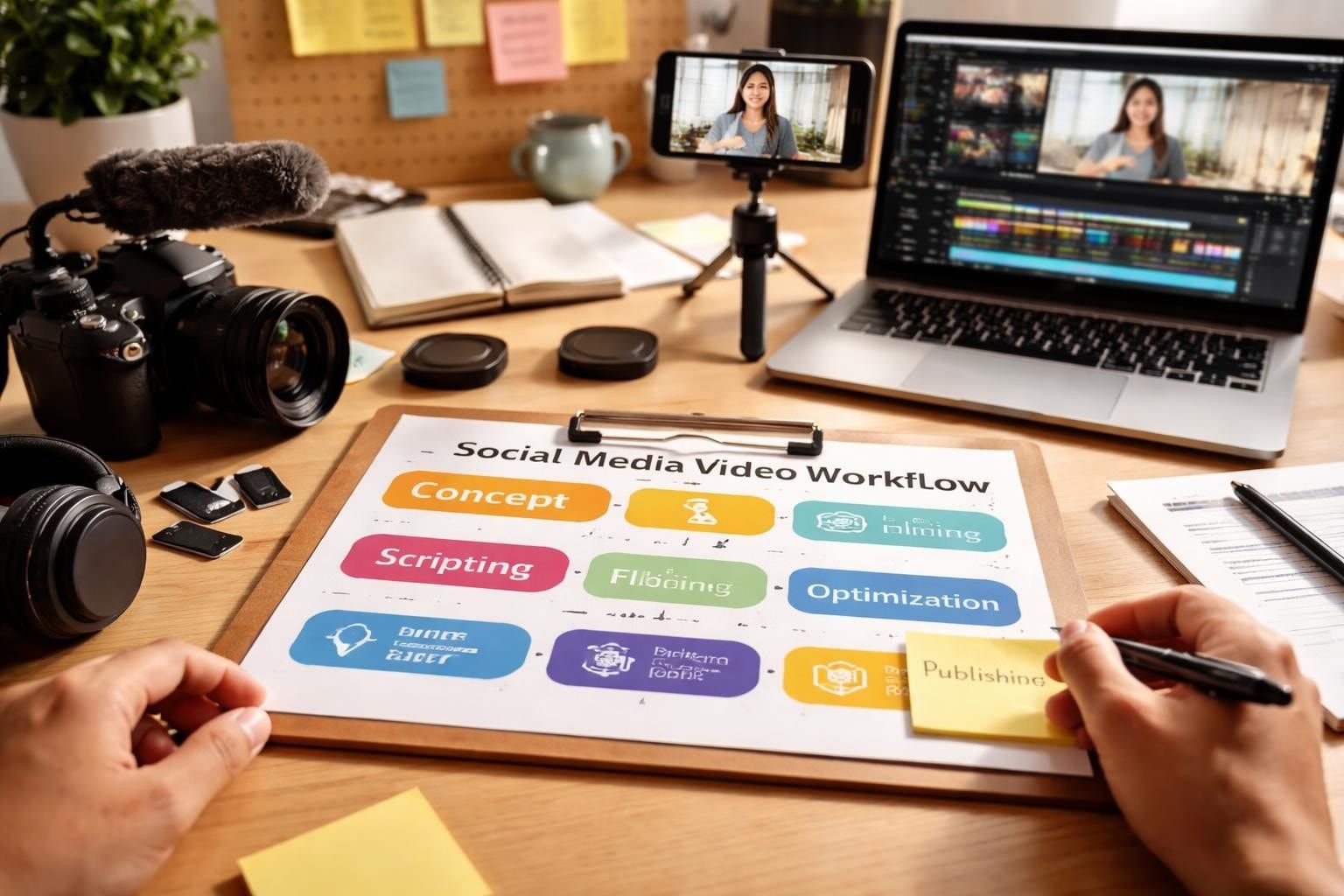
Batch Production Workflow
- Theme identification based on business goals and audience questions
- Script development for 4-8 videos sharing similar setup requirements
- Location and talent scheduling to capture multiple videos in single sessions
- Production day filming all planned content with consistent lighting and audio
- Editing workflow creating templates that speed post-production
- Strategic scheduling distributing content across optimal posting times
This approach reduces per-video costs dramatically compared to individual production sessions. A single production day can generate a month's worth of content when properly planned.

Mobile Optimization Best Practices
Mobile devices account for 78% of social media video views in 2026, making mobile optimization essential rather than optional. Every production decision should prioritize the mobile viewing experience.
Visual Elements for Small Screens
Text must be large enough to read on smartphones without squinting. Minimum font sizes of 40-50 points ensure legibility, while high-contrast color combinations improve visibility in various lighting conditions. Avoid placing critical information near screen edges where mobile interface elements might obscure content.
Close-up shots work better than wide establishing shots on small screens. When making videos for social media, plan shot compositions that remain impactful when viewed on 6-inch displays. Facial expressions, product details, and text overlays should fill the frame rather than competing for attention in busy wide shots.
Vertical Video Production Techniques
Shooting vertical requires different framing approaches than traditional horizontal video. Use the top third for faces and important visual elements, middle third for body language or product interaction, and bottom third for text overlays or calls-to-action.
Leading lines and vertical movement (jumping, rising, falling) feel more natural in 9:16 format compared to horizontal panning. Plan camera movements that complement vertical space rather than fighting against it.
Testing and Performance Analysis
Data-driven iteration separates successful social video strategies from content that fails to drive business results. Every video provides learning opportunities that inform future production decisions.
Metrics That Drive Strategic Decisions
Vanity metrics like total views matter less than engagement metrics that predict business outcomes. Track these performance indicators:
- Completion rate: Percentage of viewers who watch to the end
- Save rate: How often viewers bookmark content for later
- Share rate: Frequency of audience distribution to others
- Click-through rate: Percentage clicking profile or external links
- Conversion rate: Actions taken after viewing (purchases, sign-ups, inquiries)
Compare performance across content types, lengths, topics, and posting times. Patterns emerge that reveal what your specific audience values most. A topic generating high saves but low shares indicates reference content people want to keep private. High shares with low completion rates suggest strong hooks but weak payoff.
A/B Testing Framework
Test single variables between similar videos to isolate what drives performance differences. Understanding best practices for social media videos includes systematic testing of thumbnails, opening hooks, video lengths, and call-to-action placement.
Create two versions of the same core content with one different element. Post at similar times and compare results after 48 hours. Winning elements become standard in future production while losing approaches get eliminated or refined.
Equipment Investment Strategy
Making videos for social media doesn't require Hollywood budgets, but strategic equipment investment improves quality and efficiency. Prioritize purchases that solve specific problems in your current workflow rather than accumulating gear you rarely use.
Essential vs. Optional Equipment
Essential equipment includes proper lighting (even simple LED panels transform quality), external microphones for clear audio, and stabilization tools (gimbal or tripod). These three categories deliver the most noticeable quality improvements for social media content.
Optional equipment that enhances specific content types includes teleprompters for speaking videos, green screens for brand consistency, and specialized lenses for product close-ups. Invest in these only after mastering fundamentals and identifying specific needs.
| Equipment Category | Budget Option | Professional Option | Impact on Quality |
|---|---|---|---|
| Lighting | $50-100 LED panels | $500-1000 multi-light kit | High |
| Audio | $50-150 lavalier mic | $300-600 shotgun mic | Critical |
| Stabilization | $30-80 basic tripod | $300-800 gimbal | Medium |
| Camera | Modern smartphone | $1000-3000 mirrorless | Medium |
Most smartphones in 2026 shoot exceptional video quality that meets social media requirements. The limiting factors are typically lighting and audio rather than camera specifications. Businesses often see better ROI improving these elements before upgrading cameras.
Caption and Accessibility Integration
Captions serve multiple purposes beyond accessibility compliance. They improve engagement for viewers in sound-sensitive environments, support non-native speakers, and provide additional keyword opportunities for search optimization.
Caption Best Practices
Auto-generated captions require editing for accuracy, particularly with technical terminology, brand names, and industry jargon. Maximizing engagement in social media video includes ensuring captions match spoken content precisely while remaining readable at quick scanning speeds.
Position captions in the lower-middle portion of vertical videos, avoiding the bottom 20% where mobile interface elements appear. Use high-contrast backgrounds behind white or yellow text to ensure visibility against varying video backgrounds.
Styling considerations include appropriate text size, timing that matches natural speech rhythm, and highlighting key phrases for emphasis. Some platforms allow caption customization while others use default formatting that limits creative control.
Call-to-Action Strategy
Every social media video should guide viewers toward a specific next step aligned with business objectives. Weak or missing calls-to-action waste the attention you've earned through quality content.
Effective CTA Placement and Wording
Place primary calls-to-action in the final 5-10 seconds when viewers have received value and built enough trust to take action. Secondary CTAs can appear mid-video for longer content, directing engaged viewers who might not finish.
Specific CTAs outperform generic requests. "Comment 'GUIDE' below for our free content calendar template" drives more engagement than "Let us know what you think." The specificity reduces decision friction and provides clear instruction.
Match CTA difficulty to content value delivered. A 15-second tip deserves a low-commitment action like "follow for daily tips," while comprehensive tutorials can request email sign-ups or website visits. Compelling calls-to-action connect directly to problems your content addresses.
Repurposing Content Across Platforms
Strategic repurposing maximizes ROI from video production by adapting content for multiple platforms rather than creating platform-exclusive videos. A single production session can generate content for Instagram, TikTok, LinkedIn, YouTube, and Facebook with proper planning.
Cross-Platform Adaptation Techniques
Start with the most restrictive format (typically vertical 9:16 for Reels and TikTok), then adapt outward to other platforms. This approach ensures core content works everywhere rather than creating horizontal content that gets awkwardly cropped for vertical platforms.
Format variations to create from single source content:
- Full-length video for primary platform
- 15-second teaser highlighting key moment
- Quote graphics pulling impactful statements
- Behind-the-scenes clips showing production process
- Extended versions with additional context for YouTube
- Audio-only podcast clips for LinkedIn articles
Platform-specific optimization still matters. LinkedIn versions should include professional context and industry insights, while Instagram iterations can embrace trending audio and effects. The core message remains consistent while presentation adapts to audience expectations.
Collaboration with Video Production Partners
Many businesses reach a point where in-house video creation limits scale and quality. Working effectively with a video production company accelerates results while maintaining brand consistency.
When to Partner with Professionals
Consider professional partnership when you need specialized expertise, equipment, or creative direction beyond internal capabilities. Assessing whether your company needs to hire a video producer involves evaluating content volume needs, quality requirements, and internal resource constraints.
Professional production companies bring systematic approaches to making videos for social media that deliver measurable business results. They understand platform algorithms, audience psychology, and technical optimization that maximizes every content dollar invested.
Selecting the Right Production Partner
Evaluate potential partners based on their portfolio of social media work rather than traditional commercial reels. Questions to ask before hiring a video production company should focus on their understanding of social platforms, performance metrics, and content strategy rather than just production capabilities.
Look for partners who discuss audience insights, posting strategy, and performance goals before equipment and techniques. The best collaborations begin with strategic alignment around business objectives rather than creative preferences.
Staying Current with Platform Evolution
Social media platforms constantly evolve their features, algorithms, and best practices. What works in early 2026 may become obsolete by year-end as platforms prioritize different content types or introduce new formats.
Building Adaptive Content Systems
Rather than chasing every trend, develop flexible content frameworks that adapt to platform changes without requiring complete strategy overhauls. Focus on fundamental principles (value delivery, authentic connection, clear messaging) that remain relevant regardless of algorithm updates.
Monitor platform announcements, beta features, and creator resources for early signals about coming changes. Tips for creating engaging social media videos include staying informed about new features while maintaining consistency in brand presentation.
Adaptation strategies that maintain stability:
- Test new features with low-stakes content before major campaigns
- Maintain core content pillars while experimenting with format variations
- Track performance trends across quarters to identify pattern shifts
- Balance trending content (20%) with evergreen value content (80%)
- Build relationships with platform representatives for early feature access
Platform changes create opportunities for early adopters who master new features before competitors. Being among the first to effectively use new tools often delivers algorithmic preference and audience attention that fades as adoption increases.
Making videos for social media requires balancing strategic planning, technical execution, and creative storytelling to deliver content that drives measurable business results. The businesses that succeed treat social video as an integrated marketing system rather than isolated creative projects, consistently testing and refining their approach based on performance data. Viva Media specializes in creating high-performance social media video content for Toronto businesses that need professional production combined with platform expertise, helping brands cut through digital noise and connect authentically with their target audiences.