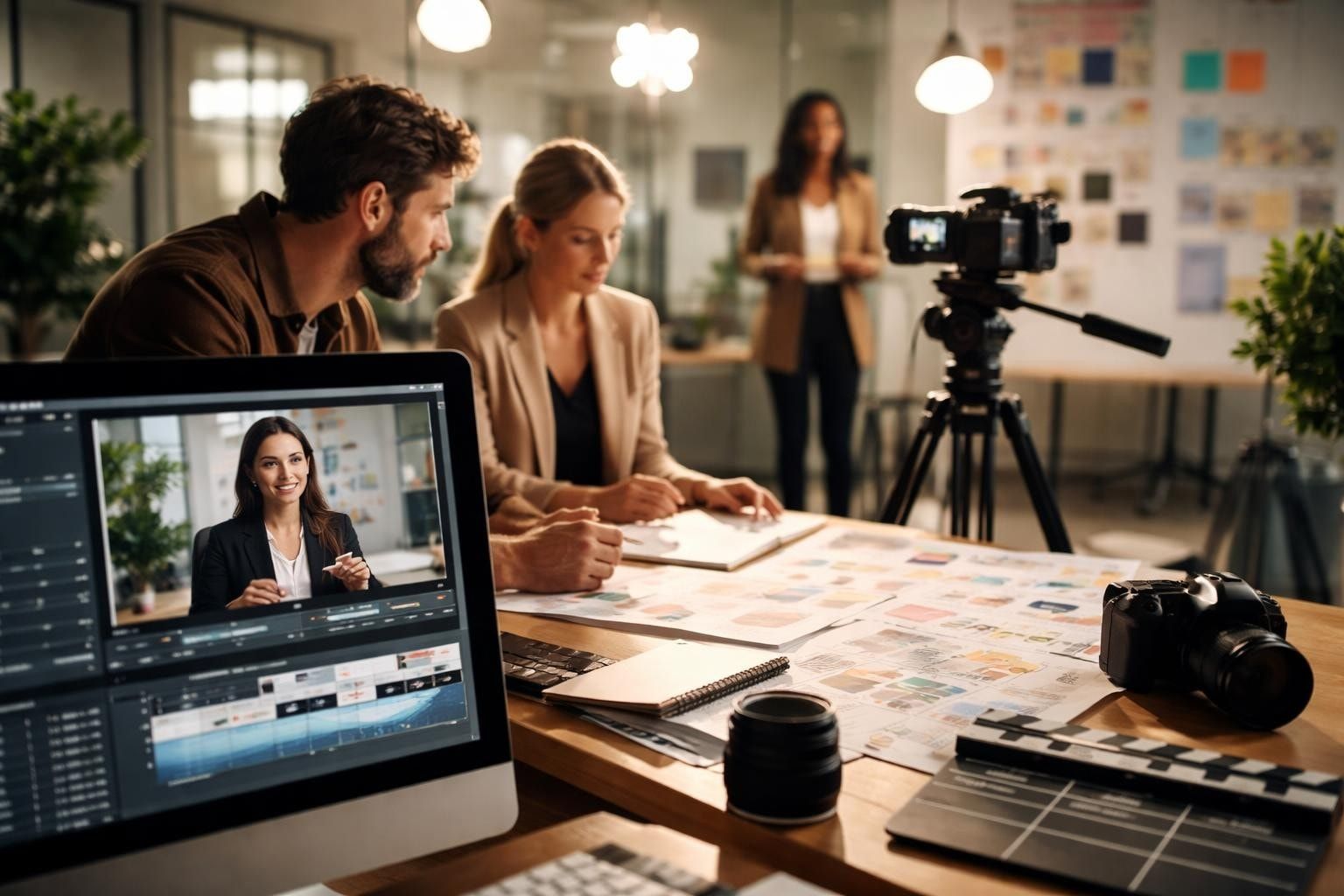
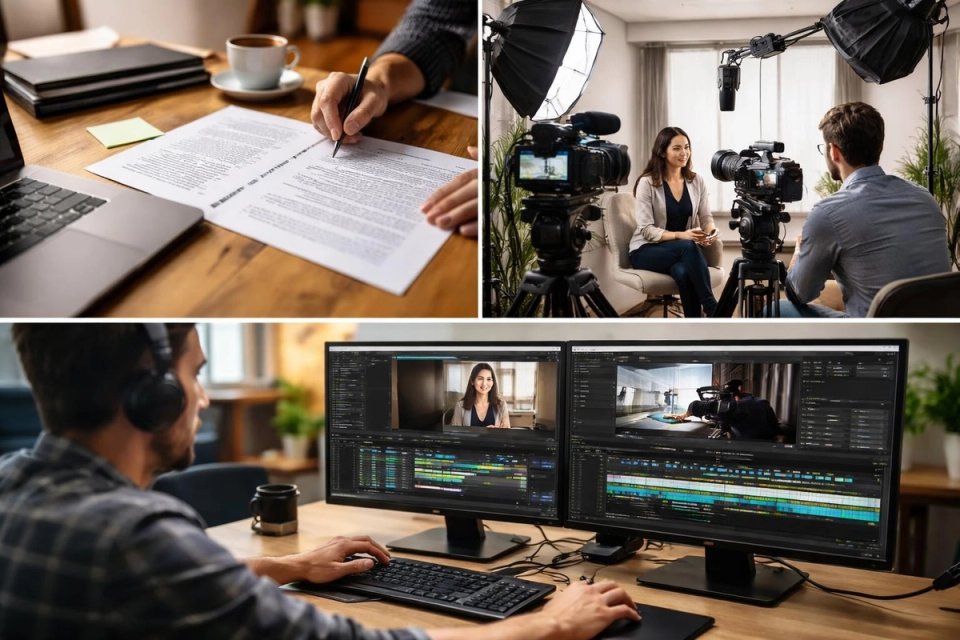
Interview video production has evolved into one of the most powerful tools for businesses to communicate authenticity, expertise, and credibility. Whether you're capturing customer testimonials, thought leadership content, or internal communications, mastering the interview format delivers content that resonates with audiences and drives measurable engagement. In today's digital landscape, where video content dominates social media feeds and corporate websites, understanding the technical and creative elements of professional interviews separates amateur footage from content that converts.
Understanding Interview Video Production Fundamentals
Interview video production requires a strategic blend of technical expertise and human connection. The format inherently builds trust because viewers see real people sharing genuine perspectives, making it particularly effective for brand storytelling and relationship building.
The foundation of successful interview content starts with clearly defining your objectives. Are you showcasing customer success stories? Building thought leadership? Training employees? Each purpose demands different approaches to questioning, setup, and delivery.
Key elements that define professional interview production include:
- Audio clarity that captures every word without distortion
- Lighting that flatters subjects while maintaining visual interest
- Camera placement that creates connection with viewers
- Environment selection that reinforces your message
- Question flow that elicits authentic, valuable responses
Modern interview video production extends beyond simple talking-head footage. Corporate video production services now incorporate dynamic b-roll, motion graphics, and multi-camera angles to maintain viewer attention throughout longer-form content.
Planning Your Interview Production Strategy
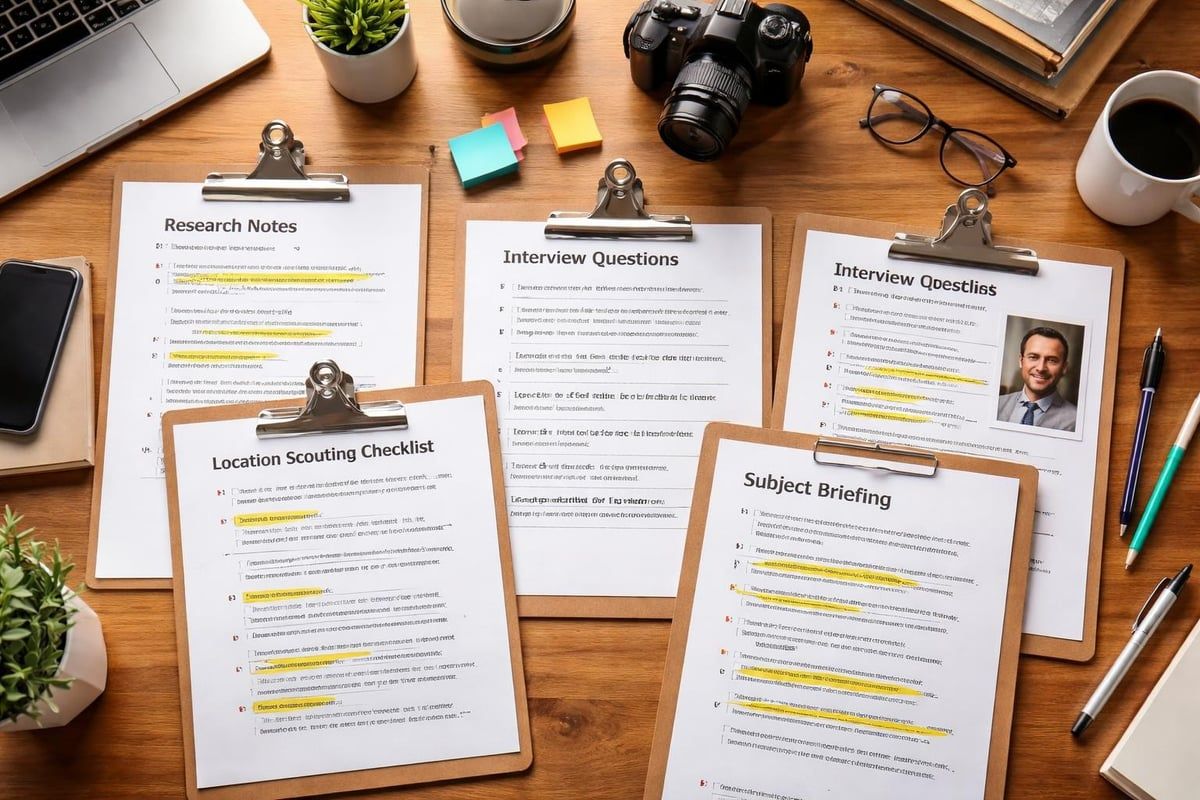
Before cameras roll, thorough preparation determines the difference between mediocre and exceptional results. Start by researching your subject extensively, whether they're customers, executives, or industry experts.
Develop a question framework that guides conversation while allowing natural dialogue to emerge. Avoid rigid scripts that create stiff, rehearsed responses. Instead, prepare open-ended questions that encourage storytelling and genuine emotion.
Consider your distribution channels during the planning phase. Content destined for LinkedIn requires different pacing than Instagram reels. Social media video production often demands tighter edits and attention-grabbing openings compared to long-form YouTube content.
Location scouting matters more than many producers realize. The environment should complement your message without overwhelming it. Corporate offices work for B2B thought leadership, while customer locations add authenticity to testimonial content.
Essential Equipment for Professional Results
Quality equipment forms the backbone of professional interview video production, but you don't need Hollywood budgets to achieve broadcast-ready results. Understanding which tools deliver the most impact helps allocate resources effectively.
Camera and Lens Selection
Modern mirrorless cameras and cinema cameras offer exceptional image quality at various price points. Full-frame sensors provide beautiful depth of field, separating subjects from backgrounds with professional bokeh effects.
Lens choice significantly impacts the visual story. Prime lenses in the 35mm to 85mm range create natural perspective for interview subjects. Wider lenses can distort faces, while telephoto options compress backgrounds pleasingly but require more shooting space.
| Equipment Category | Entry Level | Professional | Premium |
|---|---|---|---|
| Camera Body | $1,200-$2,000 | $3,000-$6,000 | $8,000+ |
| Interview Lens | $400-$800 | $1,200-$2,000 | $3,000+ |
| Audio Package | $300-$600 | $1,000-$2,000 | $3,500+ |
| Lighting Kit | $400-$800 | $1,500-$3,000 | $5,000+ |
Audio Capture Systems
Audio quality matters more than image quality in interview video production. Viewers tolerate imperfect visuals but abandon content with poor sound immediately. Essential recording equipment includes lavalier microphones for wireless freedom and boom microphones for superior sound quality.
Invest in audio monitoring headphones that reveal problems during recording rather than discovering issues in post-production. Professional audio recorders provide backup redundancy and superior preamps compared to in-camera recording alone.
Complete audio setup should include:
- Primary lavalier microphone with wireless transmitter
- Backup lavalier or shotgun microphone
- Audio recorder with dual recording capability
- Closed-back monitoring headphones
- Wind protection and shock mounts
Lighting Equipment and Techniques
Three-point lighting remains the industry standard for interview setups, creating dimensional, flattering illumination. The key light provides primary illumination, fill light softens shadows, and backlight separates subjects from backgrounds.
LED panels have revolutionized interview lighting with continuous output, color temperature adjustment, and minimal heat generation. Budget-conscious productions can achieve excellent results with modified natural light supplemented by affordable LED options.
Interview Techniques That Drive Engagement
Technical excellence means nothing without compelling content. The best interview video production balances professional polish with authentic human connection that resonates emotionally with viewers.
Building Rapport and Comfort
Nervous subjects deliver stiff, unconvincing performances. Spend time before recording establishing genuine connection with interviewees. Explain the process, share your vision for the final piece, and reassure them that imperfection is normal and fixable.
Best practices for conducting video interviews emphasize treating conversations naturally rather than formal interrogations. Start with easy warm-up questions before diving into substantial topics.
Create a comfortable physical environment with appropriate room temperature, refreshments nearby, and minimal distractions. Brief subjects on where to look (usually at the interviewer, not the camera) and encourage them to take their time formulating thoughtful responses.
Question Strategies for Authentic Responses
The questions you ask determine the content you capture. Avoid yes/no questions that produce unusable soundbites. Instead, craft questions that require detailed, story-driven answers.
Frame questions that begin with "Tell me about..." or "Walk me through..." to encourage narrative responses. Follow interesting threads with spontaneous follow-up questions rather than rigidly adhering to prepared lists.
Effective question frameworks include:
- "What surprised you most about..."
- "Describe the moment when you realized..."
- "How did that experience change your perspective on..."
- "What would you tell someone who's considering..."

Multi-Camera Production Approaches
Single-camera interviews work well, but multi-camera setups provide editing flexibility that elevates production value significantly. Multiple angles maintain visual interest during longer content and allow seamless removal of pauses or mistakes.
Camera Positioning and Framing
The primary camera typically captures a medium shot at eye level, positioned slightly off-center to create directional eye-line. Secondary cameras might include a tighter shot emphasizing facial expressions and a wider establishing shot showing the environment.
Avoid crossing the 180-degree line, which creates disorienting axis jumps between camera angles. Position all cameras on the same side of an imaginary line drawn through interviewer and subject.
Frame subjects using the rule of thirds, positioning eyes in the upper third of the frame with appropriate headroom. Leave looking space in the direction subjects face to create balanced, professional compositions.
Technical Considerations for Multi-Camera Shoots
Synchronizing multiple cameras in post-production requires either matching timecode or easily identifiable sync points like handclaps. Most editing software provides automatic audio waveform syncing that simplifies the process considerably.
Match camera settings across all units, maintaining consistent white balance, picture profiles, and exposure. Color correction becomes exponentially more difficult when cameras capture wildly different looks.
| Setup Type | Cameras | Best For | Complexity |
|---|---|---|---|
| Single Cam | 1 | Quick turnaround, limited budget | Low |
| Two-Cam | 2 | Standard interviews, flexibility | Medium |
| Three-Cam | 3 | High-value content, maximum options | High |
| Multi-Cam + B-Roll | 3+ | Premium productions, documentary style | Very High |
Post-Production Workflow Optimization
Interview video production culminates in the editing suite, where raw footage transforms into polished, purposeful content. Efficient workflows maintain quality while meeting deadlines and budgets.
Organizing and Transcribing Footage
Begin by creating a logical folder structure separating video files, audio recordings, b-roll, graphics, and music. Consistent naming conventions save countless hours searching for specific clips.
Transcription services, whether AI-powered or human, provide searchable text for quickly locating the best soundbites. Many editors now work directly from transcripts, marking strong quotes before touching editing software.
Import all footage into your editing platform and create synchronized multi-camera sequences. Most professional editing applications handle this automatically when clips share matching audio.
Editing for Pacing and Impact
Remove verbal fillers, long pauses, and false starts while maintaining natural speech rhythm. Viewers expect polished content but detect and reject overly manipulated pacing that feels artificial.
Professional video production tips emphasize using b-roll strategically to cover jump cuts and maintain visual interest. Cutaways to relevant imagery, products, or environments provide context while smoothing edits.
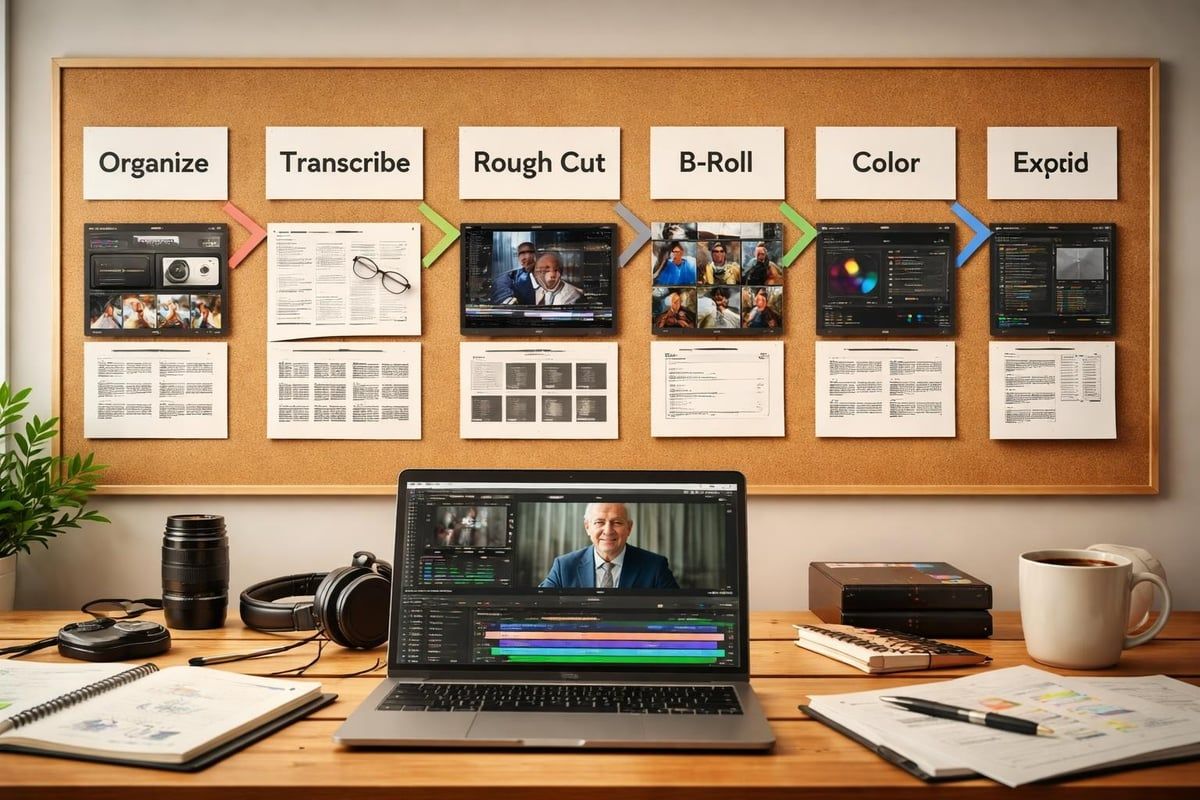
Essential post-production steps include:
- Sync and organize all footage by topic or question
- Mark best soundbites and compelling moments
- Build rough cut following narrative flow
- Add b-roll coverage and environmental shots
- Color grade for consistency and mood
- Mix audio levels and add subtle music
- Insert graphics, lower thirds, and call-to-actions
- Export optimized versions for each platform
Consider the final delivery platform during editing. Vertical video for stories and reels requires reframing interview footage shot in traditional landscape orientation. Many productions now shoot in 4K or higher, allowing flexibility to reframe and crop for various aspect ratios.
Distribution Strategy for Maximum Impact
Producing exceptional interview content means nothing without strategic distribution that reaches target audiences. Different platforms demand specific formatting, length, and promotional approaches.
Platform-Specific Optimization
LinkedIn favors thought leadership interviews ranging from two to five minutes, with strong hooks in the first three seconds. Native uploads outperform external links, and subtitles dramatically increase completion rates.
Instagram prioritizes short-form content, requiring tight edits highlighting single powerful insights. Working with a video production company helps optimize content across multiple platforms efficiently.
YouTube accommodates longer-form interviews where depth and value matter more than brevity. Chapters, strong thumbnails, and optimized descriptions improve discoverability and watch time.
Platform optimization checklist:
- Square or vertical formatting for social feeds
- Burned-in captions for sound-off viewing
- Platform-native uploads rather than external links
- Thumbnail testing for maximum click-through
- SEO-optimized titles and descriptions
- Strategic CTAs appropriate to platform
Repurposing Interview Content
Smart interview video production considers content atomization from the planning stage. Single long-form interviews generate dozens of shorter clips, quote graphics, blog posts, and social snippets.
Extract individual quotes as standalone posts with custom graphics. Compile multiple subject responses to single questions into comparison or panel-style videos. Transcribe full interviews into blog articles that rank for relevant search terms.
This approach maximizes ROI on production investment while maintaining consistent messaging across channels. The initial production cost amortizes across numerous content pieces rather than single-use videos.
Measuring Interview Video Performance
Data-driven optimization separates amateur content from strategic interview video production that delivers business results. Establish clear KPIs before production begins, ensuring content serves measurable objectives.
Key Performance Indicators
View counts provide surface-level insights but rarely correlate directly with business impact. Dig deeper into completion rates, which reveal whether content maintains attention throughout its duration.
Track engagement metrics including likes, comments, shares, and saves. These signals indicate content resonates emotionally enough to prompt active response rather than passive consumption.
Essential metrics for interview content:
- Completion rate by platform and length
- Click-through rate on embedded CTAs
- Lead generation or conversion attribution
- Share rate and organic reach expansion
- Audience retention graphs identifying drop-off points
- Comments sentiment and topic analysis
Understanding video pricing helps establish realistic budgets against expected performance outcomes. Premium interview production costs more but typically delivers proportionally higher engagement and conversion rates.
Iterative Improvement Strategies
Review performance data after each interview video production to identify patterns. Do certain question types generate more engagement? Does specific b-roll coverage improve retention? Which runtime sweet spot maximizes completion?
Test different thumbnail styles, opening hooks, and CTA placements. Many platforms now support A/B testing, allowing data-driven decisions rather than guesswork.
Compile a growing library of top-performing interviews to analyze commonalities. Subject energy, topic relevance, visual variety, and pacing all influence results. Document these insights to inform future productions.
Advanced Interview Production Techniques
As interview video production skills mature, advanced techniques elevate content above commodity-level corporate videos. These approaches require additional resources but generate disproportionate impact.
Creative Lighting and Color Grading
Move beyond basic three-point lighting with creative color motivation and dramatic techniques. Colored backlights, practical sources within frame, and motivated shadows add cinematic dimension to standard interviews.
Color grading establishes mood and reinforces brand identity. Cooler tones communicate professionalism and technology, while warmer palettes feel approachable and human. Consistent color treatment across interview series builds visual brand recognition.
Motion and Dynamic Framing
Subtle camera movement during interviews maintains visual interest without distraction. Motorized sliders provide slow push-ins that increase emotional intensity during powerful moments. Gimbal or dolly moves work for walk-and-talk interview styles.
Use framing changes strategically rather than constantly. A slow zoom during a particularly important quote focuses attention, while static wide shots allow viewers to absorb environment and context.
| Technique | Difficulty | Equipment Cost | Impact Level |
|---|---|---|---|
| Three-Point Lighting | Beginner | $500-$1,500 | Baseline Professional |
| Creative Color Lighting | Intermediate | $800-$2,500 | High Visual Interest |
| Motorized Camera Movement | Advanced | $1,200-$5,000 | Cinematic Quality |
| Multi-Location Scenarios | Advanced | Variable | Premium Storytelling |
Environmental Storytelling
Where you conduct interviews communicates as much as what subjects say. Manufacturing executives interviewed on production floors demonstrate operational engagement. Software founders in modern offices signal innovation and growth.
Different interview techniques leverage environment strategically, from controlled studio setups to documentary-style field interviews. Match location authenticity to your brand positioning and message.
Common Interview Production Mistakes to Avoid
Learning from common pitfalls accelerates your interview video production mastery while avoiding costly errors. Many mistakes seem obvious in retrospect but plague even experienced producers.
Audio Failures That Ruin Otherwise Great Content
Background noise from HVAC systems, traffic, or office activity destroys interview usability. Scout locations with audio monitoring, not just visual assessment. Simple mistakes like failing to disable phone notifications create unusable sections.
Always record backup audio. Wireless microphones fail, batteries die, and interference happens. A secondary recorder or camera-mounted shotgun mic provides insurance against catastrophic audio loss.
Inadequate Preparation and Research
Showing up unprepared signals disrespect for subjects' time and produces shallow, generic content. Research subjects thoroughly, understanding their background, achievements, and perspective before interviews begin.
Develop questions specific to each individual rather than generic templates. Thorough research enhances content quality by enabling deeper, more valuable conversations that reveal unique insights.
Pre-production checklist to avoid common mistakes:
- Confirm interview location with site visit or detailed photos
- Test all equipment 24 hours before production
- Prepare primary questions plus spontaneous follow-ups
- Brief subjects on process, timeline, and expectations
- Arrange backup power, storage, and recording systems
- Create shot list including b-roll and environment coverage
- Coordinate wardrobe guidance for on-camera appearance
Poor Framing and Composition Choices
Centered subjects in every frame create static, amateur-looking content. Use the rule of thirds, positioning eyes in the upper third with appropriate looking space.
Watch headroom carefully. Too much empty space above subjects' heads looks unprofessional, while insufficient headroom feels claustrophobic and cramped.
Neglecting the Edit During Production
Editors need options. Shoot more b-roll than you think necessary, capture multiple takes of important responses, and record clean environmental audio for mixing flexibility.
Leave camera rolling between official questions. Often the best moments happen when subjects relax, thinking recording stopped. These authentic reactions elevate ordinary interviews to memorable content.
Mastering interview video production transforms how businesses communicate value, build credibility, and connect with audiences authentically. The combination of technical excellence, strategic planning, and genuine human storytelling creates content that drives measurable results across every distribution channel. Whether you're ready to produce your first professional interviews or elevate existing capabilities to the next level, partnering with experienced professionals accelerates success while ensuring your investment delivers maximum ROI. Viva Media brings Toronto businesses the technical expertise, creative vision, and strategic approach needed to create interview content that captures attention and converts viewers into customers.