


Modern businesses face a critical challenge: capturing attention in an oversaturated digital landscape. Corporate video production services have evolved from simple promotional tools into strategic assets that drive measurable business outcomes. Organizations across the Greater Toronto Area and beyond are discovering that professionally produced video content generates higher engagement rates, stronger brand recall, and tangible return on investment compared to traditional marketing methods.
Strategic Value of Professional Video Production
The corporate video landscape has transformed dramatically over the past few years. Companies no longer view video as a luxury but as an essential component of their communication strategy. Professional corporate video production services deliver content that aligns with specific business objectives, whether that's employee training, brand awareness, product launches, or executive communications.
Key benefits include:
- Enhanced brand credibility through polished, professional content
- Improved message retention rates exceeding 95% compared to text-based communications
- Measurable engagement metrics that inform future strategy
- Versatile content assets deployable across multiple platforms
- Stronger emotional connections with target audiences
Organizations investing in corporate video production services in Toronto report significant improvements in their marketing performance. These improvements stem from the combination of strategic planning, creative execution, and distribution optimization that professional production companies bring to every project.

Understanding Modern Production Workflows
The production process has become more sophisticated while simultaneously more efficient. Today's corporate video production services leverage streamlined workflows that reduce time-to-market without compromising quality. Pre-production planning establishes clear objectives, identifies target audiences, and develops messaging frameworks that resonate.
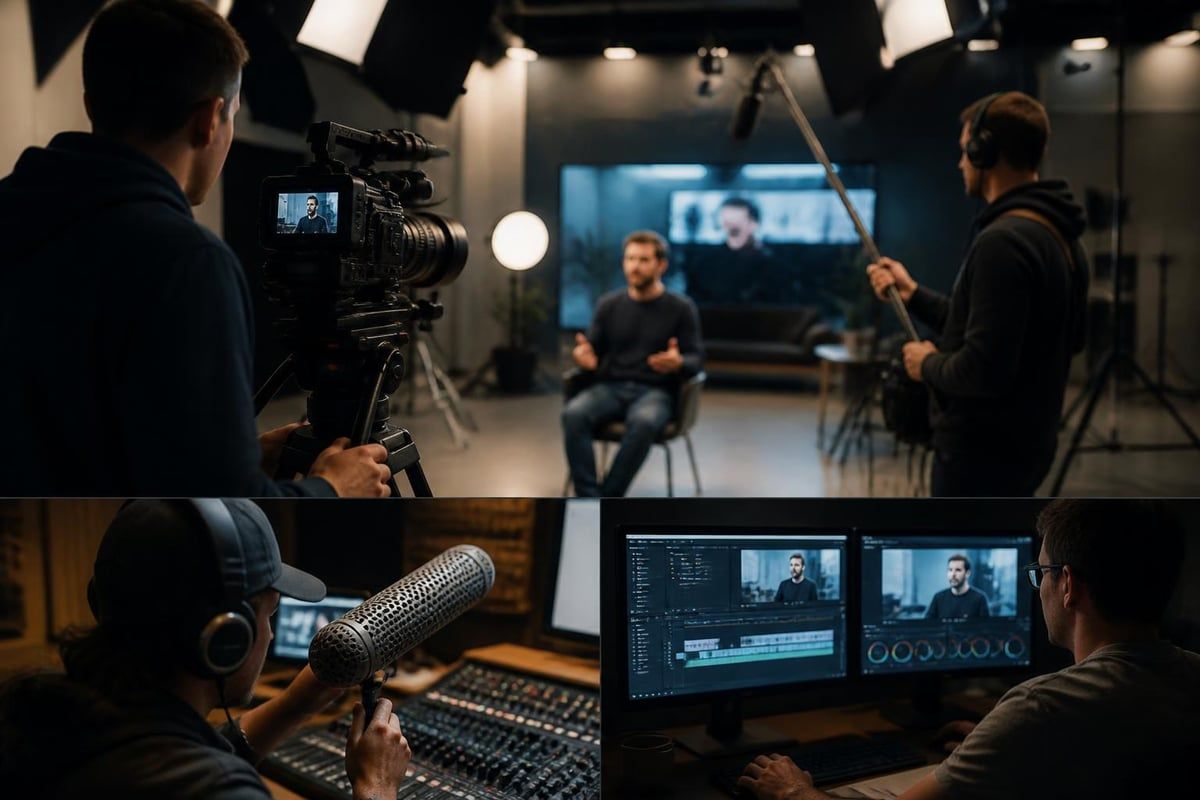
During production, experienced teams capture content using cinema-grade equipment and professional lighting setups. Post-production transforms raw footage into polished final products through color grading, sound design, motion graphics, and strategic editing. This comprehensive approach ensures every frame serves the broader business objective.
Types of Corporate Video Content
Different business needs require different video solutions. Understanding the full spectrum of available options helps organizations select the right format for their specific goals.
| Video Type | Primary Purpose | Typical Length | Best Use Cases |
|---|---|---|---|
| Brand Story | Build emotional connection | 2-3 minutes | Website homepage, investor presentations |
| Product Demo | Showcase features/benefits | 1-2 minutes | Sales enablement, trade shows |
| Training Videos | Employee development | 5-15 minutes | Onboarding, compliance, skill building |
| Testimonials | Social proof | 1-2 minutes | Landing pages, sales presentations |
| Executive Messages | Internal communication | 2-4 minutes | Company updates, vision sharing |
| Event Coverage | Document experiences | 3-5 minutes | Marketing, recruitment, PR |
Corporate video production services adapt to these varying requirements through flexible production models. Some projects demand multiple shoot days with large crews, while others benefit from nimble, documentary-style approaches. The evolution of corporate video trends shows increasing demand for diverse content formats.
Matching Format to Objective
Selecting the appropriate video format begins with clearly defined objectives. A company launching a new product requires different content than an organization focused on employer branding. Professional production teams conduct discovery sessions to understand business context, competitive landscape, and success metrics before recommending specific approaches.
Format selection considerations:
- Audience sophistication and preferences
- Distribution platform requirements
- Available budget and timeline
- Desired emotional response
- Technical complexity of subject matter
- Integration with broader marketing initiatives
The most successful corporate video campaigns deploy multiple formats in coordinated sequences. An initial brand story video might introduce core values, followed by product-specific content, and reinforced through customer testimonials. This layered approach builds comprehensive narratives that move audiences through awareness, consideration, and decision stages.
Production Quality and Technical Excellence
Quality separates professional corporate video production services from amateur efforts. Audiences have become increasingly discerning, and subpar production values can damage brand perception rather than enhance it. Technical excellence encompasses multiple dimensions beyond simple visual clarity.
Audio quality often matters more than video quality in determining viewer retention. Professional productions invest in proper microphone selection, acoustic treatment, and post-production audio mixing. Clear, crisp sound keeps audiences engaged, while poor audio drives viewers away regardless of visual appeal.
Equipment and Expertise
Modern corporate video production services utilize cinema cameras, professional lighting systems, and stabilization equipment that deliver broadcast-quality results. However, equipment alone doesn't guarantee success. The expertise to properly utilize these tools separates exceptional content from mediocre output.
Experienced directors of photography understand how lighting shapes mood, how camera angles influence perception, and how composition guides viewer attention. These technical skills combine with strategic thinking to ensure every creative choice supports the intended business outcome. Companies exploring video production pricing should recognize that professional expertise represents the most valuable component of service packages.
Strategic Planning and Creative Development
Effective corporate video production services begin long before cameras start rolling. Strategic planning establishes the foundation for successful outcomes through careful analysis and creative development. This phase typically consumes 30-40% of total project timelines but dramatically impacts final results.
Planning phase deliverables:
- Comprehensive creative briefs documenting objectives and constraints
- Target audience profiles with psychographic and demographic insights
- Messaging frameworks aligning video content with brand positioning
- Script development incorporating proven storytelling techniques
- Storyboards visualizing key scenes and transitions
- Production schedules coordinating locations, talent, and crew
The best practices for corporate video production emphasize the importance of thorough pre-production. Organizations that invest adequate time in planning consistently achieve better results than those rushing into production.
Storytelling Frameworks
Compelling corporate videos leverage narrative structures that engage viewers emotionally while communicating key information. The most effective approach varies based on content type and audience, but certain principles apply universally. Stories need clear protagonists, relatable challenges, and satisfying resolutions.
For corporate content, the protagonist might be a customer solving problems with your product, an employee achieving career growth, or your company transforming an industry. These human-centered narratives connect more powerfully than feature lists or technical specifications. Professional corporate video production services excel at translating business objectives into engaging stories.
Distribution and Optimization Strategies
Creating exceptional video content represents only half the equation. Strategic distribution ensures target audiences actually view and engage with finished productions. Corporate video production services increasingly incorporate distribution planning as a core component of their offerings.
Different platforms require different technical specifications and content strategies. LinkedIn favors professional, information-dense content between 30-90 seconds. YouTube accommodates longer-form educational material. Instagram prioritizes vertical formats under 60 seconds. Understanding these platform-specific requirements during production ensures content performs optimally across channels.
Search Engine Optimization
Video content offers significant SEO advantages when properly optimized. Search engines increasingly prioritize pages featuring video content, particularly when videos include relevant metadata, transcripts, and strategic keyword integration. Corporate video production services that understand proven corporate video production strategies incorporate SEO considerations throughout the production process.
Technical optimization includes:
- Descriptive titles incorporating target keywords
- Detailed video descriptions with timestamps and links
- Accurate transcripts improving accessibility and searchability
- Custom thumbnails optimizing click-through rates
- Schema markup enabling rich search results
- Strategic embedding on high-authority pages
Organizations viewing their video investments through a comprehensive lens achieve superior results compared to those treating videos as isolated assets. This integrated approach aligns with broader content marketing strategies and customer journey mapping.
Measuring Performance and ROI
Professional corporate video production services establish clear success metrics before production begins. These metrics provide objective frameworks for evaluating performance and informing future investment decisions. Without measurement, organizations cannot determine whether video initiatives deliver acceptable returns.
| Metric Category | Key Indicators | Business Insights |
|---|---|---|
| Engagement | View count, watch time, completion rate | Content relevance and quality |
| Conversion | Click-through rate, form submissions, purchases | Direct business impact |
| Brand Awareness | Reach, impressions, share rate | Market penetration |
| Audience Sentiment | Comments, reactions, net promoter score | Brand perception shifts |
The corporate video production services market continues expanding as organizations recognize measurable returns on video investments. Companies tracking comprehensive metrics consistently optimize their video strategies and improve performance over time.
Attribution and Analytics Integration
Advanced analytics platforms enable sophisticated attribution modeling that connects video engagement to downstream business outcomes. Marketing automation systems track how prospects interact with video content throughout their journey, attributing revenue to specific touchpoints.
This data-driven approach transforms video from a creative expense into a measurable investment. Organizations can calculate cost-per-view, cost-per-lead, and ultimately cost-per-acquisition metrics specific to video campaigns. These insights inform budget allocation decisions and content strategy refinement.

Emerging Technologies and Future Trends
The corporate video production landscape evolves rapidly as new technologies enable innovative creative possibilities. Forward-thinking organizations partner with production services that stay current with corporate video content trends and can implement emerging techniques effectively.
Technology trends shaping 2026:
- Artificial intelligence streamlining editing and post-production workflows
- Interactive video enabling viewer choice and personalized experiences
- Virtual production techniques reducing location costs and environmental impact
- Advanced color science delivering cinematic visual quality
- Automated captioning improving accessibility and engagement
- Cloud-based collaboration accelerating review and approval processes
These technological advances make professional-quality video production more accessible while simultaneously raising audience expectations. Organizations benefit from partnering with experienced teams that balance innovation with proven approaches, ensuring content remains effective rather than merely trendy.
Personalization and Dynamic Content
Sophisticated corporate video production services now offer dynamic video capabilities that automatically personalize content for individual viewers. These systems adjust messaging, imagery, and calls-to-action based on viewer demographics, behavior, or position in the sales funnel.
Personalized video dramatically improves engagement metrics and conversion rates compared to generic content. A prospect researching manufacturing solutions sees different examples and testimonials than someone exploring financial services applications. This targeted approach maximizes relevance while controlling production costs through modular content architectures.
Building Long-Term Production Partnerships
Organizations achieving consistent video marketing success typically develop ongoing relationships with their production partners rather than treating each project as a one-off transaction. These partnerships enable deeper brand understanding, streamlined workflows, and superior results over time.
Long-term production partners develop comprehensive understanding of your brand guidelines, messaging frameworks, and organizational culture. This familiarity reduces briefing time, minimizes revisions, and ensures consistent quality across all deliverables. Many businesses exploring advertising video production discover that partnership approaches deliver better value than project-by-project engagements.
Selecting the Right Production Partner
Choosing corporate video production services requires evaluating multiple factors beyond portfolio quality and pricing. The ideal partner combines technical expertise with strategic thinking, project management excellence, and cultural alignment with your organization.
Evaluation criteria include:
- Demonstrated experience in your industry or with similar objectives
- Production quality meeting or exceeding your standards
- Strategic capabilities extending beyond execution
- Transparent pricing and realistic timeline estimates
- Collaborative working style matching your preferences
- Technical infrastructure supporting your distribution requirements
- References from clients with comparable needs
Organizations should also assess whether potential partners offer complementary services like social media video production or creative video development that align with broader marketing initiatives. Comprehensive service offerings simplify vendor management and ensure consistent quality across content types.
Content Libraries and Asset Management
Strategic organizations view individual video projects as components of larger content libraries rather than isolated deliverables. This library approach maximizes production investments by creating modular assets that can be repurposed, updated, and recombined for multiple applications.
Professional corporate video production services structure projects to generate maximum versatility. A single shoot day might produce a flagship brand video, multiple social media cuts, testimonial clips, and b-roll footage for future projects. This efficient approach reduces per-asset costs while building comprehensive content libraries.
| Asset Type | Primary Use | Secondary Applications | Shelf Life |
|---|---|---|---|
| Master Interviews | Feature videos | Social clips, testimonials | 12-24 months |
| B-Roll Footage | Supporting visuals | Multiple projects, backgrounds | 24-48 months |
| Product Shots | Demos, commercials | Website, social media | 12-18 months |
| Graphics/Animations | Branding elements | Templates, presentations | 24-36 months |
Effective asset management systems organize this content for easy discovery and deployment. Teams can quickly locate specific clips, track usage rights, and identify gaps requiring new production. This systematic approach transforms video from periodic campaigns into ongoing communication infrastructure.
Investment Considerations and Budgeting
Corporate video production services span a wide range of investment levels depending on scope, complexity, and quality requirements. Understanding typical cost structures helps organizations budget appropriately and evaluate proposals effectively.
Production budgets typically allocate resources across three phases: pre-production (20-30%), production (40-50%), and post-production (30-40%). Within each phase, specific cost drivers include creative development, crew size, equipment specifications, shoot duration, location requirements, talent fees, and post-production complexity.
Cost-Benefit Analysis
Smart organizations evaluate video investments through comprehensive cost-benefit frameworks rather than focusing solely on production expenses. A modestly budgeted video generating significant engagement and conversions delivers better return than an expensive production that fails to resonate with audiences.
ROI calculation factors:
- Direct conversion value from video-driven leads and sales
- Indirect benefits like reduced customer service inquiries
- Opportunity costs of alternative marketing approaches
- Asset longevity and repurposing potential
- Competitive positioning advantages
- Employee productivity improvements from training videos
Companies should also consider the cumulative impact of consistent video marketing versus sporadic campaigns. Regular content production builds audience expectations, improves search visibility, and compounds results over time.
Professional corporate video production services transform how organizations communicate with employees, customers, and stakeholders by delivering content that engages audiences and drives measurable results. Success requires strategic planning, technical excellence, creative storytelling, and data-driven optimization working in concert. If you're ready to leverage video content that generates real business impact, Viva Media brings proven expertise in creating high-performance video solutions for forward-thinking brands throughout the Greater Toronto Area and beyond.