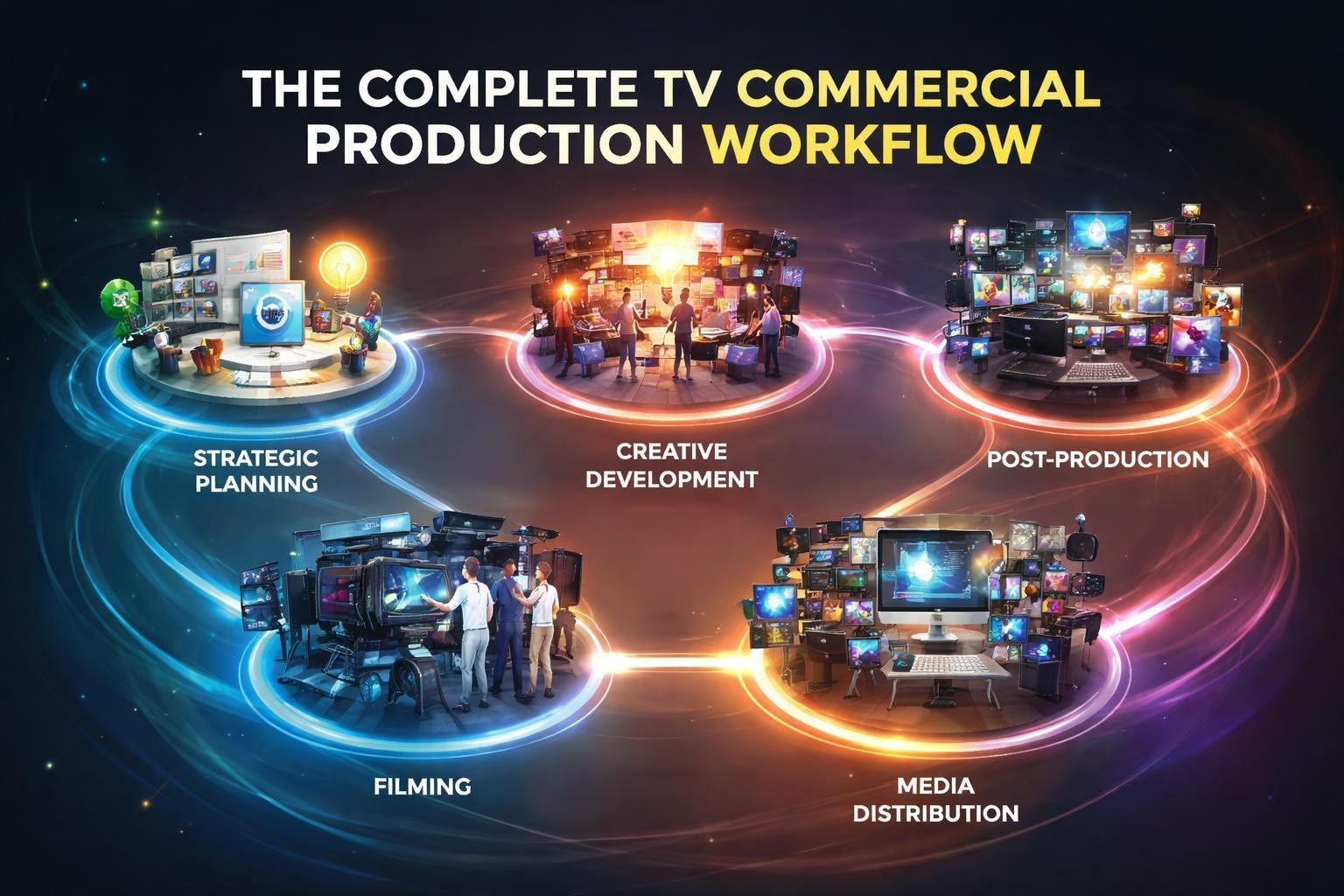

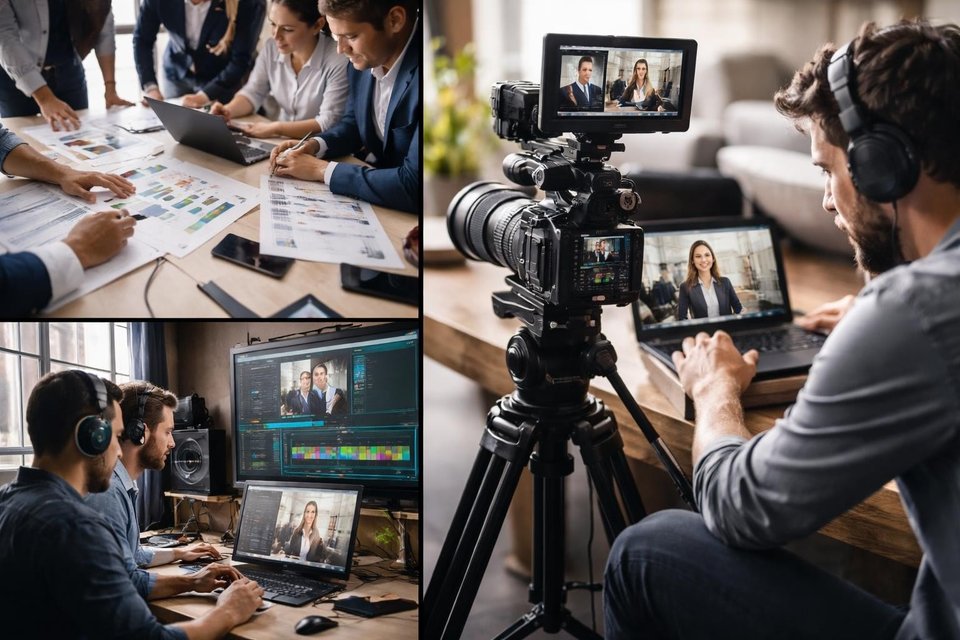
A commercial videographer creates purposeful, results-driven video content designed to achieve specific business objectives. Unlike traditional filmmaking focused on artistic expression or documentary storytelling, these professionals engineer visual experiences that convert viewers into customers, amplify brand awareness, and generate measurable returns on investment. In 2026, the demand for skilled commercial videography has never been stronger, with video traffic accounting for 82% of all IP traffic and businesses increasingly recognizing video as their most powerful marketing tool. The Toronto market particularly demonstrates this evolution, with brands seeking videographers who understand both technical excellence and strategic business outcomes.
What Distinguishes a Commercial Videographer from Other Video Professionals
The commercial videographer operates at the intersection of creative vision and marketing strategy. While a wedding videographer captures emotional moments and a documentary filmmaker tells investigative stories, the commercial professional builds content engineered to drive business performance.
Strategic Business Alignment
Every project begins with understanding client objectives. A commercial videographer doesn't simply record footage, they decode business challenges and translate them into visual solutions. This means comprehending target demographics, competitive positioning, conversion funnels, and brand messaging architecture.
Key strategic competencies include:
- Audience psychology and viewing behavior analysis
- Platform-specific content optimization
- Brand voice consistency across video assets
- Performance metric identification and tracking
- Campaign integration and cross-channel amplification
The work demands fluency in marketing language and business metrics. When a client discusses customer acquisition costs or engagement rates, the commercial videographer must respond with production strategies that address those specific concerns.

Technical Production Excellence
Modern commercial work requires mastery of sophisticated technical systems. The 2026 videographer navigates an increasingly complex production landscape where emerging technologies like virtual production and volumetric sets become accessible for mid-tier commercial projects.
| Technical Domain | Required Expertise | Business Impact |
|---|---|---|
| Camera Systems | Multi-format capture, sensor technology, lens selection | Visual quality, production efficiency |
| Lighting Design | Three-point lighting, practical integration, mood creation | Brand perception, professional credibility |
| Audio Engineering | Location sound, ADR, mixing, sound design | Message clarity, viewer retention |
| Post-Production | Color grading, motion graphics, editing rhythm | Brand consistency, emotional impact |
Understanding technical production standards ensures deliverables meet broadcast specifications and platform requirements. This technical foundation separates amateur content from professional commercial work that commands premium pricing.
Core Service Categories for Commercial Videographers
The commercial videography field encompasses diverse content types, each serving distinct business functions. Successful practitioners develop expertise across multiple categories while often specializing in specific niches.
Brand Films and Company Profiles
These foundational assets communicate organizational identity, values, and capabilities. A well-executed brand film becomes the centerpiece of corporate communications, appearing on websites, investor presentations, and recruitment campaigns. The commercial videographer shapes narrative arcs that transform abstract company missions into compelling visual stories.
Production typically involves executive interviews, workplace footage, customer testimonials, and product demonstrations. Corporate video production requires sensitivity to organizational politics, message approval processes, and stakeholder management.
Product Demonstrations and Launch Content
Product-focused commercial videography demands technical precision and creative problem-solving. The videographer must showcase features, benefits, and use cases while maintaining viewer engagement. This often involves macro photography, motion control systems, and carefully choreographed sequences that reveal product details.
The challenge lies in balancing information density with entertainment value. Viewers need sufficient detail to understand product advantages without experiencing information overload that triggers abandonment.
Social Media and Platform-Specific Content
The explosive growth of social media has created entirely new commercial videography categories. Commercial video production formats now include vertical video for Stories, square formats for Instagram feeds, and short-form content optimized for TikTok and Reels.
Platform-specific considerations include:
- Aspect ratios: 9:16 vertical, 1:1 square, 16:9 landscape
- Duration constraints: 15-second TikToks, 60-second Instagram Reels, 3-minute YouTube pre-rolls
- Caption integration: Text overlays for sound-off viewing
- Hook timing: First three seconds determine view-through rates
- Platform algorithms: Content structure optimized for discovery
This specialization requires understanding video pricing structures that account for versioning multiple deliverables from single shoots.
Advertising and Paid Media Campaigns
Commercial videographers working in advertising create content specifically designed for paid distribution. These projects involve highest production values, rigorous A/B testing, and performance optimization. The videographer collaborates with media buyers, copywriters, and creative directors to engineer content that achieves cost-per-acquisition targets.
Television commercials still command significant budgets, but digital advertising now dominates most commercial videography portfolios. Understanding platform specifications, file compression, and programmatic delivery systems becomes essential.

Essential Skills and Equipment Investment
Building a sustainable commercial videography practice requires systematic skill development and strategic equipment acquisition. The barrier to entry has simultaneously lowered and risen, with affordable cameras making basic video accessible while client expectations demanding increasingly sophisticated production quality.
Camera and Lens Systems
Professional commercial work typically requires full-frame or Super 35 sensor cameras capable of 4K or higher resolution. In 2026, many videographers maintain multiple camera bodies to enable efficient multi-camera shoots and reduce production time.
Core camera requirements:
- High dynamic range for challenging lighting conditions
- Professional codec options (ProRes, RAW formats)
- Reliable autofocus systems for solo operation
- Professional audio inputs with phantom power
- Robust build quality for daily professional use
Lens collections should span wide-angle establishing shots through telephoto compression. Prime lenses deliver superior image quality while zoom lenses provide production flexibility. Many commercial videographers invest in cinema lenses with consistent apertures and smooth manual focus.
Stabilization and Movement Systems
Static tripod shots rarely satisfy modern commercial clients. The commercial videographer's toolkit includes gimbals, sliders, jibs, and sometimes full Steadicam or tracking systems. These tools add production value and create the dynamic movement contemporary audiences expect.
Learning proper movement techniques prevents amateur-looking footage. Motivated camera movement that follows action or reveals information serves the story, while unmotivated movement distracts from the message.
Lighting Equipment and Grip Gear
Professional lighting separates commercial work from consumer content. A comprehensive lighting package includes key lights, fill lights, backlights, practical fixtures, and specialty units for specific effects. LED technology has revolutionized commercial videography, offering color-tunable fixtures with minimal power consumption.
Supporting grip equipment, flags, diffusion materials, and rigging systems enable the videographer to control light precisely. Understanding lighting ratios, color temperature, and mood creation through illumination distinguishes professional commercial work.
Business Development and Client Acquisition Strategies
Technical excellence alone doesn't build a thriving commercial videography business. Successful practitioners develop equally sophisticated marketing, sales, and client relationship systems.
Portfolio Development and Case Studies
The commercial videographer's portfolio demonstrates problem-solving capabilities rather than simply showcasing pretty footage. Effective portfolios include context about client objectives, production challenges, creative solutions, and measurable results.
Examining successful commercial video production reveals how professionals structure case studies that appeal to business decision-makers. Each portfolio piece should answer: What business problem did this solve? How did the video contribute to client success?
Organizing portfolios by industry vertical often proves more effective than chronological presentation. Prospective clients want evidence you understand their specific sector, whether that's technology, healthcare, real estate, or manufacturing.
Pricing Models and Value Communication
Understanding video production pricing helps commercial videographers position services appropriately. Most professionals employ project-based pricing rather than hourly rates, bundling creative development, production, and post-production into comprehensive packages.
| Pricing Tier | Scope | Typical Investment Range | Client Profile |
|---|---|---|---|
| Foundation | Single camera, minimal crew, template editing | $3,000-$8,000 | Small businesses, startups |
| Professional | Multi-camera, small crew, custom creative | $8,000-$25,000 | Established companies, marketing agencies |
| Premium | Full production team, location scouting, original scoring | $25,000-$75,000+ | Enterprise brands, national campaigns |
Articulating value requires translating production elements into business outcomes. Rather than selling "4K footage with professional color grading," the commercial videographer sells "premium visual quality that elevates brand perception and builds consumer trust."
Relationship Management and Repeat Business
The most profitable commercial videographers build ongoing client relationships rather than constantly pursuing new business. This requires systematic follow-up, proactive content strategy recommendations, and consistent delivery excellence.
Many successful practitioners transition clients from project-based work to retainer arrangements, providing monthly video content for social media, internal communications, or ongoing campaigns. This creates predictable revenue and deeper strategic partnerships.
Industry Trends Shaping Commercial Videography in 2026
The commercial videography landscape continues rapid evolution, driven by technology advancement, platform changes, and shifting viewer expectations. Staying current with trends in corporate videography and commercial production ensures continued relevance.
Interactive and Personalized Video Experiences
Static, one-directional video increasingly gives way to interactive experiences where viewers control narrative flow, explore product features, or customize content based on preferences. Commercial videographers with technical skills in branching narratives, clickable hotspots, and data integration command premium positioning.
AI-driven personalization enables commercial video that adapts to individual viewer characteristics, displaying different messaging based on demographics, viewing history, or expressed interests. This technological capability transforms commercial videography from broadcast medium to targeted conversation.
Sustainability and Purpose-Driven Production
Environmental consciousness reshapes commercial production practices. Clients increasingly evaluate videographers based on sustainable production methods, carbon footprint reduction, and ethical business practices.
This manifests through local crew hiring, equipment rental over ownership, digital delivery eliminating physical media, and thoughtful location selection minimizing travel. Commercial videographers who articulate sustainability commitments differentiate themselves in competitive markets.
Vertical Video and Mobile-First Content
The smartphone revolution fundamentally altered commercial videography. While horizontal 16:9 dominated for decades, vertical 9:16 now comprises significant portions of commercial work. This isn't simply rotating cameras, it requires completely reimagining composition, framing, and visual storytelling.
Mobile-first content characteristics:
- Bold, simplified compositions that read clearly on small screens
- Captions and text integration for sound-off viewing
- Faster pacing matching reduced attention spans
- Immediate hooks capturing attention within two seconds
- Native platform aesthetics rather than overly polished commercial looks
Understanding these principles separates commercial videographers who truly grasp modern content consumption from those simply adapting traditional approaches to new aspect ratios.

Short-Form Dominance and Attention Engineering
Extended commercial content still serves specific purposes, but short-form video dominates 2026's commercial landscape. Videographers must compress compelling narratives into 15, 30, or 60-second formats without sacrificing message clarity or emotional impact.
This demands ruthless editing discipline, precise scripting, and strategic use of every frame. The commercial videographer becomes attention engineer, understanding exactly how to structure hooks, build tension, deliver payoffs, and incorporate calls-to-action within severe time constraints.
Collaborating with Production Companies and Creative Teams
Many commercial videographers balance independent client work with collaborations through established video production companies. These partnerships provide access to larger projects, specialized crew resources, and comprehensive production infrastructure.
Agency and Brand Relationships
Working with marketing agencies and in-house brand teams introduces additional stakeholder layers. The commercial videographer must navigate creative directors, brand managers, legal reviews, and approval hierarchies while maintaining creative vision and production efficiency.
Success requires diplomatic communication, documented approval processes, and realistic timeline management. Understanding that commercial work serves business objectives helps videographers remain flexible when creative preferences conflict with strategic requirements.
Crew Building and Specialized Roles
Complex commercial productions require assembled crews spanning producers, directors of photography, gaffers, grips, production assistants, makeup artists, and specialized technicians. The commercial videographer often transitions from solo operator to crew leader, requiring project management and interpersonal skills alongside technical expertise.
Building reliable crew networks throughout markets like Toronto enables scaling capacity for larger projects while maintaining quality standards. These relationships become valuable business assets as commercial videographers grow their practices.
Quality Standards and Continuous Improvement
Professional commercial videography demands commitment to consistent excellence and ongoing skill development. The field evolves rapidly enough that complacency guarantees obsolescence.
Technical Benchmarks and Client Expectations
Clients increasingly arrive with sophisticated video literacy, having consumed countless hours of professional content. This elevates baseline expectations for commercial work. Understanding best practices for video production ensures deliverables meet professional standards.
Regular equipment maintenance, color calibration, and quality control workflows prevent technical issues from compromising final deliverables. Many commercial videographers implement multi-stage review processes catching errors before client presentation.
Education and Skill Expansion
Successful commercial videographers allocate resources toward continuous learning. This includes technical training on new equipment and software, creative development through workshops and masterclasses, and business education covering marketing, finance, and operations.
Industry conferences, online courses, and professional associations provide structured learning opportunities. Many practitioners also study adjacent disciplines like photography, graphic design, and copywriting to expand creative capabilities.
Building Competitive Advantages
Differentiation becomes essential in increasingly crowded commercial videography markets. Some professionals specialize in specific industries, developing deep expertise in sectors like healthcare, technology, or real estate. Others build reputations for particular production styles, technical capabilities, or strategic approaches.
Commercial video production in Toronto demonstrates how geographic specialization creates competitive positioning, with videographers becoming known resources within specific metropolitan markets.
Measuring Success and Performance Metrics
Commercial videography differs from artistic filmmaking through its emphasis on measurable business outcomes. Professional videographers increasingly adopt data-driven approaches to demonstrate value and optimize future content.
Client ROI and Attribution
Sophisticated clients track video performance through conversion rates, engagement metrics, brand lift studies, and sales attribution. The commercial videographer who understands these measurements can participate in strategic discussions about content optimization.
While not responsible for distribution strategy or media buying, awareness of performance analytics informs creative decisions. Understanding that viewers typically abandon within three seconds influences how commercial videographers structure opening sequences.
Portfolio Performance and Business Analytics
Internal business metrics guide commercial videography practice development. Tracking project profitability, client acquisition costs, lifetime customer value, and revenue per project enables strategic business decisions.
Many professionals discover certain project types or client segments deliver substantially higher returns than others, allowing focused business development toward most profitable opportunities. This analytical approach transforms creative passion into sustainable business.
Commercial videography represents the convergence of creative excellence and strategic business thinking, where technical mastery serves measurable objectives and artistic vision drives tangible results. As the industry continues evolving with new technologies, platforms, and viewer expectations, commercial videographers who commit to continuous improvement while maintaining focus on client success will thrive throughout 2026 and beyond. Viva Media specializes in creating high-performance commercial video content that delivers measurable business results for forward-thinking brands throughout the Greater Toronto Area, partnering with clients to engineer attention-grabbing experiences that generate real ROI.