

As video content continues to dominate digital communication in 2026, the need for advanced video processing has never been greater. The rapid evolution of technology has transformed how creators, businesses, and technologists approach visual storytelling.
This essential guide explores the latest video processing techniques shaping the industry. Readers will discover foundational principles, cutting-edge algorithms, new compression standards, real-time solutions, AI integration, hardware acceleration, and future trends.
Demand for high-quality, efficient video is exploding. Understanding these strategies offers a competitive edge for professionals in media, technology, marketing, and research. Stay ahead by mastering the approaches that define video innovation today.
Foundations of Video Processing in 2026
As we move into 2026, the foundations of video processing have evolved rapidly to meet the demands of a digital-first world. Understanding these core principles is crucial for anyone working with video, whether in entertainment, business, or research. Let us explore the essential concepts and historical context that shape this dynamic field.
Key Concepts and Definitions
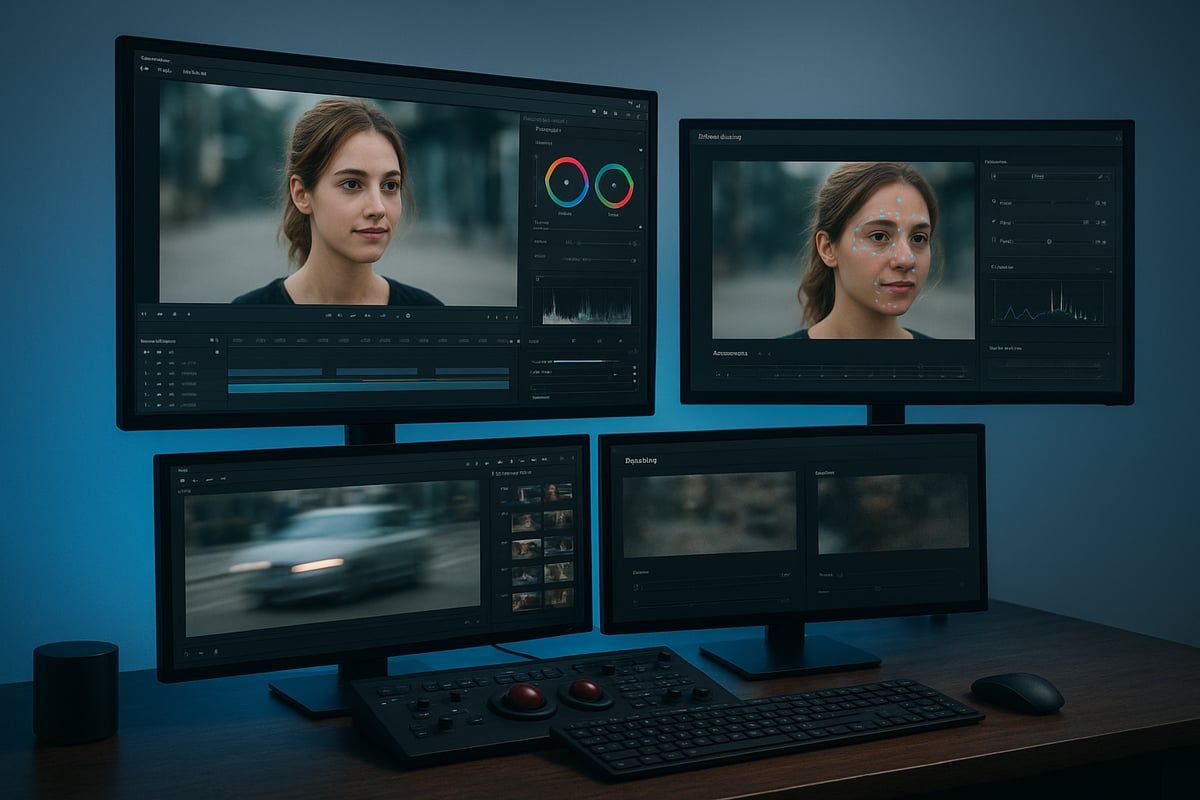
Video processing refers to the manipulation and analysis of moving visual content, setting it apart from image processing, which focuses on single, static frames. The key distinction lies in motion and temporal information, which introduces unique challenges and opportunities for extracting patterns and meaning over time.
A digital video signal consists of a series of frames, each representing a snapshot in time. These frames are organized in sequences and rely on color spaces such as RGB or YUV to accurately display content. Formats like MP4, AVI, and MOV standardize how video data is stored and transmitted, ensuring compatibility across devices.
Preprocessing is a vital step in video processing pipelines. Techniques like denoising remove unwanted artifacts, normalization adjusts frame intensity, and frame extraction isolates relevant segments for further analysis. Each step prepares the video for accurate downstream tasks, such as object detection or scene segmentation.
The typical video processing pipeline includes acquisition (capturing raw footage), preprocessing (cleaning and preparing data), analysis (extracting insights), and output (rendering or streaming the final product). Applications for video processing are widespread. In surveillance, denoising with median filtering enhances footage clarity for security. Medical imaging leverages precise frame analysis to detect anomalies. Entertainment and business use video processing for everything from special effects to marketing analytics. For a deeper understanding of how these techniques benefit organizations, see Corporate Video Production Benefits.
Notably, over 80% of internet traffic is projected to be video by 2026, highlighting the immense impact of video processing on global communication and commerce.
Evolution of Video Processing Techniques
Historically, video processing began with analog systems, where editing and enhancement were limited by hardware constraints. The digital revolution introduced pixel-level manipulation, enabling higher accuracy and flexibility. As video resolutions increased to 4K, 8K, and beyond, processing requirements grew exponentially, demanding more efficient algorithms and powerful hardware.
The rise of streaming platforms changed consumption patterns. Real-time video processing became essential for delivering smooth, high-quality streams. Social media and user-generated content further accelerated the need for scalable solutions that could handle diverse formats and rapid uploads.
For example, the industry has shifted from physical media like DVD and Blu-ray to cloud-based video platforms, which rely on advanced video processing to encode, compress, and deliver content instantly to users worldwide. This transition reflects not just technological progress but a fundamental change in how society interacts with video.
Today, video processing continues to adapt, integrating artificial intelligence, edge computing, and new compression standards to meet future challenges. Understanding both the foundational concepts and their evolution is key to staying ahead in this ever-changing landscape.
Core Video Processing Algorithms and Techniques
Advancements in video processing are transforming how we capture, analyze, and deliver visual content. Understanding the core algorithms and techniques is crucial for anyone working with modern video workflows. Let us explore the foundational methods that drive today’s innovations.
Preprocessing and Enhancement
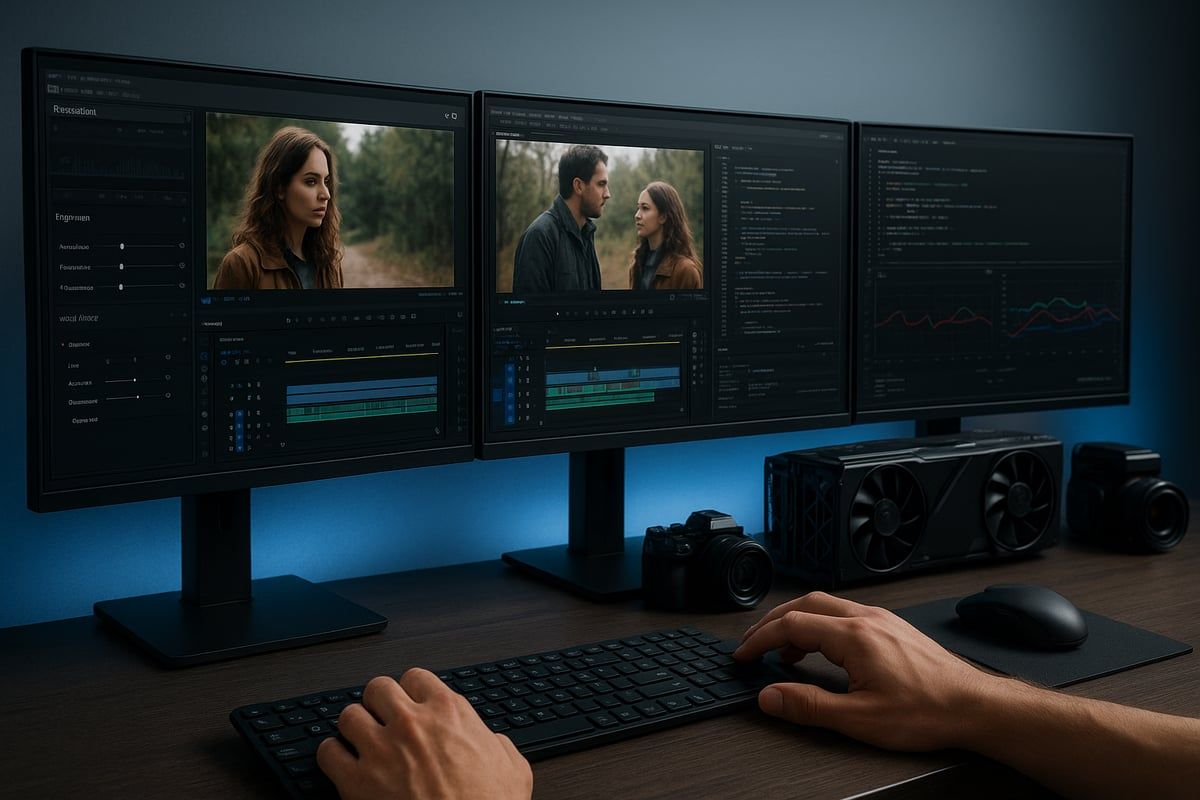
Preprocessing is the essential first step in any video processing pipeline. It prepares raw footage for efficient downstream analysis and ensures consistent quality.
Frame extraction and resizing are fundamental processes. Extracting frames allows for individual analysis, while resizing ensures compatibility across devices and platforms. For example, a surveillance system may need to standardize all video input to a specific resolution for real-time monitoring.
Denoising is another key aspect. Methods like median, bilateral, and guided filtering help remove unwanted noise without sacrificing crucial details. Median filtering is especially effective for reducing salt-and-pepper noise in low-light security footage.
Morphological operations, such as dilation and erosion, enhance shapes and structures within frames. These techniques are vital for applications like medical imaging, where clear boundaries are important.
Color correction, brightness, contrast, and gamma adjustments further improve the visual quality. For facial recognition systems, applying a Gaussian blur can reduce minor imperfections and boost recognition accuracy. Each of these preprocessing steps is integral to effective video processing.
Motion Estimation and Compensation
Motion estimation is at the heart of dynamic video processing. It involves tracking movement between frames, which is crucial for compression, object detection, and scene understanding.
Optical flow algorithms analyze the apparent motion of objects by comparing pixel patterns across consecutive frames. This technique is widely used in autonomous vehicles to detect pedestrians and obstacles.
Frame difference methods offer a straightforward way to detect moving objects by subtracting one frame from another. For example, in retail security, sudden movement can trigger alerts based on these calculations.
Background subtraction is employed to isolate foreground elements. Static models work well in controlled environments, while adaptive models adjust to changing backgrounds, such as outdoor scenes with varying lighting. Adaptive background subtraction can increase detection accuracy by up to 20 percent in dynamic settings.
These motion estimation techniques are central to video processing applications, from surveillance to sports analytics, enabling systems to interpret and respond to rapidly changing scenes.
Spatial and Temporal Filtering
Spatial and temporal filtering are powerful tools in video processing for enhancing details and minimizing unwanted artifacts.
Edge enhancement and detail sharpening are applied to highlight important features. In sports broadcasting, edge enhancement makes replay visuals clearer, allowing viewers to follow fast-paced action with greater precision.
Temporal filtering focuses on reducing flicker and smoothing out motion artifacts over time. For instance, when streaming live concerts, temporal filters help maintain smooth transitions even under challenging lighting conditions.
These filters are often combined with other video processing steps to deliver high-quality results. Engineers may use configurable filter kernels or advanced algorithms to tailor the effect to specific content types.
By integrating spatial and temporal filtering, professionals can significantly elevate the clarity and stability of video streams, providing a better viewer experience across platforms.
Noise and Artifact Reduction
Noise and artifact reduction are vital for maintaining the integrity of processed video, especially in compressed or streamed formats.
Mosquito noise and block noise are common byproducts of aggressive compression. Techniques such as adaptive filtering and frequency-domain processing help suppress these distortions.
Deblocking and de-ringing algorithms further refine the output by smoothing block boundaries and removing ringing effects around sharp edges. This is particularly important for high-efficiency codecs, which may introduce artifacts during transmission.
Managing compression artifacts is an ongoing challenge in video processing, especially as demand for high-resolution and low-latency streaming grows. For a deeper dive into hardware-accelerated solutions and algorithmic strategies, see Real-Time Video Processing Tools and Techniques.
By applying robust noise and artifact reduction methods, video professionals ensure that end-users receive content that is both visually appealing and technically sound.
Video Compression and Encoding Standards in 2026
Efficient video compression is at the heart of modern video processing. As video resolutions and streaming demands surge, the ability to maintain visual quality while minimizing bandwidth and storage usage is more critical than ever. In 2026, the evolution of compression standards and encoding technologies is reshaping how content is captured, transmitted, and experienced.
Compression Fundamentals
Video processing relies on compression to efficiently handle vast amounts of data. The core principle is to remove spatial and temporal redundancies found in video sequences. Spatial redundancy comes from repeated patterns within a single frame, while temporal redundancy arises from similarities across consecutive frames.
Transform-based compression methods, such as the Discrete Cosine Transform (DCT) and wavelet transforms, convert pixel data into frequency components. This approach enables the effective quantization and removal of less perceptible information, reducing file size without significant loss of quality.
Motion compensation and inter-frame prediction further optimize video processing pipelines. By analyzing the movement of objects between frames, algorithms can encode only the differences, dramatically reducing required bandwidth. Preprocessing steps, including noise reduction and normalization, are essential for maximizing compression efficiency.
Advancements in AI-driven methods are also influencing video processing. Neural networks now assist in predicting and encoding video data, pushing the boundaries of traditional algorithms. This integration leads to improved compression ratios and better adaptation to diverse content types.
Leading Standards and Codecs
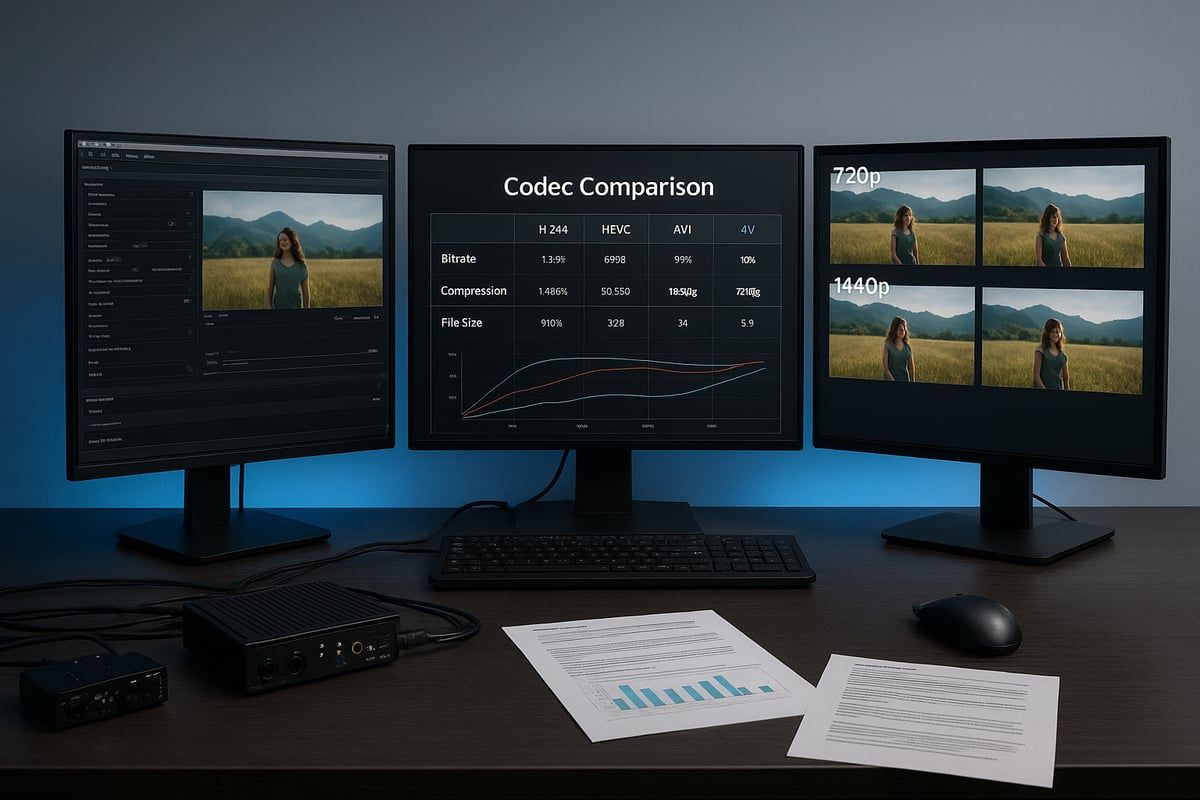
A variety of codecs have shaped the video processing landscape over the years. Legacy standards such as MPEG-4 and H.264/AVC remain in use, but their limitations are becoming apparent with the rise of 4K and 8K content. H.265/HEVC improved efficiency, yet the demand for even greater performance led to the development of Versatile Video Coding (VVC/H.266) and AOMedia Video 2 (AV2).
VVC, for instance, achieves up to 50% bit rate reduction compared to HEVC at equivalent quality, making it a preferred choice for high-resolution streaming. Deep learning-based codecs are also emerging, leveraging neural networks to optimize both perceptual quality and compression. Industry leaders are collaborating on next-generation standards, as seen in the 6G Video Coding Standard Collaboration, which aims to enhance immersive media experiences and mobile video processing capabilities.
Below is a summary table of key codecs:
| Codec | Efficiency | Typical Use Case | AI Integration |
|---|---|---|---|
| MPEG-4 | Low | Legacy, SD/HD archives | No |
| H.264/AVC | Moderate | HD streaming, broadcast | Limited |
| H.265/HEVC | High | 4K streaming, mobile | Some |
| VVC/H.266 | Very High | 8K, VR, cloud-based video | Early stages |
| AV2 | Very High | Open-source, web streaming | Early stages |
The evolution of these codecs directly impacts how video processing adapts to new content formats and distribution channels.
Trade-Offs and Application Scenarios
Selecting the right compression approach in video processing involves balancing several factors. The compression ratio must be weighed against computational complexity and visual quality. Higher compression can save bandwidth but may introduce artifacts or require more powerful hardware.
Key trade-offs include:
- Compression ratio vs. image quality
- Computational load vs. real-time performance
- Battery life vs. processing demands on mobile devices
For real-time video conferencing, low latency and efficient encoding are essential, even if some quality is sacrificed. In contrast, high-resolution video archiving prioritizes maximum quality and can tolerate longer processing times.
Ultimately, video processing strategies must align with the intended application, device capabilities, and user expectations. The right standard ensures seamless delivery, whether for live events, on-demand streaming, or immersive VR content.
AI and Machine Learning Integration in Video Processing
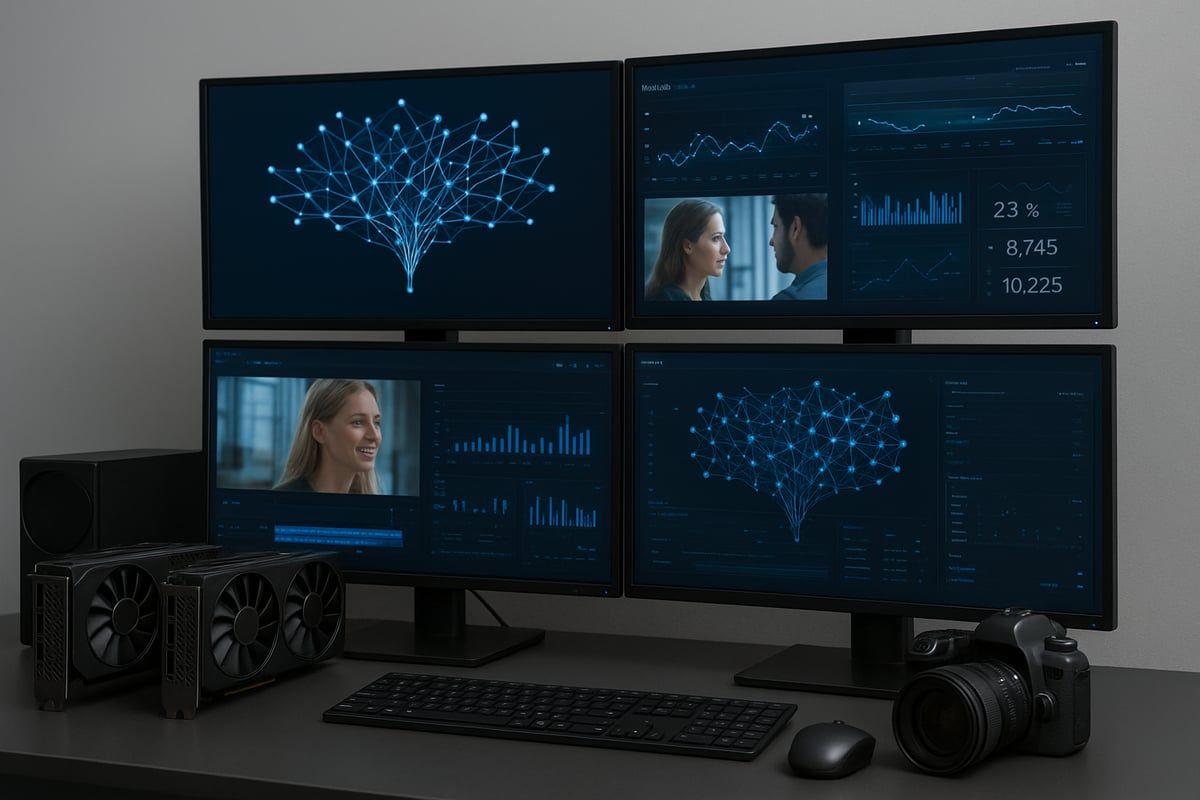
Artificial intelligence is revolutionizing video processing, driving innovation across analysis, compression, and enhancement. In 2026, AI models are at the heart of advanced video processing workflows, enabling unprecedented levels of automation and efficiency. As the demand for smarter, faster, and higher-quality video grows, understanding how machine learning is integrated into video processing is essential.
Deep Learning for Video Analysis
Deep learning is transforming video processing by enabling machines to interpret complex visual data with high accuracy. Convolutional neural networks (CNNs) are widely used for feature extraction and classification tasks in video processing, such as identifying objects, tracking movement, and recognizing faces across frames.
Transformer-based architectures, like VideoBERT and ViViT, have emerged as powerful tools for modeling spatiotemporal relationships. These models excel at understanding the context and sequence of actions within a video, making them invaluable for scene segmentation and activity recognition. Automated content tagging, powered by deep learning, is streamlining video processing pipelines for media, marketing, and research applications.
Key applications include:
- Real-time object detection in surveillance footage
- Automated scene segmentation for content moderation
- Activity recognition in sports analytics
By leveraging deep learning, video processing systems can analyze vast amounts of footage efficiently, providing actionable insights and automating time-consuming tasks.
AI-Driven Compression and Enhancement
AI is redefining video processing by optimizing both compression and visual quality. Neural compression models analyze spatial and temporal patterns, reducing file sizes while preserving perceptual quality. These techniques outperform traditional codecs, especially in streaming and storage-constrained environments.
Super-resolution algorithms, powered by AI, upscale low-resolution video to higher clarity. This is particularly valuable for restoring archival footage or enhancing live streams. Recent research, such as Neural Video Compression with 2D Gaussian Splatting, demonstrates how neural models can achieve real-time decoding with improved efficiency compared to legacy methods.
Benefits of AI-driven compression in video processing:
- Reduced bandwidth usage for streaming platforms
- Enhanced quality for mobile and remote viewing
- Adaptive encoding tuned to viewer devices
Deep learning approaches have improved codec efficiency by up to 11 percent, setting new standards for high-quality, low-latency video processing.
Challenges and Best Practices
Despite its potential, integrating AI into video processing presents several challenges. High-performance AI models often require significant computational resources, making real-time processing demanding. Ensuring smooth playback and analysis on diverse hardware, from servers to mobile devices, is a constant concern.
Access to large, annotated video datasets is crucial for training robust models. Manual annotation is time-consuming and expensive, so many organizations invest in semi-automated labeling or synthetic data generation. Balancing accuracy, speed, and resource usage is key for real-world video processing deployments.
Best practices for AI in video processing include:
- Optimizing models for hardware acceleration (GPU, FPGA)
- Using transfer learning to reduce data requirements
- Prioritizing real-time inference for live applications
By addressing these challenges, professionals can unlock the full potential of AI in video processing, ensuring scalable, reliable solutions for the future.
Real-Time Video Processing and Hardware Acceleration
In 2026, real-time video processing stands as a cornerstone of digital communication. As the volume of live and interactive video content grows, the need for responsive, efficient solutions is more urgent than ever. Achieving seamless experiences requires a blend of advanced algorithms, agile hardware, and strategic system design.
Meeting the Demands of Live and Interactive Video
Live streaming and interactive platforms have raised the bar for real-time video processing. Low latency is essential, especially for applications like gaming, remote collaboration, and virtual events. Even a slight delay can disrupt user experience or, worse, cause critical information loss.
To address these challenges, developers implement strategies such as frame skipping, temporal prediction, and adaptive buffering. Parallelization and pipelining are often used to process multiple frames simultaneously, reducing bottlenecks. These methods optimize resource allocation and minimize wait times.
For instance, adaptive frame rate control enables systems to dynamically adjust processing load based on network conditions. This flexibility is vital for mobile and remote setups. Efficient frame processing not only improves quality but also extends device battery life.
If you are seeking practical advice on optimizing your real-time video workflows, the Live Streaming Tips for Businesses article offers actionable strategies for minimizing latency and ensuring smooth broadcasts. By combining software and infrastructure optimization, organizations can deliver high-quality, responsive video content.
Hardware Solutions
Modern video processing relies heavily on dedicated hardware accelerators. Graphics Processing Units (GPUs) are the industry standard for parallel computations, making them ideal for both encoding and real-time analysis. Field Programmable Gate Arrays (FPGAs) offer customizable pipelines, allowing organizations to tailor processing for specific tasks. Application Specific Integrated Circuits (ASICs) are designed for ultra-efficient, high-throughput operations, although they lack flexibility.
System-on-chip (SoC) architectures integrate CPUs, GPUs, and sometimes AI accelerators on a single chip, making them suitable for mobile and embedded devices. This integration supports efficient video processing without excessive power consumption.
| Hardware Type | Pros | Cons | Common Use |
|---|---|---|---|
| GPU | High parallelism, flexible | Power-hungry | Streaming, AI analysis |
| FPGA | Customizable, low latency | Complex setup | Surveillance, edge |
| ASIC | Energy efficient, fast | Inflexible | Dedicated appliances |
| SoC | Compact, integrated | Limited power | Mobile, IoT devices |
A notable example is the use of FPGA-based accelerators in surveillance systems, where they reduce processing latency by up to 40 percent. Choosing the right hardware depends on the specific video processing requirements and deployment context.
Edge Computing and Distributed Processing
As real-time video processing demands grow, moving computation closer to the data source has become a key strategy. Edge computing places processing units at the network edge, reducing the distance data travels and significantly cutting latency. This setup is particularly beneficial for applications such as smart cameras, autonomous vehicles, and industrial monitoring.
Mobile Edge Computing (MEC) extends this model by integrating processing capabilities into mobile base stations. MEC enables fast, localized video analytics, which is critical for time-sensitive tasks. According to recent reports, edge deployments can decrease end-to-end video latency by 60 percent compared to cloud-only solutions.
Distributed processing also enhances scalability. By sharing workloads across multiple edge nodes, systems can handle larger volumes of video data without central bottlenecks. These advancements ensure that video processing remains agile, secure, and responsive, even as data volumes continue to rise.
Emerging Trends and Future Directions in Video Processing
As the demand for advanced video processing continues to surge, the industry is witnessing rapid innovation across formats, quality, security, sustainability, and workforce development. Staying ahead means understanding these emerging trends and preparing for the evolving landscape.
Next-Generation Video Formats and Technologies
Next-generation video formats are transforming how audiences experience digital content. The adoption of 8K and 16K resolutions, together with high dynamic range (HDR), delivers unprecedented clarity and realism. Volumetric video and immersive formats like augmented reality (AR), virtual reality (VR), and 360-degree video are becoming mainstream, offering interactive and lifelike experiences.
Real-time video processing is essential for these technologies, especially for applications such as multi-camera VR content stitching. As creators push boundaries, video processing pipelines must handle massive data volumes and complex rendering tasks with efficiency.
Automated Quality Assessment and Enhancement
Ensuring optimal video quality is more challenging than ever with diverse devices and network conditions. AI-based video quality assessment tools evaluate perceptual quality in real time, enabling adaptive streaming and dynamic optimization. These tools adjust bitrate, resolution, and enhancement parameters based on user context.
Automated segmentation and scene analysis, as highlighted in this survey on fast dense video segmentation techniques, are becoming integral to video processing workflows. Leveraging deep learning, these methods support real-time content enhancement and personalized viewing experiences.
Security, Privacy, and Ethical Considerations
The rise of synthetic media and deepfake technology presents new security challenges in video processing. Advanced algorithms are being developed for deepfake detection and content authenticity verification, helping to maintain trust in digital media.
Privacy-preserving analytics, such as anonymization and encrypted processing, are increasingly important, especially in surveillance and healthcare. Regulatory compliance is a growing focus, with organizations required to secure video data and uphold ethical standards throughout the processing pipeline.
Sustainability and Efficiency
As large-scale video processing grows, so does the need for sustainable approaches. Energy-efficient algorithms and hardware are being prioritized to reduce power consumption in data centers and edge devices. Green AI initiatives focus on minimizing the carbon footprint of training and deploying deep learning models for video applications.
Eco-friendly codec development is another trend, aiming to deliver high-quality video at lower bitrates, saving both bandwidth and energy. These efforts contribute to a more sustainable future for the industry while maintaining high performance.
Preparing for the Future
Professionals aiming to excel in video processing must upskill in AI, hardware acceleration, and cloud computing. The rise of open-source projects and industry collaboration accelerates innovation and knowledge sharing. By embracing continuous learning, engineers and creators can adapt to evolving technologies and standards.
According to tech employment forecasts, demand for video processing specialists is projected to grow by 25% by 2028. Staying current with trends, tools, and best practices ensures long-term career success and drives the industry forward.
As we’ve explored, mastering advanced video processing techniques is crucial for staying competitive in the fast evolving digital landscape. Whether you’re navigating new compression standards, integrating AI for smarter analytics, or preparing your team for the future, having the right strategy is essential to achieve measurable business results. At Viva Media, we help forward thinking brands in Toronto and beyond turn these insights into high performance video content that truly stands out. If you’re ready to discuss how you can apply these techniques to elevate your next project, I invite you to Book a strategy session.