
Creating exceptional video content starts long before cameras roll or editing software opens. The foundation of every successful video project lies in developing a comprehensive video concept that aligns creative vision with strategic business objectives. For businesses seeking to maximize their investment in video marketing, understanding how to craft and refine a strong concept becomes the difference between content that drives measurable results and content that disappears into the digital void. A well-developed video concept serves as the blueprint guiding every subsequent production decision, from scriptwriting and storyboarding to final post-production touches.
Understanding What Makes a Strong Video Concept
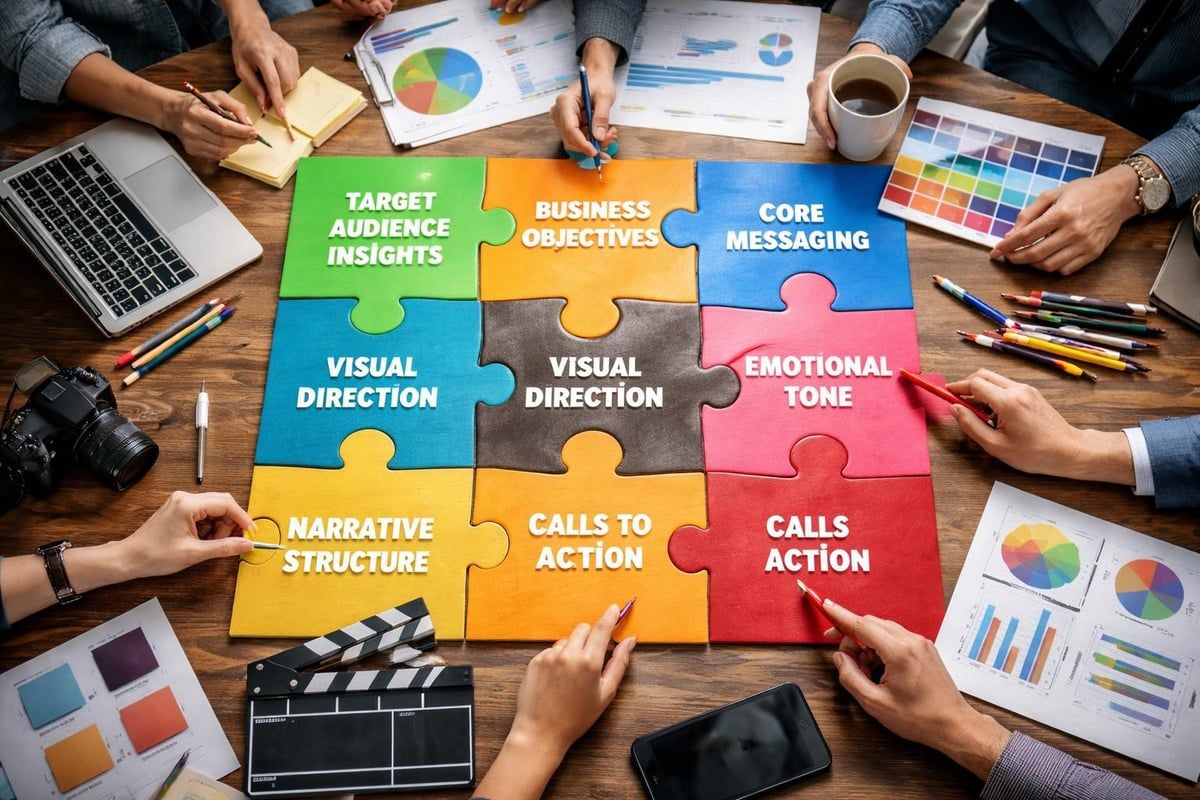
A video concept encompasses far more than simply deciding what appears on screen. At its core, a video concept represents the foundational idea that communicates your message to a specific audience while supporting defined business objectives. This comprehensive framework includes identifying target viewers, establishing clear goals, determining the emotional tone, and crafting the narrative approach that will resonate most effectively.
The strength of your video concept directly correlates with how thoroughly you understand your audience. Before developing creative ideas, successful production teams invest significant time researching viewer demographics, preferences, pain points, and consumption habits. This audience-centric approach ensures that creative decisions serve strategic purposes rather than existing merely for artistic expression.
Core Components That Define Your Concept
Every effective video concept contains several essential elements that work together to create cohesive, impactful content:
- Target audience definition with specific demographic and psychographic characteristics
- Clear objectives tied to measurable business outcomes
- Core message distilled into a single compelling statement
- Emotional tone that aligns with brand identity and viewer expectations
- Visual style that supports the message and appeals to the target audience
- Narrative structure determining how the story unfolds
- Call to action that guides viewers toward desired next steps
These components must work in harmony rather than competing for attention. When developing concepts for professional video production services, teams evaluate how each element reinforces the others to create a unified viewer experience.
Different Types of Video Concepts and Their Applications
Video concepts vary dramatically based on their intended purpose and audience. Understanding these distinctions helps businesses select the right approach for their specific needs and objectives.
Commercial and Promotional Concepts
Commercial video concepts prioritize persuasion and conversion, designed to move viewers along the customer journey. These concepts often employ emotional storytelling, aspirational imagery, or problem-solution frameworks that position products or services as essential solutions. The most effective commercial concepts balance entertainment value with clear brand messaging, creating content that viewers choose to watch rather than skip.
Corporate and Internal Communication Concepts
Corporate video concepts serve internal audiences or B2B stakeholders with different priorities than consumer-facing content. These concepts emphasize credibility, professionalism, and information delivery while maintaining engagement. Company culture videos exemplify how corporate concepts can balance authenticity with polish, showcasing organizational values and workplace environment to attract talent or build stakeholder confidence.
Educational and Explainer Concepts
Concept videos designed for education break down complex information into digestible, engaging content. These concepts prioritize clarity and progression, using visual metaphors, animations, or demonstrations to illuminate abstract ideas. The challenge lies in maintaining viewer interest while delivering substantive information without overwhelming or boring the audience.
| Video Concept Type | Primary Purpose | Key Success Metrics | Typical Length |
|---|---|---|---|
| Commercial/Promotional | Drive conversions and sales | Click-through rate, conversion rate, sales lift | 15-90 seconds |
| Corporate Communication | Inform and align stakeholders | Completion rate, message retention, sentiment | 2-5 minutes |
| Educational/Explainer | Teach and clarify | Comprehension, engagement rate, shares | 60-180 seconds |
| Social Media Content | Build awareness and engagement | Views, shares, comments, saves | 6-60 seconds |
| Brand Storytelling | Establish emotional connection | Brand recall, sentiment, time watched | 90-180 seconds |
The Strategic Process of Concept Development
Developing a video concept requires systematic thinking that balances creativity with strategic discipline. Professional production companies follow structured approaches to ensure concepts serve business objectives while maintaining creative appeal.
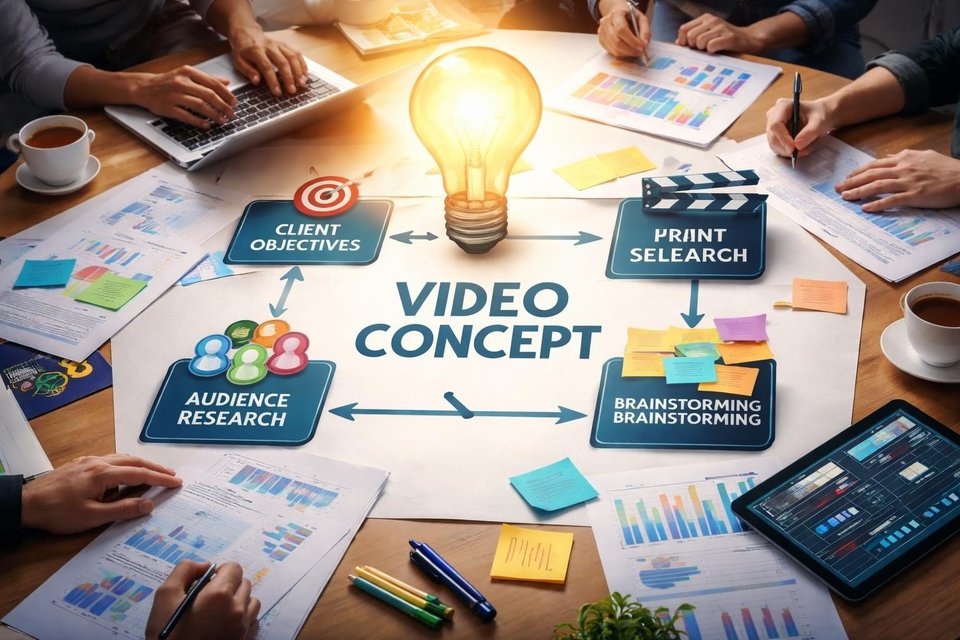
The process begins with thorough discovery, gathering intelligence about business goals, competitive landscape, target audience insights, and brand positioning. This research phase prevents creative teams from pursuing ideas that fail to align with strategic priorities or audience preferences. Many failed video projects trace their problems back to inadequate discovery work during concept development.
Collaborative Brainstorming and Ideation
Once research provides a solid foundation, creative teams generate multiple concept directions rather than committing prematurely to a single idea. This divergent thinking phase encourages exploration across different narrative approaches, visual styles, and messaging strategies. The goal involves creating a range of options that address the brief from various angles.
Effective brainstorming sessions bring together diverse perspectives, including creative directors, strategists, and client stakeholders. This collaborative approach surfaces ideas that individual contributors might miss while ensuring concepts remain grounded in practical execution realities. Music video concept ideas demonstrate how creative frameworks can inspire innovative approaches across different video types.
Refinement and Validation
After generating multiple concept directions, teams evaluate each against specific criteria including strategic alignment, production feasibility, budget requirements, and potential impact. This convergent phase eliminates weaker concepts while refining promising directions into detailed proposals.
Validation involves testing concepts with representative audience members or stakeholders before committing resources to full production. This step identifies potential disconnects between creative intent and audience interpretation, allowing teams to adjust concepts before expensive production begins.
Translating Concepts Into Production Reality
A brilliant video concept delivers value only when successfully executed. The transition from concept to production requires detailed planning that maintains the original vision while adapting to practical constraints.
Pre-Production Planning and Documentation
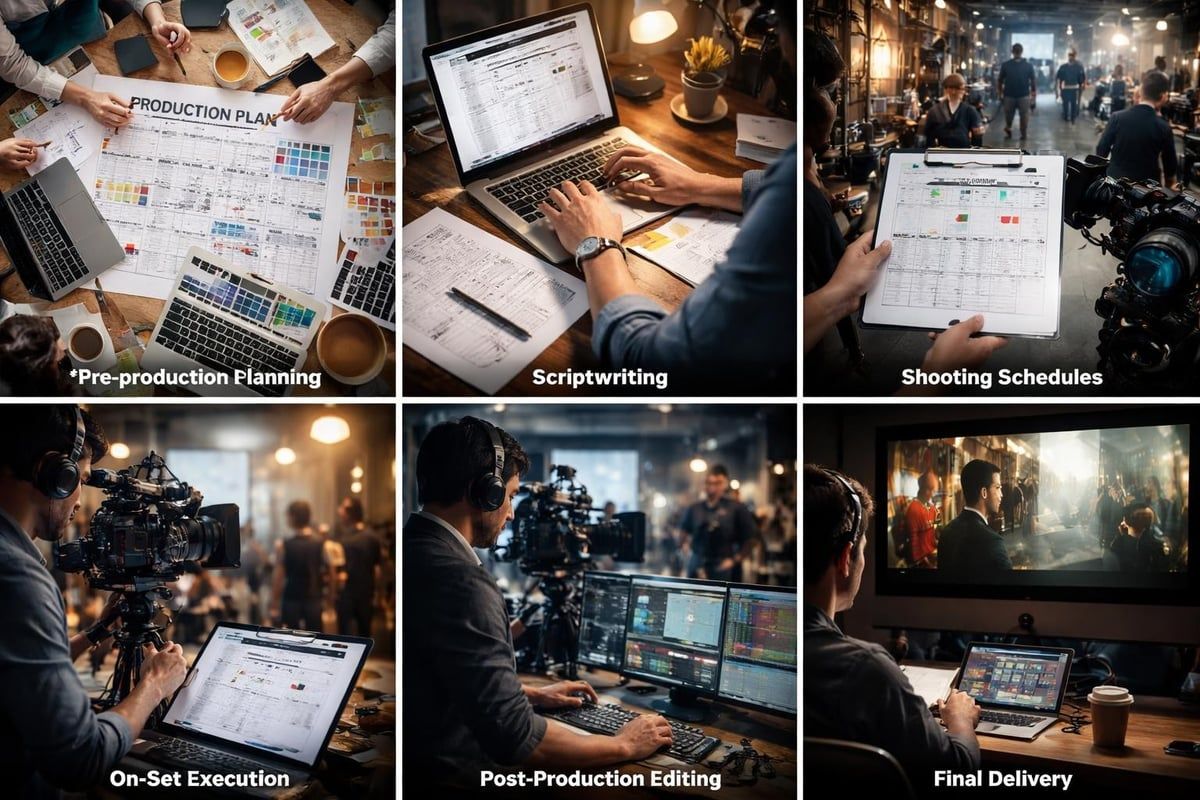
Comprehensive pre-production transforms abstract concepts into concrete production plans. This phase includes scriptwriting that captures the intended messaging and tone, storyboarding that visualizes key moments, location scouting that identifies appropriate settings, and casting that finds talent embodying the concept's requirements.
The video production process from concept to creation involves numerous technical and creative decisions that either strengthen or dilute the original concept. Maintaining concept integrity requires constant reference back to the core idea, ensuring that convenience or compromise doesn't undermine strategic intent.
Maintaining Concept Integrity During Execution
Production days bring inevitable challenges including weather changes, talent availability, technical difficulties, and time constraints. Strong concepts provide enough clarity that production teams can make informed adjustments without losing the essential idea. This flexibility proves especially important when working with corporate video production where stakeholder expectations and brand guidelines create additional constraints.
Directors and producers must balance creative vision with practical realities, sometimes finding innovative solutions that strengthen rather than compromise the concept. The best production teams view constraints as creative challenges rather than obstacles, discovering unique approaches that enhance the original idea.
Measuring Concept Effectiveness and Impact
The true test of a video concept comes after publication when viewer response and business metrics reveal whether strategic objectives were achieved. Establishing measurement frameworks during concept development ensures that success can be objectively evaluated rather than subjectively debated.
Different video types require different success metrics aligned with their specific objectives:
- Awareness campaigns measure reach, impressions, and view counts
- Engagement-focused content tracks likes, shares, comments, and completion rates
- Educational videos assess comprehension, information retention, and follow-up actions
- Conversion-driven content monitors click-through rates, lead generation, and sales attribution
- Brand-building initiatives evaluate sentiment changes, brand recall, and perception shifts
Performance Analysis and Concept Iteration
Post-campaign analysis provides invaluable insights for refining future concepts. High-performing videos reveal what resonates with audiences, informing creative direction for subsequent projects. Conversely, underperforming content identifies disconnects between creative assumptions and audience reality.
Interactive video formats offer enhanced measurement capabilities, tracking exactly which content elements capture attention and drive engagement. This granular data helps production teams understand not just whether concepts work but specifically which components deliver the strongest impact.
Best Practices for Concept Development in 2026
The video landscape continues evolving rapidly, with new platforms, formats, and viewer expectations reshaping what constitutes an effective video concept. Staying current with these trends while maintaining timeless storytelling principles creates the optimal balance for concept development.
Platform-Specific Concept Adaptation
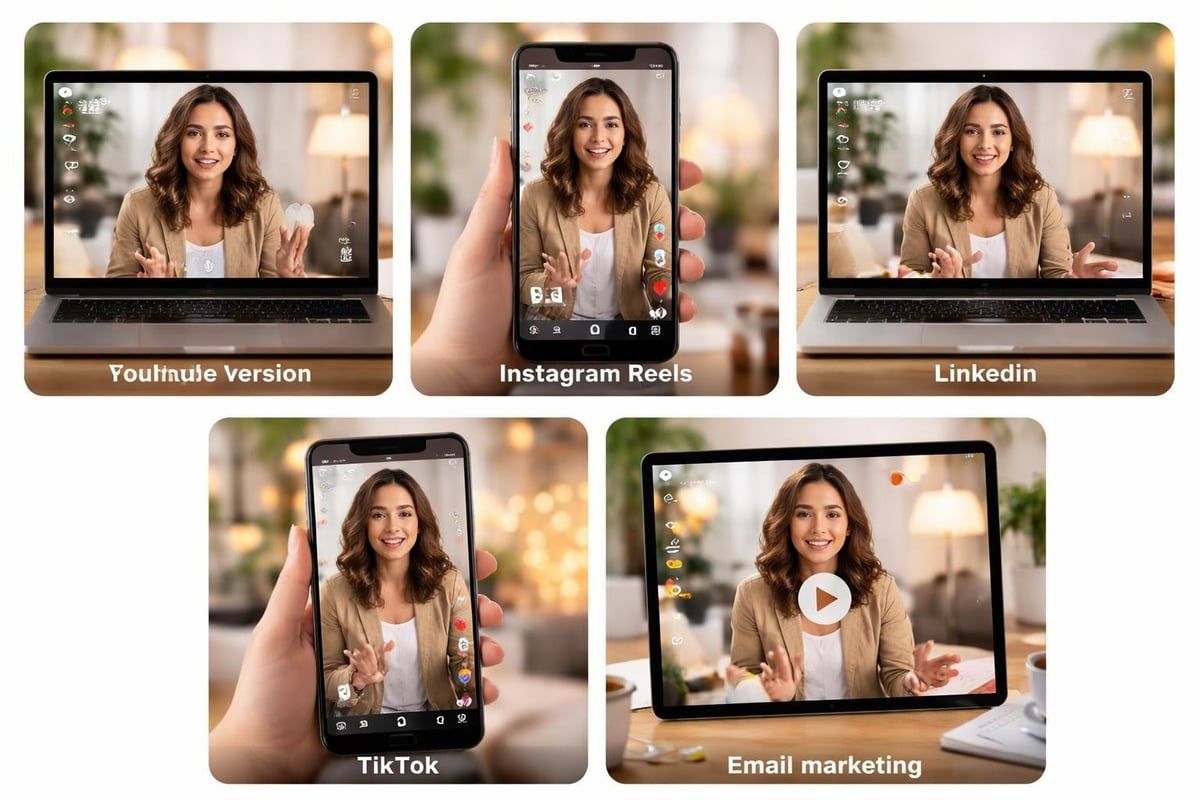
A single video concept often requires adaptation across multiple platforms, each with unique technical specifications, viewer behaviors, and consumption contexts. Smart concept development anticipates these variations, creating core ideas flexible enough to work across formats while maintaining consistent messaging.
- Short-form social platforms demand immediate hooks and rapid pacing
- Long-form content allows deeper storytelling and comprehensive information delivery
- Email marketing videos require strong thumbnails and front-loaded messaging
- Website hero videos balance ambient atmosphere with clear value propositions
- Paid advertising prioritizes conversion optimization over artistic expression
Understanding these nuances during concept development prevents expensive rework when adapting content for different distribution channels. The benefits of promotional videos multiply when concepts are architected for multi-platform deployment from inception.
Authenticity and Audience Connection
Modern audiences demonstrate increasing skepticism toward overly polished, corporate messaging that feels disconnected from genuine human experience. Effective concepts in 2026 prioritize authenticity and relatability over production perfection. This shift doesn't mean abandoning quality standards but rather ensuring that creative choices serve connection rather than mere aesthetics.
Creating compelling product videos requires balancing professional production values with authentic presentation that builds trust rather than triggering advertising resistance. The most effective concepts feel like valuable content viewers choose to engage with rather than interruptions they tolerate.
Data-Informed Creative Development
While creativity remains essential, the most successful video concepts increasingly leverage data insights to inform creative decisions. Audience analytics, competitive analysis, A/B testing results, and platform algorithm insights provide objective guidance that complements creative intuition.
This data-informed approach doesn't stifle creativity but rather channels it toward directions with the highest probability of success. Explainer video examples that drive results demonstrate how strategic insights and creative execution combine to deliver measurable business impact.
Common Concept Development Pitfalls to Avoid
Even experienced production teams occasionally develop concepts that fail to deliver intended results. Understanding common pitfalls helps avoid costly mistakes during the concept phase when changes remain inexpensive.
Prioritizing Creativity Over Strategy
The most frequent concept development mistake involves pursuing creative ideas that look impressive but fail to serve strategic objectives. Stunning visuals and clever narratives mean nothing if they don't connect with target audiences or advance business goals. Every creative choice should answer the question: "How does this serve our strategic objectives?"
Insufficient Audience Understanding
Developing concepts based on assumptions rather than research leads to content that misses the mark. What production teams find compelling may differ dramatically from what resonates with target audiences. Investing in proper audience research prevents this disconnect, ensuring concepts address real viewer needs and preferences.
Overcomplicated Concepts
Some concepts try incorporating too many ideas, messages, or creative elements, resulting in confused viewers and diluted impact. The most effective video concepts embrace simplicity, focusing on one core idea delivered clearly and memorably. Working effectively with production companies includes trusting their experience when they recommend simplifying overcomplicated concepts.
| Common Pitfall | Consequence | Prevention Strategy |
|---|---|---|
| Weak audience research | Concepts that don't resonate | Invest in thorough discovery and testing |
| Unclear objectives | Inability to measure success | Define specific, measurable goals upfront |
| Creative over strategy | Beautiful videos that don't perform | Evaluate all creative choices against objectives |
| Inadequate budget alignment | Production compromises that weaken concept | Honest budget discussions during concept phase |
| Insufficient differentiation | Forgettable content lost in competition | Competitive analysis and unique positioning |
Budget-Concept Misalignment
Developing concepts without considering production budget creates frustration when exciting ideas prove financially unfeasible. Honest budget conversations during concept development prevent this disappointment, allowing creative teams to develop ambitious yet achievable concepts that maximize available resources. Understanding pricing for video production helps align concept ambitions with financial reality.
Industry-Specific Concept Considerations
Different industries and sectors require specialized approaches to video concept development, reflecting unique audience expectations, regulatory requirements, and competitive dynamics.
Technology and SaaS Concepts
Technology products often involve complex features requiring concepts that simplify without oversimplifying. Effective tech video concepts balance technical accuracy with accessibility, using metaphors and demonstrations that make abstract capabilities tangible and relevant. The challenge involves explaining sophisticated functionality to audiences with varying technical literacy.
Healthcare and Medical Concepts
Healthcare video concepts navigate strict regulatory requirements while maintaining engagement and accessibility. These concepts must balance credibility and compassion, delivering important information with appropriate sensitivity. Patient privacy, medical accuracy, and compliance considerations significantly influence creative options.
Retail and E-commerce Concepts
Retail concepts prioritize product presentation and conversion optimization, often incorporating lifestyle context that helps viewers envision products in their lives. Creative corporate video examples showcase innovative approaches to product presentation that transcend traditional advertising formats.
Nonprofit and Mission-Driven Concepts
Nonprofit video concepts harness emotional storytelling to inspire action while maintaining authenticity and transparency. These concepts often face budget constraints requiring creative resourcefulness to deliver professional quality. Video marketing strategies for nonprofits demonstrate how strong concepts overcome resource limitations through strategic focus.
Future-Proofing Your Video Concept Approach
As technology advances and audience behaviors evolve, video concept development continues adapting to new possibilities and expectations. Forward-thinking businesses prepare for emerging trends while maintaining focus on timeless storytelling fundamentals.
Artificial intelligence increasingly influences concept development through data analysis, creative assistance, and personalization capabilities. However, human creativity and strategic thinking remain essential for developing concepts that genuinely connect with audiences on emotional levels. The future belongs to teams that leverage technological tools while maintaining human-centered creative approaches.
The rise of immersive formats including virtual reality and augmented reality expands concept possibilities beyond traditional video frameworks. While these technologies remain niche in 2026, developing familiarity with their creative potential prepares teams for broader adoption. Music and video production increasingly explores these emerging formats, creating innovative audience experiences.
Sustainability and social responsibility increasingly influence concept development as audiences expect brands to demonstrate authentic commitment to positive impact. Video concepts that integrate these values naturally rather than superficially resonate more strongly with conscious consumers.
Developing a strong video concept requires balancing creative vision with strategic discipline, ensuring every production decision serves defined business objectives while engaging target audiences. The investment in thorough concept development pays dividends throughout production and beyond, creating content that delivers measurable results rather than merely looking impressive. When you're ready to transform your vision into high-performance video content, Viva Media brings strategic expertise and creative excellence to every project, partnering with Toronto-area brands to develop concepts that drive real business impact.