
Modern brands face an undeniable reality: social media users consume video content at unprecedented rates, and businesses that fail to adapt their content strategies risk becoming invisible. Social video production has evolved from a marketing novelty into a business-critical discipline that demands technical expertise, platform knowledge, and strategic thinking. Toronto businesses and forward-thinking companies across North America are investing heavily in professional video content tailored specifically for social platforms, recognizing that generic video approaches no longer generate meaningful engagement or conversions.
Understanding the Social Video Production Landscape
Social video production differs fundamentally from traditional video creation. While conventional corporate videos prioritize polish and production value, social content demands authenticity, rapid consumption patterns, and platform-specific optimization. The average social media user scrolls through content at remarkable speed, making the first three seconds of any video absolutely critical for capturing attention.
Platform algorithms favor video content that keeps users engaged within their ecosystems. This reality has transformed how businesses approach content creation, requiring dedicated strategies for each social channel rather than repurposing a single video across multiple platforms. Companies working with professional video production services understand that social video production requires distinct creative approaches, technical specifications, and distribution strategies.
The Technical Foundation of Platform-Specific Content
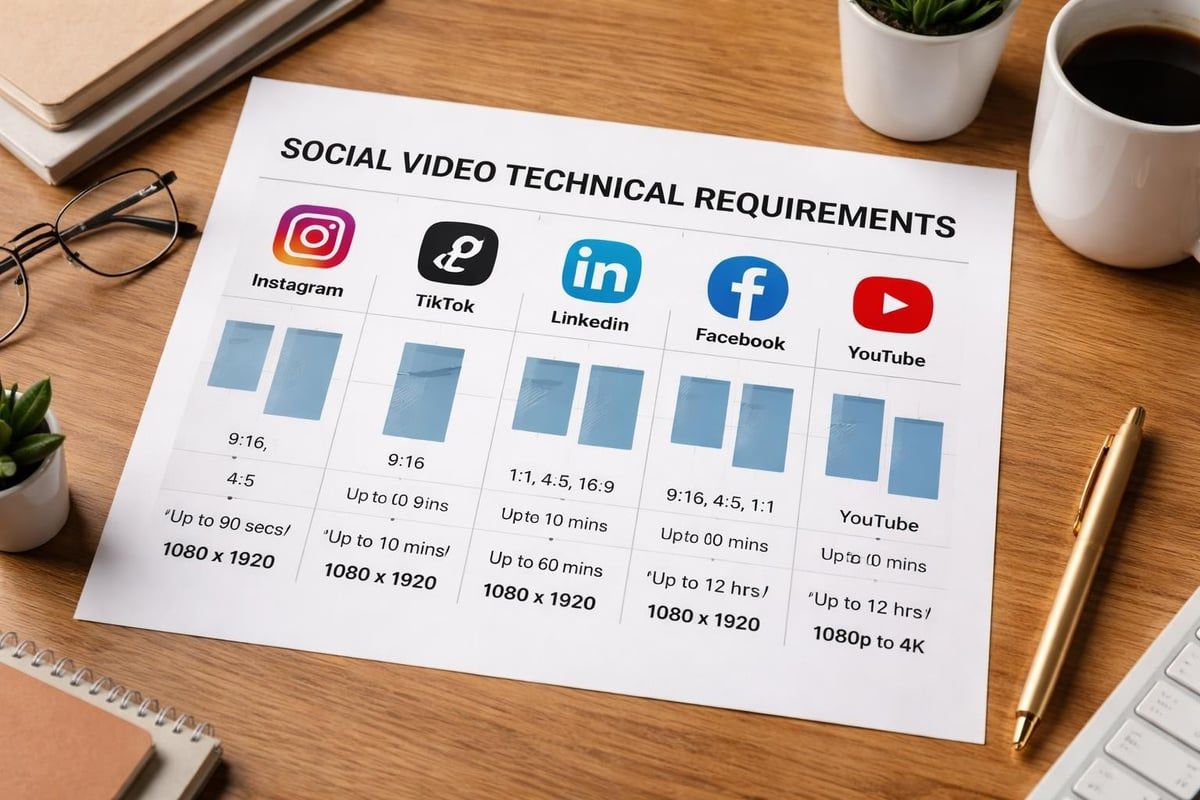
Each social platform maintains unique video specifications that directly impact performance. Understanding these requirements prevents technical issues that reduce visibility and engagement.
| Platform | Aspect Ratio | Max Duration | Resolution | File Size |
|---|---|---|---|---|
| Instagram Feed | 1:1 or 4:5 | 60 seconds | 1080 x 1080px | 4GB |
| Instagram Stories | 9:16 | 60 seconds | 1080 x 1920px | 4GB |
| Facebook Feed | 16:9 or 1:1 | 240 minutes | 1280 x 720px | 10GB |
| TikTok | 9:16 | 10 minutes | 1080 x 1920px | 287.6MB |
| 16:9 or 1:1 | 10 minutes | 1920 x 1080px | 5GB | |
| YouTube Shorts | 9:16 | 60 seconds | 1080 x 1920px | 256GB |
These specifications represent more than technical constraints. They reflect how users consume content on each platform, dictating everything from shooting orientation to editing rhythm. Optimizing video content for platforms like Facebook and LinkedIn requires tailoring videos to each platform's specifications and audience preferences.
Creating Scroll-Stopping Content
The most sophisticated social video production techniques mean nothing if viewers scroll past within milliseconds. Successful social videos engineer attention from the first frame, using proven psychological triggers and visual techniques to interrupt the scroll.
Opening Hooks That Command Attention
The opening three seconds determine video performance more than any other element. Research consistently demonstrates that social videos lose the majority of potential viewers within this critical window. Starting strong to capture audience attention represents the single most important factor in social video success.
Effective hooks employ several strategies:
- Visual disruption: Unexpected movements, color contrasts, or pattern interruptions that break the scroll
- Text overlays: Provocative questions or bold statements that create immediate curiosity
- Human faces: Close-up facial expressions that trigger emotional recognition
- Motion dynamics: Fast-paced editing or kinetic typography that signals energy
Pattern interruption works because human brains are wired to notice anomalies. When every video in a feed follows similar visual patterns, content that breaks those patterns captures disproportionate attention. This principle applies equally to B2B and B2C content, though the specific execution differs based on audience sophistication.
The Sound-Off Reality
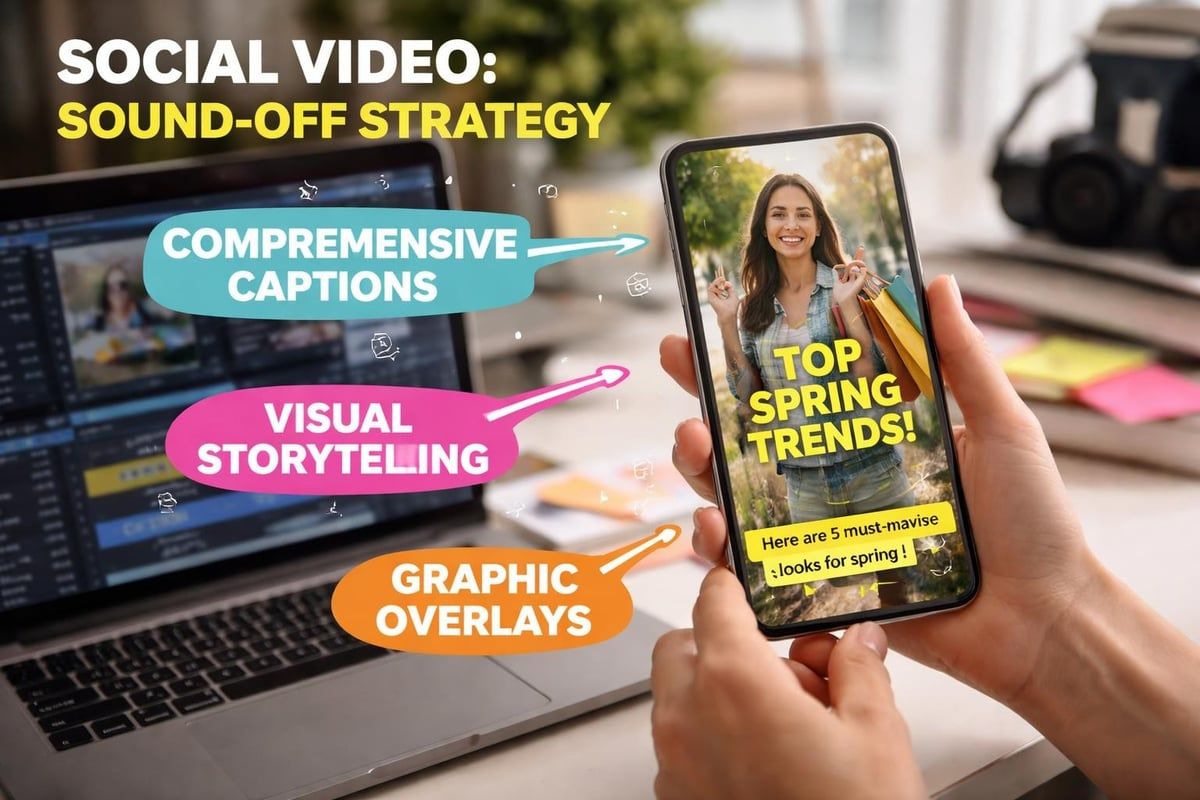
Plan for viewers who cannot hear the audio or choose to watch without it. W3C's caption guidance explains how captions convey speech and meaningful non-speech audio. Review their accuracy, timing and readability alongside the visuals.
Successful silent communication requires:
- Comprehensive captioning: Not just dialogue, but sound effects and contextual information
- Visual storytelling: Narrative progression that works without audio support
- Graphic reinforcement: Text elements that highlight key information
- Strategic composition: Visual framing that guides viewer attention
Companies that master silent storytelling gain significant competitive advantages. Their content performs equally well whether audiences watch with sound enabled or disabled, effectively doubling their addressable viewership. Professional teams building corporate video content now treat captions as essential production elements rather than post-production additions.
Designing for Dual Consumption
Smart social video production accounts for both sound-on and sound-off viewing experiences. This dual approach requires thoughtful planning during pre-production rather than attempting fixes during editing.
The visual narrative must communicate core messages independently while audio enhances rather than carries the story. Music and voice-over become supplementary layers that deepen engagement for sound-on viewers without alienating the silent majority. Understanding how music integrates with video production helps create content that works across consumption modes.
Strategic Content Formats for Different Objectives
Social video production serves diverse business objectives, requiring format selection based on specific goals rather than creative preferences. Different video types excel at different stages of the customer journey, and understanding these distinctions prevents wasted production investment.
Educational and Tutorial Content
How-to videos and educational content generate sustained engagement while positioning brands as industry authorities. These videos work particularly well on LinkedIn and YouTube, where professional audiences actively seek knowledge and solutions.
Educational content succeeds when it:
- Addresses specific pain points viewers actually experience
- Delivers actionable information within short timeframes
- Demonstrates clear before-and-after transformations
- Establishes credibility through expertise rather than sales messaging
Tutorial videos require careful scripting that balances comprehensiveness with brevity. The most effective educational content focuses on single topics rather than attempting comprehensive coverage, allowing for depth within platform time constraints.
Behind-the-Scenes and Culture Content
Authenticity drives social engagement, and behind-the-scenes content satisfies audience curiosity about company operations and values. These videos humanize brands while building emotional connections that transcend transactional relationships. Company culture videos demonstrate this principle in action.
Culture content works because it:
- Reduces psychological distance between brands and audiences
- Showcases real people and genuine moments
- Provides proof of organizational values
- Creates recruitment advantages for employer branding
Production quality matters less for behind-the-scenes content than authenticity and consistency. Audiences forgive technical imperfections when content delivers genuine insights into company culture and operations.
Product Demonstrations and Announcements
Product-focused videos require balancing information density with entertainment value. The challenge lies in maintaining viewer interest while communicating technical details and value propositions effectively.
Successful product videos demonstrate solutions rather than describe features. They show products solving real problems in contexts audiences recognize, making benefits tangible rather than abstract. This approach works across industries, from technology services to consumer goods.
Production Workflow Optimization
Efficient social video production requires systematic workflows that maximize output quality while controlling costs and timelines. Professional production teams develop repeatable processes that ensure consistency across content while allowing creative flexibility.
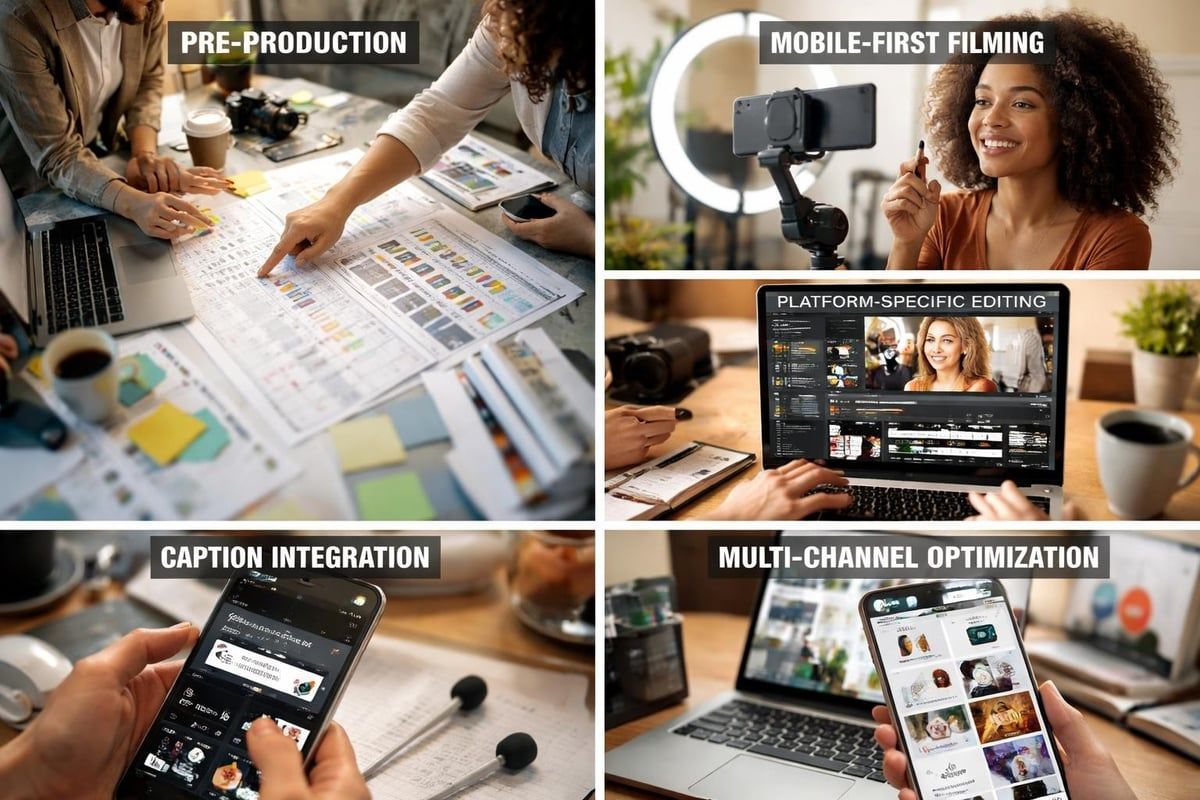
Pre-Production Planning
Strategic planning prevents expensive production mistakes and ensures content aligns with business objectives. Pre-production encompasses:
- Creative brief development: Defining objectives, target audiences, key messages, and success metrics
- Script and storyboard creation: Visualizing narrative flow and shot requirements
- Location scouting: Identifying appropriate filming environments
- Talent coordination: Scheduling on-camera participants and securing necessary releases
- Equipment preparation: Ensuring technical resources match creative requirements
Teams that invest time in thorough pre-production reduce production day chaos and post-production challenges significantly. This planning phase determines whether video production costs deliver proportional value or wasteful spending.
Production Execution
Filming social content differs from traditional production in several key aspects. Social video production often prioritizes volume over perfection, recognizing that consistent content publication outperforms occasional masterpieces in algorithmic systems.
Mobile-first thinking shapes production decisions. Since most social viewers consume content on smartphones, filming and framing must prioritize mobile viewing experiences. What looks impressive on a 27-inch monitor might feel cramped or illegible on a phone screen.
| Production Consideration | Traditional Video | Social Video Production |
|---|---|---|
| Primary Viewing Device | Desktop/TV | Mobile Phone |
| Optimal Shot Size | Wide establishing shots | Tight, vertical framing |
| Pacing | Measured, deliberate | Rapid, dynamic |
| Audio Dependency | High | Low (caption-supported) |
| Production Schedule | Days/weeks | Hours/days |
Post-Production and Optimization
Editing for social platforms requires restraint and precision. The temptation to showcase editing prowess must yield to clarity and message delivery. Every transition, effect, and overlay should serve strategic purposes rather than aesthetic preferences.
Post-production workflow includes:
- Assembly editing and narrative refinement
- Color grading for brand consistency
- Caption integration and accuracy verification
- Platform-specific optimization and exports
- Thumbnail creation for clickthrough optimization
- Metadata preparation for discoverability
Review each edit in its intended placement. Check whether the framing, text size, pacing and captions suit that viewing context, and use the results from your own content to inform later versions.
Analytics and Performance Optimization
Social video production creates data goldmines that inform future content strategies. Platform analytics reveal precisely how audiences interact with content, providing insights that guide continuous improvement.
Key Performance Metrics
Different metrics matter for different objectives. Vanity metrics like view counts provide limited strategic value compared to engagement indicators and conversion tracking.
Critical metrics include:
- Watch time percentage: How much of videos audiences actually consume
- Engagement rate: Likes, comments, shares relative to reach
- Click-through rate: Actions taken from videos
- Audience retention graphs: Specific moments where viewers drop off
- Demographic data: Who actually watches and engages
These metrics reveal content performance patterns that inform strategic decisions. Videos with high initial engagement but poor completion rates signal hook strength but narrative weakness. Strong completion rates with low click-through suggest compelling content that needs stronger calls-to-action.
Iterative Improvement Through Testing
The most successful social video strategies embrace experimentation and data-driven refinement. A/B testing different hooks, lengths, formats, and publishing times reveals platform-specific and audience-specific preferences that generic best practices miss.
Testing methodology includes:
- Isolating single variables between test versions
- Ensuring adequate sample sizes for statistical significance
- Documenting results and observable patterns
- Implementing winning approaches in future content
- Continuing testing to prevent creative stagnation
Machine learning tools assist social media video creators in improving content quality and predicting video popularity, though human creative judgment remains irreplaceable for strategic direction.
Budget Allocation and Resource Management
Social video production presents unique budgeting challenges. The volume required for algorithmic success demands efficient production systems that maintain quality while controlling per-video costs.
Cost Structure Considerations
Understanding where production budgets generate returns helps optimize resource allocation. High-production-value content doesn't automatically outperform efficiently produced authentic content on social platforms.
Budget allocation typically divides across:
- Creative development: Strategy, scripting, concept development
- Production: Filming, talent, equipment, locations
- Post-production: Editing, motion graphics, sound design
- Distribution: Platform promotion, influencer partnerships
Many businesses discover that investing heavily in distribution and promotion of good content outperforms minimal promotion of excellent content. Social platforms reward consistent publication and promotional support more than occasional production excellence.
Video pricing considerations vary based on production complexity and platform requirements, but efficiency-focused workflows reduce per-video costs while maintaining quality standards.
Internal vs. External Production Resources
Businesses face critical decisions about building internal production capabilities versus partnering with specialized agencies. Each approach offers distinct advantages depending on volume requirements, quality standards, and strategic importance.
Internal production provides:
- Greater content volume and publication consistency
- Direct control over messaging and brand representation
- Lower per-video costs at scale
- Faster iteration and response to trending topics
External partnerships deliver:
- Professional expertise and creative perspectives
- Advanced equipment and technical capabilities
- Strategic guidance and best practice knowledge
- Scalable capacity without permanent overhead
Many successful strategies combine both approaches, using internal teams for high-volume authentic content while partnering with professionals for flagship campaigns and complex productions. Working effectively with video production companies requires clear communication about objectives and expectations.
Platform-Specific Strategy Development
Effective social video production requires distinct strategies for each platform rather than universal approaches. Audiences, algorithms, and cultural norms vary dramatically across social networks, demanding tailored content strategies.
Instagram and Visual Storytelling
Instagram prioritizes aesthetic appeal and aspirational content. The platform's visual-first culture rewards beautifully composed content that feels native to the feed rather than imported from other channels.
Instagram strategy emphasizes:
- Strong visual branding and consistent aesthetic
- Vertical and square formats for maximum screen real estate
- Story-driven narratives that build emotional connections
- Strategic use of Stories, Reels, and Feed posts for different objectives
LinkedIn and Professional Value
LinkedIn audiences seek professional value rather than entertainment. Content succeeds when it delivers actionable insights, industry perspectives, or career advancement knowledge. A social-first approach maximizes engagement even on professional platforms.
LinkedIn video strategy includes:
- Thought leadership content that demonstrates expertise
- Industry trend analysis and future predictions
- Customer success stories and case study narratives
- Employee spotlights and culture insights for recruitment
TikTok and Trend Participation
TikTok's algorithm democratizes visibility, giving new accounts genuine reach potential. The platform rewards trend participation, creative audio usage, and authentic personality over production polish.
TikTok success requires:
- Monitoring trending sounds and challenges for participation opportunities
- Fast-paced editing that maintains constant visual interest
- Personality-driven content rather than corporate messaging
- Willingness to experiment and iterate rapidly based on performance
Compliance and Brand Safety
Social video production carries legal and reputational considerations that require systematic attention. Content that violates platform policies, copyright laws, or regulatory requirements can trigger account penalties or legal consequences.
Copyright and Music Licensing
Music licensing represents one of the most common compliance challenges in social video production. Platform policies vary regarding copyright enforcement, but consequences can include content removal, account strikes, or legal action from rights holders.
Safe music usage requires:
- Platform-native music libraries with cleared licenses
- Original composition or royalty-free music services
- Proper licensing for commercial music usage
- Understanding platform-specific copyright policies
Accessibility Requirements
Accessibility represents both legal obligation and audience expansion opportunity. Captions benefit not only deaf and hard-of-hearing viewers but the majority of social audiences watching without sound. Tips for social media video production emphasize accessibility as a core production consideration.
Accessibility best practices include:
- Accurate captions with proper timing and speaker identification
- Audio descriptions for complex visual content
- Sufficient color contrast for text readability
- Avoiding flashing or strobing effects that trigger photosensitivity
Content Calendar and Publishing Strategy
Consistent publication schedules outperform sporadic excellence in social algorithms. Platform systems reward accounts that maintain regular posting cadences, building audience expectations and algorithmic favor.
Optimal Publishing Frequency
Publishing frequency balances audience fatigue against algorithmic visibility. Different platforms and audiences tolerate different posting volumes, requiring experimentation to identify optimal schedules.
General frequency guidelines suggest:
- Instagram: 3-5 posts per week, daily Stories
- TikTok: 1-3 posts daily for maximum algorithm engagement
- LinkedIn: 2-3 posts weekly focusing on quality over volume
- Facebook: 3-7 posts weekly depending on audience size
- YouTube: 1-4 videos weekly maintaining consistency
These represent starting points rather than absolute rules. Understanding video purpose and platform specifications helps determine appropriate publishing strategies.
Strategic Content Mixing
Effective content calendars balance different video types to maintain audience interest while serving various business objectives. Promotional content interspersed with educational and entertaining videos prevents audience fatigue while building long-term relationships.
Strategic mixing includes:
- Educational content that provides genuine value (40%)
- Entertainment or culture content that humanizes brands (30%)
- Product or promotional content driving conversions (20%)
- User-generated or community content building relationships (10%)
This distribution prevents excessive self-promotion while ensuring regular opportunities for conversion-focused content. The specific ratio adjusts based on industry, audience maturity, and business objectives.
Social video production represents a fundamental shift in how businesses communicate with audiences, requiring platform expertise, strategic thinking, and consistent execution. The brands achieving measurable results combine technical proficiency with authentic storytelling and data-driven optimization. Viva Media partners with forward-thinking Toronto businesses to create social video content that generates real engagement and tangible ROI, bringing professional expertise to every stage of the production process.