
By 2026, video ads are expected to make up over 82% of all consumer internet traffic, transforming how brands connect with shoppers. As competition intensifies, product video ads have become essential for driving e-commerce growth and building brand recognition.
This guide delivers a comprehensive, actionable approach to leveraging product video ads for measurable business success in 2026. You will discover the latest industry trends, ad formats, step-by-step creation methods, AI-powered tools, platform strategies, optimization tactics, and future predictions.
Ready to outperform your competitors? Dive in and unlock the full potential of product video ads for your brand’s next chapter.
The 2026 Product Video Ad Landscape: Trends & Consumer Expectations
The landscape for product video ads in 2026 is rapidly transforming as brands and platforms respond to shifting consumer demands and technological advancements. To stay ahead, marketers must understand the key trends, consumer behaviors, platform innovations, data-driven strategies, and compliance requirements shaping successful campaigns.

The Evolution of Video Advertising
Over the past decade, product video ads have evolved from simple, static banners into dynamic, interactive experiences. Brands now prioritize mobile-first and vertical video formats, ensuring content is optimized for how audiences consume media today. Platforms like YouTube and Google Ads have integrated product feeds directly into video ads, enabling seamless shoppable moments. According to Google, campaigns using product feeds see 60 percent more conversions at a lower cost. AI and automation now drive both creative development and audience targeting. In fact, recent projections suggest that by 2026, generative AI will power nearly 40 percent of all video ads, accelerating production cycles and personalization. For more on the impact of AI, see the IAB's 2025 Digital Video Ad Spend Report.
Consumer Behaviors & Expectations in 2026
Today’s consumers expect product video ads to offer instant, interactive shopping experiences. They prefer personalized recommendations that match their tastes and browsing history. Audiences want to move smoothly from viewing an ad to purchasing a product, without friction or delay. Authenticity is also essential, with user-generated content and real customer reviews boosting trust. Social platforms like TikTok and Instagram have set new standards, as their shoppable video features directly influence buying decisions and drive higher engagement.
Key Platforms and Their Innovations
Major platforms such as YouTube, Instagram, TikTok, and Facebook have all introduced innovative features to enhance product video ads. Google’s virtual storefronts use product feeds to display clickable product panels within video action campaigns. Platforms now offer interactive overlays, product carousels, and advanced call-to-actions that prompt immediate engagement. AI tools are increasingly used to auto-generate and optimize video assets for different audiences. Notably, more than 70 percent of YouTube viewers have purchased from a brand after seeing it featured in a video ad, highlighting the growing impact of these innovations.
Data-Driven Creative: The New Standard
In 2026, successful product video ads are grounded in performance analytics. Marketers track conversions, return on ad spend, and engagement rates to guide creative decisions. Real-time analytics and A/B testing help brands quickly identify what resonates with viewers. Dynamic product insertion, powered by AI, enables tailored ad experiences for different audience segments. Creative processes are also enhanced by AI tools that assist with scriptwriting, editing, and targeting. Automated campaign types like Performance Max make it easier for brands to scale and optimize their video advertising efforts.
Regulatory and Privacy Considerations
Evolving privacy laws such as GDPR and CCPA have a direct impact on how product video ads are targeted and personalized. Transparency and explicit consent are now standard practices in data collection. Marketers are shifting towards first-party data and contextual targeting to balance personalization with compliance. Following best practices for ethical video advertising is crucial, including regular audits and clear privacy policies. Google’s privacy-safe targeting features, for example, help brands deliver effective campaigns while respecting user privacy and regulatory requirements.
Essential Product Video Ad Formats & Features for 2026
To achieve standout results in 2026, brands must master the evolving landscape of product video ads. Selecting the right formats and features is crucial for boosting engagement and conversions. Let us explore the formats reshaping how consumers discover and shop online, and see how you can leverage these innovations for measurable success.

Shoppable Video Ads
Shoppable video ads are revolutionizing e-commerce by letting viewers interact with products directly within the video. These ads integrate product feeds and clickable purchase options, streamlining the path from discovery to checkout.
Platforms like YouTube, Instagram, and TikTok now support native shoppable video experiences. For instance, Google Ads features a product panel below video action campaigns, making it easy for users to browse and buy.
Key benefits of shoppable video ads include:
- Higher conversion rates
- Lower customer acquisition costs
- Seamless shopping journeys
Best practices:
- Curate top-selling products in your feed
- Regularly update inventory and details
- Ensure fast-loading, mobile-optimized experiences
Interactive & Immersive Experiences
Today’s product video ads often include interactive hotspots, product carousels, and 360° product views to immerse shoppers in the experience. Augmented reality (AR) try-ons and virtual demos are especially popular for beauty and fashion brands.
Instagram’s AR shopping ads allow users to virtually test products before purchase, increasing confidence and engagement. Metrics like dwell time and interaction rates typically rise with immersive features.
To maximize results:
- Place clickable elements on high-interest products
- Use AR for real-world visualization
- Track user interactions to refine creative
Interactive product video ads keep viewers engaged and encourage deeper exploration of your offerings.
Short-Form & Vertical Video Formats
Short-form vertical video is now the default for mobile audiences, making it a must-have for brands using product video ads. Platforms such as TikTok, Instagram Reels, and YouTube Shorts favor videos between 15 and 30 seconds, driving high engagement and completion rates.
Brands are achieving impressive ROI with concise, punchy storytelling in vertical formats. For best results:
- Open with a strong visual hook
- Showcase products in action within the first few seconds
- End with a clear call-to-action
Creative guidelines for short-form product video ads focus on authenticity, pacing, and relevance to the target audience.
Dynamic Product Insertion & Personalization
AI-driven dynamic product insertion lets brands tailor product video ads to each viewer. By analyzing user data, platforms can display different products to distinct audience segments in real time.
For example, e-commerce brands can use Google Performance Max to show relevant products based on browsing behavior or past purchases. Tools that enable dynamic video creation help scale personalized content efficiently.
When implementing dynamic product video ads:
- Ensure opt-in and privacy compliance
- Use first-party data for targeting
- Test personalization strategies for best results
Personalized product video ads enhance relevance and drive higher conversion rates.
Call-to-Action (CTA) Innovations
Innovative CTAs are pushing product video ads beyond traditional “Shop Now” buttons. Interactive elements like countdown timers, quizzes, and gamified prompts are boosting engagement and driving immediate action.
YouTube’s auto-applied “Shop now” CTA in product feed campaigns is a strong example of this trend. Marketers are also experimenting with placement, design, and messaging to maximize impact.
To optimize CTAs in product video ads:
- A/B test different CTA formats
- Monitor analytics for click and conversion rates
- Adjust creative based on performance data
For a deeper dive into maximizing campaign impact, explore effective video ad strategies.
Step-by-Step Guide: Creating High-Performance Product Video Ads
Mastering product video ads in 2026 requires a precise, systematic approach. This guide breaks down every step, ensuring your campaigns achieve measurable results and stand out in a competitive market.

Step 1: Define Campaign Goals & KPIs
Start by clarifying your business objectives for product video ads. Decide whether your focus is on driving sales, generating leads, increasing brand awareness, or boosting engagement. Each goal requires a tailored strategy.
Select key performance indicators (KPIs) that align with your objectives, such as conversions, return on ad spend (ROAS), click-through rate, or view-through rates. For example, you might set a target to lower cost per acquisition by 20% through well-optimized product video ads.
Use tools offered by your chosen platform, like Google Ads campaign objectives, to ensure your creative direction matches your desired outcomes. This alignment will make every metric meaningful and actionable.
Step 2: Gather & Prepare Product Assets
Next, assemble all assets needed for your product video ads. Gather high-resolution product images, videos, and compelling descriptions. Your product feed should meet platform requirements, such as including at least four products for Google.
Optimize each asset for various aspect ratios and resolutions to ensure compatibility across different devices. For instance, Google recommends images with a .6 to 1.4 aspect ratio for best results.
If your catalog is large, use item_group_id to group product variants efficiently. Meticulous asset preparation lays the foundation for visually appealing, high-converting product video ads.
Step 3: Script & Storyboard Your Video
A clear script and storyboard bring structure to product video ads. Focus your messaging on product benefits, addressing consumer needs and pain points concisely.
Plan the visual flow: start with an attention-grabbing introduction, follow with a detailed product showcase, and finish with a strong call-to-action. Incorporate storytelling elements to create an emotional connection with viewers.
Many brands use a three-act structure for 30-second shoppable ads: introduce the problem, present the solution, and invite action. Consider leveraging AI-powered tools for scriptwriting and storyboard generation to streamline this creative phase.
Step 4: Produce & Edit Video Content
Choose the right production style for your product video ads: live-action, animation, user-generated content, or a hybrid approach. Film or animate your product in action, highlighting unique features and benefits.
Edit your footage to fit platform-specific requirements, such as video length, aspect ratio, and inclusion of captions. Adding interactive overlays can turn ordinary videos into shoppable experiences.
AI-powered tools are transforming video production. For example, Google's AI-driven tools can generate voiceovers, speeding up editing and ensuring consistency. Discover more about these advancements in Google Vids Enhances AI Voiceovers, which details how automation is making video creation more accessible and efficient.
Step 5: Integrate Product Feeds & Interactive Elements
Integrate your product feeds, such as those from Google Merchant Center, with your ad platforms. Set up engaging product panels, carousels, and clickable hotspots to drive interaction.
Before launching, preview and thoroughly test all integrations to ensure a seamless user experience. Address any product approval errors and confirm you meet minimum requirements for live campaigns.
Interactive elements not only increase engagement but also directly impact conversion rates for product video ads. Proper feed management is essential for both compliance and performance.
Step 6: Configure Targeting & Budgeting
Define your audience segments using demographics, interests, and behavioral data. Rely on first-party and contextual data to maintain privacy compliance while reaching relevant users.
Set daily budgets and bid strategies that match your campaign goals. Platforms like Google offer advanced data segments and automated bidding for optimal results.
Test various targeting setups to maximize ROAS. Adjust your approach as you analyze how different segments respond to your product video ads, ensuring efficient budget allocation.
Step 7: Launch, Monitor, and Optimize
Once your product video ads are ready, preview the final creatives to confirm all assets function correctly. Launch your campaign and monitor its performance in real time using platform analytics.
Segment your results by click type, product, and audience to uncover actionable insights. For example, Google Ads allows detailed segmentation of product feed campaigns, helping you identify top performers.
Iterate continuously. Use analytics to refine creative assets and targeting strategies, ensuring your product video ads evolve with consumer behavior and market trends.
Leveraging AI & Automation for Smarter Product Video Ads
Artificial intelligence and automation are reshaping how brands approach product video ads. In 2026, marketers can harness advanced tools to streamline production, personalize experiences, and maximize campaign performance. Understanding how AI drives smarter product video ads is essential for staying competitive.
The Role of AI in Video Ad Creation
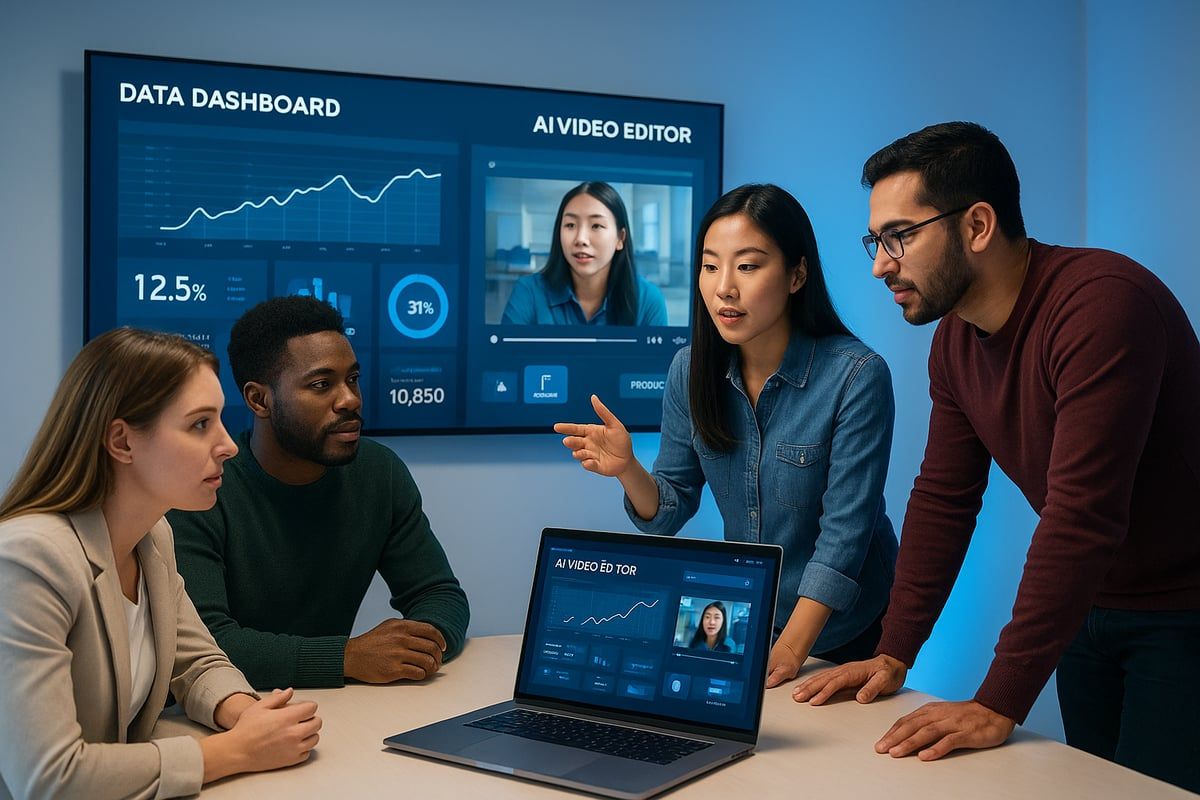
AI is revolutionizing the creation of product video ads by automating scriptwriting, voiceover generation, and video editing. Marketers can now produce high-quality video content at scale, adapting assets for multiple platforms in less time. Tools like Canva's Magic Studio are making AI-powered content creation more accessible, enabling brands to quickly generate engaging videos and maintain creative consistency.
Benefits of AI-driven video ad creation include:
- Rapid production cycles
- Automated resizing and cropping for each platform
- Consistent branding across campaigns
By integrating these innovations, brands can launch product video ads faster and achieve a measurable advantage.
Smart Product Recommendations & Personalization
Personalization is a key differentiator for product video ads in 2026. AI analyzes user behavior and preferences to display the most relevant products in real time, resulting in highly tailored ad experiences. Dynamic product feeds automatically update to reflect inventory and audience interests, ensuring each viewer sees offers that resonate.
Brands leveraging AI for product video ads benefit from:
- Increased conversion rates through relevant recommendations
- Enhanced customer satisfaction and engagement
- Greater efficiency in managing large product catalogs
Balancing personalization with privacy compliance is essential in building trust and maximizing ad impact.
Automated Campaign Management & Optimization
Automation is transforming how marketers manage product video ads. AI-powered bidding strategies optimize for conversions or ROAS, adjusting bids and budgets in real time based on performance data. Automated creative rotation ensures the best-performing assets are always in play, reducing manual workload and improving outcomes.
Key features of automated campaign management:
- Real time budget allocation
- Data driven audience targeting
- Continuous creative testing
Marketers who embrace automation in product video ads see improved efficiency and more predictable results.
Measuring and Enhancing AI Performance
To ensure AI is driving real value in product video ads, marketers must measure performance meticulously. Setting up A/B tests helps validate AI-driven changes, while tracking metrics like conversions, CPA, and engagement provides actionable insights. Comparing campaigns with and without automation highlights the true impact of AI.
Best practices for refining AI in product video ads:
- Regularly review analytics dashboards
- Iterate based on data trends and learnings
- Stay current with evolving AI capabilities in ad platforms
This data driven approach secures ongoing growth and optimization for product video ads.
Platform-Specific Strategies for Product Video Ad Success
Tailoring your product video ads to each platform is essential for maximizing results in 2026. Every channel offers unique features, audience behaviors, and creative opportunities, making a one-size-fits-all approach ineffective. By leveraging the strengths of each platform, you can drive higher engagement, boost conversions, and stand out in a crowded digital marketplace.
YouTube & Google Video Campaigns
YouTube and Google remain at the forefront of product video ads, offering robust tools for shoppable experiences and audience targeting. Video action campaigns, when paired with product feeds, have proven to deliver over 60% more conversions at a lower cost. Brands can create virtual storefronts, integrate clickable product panels, and reach consumers across Google video partners for expanded visibility.
To optimize your product video ads on YouTube and Google, segment campaigns by product category, audience, and creative type. Monitor performance closely using real-time analytics and adjust targeting or creative elements based on what resonates. Prioritize vertical and mobile-friendly formats to match shifting consumer behaviors.
Instagram & Facebook Shopping Videos
Instagram and Facebook are ideal for immersive, mobile-first product video ads. With features like Reels, Stories, and in-feed shoppable videos, brands can tag products, use interactive stickers, and create seamless shopping experiences. Augmented reality ads and product carousels further boost engagement, driving users directly from content to checkout.
Leverage detailed targeting options, including lookalike audiences and retargeting, to reach high-intent shoppers. For actionable advice on maximizing your impact, explore these Shoppable Instagram video tips to refine your creative approach. Consistently test different video lengths, aspect ratios, and CTA placements to optimize your product video ads for mobile consumption.
TikTok & Emerging Social Platforms
Product video ads on TikTok and other emerging platforms thrive on authenticity, creativity, and trend participation. TikTok’s native shoppable video formats and “Shop Now” CTAs make it easy for users to discover and purchase products without leaving the app. Partnering with creators for genuine product showcases can significantly amplify reach and trust.
Stay agile by harnessing viral trends and challenges, adapting your product video ads to fit evolving platform features. Experiment with short-form storytelling, interactive elements, and real-time engagement tools. Regularly analyze campaign data to identify which creative approaches yield the strongest results.
E-Commerce & Retailer Video Ad Networks
Expanding product video ads into e-commerce ecosystems like Amazon, Walmart, and Shopify unlocks direct paths to purchase. Retailer video ad networks enable dynamic product placements, sponsored brand videos, and seamless integration with product feeds. These environments support precise attribution, allowing you to measure every step of the customer journey.
Adapt your creative to align with retailer guidelines and optimize for the specific shopping context. Use cross-channel data to refine audience targeting and allocate budget to top-performing products. By integrating product video ads into these networks, brands can drive incremental sales and reinforce their presence at the point of purchase.
Advanced Optimization & Measurement Tactics for 2026
Driving measurable impact with product video ads in 2026 requires advanced optimization and precise measurement. As the landscape evolves, marketers must adopt a data-driven approach to stay ahead of competitors and maximize returns.
A/B Testing and Creative Experimentation
Successful product video ads in 2026 rely on constant experimentation. Systematic A/B testing helps identify which video formats, messages, and CTAs drive the highest engagement and conversions. Start by testing variables such as video length, visual style, and CTA placement.
- Test one element at a time for clear insights.
- Use platform analytics to track performance metrics like view-through rate and conversion rate.
- Document learnings to guide future campaigns.
For example, use Google’s video experiments to compare different product video ads. This iterative process ensures your creative evolves with consumer preferences and platform algorithms.
Attribution, Analytics, and Reporting
Accurate attribution is vital for understanding the true impact of product video ads across multiple channels. Leverage advanced analytics to track view-through conversions, click-through rates, and assisted conversions.
Key metrics to monitor include:
| Metric | Description |
|---|---|
| View-through Conversions | Purchases after ad view, no click |
| Click-through Rate (CTR) | Percentage of viewers clicking CTA |
| Assisted Conversions | Conversions influenced by the ad |
Integrate product video ads performance data with e-commerce analytics for a holistic view. Use real-time dashboards to segment data by product, click type, and audience, enabling faster optimization decisions.
Budget Optimization and Scaling
Maximizing ROI from product video ads requires strategic budget allocation and ongoing scaling. Use automated rules to shift spend toward top-performing products and audiences. Adjust bids based on performance trends, seasonality, and inventory levels.
- Allocate budget to campaigns with the best ROAS.
- Scale successful product video ads across platforms and regions.
- Monitor for diminishing returns, then reallocate as needed.
Embrace new AI-powered tools such as Google’s Veo 3 for faster video generation and smarter budget management. These innovations help marketers adapt quickly and maintain efficiency at scale.
Future-Proofing Your Product Video Ad Strategy
To sustain long-term success, future-proof your approach to product video ads. Stay informed about platform updates, emerging ad formats, and evolving privacy regulations. Build a robust first-party data strategy for targeting and personalization.
Invest in creative agility by adopting AI-driven tools like Canva's Magic Studio, which streamlines video content creation and adapts to new trends. Encourage ongoing education and upskilling within your marketing team to keep pace with industry shifts.
Early adoption of AR and AI-powered video ads positions your brand as an innovator, ensuring continued relevance in the fast-evolving digital landscape.
After exploring the latest trends, creative formats, and step-by-step strategies for impactful product video ads in 2026, you’re likely ready to elevate your brand’s approach and drive measurable results. At Viva Media, we specialize in translating these insights into powerful, ROI-focused video content for forward-thinking businesses across Toronto. If you’re looking for guidance tailored to your goals or want to craft video ads that truly stand out, let’s connect and map out your next steps together. You can book a strategy session with our team and start building your success story today.