

In 2026, brands face unprecedented competition for attention as the advertising landscape evolves rapidly. To truly stand out, it is no longer enough to just create commercials with creativity—success demands a blend of data-driven strategy and measurable impact.
This expert guide will walk you through proven steps and emerging trends that will help you create commercials designed for real results in 2026. Discover how to set clear objectives, develop compelling concepts, master production, optimize distribution, and accurately measure ROI.
With practical insights and expert strategies, you will be equipped to thrive in a world where only the most strategic and effective commercials break through. Get ready to transform your approach and achieve measurable success.
Understanding the 2026 Commercial Landscape
The landscape to create commercials in 2026 is evolving at a rapid pace. Marketers face a dynamic environment shaped by technological innovation, changing regulations, and shifting audience expectations. To stay ahead, brands must understand both the emerging trends and the behaviors that define today’s viewers.

Key Trends Shaping Commercials in 2026
Several pivotal trends are redefining how brands create commercials for measurable impact. First, the surge in AI-generated content and automation is transforming video production workflows. In fact, 84% of marketers use AI in video creation, allowing teams to scale content, personalize messaging, and reduce turnaround times.
Personalization is not just a buzzword. Advanced data analytics enable brands to tailor every aspect of their commercials, from visuals to calls-to-action, ensuring each viewer feels uniquely addressed. This level of targeting is now essential to create commercials that stand out.
Interactive and shoppable video ads are gaining momentum. Statista reports a 35% increase in shoppable video ad spend since 2024, reflecting how commerce and content are merging. Viewers can now engage with products directly within videos, shortening the path from awareness to purchase.
Mobile-first and vertical formats have become the standard as mobile video consumption overtakes desktop. The expansion of 5G and improved device screens make it easier than ever to create commercials optimized for mobile viewing.
Immersive technologies are also on the rise. Brands are integrating augmented reality (AR) and mixed reality to offer interactive experiences that boost engagement. These tools help create commercials that are not only seen but experienced.
Short-form storytelling is more critical than ever. With attention spans shrinking, high-impact narratives under 30 seconds dominate social feeds. To create commercials that capture interest quickly, marketers are embracing concise, emotionally resonant messaging.
Finally, regulatory changes around data privacy and ad transparency are reshaping creative strategies. Brands must now balance personalization with compliance, integrating transparent data practices into every campaign.
Audience Behavior & Platform Evolution
Audience behavior is evolving just as quickly as the technology used to create commercials. Viewing habits are increasingly fragmented across streaming services, social media, and connected TV. This fragmentation challenges brands to reach their audience wherever they are.
One major shift is the prevalence of “sound-off” viewing. Platforms like TikTok and Instagram Reels have made visual storytelling paramount, as over 60% of video ad impressions among Gen Z occur on these channels (eMarketer). To create commercials that perform, marketers must prioritize clear visuals and on-screen text.
Platform evolution means adapting to new ad formats and algorithms. Mobile-first design, vertical video, and interactive overlays are now table stakes. Brands that create commercials tailored to each platform’s strengths see higher engagement and ROI.
Let’s summarize key behaviors and platform trends:
| Trend/Behavior | 2026 Impact on Commercials |
|---|---|
| Fragmented viewing | Multi-platform strategy required |
| Sound-off viewing | Visual-first storytelling crucial |
| Short-form dominance | Brevity and clarity win attention |
| Algorithm changes | Continuous creative adaptation |
| Interactive features | Higher engagement, direct commerce |
Success in 2026 depends on a deep understanding of where, how, and why audiences consume video. Brands that create commercials with agility and insight will lead the market, adapting quickly to both technological and behavioral shifts.
Step 1: Setting Objectives and Defining Success
In the rapidly evolving world of advertising, taking a strategic approach to create commercials is more critical than ever. Before investing in production or media, clear objectives and success benchmarks ensure every campaign delivers measurable value.

Determining Commercial Goals
Every successful effort to create commercials begins with defining what you want to achieve. Is your priority brand awareness, lead generation, direct sales, or launching a new product? Setting primary objectives gives your team a clear direction and aligns creative decisions with broader business targets.
For instance, a retail brand may seek to reduce its cost-per-acquisition by 20 percent through a focused video campaign. In this scenario, KPIs such as conversions and CPA become the main benchmarks. Aligning these goals ensures your investment is both trackable and tied to meaningful business impact.
To further clarify your objectives, consider reviewing the 7 reasons to create a commercial. This resource outlines key motivations, from boosting brand recognition to driving tangible sales, helping you set a foundation for measurable results.
Audience Research and Persona Development
Once objectives are set, the next step to create commercials that resonate is understanding your audience. Modern campaigns rely on detailed, data-driven personas, which leverage both first-party data (from your CRM or website analytics) and third-party insights (industry reports or social listening).
Defining your ideal viewer goes beyond demographics. Consider behavioral patterns, purchase motivations, and preferred platforms. For example, a B2B brand increased conversion rates by 30 percent by refining their messaging based on in-depth persona research.
Effective persona development ensures your commercial speaks directly to your target market, increasing the likelihood of engagement and action. This targeted approach is essential to maximize ROI and avoid wasted impressions.
Benchmarking and Success Metrics
Establishing how you will measure success is fundamental when you create commercials. Key metrics include view-through rate, engagement rate, conversion rate, brand lift, and overall ROI. Setting benchmarks based on industry standards, such as the 1.84 percent average video ad click-through rate in 2025, helps you gauge performance realistically.
A/B testing is invaluable for optimizing creative and refining objectives. Iterative testing allows you to compare different versions of your commercial, analyze performance data, and make adjustments for continuous improvement.
By defining clear metrics and reviewing results regularly, you ensure your efforts to create commercials lead to sustained growth and measurable business outcomes.
Step 2: Crafting a High-Impact Commercial Concept
Creating a standout concept is the heart of any effort to create commercials that excel in 2026. The right idea can cut through noise, inspire action, and set the stage for measurable success.

Ideation and Creative Development
The first step when you create commercials is a robust ideation process. Gather your team for brainstorming sessions that encourage bold thinking and fresh perspectives. Use creative sprints to generate a high volume of ideas, then filter them through proven storytelling frameworks, such as the hero’s journey or a simple problem and solution narrative.
Originality is crucial, but so is strategy. Viral campaigns often blend humor, emotional resonance, and cultural relevance to drive engagement. For inspiration, review the 10 key elements every viral video needs to anchor your creative process in what truly works. This approach ensures your efforts to create commercials start with a foundation built for audience connection.
Scriptwriting and Storyboarding
Once the concept is clear, transform it into a concise, impactful script. Successful attempts to create commercials in 2026 prioritize brevity and clarity, ensuring every word serves the story and matches the chosen platform’s requirements. Tailor language, pacing, and tone to your intended audience.
Storyboarding is essential for visualizing your narrative. Use detailed storyboards to align the team and anticipate production needs. Sound design and accessibility should factor in early, with captions and visual cues supporting silent viewing. This methodical preparation streamlines production and helps create commercials that are both polished and accessible.
Brand Integration and Messaging Consistency
To create commercials that resonate, integrate the brand authentically into the story. Avoid overt product placement, which can alienate viewers. Instead, find organic moments for your brand to appear, whether through dialogue, visuals, or context.
Consistent messaging across all touchpoints reinforces brand recall. A Nielsen study found a 23 percent lift in recall when branding is woven naturally into the narrative. Ensure your approach to create commercials balances subtlety with clarity so the audience remembers both the story and the brand behind it.
Compliance and Inclusivity
In 2026, every attempt to create commercials must meet evolving advertising standards and accessibility regulations. Stay informed about current guidelines to avoid costly missteps or ad rejections.
Inclusivity is non-negotiable. Cast diverse talent and ensure messaging speaks to a broad spectrum of viewers. Accessible design, such as audio descriptions and high-contrast visuals, enables more people to engage. Integrating these principles as you create commercials not only meets regulatory requirements but also broadens your campaign’s impact.
Budgeting and Resource Allocation
Strategic budgeting is key to maximizing ROI when you create commercials. Allocate resources thoughtfully between creative development, production, and media spend. Data from Think with Google shows brands achieve three times higher ROI by investing 60 percent in media and 40 percent in production.
Use a simple table to compare allocations:
| Category | Recommended % | Impact |
|---|---|---|
| Creative | 20% | Concept, scripting |
| Production | 20% | Filming, editing |
| Media | 60% | Distribution, reach |
This balance empowers you to create commercials that look great and reach the right audience, driving measurable business results.
Step 3: Production Excellence—From Pre-Production to Post
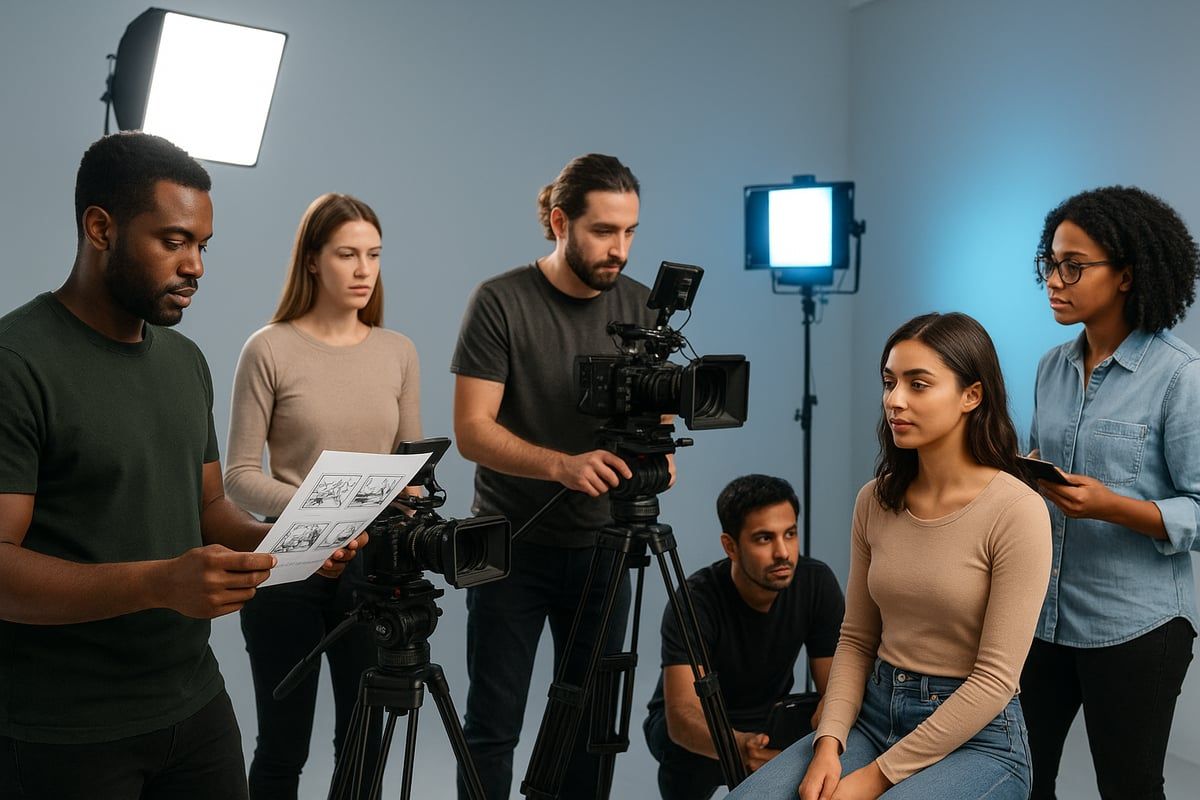
Bringing your vision to life requires more than creativity. To create commercials that truly perform in 2026, you need a flawless production process. Let’s explore each critical stage, from initial planning to the final quality check, ensuring every commercial stands out and delivers measurable impact.
Pre-Production Planning
The foundation of successful commercial production is meticulous pre-production. When you create commercials, start by scouting the perfect locations that match your concept. Secure all necessary permits early and ensure your casting reflects the diversity of your target audience.
Develop a clear schedule and logistics plan to keep everything on track. Use a detailed shot list and a comprehensive production brief to avoid surprises on shoot day. Planning every detail in advance reduces costly delays and helps your team stay focused on the creative vision.
By prioritizing pre-production, you set the stage to create commercials that run smoothly from the start.
Filming and Directing
Once pre-production is complete, the filming phase takes center stage. When you create commercials, leverage the latest camera technology like 8K video, drones, and virtual production tools. These advances allow for cinematic visuals and dynamic movement, even on tight timelines.
Directing is about more than technical execution. Guide your talent to deliver authentic performances that align with your brand. Virtual sets can cut production costs and speed up timelines, making them an attractive option for ambitious campaigns.
Attention to detail during filming ensures your commercials look polished and professional across every platform.
Post-Production and Editing
Post-production transforms raw footage into a compelling story. To create commercials that resonate, edit for clarity, emotion, and impact. Use motion graphics and animation to reinforce key messages or calls to action.
Color grading and sound design add the finishing touches, helping your commercial stand out in crowded feeds. Ensure all edits maintain accessibility, such as adding captions for viewers who watch with sound off.
A strong post-production workflow is essential for producing commercials that capture attention and drive results.
Quality Control and Feedback Loops
Before launching, rigorous quality control is crucial. Review your commercial internally and conduct test screenings to gather diverse feedback. Double-check that your technical specs match platform requirements, including aspect ratios and file formats.
Avoid common pitfalls by following a detailed checklist. For further insights, review 7 promotional video mistakes to avoid to ensure your process is airtight.
This step minimizes the risk of ad rejection and maximizes your chance to create commercials that perform flawlessly.
Viva Media: Toronto’s Commercial Production Partner
If you want to create commercials that drive real business growth, consider partnering with Viva Media. Their strategic discovery process aligns every commercial with your unique objectives and audience insights.
Viva Media’s award-winning creative team and premium production quality are trusted by leading brands. They offer a full-service approach, guiding you from concept to delivery with transparent pricing and fast turnaround.
Clients consistently report record-low cost per lead and outstanding satisfaction. With Viva Media as your partner, you can confidently create commercials that deliver measurable ROI and lasting brand impact.
Step 4: Distribution, Media Buying, and Optimization
In 2026, the ability to create commercials that achieve real business outcomes depends as much on strategic distribution as on creative execution. Advanced media planning, smart buying, and agile optimization are essential to ensure your commercial reaches the right audience, at the right time, on the right platform.
Platform Selection and Media Planning
Selecting the right platforms is the foundation to create commercials that resonate with your target audience. In 2026, options are more diverse than ever, including TV, streaming services, social media, connected TV, YouTube, and emerging interactive channels.
The rise of shoppable and interactive video formats has redefined how brands approach distribution. According to Shoppable Media Adoption in 2026, marketers are seeing higher engagement by integrating commerce-driven content directly within video ads.
To succeed, match your creative to the platform's strengths:
- Use short-form vertical ads for TikTok and Instagram Reels.
- Employ longer narratives on YouTube and streaming platforms.
- Leverage interactive elements on connected TV and e-commerce channels.
A thoughtful media plan aligns your campaign objectives with where your audience spends their time, maximizing both reach and impact.
Media Buying Strategies
Effective media buying is critical if you aim to create commercials that deliver measurable ROI. In 2026, marketers choose between programmatic and direct buys, each offering distinct advantages.
Programmatic buying enables real-time bidding and precise audience targeting, while direct buys offer premium placements and guaranteed impressions. Budget allocation should reflect your goals, balancing reach, frequency, and cost efficiency.
Industry forecasts predict digital ad spending will surpass $1.4 trillion by 2034, fueled by the expansion of video ads and e-commerce. For more insights on this trend, see the Digital Ad Spending Market Forecast.
Enhance your strategy with:
- Audience targeting and retargeting
- Lookalike modeling for new customer acquisition
- Dynamic budget adjustments based on real-time data
A data-driven approach ensures your investment works harder to create commercials that get noticed and acted upon.
Launch and Real-Time Optimization
Launching your commercial is just the beginning. To create commercials that consistently outperform, marketers must embrace real-time optimization.
A/B testing creative variations is vital for uncovering what resonates. Early data guides adjustments to spend, targeting, and messaging. Dynamic creative optimization (DCO) tools empower brands to tailor ads on the fly, increasing return on ad spend.
Consider these best practices:
- Monitor key metrics daily, like engagement and conversion rates
- Shift budget toward high-performing platforms and creatives
- Refresh ad assets regularly to combat creative fatigue
This agile approach ensures you stay ahead of shifting audience preferences and platform algorithms.
Cross-Platform Synergy
To create commercials that build brand equity and drive results, consistency across channels is essential. Cross-platform synergy means coordinating campaigns so that your message is reinforced at every touchpoint.
Sequential storytelling can guide viewers through the marketing funnel, from awareness to action. For example, a user might see a teaser on social media, a full-length ad on streaming, and a shoppable video on an e-commerce site.
Key tactics include:
- Aligning creative assets for visual and tonal consistency
- Using unified tracking to measure cross-channel impact
- Scheduling campaigns to maximize audience reach
By orchestrating efforts across platforms, you amplify your message and create commercials that leave a lasting impression.
Legal Compliance and Brand Safety
In 2026, compliance is non-negotiable if you want to create commercials that protect your brand reputation. Evolving data privacy laws, such as updated GDPR and CCPA regulations, require marketers to handle user data responsibly.
Brand safety measures are equally important. Prevent ad misplacement by using verified platforms and implementing exclusion lists.
Steps for compliance and safety:
- Stay updated on regional ad regulations
- Vet partners and platforms for transparency
- Use technology to monitor ad placements in real time
Prioritizing these safeguards ensures your commercials reach the right audience while upholding trust and integrity.
Step 5: Measuring Performance and Iterating for Success
Evaluating the impact of your efforts to create commercials in 2026 is essential for driving real business growth. This step ensures your campaigns deliver measurable results and helps you adapt to the ever-evolving advertising landscape.
Tracking and Analytics Tools
The foundation for successful measurement begins with robust analytics tools. When you create commercials, integrating platforms such as Google Analytics, Meta Ads Manager, and platform-specific dashboards is vital. These tools allow you to monitor reach, impressions, engagement, and conversion events.
Setting up pixel tracking, UTM parameters, and conversion tags ensures accurate attribution. Multi-touch tracking helps you understand the complete customer journey. For example, a retailer improved attribution accuracy by 40% by using advanced multi-touch analytics.
Organize your data collection early, so every time you create commercials, you can make data-driven decisions from the start.
Interpreting Results and Key Metrics
After collecting data, the next step is interpreting results with a focus on actionable metrics. When you create commercials, key performance indicators like cost-per-acquisition (CPA), return on ad spend (ROAS), and brand lift provide clarity on effectiveness.
A SaaS company, for example, reduced CPA from $15 to $9 through iterative optimization. Use tables to compare performance across campaigns:
| Metric | Campaign A | Campaign B |
|---|---|---|
| CPA | $15 | $9 |
| ROAS | 3.5 | 5.2 |
Always align your metrics with your original objectives. This approach ensures every effort to create commercials is tied directly to business outcomes.
Reporting and Stakeholder Communication
Clear reporting is crucial for keeping all stakeholders aligned. When you create commercials, transforming complex data into actionable reports helps marketing and executive teams make informed decisions.
Visualizing data through charts and dashboards makes insights accessible. Use concise summaries to highlight key findings and recommendations. Regular communication builds trust and ensures everyone stays focused on shared goals.
Effective reporting also supports ongoing learning, so each time you create commercials, your team becomes more strategic and agile.
Continuous Improvement and Iteration
Optimization is an ongoing process. Brands that continuously refine their approach to create commercials see significantly higher returns. Implement A/B testing for creative variations, targeting, and placements.
Review campaign results quarterly, using insights to adjust messaging, creative, or spend allocation. According to HubSpot, brands achieve 2x higher ROI through regular reviews and learning cycles.
For more strategies to boost your results, explore Boost your brand's success with effective video ads, which offers expert-backed tips for driving improvement.
Staying Ahead: Future-Proofing Your Commercial Strategy
To create commercials that remain effective, stay informed about emerging trends and technologies. Monitoring shifts such as AI-driven automation, AR integration, and the rise of mobile video is essential.
Build agile teams and invest in ongoing training to adapt quickly. Make use of industry research and reports, like those found in Mobile Video Advertising Market Growth, to anticipate changes and capitalize on new opportunities.
By consistently innovating your approach to create commercials, you ensure long-term success and resilience in a dynamic advertising environment.
After exploring the essential strategies for creating high-impact commercials in 2026, you now have the tools to set clear objectives, leverage emerging trends, and drive measurable results for your brand. But putting these insights into action is where real transformation happens. If you’re ready to take your video marketing to the next level and want an expert partner who understands the Greater Toronto Area’s unique landscape, we’re here to help. Let’s collaborate on a campaign engineered for real ROI and lasting impact. Start a project