


At Viva Media, we recommend that marketers adopt a careful, step-by-step approach to producing videos for the first time. The benefits of video content speak volumes about the future of digital marketing.Research by Insivia shows how effective video content can be when planned, created, and distributed well. People remember 95 percent of a video's core message after watching it, but only 10 percent recall the textual content's core message.What this means from our perspective is that video is here to stay in 2020 and beyond.The challenge is being able to produce enough quality videos without feeling overwhelmed. Quality is emphasized because anyone can make videos on their smartphones in a matter of minutes, but the best video content takes much longer.Today, consumers have an insatiable appetite for videos. Instagram, Facebook, Snapchat, and the infamous Chinese-owned Tik-Tok, have mastered the ability to reach millions of people, and video has a lot to do with that success.When producing videos for the first time, it's common to fall behind schedule, run over budget, and fail to meet return-on-investment goals.But a successful video production process doesn't require hidden knowledge or expensive consultants. Producing is an established process that has proved to work if executed correctly from the start.Our step-by-step video production guide provides a simple framework to make video content that rocks – and converts prospects into loyal, long-time customers.It all starts with knowing the three phases of producing a video.The three phases of video productionFrom a high-level overview, the production process breaks down into three distinct phases:
- Pre-production
- Production
- Post-production
Each phase builds upon the next, so it's essential to trust the process as the video goes through each one.We've seen that the biggest mistake when creating videos is rushing to complete a project after falling behind.Essentially, failing to stay on schedule invariably leads to higher costs as businesses, agencies, and freelancers struggle to catch up.The best way to avoid falling behind is to follow pre-production best practices before recording a single video moment.Pre-productionPlanning videos requires that businesses take a look at the big picture first. Most savvy marketers should excel at this stage because, ideally, consumer data are the best source of inspiration.Videos need a defined purpose to be effective at communicating marketing messages.The necessary steps of pre-production include:
- Audience research
- Core messaging
- Defining objectives clearly
- Developing a strategy
- Budget considerations
- Video production brief
- Choosing a creative approach
- Script creation
- Storyboard
- Scheduling the video shoot
These steps are critical to the video production process, and we don't recommend skipping over or ignoring any of them.Audience researchContent marketers should have the edge over their peers since everything they do revolves around knowing the audience. A quality brand persona will identify the best ways to connect with consumers in a preferred format.Without thorough research on consumers' attitudes and perceptions, video won't convert well enough to justify production costs.Core messagingAt Viva Media, we continuously encourage our clients to hone their core messages and target those messages at the right prospects at the right time. Indeed, it's easier said than done.Core messaging in video content is about intriguing prospects enough to seek more information about the company.Defining objectives clearlyOne way to define objectives is to follow the SMART technique. SMART is a popular mnemonic that stands for:
- Specific
- Measurable
- Achievable
- Relevant
- Time-bound
Concerning video production, the SMART method allows companies to dig deep into what they want to achieve and measure success.Developing a strategyA strategy influences the entire direction of a video project. The idea is to see the project from a high level and plan to drill down to the tactical level.One example of a strategic decision is to film the video in-house or outsource the project to an agency, each of which would require very different tactics to complete the video.Budget considerationsThe budget goes hand-in-hand with strategic decisions.The fact is that marketers don't need a massive six-figure budget to produce short, targeted videos. The other side of the coin is that marketers, limited to a meagre budget, have a tiny margin for error during the later phases.Video production briefThe next step in pre-production is to document a video production brief. This document outlines all the essential information, so anyone can read it and know the project's goals.A quality brief includes objectives and how best to measure their effectiveness in the overall marketing mix.Choosing a creative approachLike any art form, video is all about making creative choices.Will the videos use live actors, or will animation resonate more with the audience (i.e., children)? This is only one example of the creative choices videos must make.ScriptEvery video, even short videos on social media, needs a script. The purpose is to plan and outline the shooting of the video ahead of time.A quick tip: scripts have a traditional format and style, so it's best to use creative writers with that particular skill set.StoryboardAfter finishing the script, the storyboard comes next. A storyboard is a simple visual representation of the video scene by scene.Sometimes a specific storyboard artist performs this step; the alternative is to make an even more boiled-down version called a scamp.Scheduling the video shootThe last part of pre-production is scheduling the video shoot itself. In our experience, short videos require more time to film than most marketers initially expect.The ideal schedule for a video shoot leaves room for editing and distribution, which can take much longer than the filming.Once all of that is on paper, producing the video comes into play.ProductionOnce the pre-production process is complete, the fun part begins!Some marketers will insist on bringing in an agency at this point, which isn't a bad idea for first-timers. Experienced marketers, on the other hand, may get by doing the shoot themselves.It all depends on the complexity of the project and the goals defined during pre-production planning.The main steps during the production phase include:
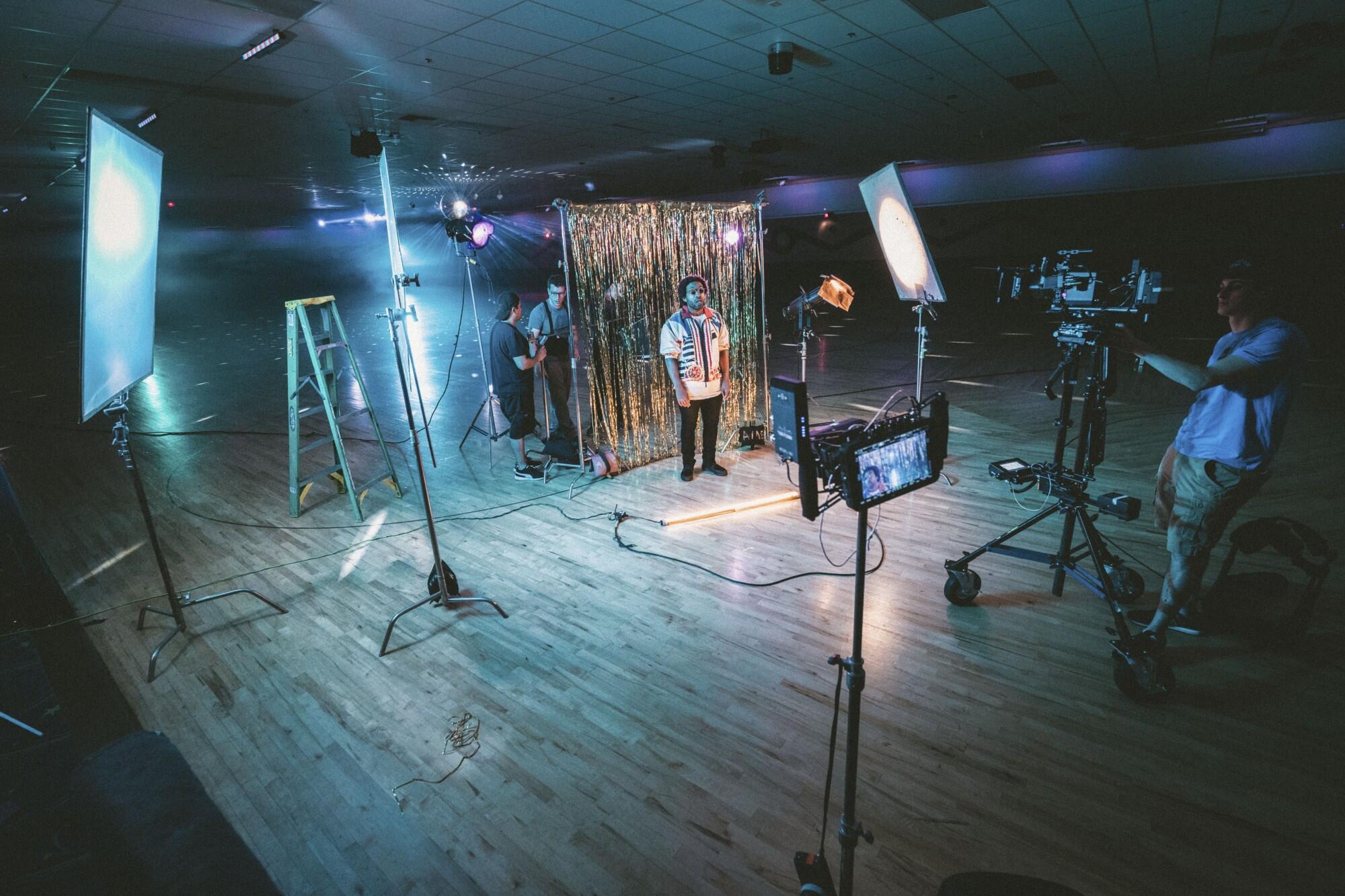
- Hiring the film crew
- Lighting and audio
- Staying on schedule
At a glance, it may look like production is the most straightforward phase, but that's not necessarily true. For some, filming the video is equally as challenging as pre-production.Hiring the film crewAn agency has the insight and experience to hire the best film crews for the job. Hiring a team won't be an issue if filming videos in-house, but it's a crucial decision for outsourced projects.The crew's size is what matters most because it's ideal to have multiple people contributing to the shoot. Still, short videos don't necessarily need a separate director, scriptwriter, or film editor.Lighting and audioThe idea is to set the stage for the audience to receive and remember the core message outlined in pre-production during production.Lighting and audio are two of the most under-rated aspects of shooting a quality video. There should be a seamless blend of narration, music, and effects, complemented by the right lighting.The impact is subtle but worth taking the time to do correctly.Staying on scheduleBy definition, the production phase doesn't finish the process; it's the middle.We recommend that marketers not think of production as the end but rather the culmination of the hard work put into pre-production planning.There is no such thing as a perfect shoot because editing and optimization come last, not the filming. It's OK to have imperfections during the shoot.The most important thing to do is stay on schedule, not fall behind, trying to film a flawless video in one cut.Now that the fun parts are over. It's time to polish the video content in post-production.Post-productionGetting this far in the video-producing process is a success in itself. It's not easy to do the first time around!Some marketers say that post-production is the most critical step for achieving the goals outlined in the pre-production and planning stages.We look at post-production from a marketer's point of view because that's the stage where video fits into the broader marketing mix.Videos that rock – and convert at a high rate – don't do well in isolation; they need careful coordination to perform best.At a minimum, post-production steps include:
- Film editing
- Audio processing and sound design
- Special effects
- Graphics
Essentially, post-production is the last opportunity to tie up loose ends before moving on to distribution and analytics.Film editingThe most significant decision to make during film editing is what software to use. Most marketers don't have experience using tools like Adobe Premiere Pro or Adobe After Effects.There is less expensive video editing software, but they have limited functionality, extending the editing process longer than planned.Audio processing and sound designRecording audio is a distinct step from processing that sound. It's OK to have imperfections during the shoot because the software optimizes the audio quality. The shoot provides the raw material.Special effectsSpecial effects may not come into play depending on the project's goals, but they often do. A small pilot project filmed on a smartphone may include special effects during the filming. More significant projects may work best with special effects added during post-production.GraphicsLastly, graphics are a phenomenal way to connect with an audience. We consider graphics a complementary part of core messaging, so they work best in an informative context, such as a product features video.So once post-production is complete, the next step is distribution and, most importantly, analytics to optimize the content across all platforms.Putting together all the pieces – Distribution and optimizationThe video production process gives marketers a general framework to follow, but successful campaigns remain works in progress long after the shoot.While producing quality video is achievable, it's also easy to make mistakes first, so optimization matters tremendously.DistributionThe pre-production phase comes full circle when it comes to distribution.The critical question is: What's the best medium to host a video? The answer depends on where the target consumers view the most video content.We've seen some companies make video content exclusively for social media channels, neglecting videos on website landing pages and email campaigns.Without a doubt, video is tremendously effective at making emotional connections with consumers in a relatively short amount of time.Typically, posting professionally produced video ads to a brand's credibility in the viewer's eyes.OptimizationSearch engine optimization is par for the course with blog and social media content, but it's a huge mistake to forget about optimizing videos in tandem.There are video hosting platforms available that capture many more metrics than YouTube or social media. Again, it all depends upon the content goals outlined in the pre-production phase.From a strictly marketing perspective, engagement metrics are most important to optimizing video for future projects.Our recommendation is to have honest, realistic expectations for initial video content. Success doesn't happen overnight, but with each video produced, new content will build upon the last, creating a continual narrative that influences consumers' decisions.Contact Viva MediaAt Viva Media, we have designed a thorough video production process and know how to execute every step.Viva Media knows that planning content for your corporate videos can improve their success dramatically. Well-thought content targets the right people and drives the results you want potential clients to take when they see it.If you'd like to see the engaging and results-driven videos we create, visit www.vivamedia.ca to contact a content specialist with the knowledge to shepherd projects from conception to distribution.




.svg)
.svg)
.svg)
.svg)
.svg)
.svg)
.svg)