
Video advertising is projected to drive over 85% of all internet traffic by 2026, delivering some of the highest ROI in digital marketing. However, the landscape of video ads production is becoming more complex as brands face intense competition and evolving consumer demands. To achieve measurable business outcomes, a strategic, results-driven approach is essential. This guide will walk you through proven strategies, emerging industry trends, and expert insights to master video ads production in 2026. Inside, you will discover how to navigate market trends, craft creative content, streamline production, optimize distribution, measure success, and future-proof your campaigns for lasting impact.
The Evolving Landscape of Video Ads in 2026
The world of video ads production is transforming rapidly as we approach 2026. Brands must keep up with new consumption habits, platform innovations, evolving privacy laws, and increased competition. Understanding these shifts is crucial for building a results-driven video ads production strategy that stands out and delivers measurable results.

Shifting Consumer Behaviors and Video Consumption Patterns
By 2026, consumer video consumption will be overwhelmingly mobile-first, with short-form and interactive content leading the way. Vertical video and immersive formats such as VR, AR, and 360° video will become standard, especially as platforms like TikTok and Instagram Reels dominate engagement metrics. According to Cisco, over 85 percent of internet traffic is projected to be video, highlighting the explosive demand for dynamic content.
Marketers are responding by exploring new creative approaches and investing in formats that encourage audience participation. For a deeper dive into emerging trends, review the 7 Video Marketing Trends to Look Out for in 2023. Staying ahead of these trends is key to effective video ads production.
Platform Innovations and Algorithm Changes
Leading platforms such as YouTube, Meta, TikTok, and connected TV are constantly evolving how ads are delivered and targeted. AI-powered recommendations and advanced personalization are reshaping ad visibility, allowing brands to reach the right viewers at the right time. For example, YouTube’s AI-driven placements and TikTok’s For You Page algorithm are setting new standards in ad relevance.
Adapting your video ads production process to these innovations means optimizing creative assets for each platform’s unique requirements. Brands that leverage these tools gain a competitive edge and improve campaign performance.
Regulatory and Privacy Shifts
Privacy regulations like updated GDPR, CCPA, and global equivalents are changing how brands collect and use consumer data. Apple’s App Tracking Transparency, for instance, has made targeting more challenging, pushing advertisers to prioritize first-party data and transparency.
Video ads production strategies now require clear consent mechanisms and robust data management practices. Brands investing in consent-driven advertising not only stay compliant but also build trust with their audiences.
Increased Competition and Ad Fatigue
With the saturation of video content, users are exposed to between 6,000 and 10,000 ads daily, resulting in rising CPMs and growing ad fatigue. Overcoming this challenge demands a creative approach to video ads production, focusing on authenticity, storytelling, and audience value.
Effective tactics include refreshing creative assets regularly, leveraging interactive formats, and personalizing content. These steps help brands cut through the noise and maintain high engagement rates.
The Role of Data, AI, and Automation
Data, AI, and automation are revolutionizing video ads production. Predictive analytics enable precise creative optimization and targeting, while AI tools assist with scriptwriting, editing, and real-time A/B testing. Dynamic creative optimization (DCO) in programmatic video ads allows for rapid personalization and adjustment based on performance data.
Incorporating these technologies streamlines workflows, reduces manual effort, and ensures your video ads production remains agile and competitive in 2026.
Strategic Planning for High-Performance Video Ads
Strategic planning is the cornerstone of effective video ads production in 2026. To achieve measurable results, brands must align creative vision with business goals, audience insights, and operational realities. This section outlines essential steps to build a high-performance framework for video ads production.
Defining Clear Business Objectives and KPIs
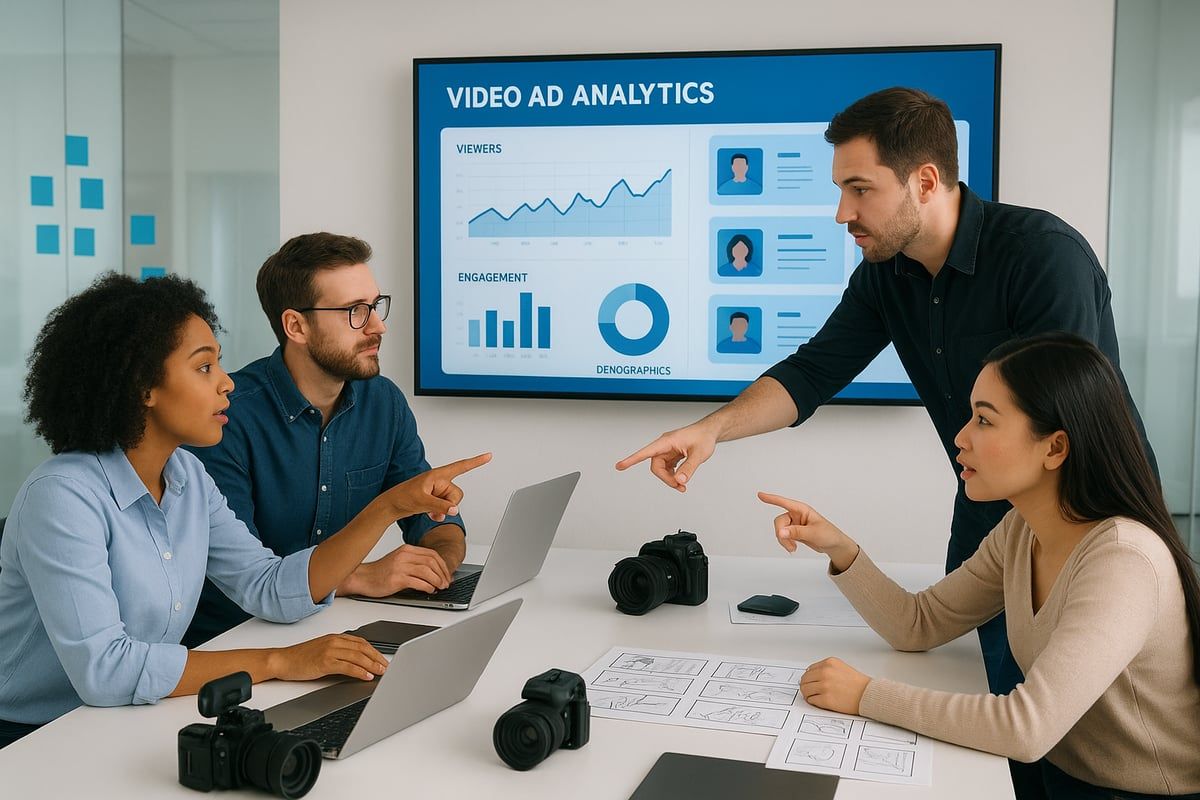
Setting clear objectives is the foundation for successful video ads production. Start by identifying how video ads will support broader marketing and business goals, such as increasing brand awareness, driving conversions, or boosting retention rates.
Choose key performance indicators (KPIs) that align with these goals. Common KPIs include cost per lead (CPL), return on ad spend (ROAS), view-through rate, and engagement metrics. For instance, if your main objective is lead generation, set a target CPL and track progress throughout the campaign.
Use a strategic framework to connect each video ad’s purpose to measurable outcomes. For actionable strategies on aligning objectives and KPIs, read Boost Your Brand's Success with Effective Video Ads.
Audience Research and Persona Development
In-depth audience research is vital for impactful video ads production. Leverage advanced segmentation tools to identify demographic, psychographic, and behavioral traits of your target audience.
Utilize social listening, surveys, and platform analytics to uncover pain points and preferences. Develop detailed personas that reflect real customer segments. These personas guide both messaging and creative decisions, ensuring content feels personalized and relevant.
Micro-segmentation allows for hyper-targeted video ads, increasing the likelihood of engagement and conversion. Prioritize ongoing research to adapt to evolving consumer behaviors.
Budget Allocation and Resource Planning
Effective budget allocation is central to video ads production success. Begin by forecasting the total campaign budget, then split it among production, media buying, and creative testing.
Consider current trends in video ad spend, such as the growing investment in short-form and interactive formats. Allocate funds for evergreen content, which delivers long-term value, and campaign-specific assets for targeted initiatives.
Resource planning should also account for technology, talent, and post-production needs. Track spending against KPIs to ensure optimal ROI and adjust allocations based on performance insights.
Creative Strategy and Messaging Frameworks
A powerful creative strategy is what sets exceptional video ads production apart. Define a unique value proposition and tap into emotional triggers that resonate with your audience.
Select storytelling frameworks proven to drive action, such as Problem-Agitate-Solution (PAS), Attention-Interest-Desire-Action (AIDA), or the Hero’s Journey. These structures help organize content for maximum impact.
Incorporate narrative arcs and compelling hooks in the first few seconds to capture attention. Use case studies to demonstrate how brands have increased engagement and conversions through storytelling in their video ads.
Legal, Compliance, and Accessibility Considerations
Compliance is non-negotiable in video ads production. Stay updated on advertising regulations and accessibility standards, including ADA and WCAG requirements.
Ensure all video ads include closed captions, audio descriptions, and accessible design elements. Representation and inclusivity are also essential—reflect diverse audiences in your content.
Brands have faced penalties for non-compliance, highlighting the importance of thorough legal review. Integrate accessibility checks into your workflow to mitigate risks and reach a wider audience.
Step-by-Step Video Ads Production Workflow for 2026
Navigating the modern landscape of video ads production in 2026 demands a strategic, agile approach. With evolving technologies, shifting audience expectations, and new creative possibilities, brands must master each phase of the workflow to deliver high-impact results.
This step-by-step guide breaks down the essential stages of video ads production, from concept to delivery, ensuring your campaigns are both innovative and effective.
Pre-Production: Strategy, Scripting, and Planning
The foundation of successful video ads production lies in thorough pre-production. Begin by defining your campaign objectives and target audience. Discovery sessions with stakeholders clarify expectations and ensure alignment.
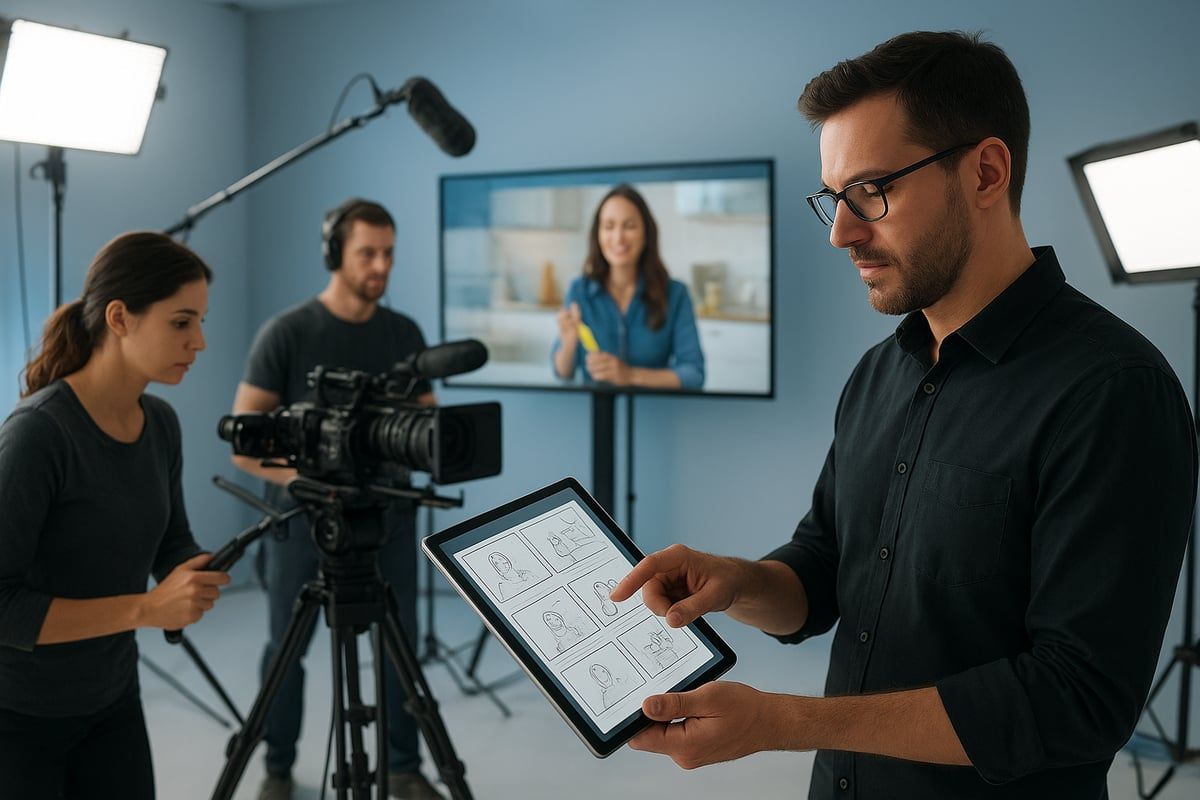
Leverage data insights and AI-assisted tools to craft compelling scripts tailored for diverse platforms. Storyboarding and visual planning are crucial for translating ideas into actionable concepts. Utilize mood boards and animatics to visualize the ad’s flow before filming begins.
- Host strategy workshops to identify goals and KPIs.
- Use AI-driven scriptwriting to enhance creativity and efficiency. According to AI's Impact on Video Ad Creation, nearly 90 percent of advertisers will use generative AI for building video ads by 2026.
- Develop storyboards that consider vertical, square, and horizontal formats.
A robust pre-production process streamlines the entire video ads production workflow and sets the stage for creative excellence.
Casting, Location Scouting, and Scheduling
Once your creative vision is clear, focus on casting and locations. Authenticity is paramount in 2026, so select talent and influencers who genuinely connect with your audience personas. Virtual casting tools make it easier to find the right fit, even remotely.
Scout locations that enhance your story’s impact. Consider both physical and virtual environments, using VR technology for remote scouting when needed. Schedule production days with precision, accounting for permits, crew availability, and platform requirements.
- Cast actors or influencers that reflect your brand’s values and audience diversity.
- Use VR or 3D mapping to preview and select locations efficiently.
- Build detailed production calendars to coordinate all moving parts.
Effective casting and scheduling are critical for seamless video ads production and reducing potential delays.
Production: Filming and Directing
With plans in place, the production phase brings your vision to life. In 2026, advanced cameras—such as 4K, 8K, drones, and 360-degree rigs—provide immersive visuals that captivate viewers. Hybrid teams, combining on-site and remote collaborators, maximize efficiency.
Real-time feedback is facilitated by collaboration tools, allowing directors to ensure brand consistency and message clarity on set. Platform-specific guidelines for duration, aspect ratio, and hooks should guide every shot.
- Use drones and 360-degree cameras for dynamic, engaging footage.
- Enable remote monitoring for stakeholders using secure streaming platforms.
- Follow shot lists and brand guidelines meticulously.
A well-managed production phase is essential for high-quality video ads production that resonates across channels.
Post-Production: Editing, Animation, and Optimization
Post-production is where raw footage transforms into polished, platform-ready video ads. Editors customize cuts for different platforms, adjusting aspect ratios and durations to optimize viewer retention. Motion graphics and subtitles increase accessibility and engagement.
AI-powered editing tools accelerate workflows and enable rapid creative iteration. Automated A/B testing helps refine video versions for maximum impact. Interactive elements, such as clickable overlays, boost engagement and drive conversions.
- Edit videos for vertical, square, and horizontal formats.
- Add animated logos, lower thirds, and interactive CTAs.
- Use AI to automate A/B testing and personalize video content.
A data-driven post-production process is vital for optimizing every aspect of your video ads production and ensuring creative assets perform at their best.
Quality Control and Compliance Review
Before launch, rigorous quality control ensures every video ad meets technical, creative, and regulatory standards. Multi-layer reviews check for resolution, sound clarity, and color accuracy. Accessibility is a priority, with closed captions, audio descriptions, and proper color contrast.
Compliance with advertising regulations and platform policies is non-negotiable. Automated compliance tools speed up approvals and reduce risk.
- Review content for technical excellence and creative consistency.
- Conduct accessibility audits, including captions and descriptive audio.
- Use compliance checklists and AI tools for faster quality assurance.
Comprehensive review processes protect your brand reputation and guarantee your video ads production is both inclusive and compliant.
Final Delivery and Asset Management
The final steps involve delivering optimized video files and organizing assets for future use. Prepare master files tailored to each platform’s specifications, ensuring fast uploads and playback. Asset management systems centralize content, making repurposing and versioning simple.
Efficient asset management supports evergreen campaigns and rapid deployment of new creative. Maintain detailed metadata for easy search and retrieval.
- Export videos in multiple formats for YouTube, TikTok, CTV, and OTT.
- Store assets in a centralized digital asset management (DAM) system.
- Archive project files, scripts, and brand guidelines for future reference.
A streamlined delivery and asset management process closes the loop on video ads production, enabling ongoing success and scalability.
Distribution, Placement, and Media Buying Strategies
With the landscape of video ads production rapidly evolving, effective distribution, placement, and media buying strategies are critical for maximizing ROI. Brands that master these areas will ensure their video content reaches the right audience, at the right time, on the most impactful platforms.

Selecting the Right Platforms and Formats
Choosing the optimal platforms and formats is foundational to successful video ads production. In 2026, platforms like YouTube, Meta, TikTok, Connected TV (CTV), and OTT services each offer unique strengths. Vertical, shoppable, and interactive ad formats are dominating, especially on mobile-first channels.
For instance, vertical video on TikTok consistently delivers higher ROI due to its native user experience. According to Video Marketing Statistics for 2025, short-form and vertical videos are expected to represent the majority of ad impressions. To optimize video ads production, align creative assets with the preferred formats of each platform and stay agile as new trends emerge.
Advanced Targeting and Retargeting Tactics
Precision targeting is at the heart of modern video ads production. Leveraging first-party data, brands can build lookalike audiences, tap into contextual targeting, and create hyper-relevant segments. Retargeting strategies, such as sequential messaging and funnel-based video journeys, help nurture prospects and boost conversions.
Consider these key tactics:
- Use behavioral data to create dynamic audience segments.
- Implement sequential ads that guide users through the purchase funnel.
- Retarget viewers who engaged with previous video ads production campaigns.
Retargeted viewers are 70 percent more likely to convert, making these strategies essential for efficient ad spend.
Programmatic Buying and Automation
Programmatic buying has revolutionized video ads production by enabling real-time, data-driven purchasing at scale. Automated platforms streamline media buying, allowing brands to set parameters for audience, placement, and spend, while algorithms handle the execution.
Benefits include:
- Real-time bidding for optimal ad placement.
- Frequency capping to reduce ad fatigue.
- Automated fraud detection for enhanced security.
A case study revealed that brands using automated media buying reduced CPA while improving targeting precision. Integrating programmatic strategies into video ads production ensures campaigns are both scalable and efficient.
Budget Optimization and Bidding Strategies
Effective budget allocation is essential for profitable video ads production. Dynamic budget optimization lets marketers shift spend in real time based on campaign performance, using models like cost-per-view (CPV), cost-per-acquisition (CPA), and return on ad spend (ROAS).
Here’s a summary table for quick comparison:
| Bidding Model | Best Use Case | Key Metric |
|---|---|---|
| CPV | Awareness campaigns | Views |
| CPA | Direct response | Conversions |
| ROAS | E-commerce, sales focus | Revenue |
Brands are increasingly adopting AI-powered bidding solutions to maximize impact, ensuring that every dollar spent on video ads production delivers measurable results.
Cross-Channel Integration and Omnichannel Campaigns
Seamless integration across channels is vital for successful video ads production. Orchestrating consistent messaging on digital, social, and CTV platforms creates a unified brand experience. Incorporating QR codes and interactive calls to action drives engagement beyond the screen.
Key strategies include:
- Synchronize creative across platforms for a consistent narrative.
- Use data to personalize messaging by channel.
- Measure results holistically to refine future campaigns.
Omnichannel approaches have been shown to achieve 287 percent higher purchase rates, proving that integrated video ads production is not just a trend, but a necessity for market leadership.
Measuring Success and Continuous Improvement
Measuring the impact of your video ads production is no longer optional. In 2026, the ability to track, analyze, and act on campaign data sets top-performing brands apart. Continuous improvement is essential to maximize ROI and adapt to changing consumer and platform dynamics.
Setting Up Tracking and Attribution Models
The foundation of effective video ads production measurement lies in robust tracking and attribution. Start by deploying UTM parameters on all links, enabling granular source tracking. Implement pixel tracking across platforms to capture user interactions and conversions.
Multi-touch attribution models provide a clearer picture of how each video ad contributes across the customer journey. Choosing the right attribution window is critical, as it reflects the typical path to conversion for your audience. For brands running cross-device campaigns, cross-device tracking brings holistic visibility, ensuring you do not lose conversions when viewers switch between devices.
Analyzing Key Performance Metrics
To evaluate the effectiveness of your video ads production, focus on metrics that align with campaign goals. Common indicators include view-through rate (VTR), completion rate, engagement, click-through rate (CTR), and conversions. Use both platform analytics and third-party tools for deeper insights.
Compare results against industry benchmarks to contextualize performance. For example, the average VTR for skippable ads is 29 percent, a useful point of reference. Professional video production can significantly improve these metrics and drive measurable business outcomes, as detailed in 10 Benefits of Corporate Video Production.
A/B Testing and Creative Experimentation
Ongoing experimentation is vital for optimizing video ads production. Systematically test different creative elements such as hooks, messaging, visuals, and calls to action. Use AI tools to predict performance and automate creative variations.
A/B testing should be structured and data-driven. Run tests long enough to reach statistical significance, then analyze which versions deliver higher engagement or conversions. Rapid creative iteration enables you to adapt quickly, keeping your video ads production efforts aligned with audience preferences and platform trends.
Learning from Insights and Scaling Winners
Continuous learning is at the core of successful video ads production. Use campaign data to refine targeting strategies, messaging, and budget allocation. Identify high-performing creatives and scale them across channels, while retiring underperformers.
Establish a feedback loop where insights from each campaign inform the next. This approach leads to lower cost per acquisition and higher ROI over time. By fostering a culture of experimentation and agility, brands can ensure their video ads production remains effective, relevant, and future-ready.
Future-Proofing Your Video Ads Strategy for 2026 and Beyond
As digital landscapes shift at lightning speed, future-proofing your video ads production strategy is critical for staying ahead of competitors and ensuring sustainable growth. Forward-thinking brands leverage emerging technologies, adapt to evolving consumer values, and build agile teams ready to respond to new challenges and opportunities.
Embracing Emerging Technologies and Formats
The future of video ads production is deeply intertwined with technological innovation. Brands that integrate AR, VR, and interactive shoppable video experiences will captivate audiences and set themselves apart. Interactive formats, such as choose-your-own-adventure ads, are gaining traction, allowing viewers to control their journey and increasing engagement rates.
Early adopters of AR-powered video ads are already seeing engagement rates double compared to traditional formats. Immersive 360-degree video and VR enable brands to create memorable, participatory experiences. For a glimpse into what’s next, explore these video marketing trends for 2026, which highlight the dominance of short-form, personalized, and interactive content.
When planning your video ads production, consider how emerging formats align with your audience and business goals. Invest in technology and talent that can bring these experiences to life.
Adapting to Evolving Consumer Preferences
Consumer expectations for video ads production are rapidly changing. Authenticity and diversity are now essential, with audiences gravitating toward brands that reflect real-world values and experiences. User-generated content (UGC) and influencer collaborations build trust, making your message more relatable and shareable.
Modern consumers prefer value-driven, transparent messaging over hard sells. To resonate, focus on genuine storytelling and inclusive representation. Encourage customers to participate in your campaigns, turning them into brand advocates. This approach not only enhances your video ads production but also drives higher engagement and loyalty.
Navigating Regulatory and Platform Changes
Regulations around data privacy and advertising standards are continuously evolving. In 2026, brands must master compliance while maintaining effective video ads production strategies. Stay up-to-date with privacy laws and platform algorithm updates to avoid disruptions.
First-party data strategies are now paramount. With third-party cookies disappearing, collecting and activating data directly from your audience ensures campaign resilience. Consent-based audience building is the foundation of future-ready video ads production, allowing you to personalize content while respecting user privacy.
Sustainability and Social Responsibility in Video Ads
Sustainability is no longer a differentiator, but an expectation. Eco-friendly video ads production practices, such as minimizing travel, using renewable energy, and repurposing sets, are becoming industry standards. Consumers are paying attention: 64 percent prefer brands with clear sustainability commitments.
Incorporate social impact themes into your creative messaging. Highlighting your brand’s environmental and social initiatives can strengthen credibility and foster deeper connections. Sustainable video ads production not only benefits the planet but also enhances brand reputation and drives consumer preference.
Building an Agile, Data-Driven Creative Team
Success in video ads production for 2026 depends on your team’s ability to adapt quickly and leverage data. Upskill your creative staff in analytics, automation, and emerging tech. Foster a culture of experimentation, encouraging rapid prototyping and feedback loops.
Agile teams outperform static ones, consistently delivering higher ROI and campaign effectiveness. Equip your team with the latest tools to analyze performance, iterate on creative, and act on real-time insights. This approach ensures your video ads production remains resilient and competitive in a fast-changing market.
Leveraging Strategic Partnerships and Industry Experts
Collaboration is a powerful catalyst for innovation in video ads production. By partnering with agencies, tech providers, and influencers, brands can access specialized expertise and accelerate growth. For a deeper look at the benefits, consider these 5 great reasons to hire a video production company for advertising.
Industry experts can help navigate new technologies, optimize campaign performance, and ensure compliance. Strategic partnerships also provide the flexibility to scale resources as needed, enabling your brand to meet the demands of modern video ads production with confidence.
As you look ahead to creating video ads that truly stand out in 2026, it’s clear that staying ahead means blending creativity with a results-driven approach. We’ve explored the latest trends, strategic planning steps, and proven production workflows to help you maximize ROI and connect with your audience in meaningful ways. If you’re ready to turn these insights into real business impact, let’s take the next step together. You deserve a partner who understands your goals and delivers measurable results.
Book a strategy session
and start building powerful video ads that drive your success.