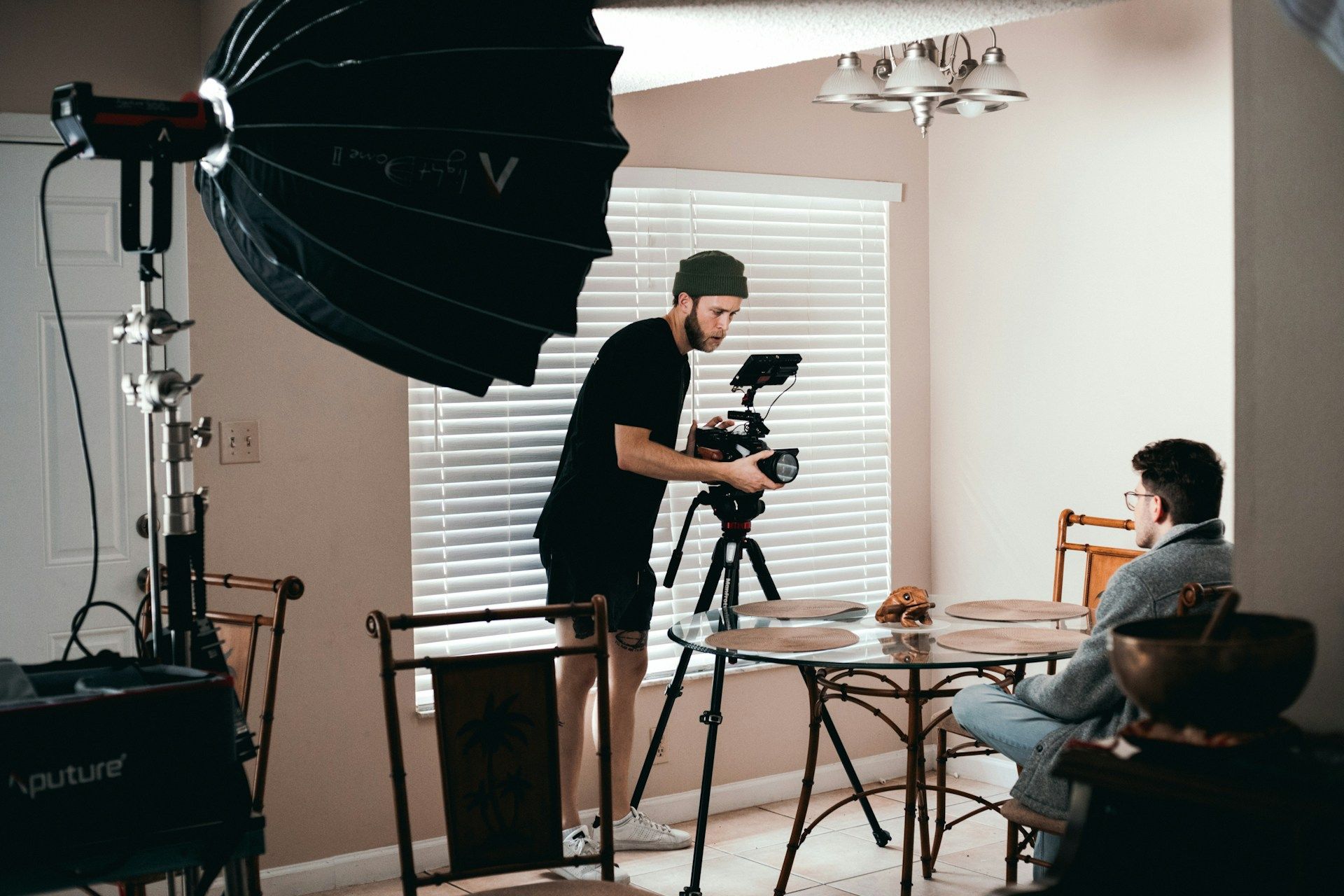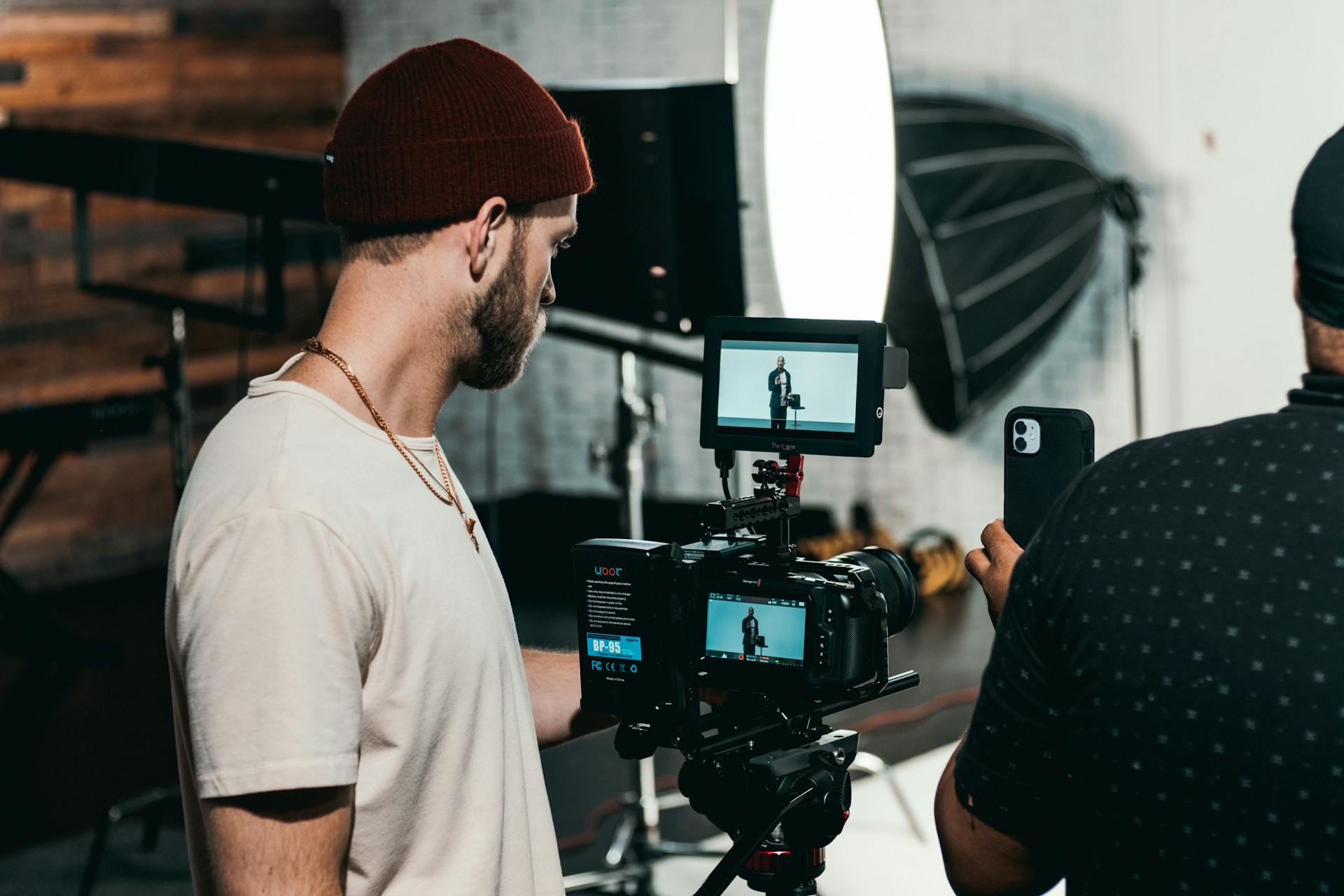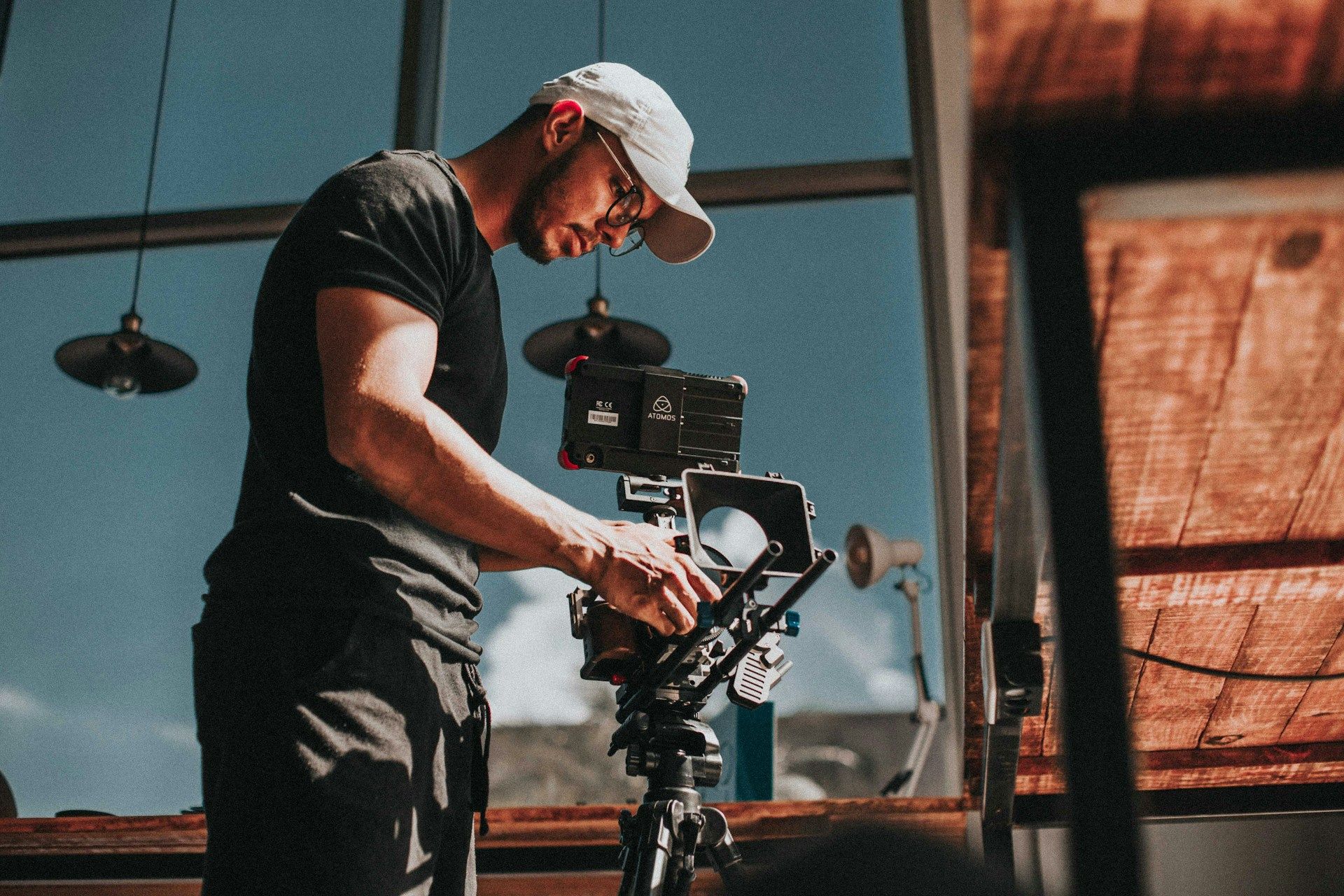

Turning Dusty Sales Playbooks into On-Screen Closers
Your sales playbook is beautiful. It is also invisible.
It lives in decks, PDFs, battle cards, and long internal docs. Meanwhile your buyers are on the couch, headphones on, watching video to learn, compare, and decide.
They click play. Your team sends page 47 of a pitch deck.
Modern B2B buyers want self-serve research, fast answers, and clear proof. Attention is low, decisions are remote, and nobody has time for ten attachments with tiny charts. Static tools are out of sync with how people actually buy.
So what if your sales playbook worked like a film script instead of a filing cabinet?
Think scenes, not slides. Each scene maps to a sales stage, a single objection, or one decision point. Instead of hoping a rep explains it the right way, the script is locked in, cinematic, and built to move a deal forward.
And yes, this is about revenue, not pretty content. Strong video should be judged by pipeline influence, deal speed, and win rate lift. Views are background noise if they do not show up in your CRM.
Q1 is when targets get scary and the snow in Toronto looks a lot like your whiteboard. Fresh quotas, fresh pressure. This is the season to stop commissioning “nice-to-have” brand pieces and start building sales-led video that can actually close.
Why Your Sales Team Needs a Director More Than Another Deck
Marketing writes the story. Then a buyer joins Zoom and the story changes.
One rep leads with value, another drowns in features, another freestyles a half-true promise. Multiply that across time zones and product lines and your brand starts to feel like improv theatre.
That inconsistency costs deals.
Thinking like a director brings control. A director does not hope the actor nails it. They design the scene, shape the beats, and repeat takes until it lands. You can do the same for key selling moments:
- Opening a first call with a sharp, 60 second POV
- Handling the three objections that always stall deals
- Lining up a mixed room of CFO, CIO, and end users
- Following up a product demo so it does not go dark
Video turns tribal knowledge into shared content. The moves your top reps use without thinking become reusable scenes: objection-handling clips, competitive positioning explainers, clean walkthroughs that never ramble.
You are not asking every rep to become a performer. You are giving them a library where the strongest version of the message is always on tap.
Our role is to sit right at that edge of sales, marketing, and production. We take the messy, brilliant guts of your playbook and turn it into cinematic, on-brand, repeatable tools, not just “a video” that floats around in a folder.
Building a Film-Ready Sales Playbook: Strategy Before Cameras
Before any camera rolls, you have to face the messy middle of your sales cycle.
Map the real path: outreach, discovery, demo, evaluation, security review, procurement, renewal. Then mark the stages where deals slow down, vanish, or shrink. Those friction points are your must-film moments.
Next, flip the script. Do not start from slogans or taglines. Start from the hard stuff:
- Where buyers feel the most risk
- Where IT thinks integration will be painful
- Where finance fears wasted budget
- Where procurement worries about lock-in
Each fear becomes a scene that answers with proof, clear steps, and simple language. No fluff, no grand speeches, just calm detail.
Modern buying groups are crowded. The same asset will not work for a CFO, an admin, and a security lead. So we plan video by role, not only by funnel stage.
- CFO: ROI breakdowns, payback timing, cost avoidance
- CIO or IT: integration views, data flow, security comfort
- End user: simple flows, daily tasks, “what changes for me”
- Legal and procurement: risk, compliance, contract clarity
For enterprise teams, alignment is half the battle. Legal, compliance, regional marketing, product: they all need a say. Bring them in early so your video suite is safe to reuse across markets and quarters without constant edits.
This is where experienced enterprise video production in Toronto is handy. You want a team that knows how to build once, then adapt, instead of starting from zero every time a region or department weighs in.
Enterprise Video That Actually Closes: Formats Built for the Buying Committee
Think of your sales content like a series, not a single film.
One strong approach is a scene-based explainer library: short, sharp clips built around one question at a time. Things like:
- How does this connect with what we already use?
- What happens in the first 30 days after signing?
- What do similar enterprises see in year one?
Reps can mix and match those clips live on calls or in follow-up sequences, sending the exact right piece at the exact right moment.
For leadership, proof wins over polish. Case stories should read like mini-films with a clear before, conflict, and after. Old state, pain, and risk. Decision, rollout, and bumps along the way. Then the numbers that show time saved, risk reduced, or revenue unlocked.
Style matters too. Live action is perfect for trust, leadership presence, and real-world scenes. Animation is great for systems, data, and things you cannot point a camera at. Hybrid video combines both, so you can show a human face and a complex platform in one flow.
As a company focused on enterprise video production in Toronto, we work across all three so your suite feels unified, not cobbled together.
Then there is the plumbing. These videos should plug into your CRM and sales tools, used in cadences, flagged as stage-entry criteria, and tracked against opportunity movement. If a clip does not show up in your pipeline data, it is just decoration.
ROI Or Die: Proving Video’s Impact to Your CFO
If you want your CFO to care about video, stop talking about engagement.
Serious metrics live closer to revenue:
- Opportunities created with at least one video touch
- Conversion rate by stage for deals that watched key clips
- Sales cycle length with and without video in play
- Deal size and expansion tied to specific assets
You can even structure A/B style cohorts, one set of deals using the new video spine, another set without, to see the real impact.
Then let the data sharpen the creative. Completion rates, drop-off points, repeat views, and segment-based performance all feed back into new edits, cuts, and scenes. The asset is living, shaped by what the pipeline shows, not frozen on delivery day.
ROI also depends on discipline. The content has to show up everywhere deals get decided: sales sequences, QBR decks, procurement packs, renewal talks, virtual events, executive mail, and even paid campaigns when it fits.
This is where thoughtful enterprise video production in Toronto has an edge. You get access to diverse locations, real weather, and a talent pool that can match global expectations, while still working with a team that understands Fortune 500 approval lines.
Industry Scripts: How Different Sectors Turn Playbooks into Film
In SaaS and tech, fear lives in rollout and integration. Video can lower that fear with clickable tours, honest integration walk-throughs, and animated architecture that makes your stack feel simple. One aim: help IT and security say yes weeks faster.
In financial services and insurance, trust and compliance lead. Clean advisor sequences, simple regulatory-safe explainers, and CFO friendly ROI films beat hype every time. Calm, clear, and specific wins those rooms.
In healthcare, manufacturing, and big service deployments, the worry is scale and disruption. Behind-the-scenes process films, training-ready modules, and operations briefings help leadership see that “big change” does not mean “big chaos.” January budget cycles love this kind of proof.
A partner based in Toronto can build global versions from a single master, with language shifts, regulatory tweaks, and industry-flavoured examples, without throwing out the core creative.
Roll Camera on Revenue: Turning Your 2026 Sales Targets into a Shooting Schedule
Those 2026 targets on the wall are not numbers. They are a content brief.
Start with the deals you cannot afford to lose. Sit marketing next to sales and pick the top accounts or segments that must land. These become the audience for your first slate of scenes.
A practical Q1 move looks simple:
- One objection-killing video series
- One hard-number case story
- One executive vision piece that sets the stakes
- One clear product or solution walkthrough set
Together, they support your most common deal paths, in every room, in every call. This is not about ordering a one-off brand film. It works best when you bring in a partner who sits in pipeline reviews, watches real call clips, and shares responsibility for revenue outcomes.
That is how we work at Viva Media. Strategy first, cameras second, and every scene pointed straight at the funnel. When you are ready to turn your static sales playbook into a 2026 shooting script, we are ready to pick up the slate.
If you are ready to take a more strategic approach to your communications, our team at Viva Media can help you plan and execute effective enterprise video production that fits your goals. We collaborate closely with stakeholders to align creative, technical and logistical details with your message and brand. To explore ideas for your next initiative or request a detailed proposal, contact us today.