
Imagine your nonprofit’s story inspiring thousands, creating waves of change across communities. In today’s fast-moving digital landscape, standing out is no longer optional—it is essential for lasting impact.
This essential guide to non profit video production will equip your organization to increase awareness, boost engagement, and achieve measurable results in 2026. You will find a clear, step-by-step roadmap covering strategy, storytelling, video creation, promotion, and future trends.
Video is now the most powerful way to connect with supporters, donors, and volunteers. Ready to lead your mission forward? Dive in and discover how to create videos that spark action and drive your cause.
Why Video Matters for Nonprofits in 2026
In 2026, non profit video production stands at the forefront of digital communication for organizations seeking to expand their mission. Video is no longer a luxury, it is an essential tool for nonprofits to build relationships, inspire action, and drive measurable impact.

The Impact of Video Storytelling
Video is the most engaging content format for digital audiences today. Non profit video production enables organizations to convey emotion, share authentic stories, and create empathy in ways that text or images alone cannot.
Through video, nonprofits humanize their causes, putting real faces and voices at the center. This emotional connection helps viewers relate to an organization's mission and motivates them to get involved. According to Nonprofit Video Engagement Statistics, nonprofits using video see a 66% boost in fundraising compared to those who do not.
Successful campaigns highlight this impact:
- The American Hearing Impaired Hockey Association’s overview film, which grew its supporter base.
- The Emmy-winning “It Gets Better” video, which fostered national dialogue and support.
Non profit video production also strengthens donor retention and volunteer recruitment. Video updates and thank-you messages foster loyalty, while volunteer testimonial videos attract new supporters.
In 2026, social media platforms will continue to prioritize video in their algorithms, making video content more visible and shareable. Nonprofits that leverage video experience increased website engagement and longer time-on-site, deepening audience connections.
Key Objectives Video Can Achieve
Non profit video production is a strategic asset for organizations aiming to achieve a range of goals. Video can simplify complex issues, raising awareness and educating the public in a visually compelling way.
Some key objectives include:
- Showcasing impact through real stories, testimonials, and case studies.
- Mobilizing supporters for fundraising, advocacy, and events with clear calls to action.
- Strengthening transparency and building trust with donors, partners, and stakeholders.
Video also helps nonprofits stand out in a crowded digital landscape. By highlighting unique stories and measurable results, organizations differentiate themselves and capture attention.
A well-planned non profit video production strategy allows nonprofits to reach new audiences, deepen engagement, and turn viewers into advocates for their cause. As digital trends evolve, video remains the most effective way to communicate mission and impact.
Planning Your Nonprofit Video Strategy
Strategic planning is the foundation of successful non profit video production. Without a clear roadmap, even the most compelling stories risk getting lost in the digital noise. By focusing on clear objectives, understanding your audience, selecting the right formats, managing resources, and assembling the right team, your organization can maximize its video impact and drive measurable results.

Setting Clear Goals and KPIs
Every successful non profit video production begins with well-defined goals. Start by aligning your video objectives with your organization’s mission and annual targets. Are you aiming to increase donations, recruit volunteers, or raise awareness?
Establish measurable KPIs such as video views, shares, completed donations, or volunteer sign-ups. For example, Campbell & Company’s annual report videos focus on deepening donor engagement, using metrics like average watch time and donation conversions. For more actionable advice on this process, explore video marketing strategies for nonprofits.
By setting precise goals and tracking progress, you ensure each non profit video production supports your broader mission and delivers real impact.
Identifying Target Audiences
Understanding who you want to reach is vital for effective non profit video production. Begin by mapping out audience personas such as donors, volunteers, beneficiaries, and partners. Each group has unique motivations and communication preferences.
Tailor your messaging and tone to resonate with each segment. For donors, focus on impact and transparency. For volunteers, highlight involvement and community. Use data analytics to refine your targeting, ensuring your videos reach those most likely to act.
When you align your content with audience needs, your non profit video production becomes more relevant and powerful.
Choosing the Right Video Formats
Selecting the ideal format is a strategic decision in non profit video production. Different goals and audiences call for different approaches. Options include explainer videos, testimonials, documentaries, event recaps, and PSAs.
Consider live streaming for virtual events or fundraisers, and animation for advocacy or educational content. For example, Urban Rivers used a documentary-style video to spotlight habitat restoration, generating strong community engagement.
By matching your format to your message, you ensure your non profit video production captures attention and achieves its objectives.
Budgeting and Resource Allocation
Budgeting is a critical step in non profit video production. Estimate costs for scripting, filming, editing, and distribution. Factor in equipment, talent, and post-production needs.
Maximize your resources by leveraging pro bono and in-kind services from partners. Prioritize high-impact, evergreen content that delivers value over time. Organizations like Richter Studios often donate productions to causes aligned with their mission, helping nonprofits stretch limited budgets.
A clear budget plan ensures your non profit video production remains sustainable and effective.
Building an Internal or External Team
Assembling the right team is essential for quality non profit video production. Assess your internal capabilities. Do you have staff with video skills, or will you need to hire professionals?
Key roles include producer, director, videographer, editor, and social media manager. Collaborate with mission-aligned video production partners when needed. This ensures your message stays authentic and your videos meet professional standards.
With the right team in place, your non profit video production can consistently deliver compelling stories that move your mission forward.
Step-by-Step Nonprofit Video Production Process
Navigating non profit video production requires clear steps, collaboration, and attention to detail. This process transforms your mission into compelling visual stories that inspire action. Let’s break down each phase to ensure your nonprofit’s message reaches and resonates with your audience.

Pre-Production: Laying the Foundation
Every successful non profit video production begins with a solid pre-production phase. Start by defining your story. What message aligns best with your nonprofit’s mission? Engage stakeholders to clarify objectives and identify the core narrative that will drive your video.
Draft a script that outlines your message, tone, and call to action. Storyboarding helps visualize scenes, ensuring consistency and clarity. Secure all necessary permissions for locations and talent in advance. Confirm that everyone involved understands the vision and their roles.
Effective scheduling is crucial. Develop a production calendar that accounts for availability, resources, and deadlines. Planning logistics now will save time and stress later.
Consider how boosting nonprofit impact with video can amplify your outreach from the very start. By setting clear intentions in this phase, you lay the groundwork for measurable impact throughout your non profit video production journey.
Pre-Production Checklist:
- Define your core story and objectives.
- Write scripts and create storyboards.
- Obtain permissions, releases, and secure locations.
- Plan schedules and logistics.
- Identify required equipment and personnel.
Preparation at this stage sets the tone for the entire non profit video production process.
Production: Bringing Stories to Life
With pre-production complete, it’s time to bring your vision to life. On set, focus on authenticity. Capture interviews and testimonials that showcase genuine emotion and personal stories. Use a mix of close-ups and wide shots to add visual interest and maintain viewer engagement.
Record b-roll footage to provide context and reinforce your message. Natural lighting is ideal, but if unavailable, use affordable lighting kits to enhance video quality. Audio is just as crucial—use external microphones to minimize background noise and ensure clarity.
For non profit video production on a budget, maximize your resources. Assign specific roles such as director, camera operator, and interviewer to streamline the process. Consider filming multiple videos within the same session to optimize time and costs.
Example: Stadium Of Mind’s Kickstarter video was produced in just two days with careful planning and clear communication, proving that impactful non profit video production does not require a large team or budget.
Production Tips:
- Prioritize authentic interviews and unscripted moments.
- Capture a variety of b-roll shots.
- Monitor audio and lighting throughout.
- Assign clear roles to team members.
- Stay adaptable during shoots.
A well-executed production phase ensures your content feels genuine and relatable.
Post-Production: Editing and Refinement
Post-production shapes your raw footage into a polished, effective story. Begin by editing for narrative flow—arrange clips to maintain viewer interest and emotional pacing. Add graphics, lower thirds, and your nonprofit’s branding elements to reinforce professionalism.
Accessibility is vital in non profit video production. Incorporate captions and consider audio descriptions to make your video inclusive for all audiences. Review your video for consistency in tone and message, ensuring that every element supports your mission.
Calls-to-action should be clear and visible. Place them strategically at the end or throughout the video to guide viewers toward your desired outcomes, whether that’s donating, sharing, or volunteering.
Example: The Zacharias Sexual Abuse Center’s “Circle of Support” video stands out for its strong visual storytelling and cohesive branding, demonstrating the power of thoughtful post-production in non profit video production.
Post-Production Essentials:
- Edit for clarity and narrative flow.
- Add graphics, branding, and captions.
- Ensure accessibility for all viewers.
- Insert clear calls-to-action.
- Double-check audio and video quality.
Meticulous post-production elevates your content and maximizes its impact.
Quality Assurance and Feedback Loops
Before releasing your video, conduct thorough quality checks. Share drafts internally for feedback, involving stakeholders and team members. Encourage honest critiques to catch inconsistencies or unclear messaging.
Beta test your video with a small segment of your target audience. Their reactions and suggestions can highlight areas for improvement that may not be visible to your team. Use their feedback to refine your video further.
Iterative review is a hallmark of effective non profit video production. Each round of feedback brings your project closer to its highest potential. Document lessons learned to inform future productions and streamline your workflow.
Quality Assurance Steps:
- Internal reviews by staff and stakeholders.
- Beta testing with sample audiences.
- Collect and analyze feedback.
- Revise and finalize the video.
- Archive lessons learned for future projects.
A robust feedback loop ensures your non profit video production meets the highest standards before public launch.
Legal and Ethical Considerations
Protecting your organization and those featured in your videos is essential. Always obtain written consent and release forms from participants, especially when filming vulnerable groups. Respect privacy by avoiding sensitive information unless explicitly approved.
Representation matters in non profit video production. Portray individuals and communities with dignity, avoiding stereotypes or exploitative imagery. Ensure copyright compliance for all music, footage, and graphics used.
Ethical storytelling builds trust and credibility, reinforcing your nonprofit’s values and mission.
Legal and Ethical Checklist:
- Secure consent and release forms.
- Safeguard privacy and sensitive content.
- Represent all individuals respectfully.
- Verify copyright for all media assets.
By adhering to these guidelines, your non profit video production will be both impactful and responsible.
Storytelling Techniques for Maximum Impact
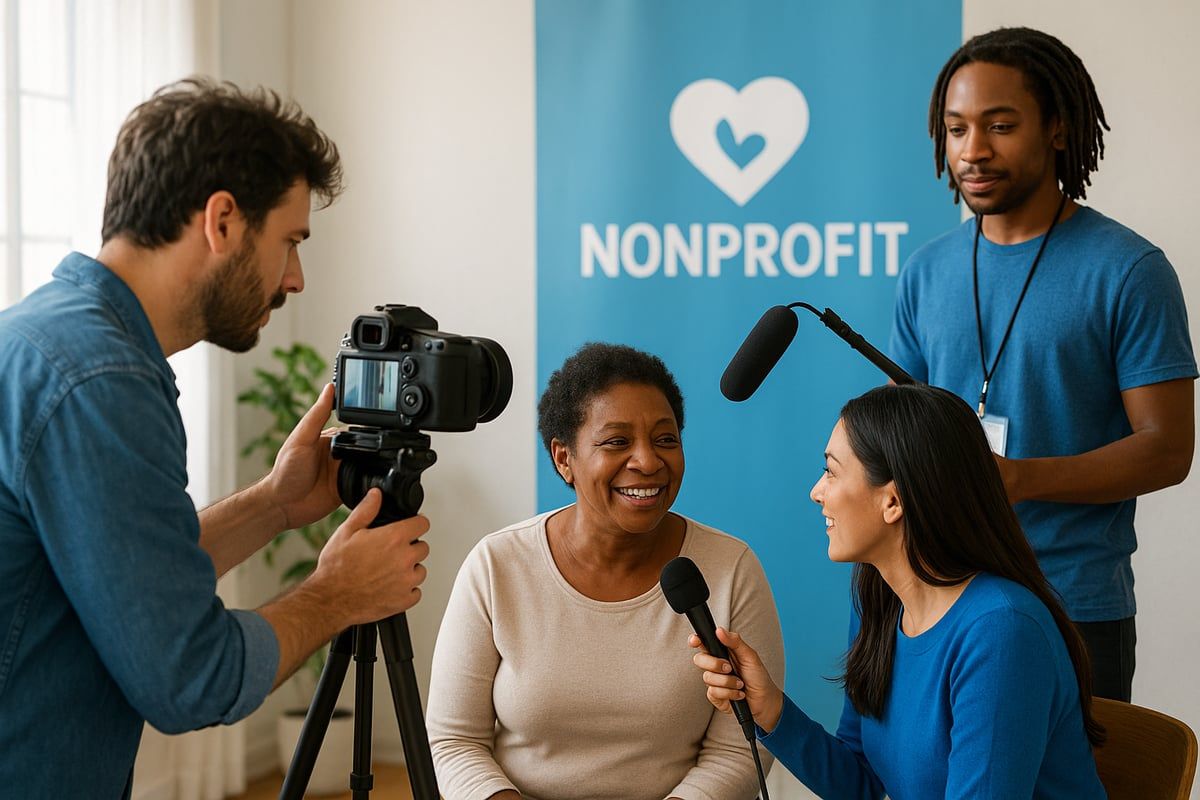
Storytelling is the heart of non profit video production, transforming abstract causes into powerful, relatable narratives. The right techniques can turn viewers into lifelong supporters, inspiring them to act, donate, or volunteer. By mastering these approaches, your videos will resonate more deeply and drive measurable impact.
Crafting Authentic Narratives
Authenticity is the cornerstone of non profit video production. Focus on real people within your community, sharing their genuine experiences and voices. This builds trust and forges a stronger emotional connection with your audience.
- Highlight personal journeys, not just statistics.
- Balance hope and urgency to inspire action.
- Use unscripted moments to capture sincerity.
For inspiration on how to develop honest, impactful stories, explore Authentic storytelling in video marketing. Videos like CASA Lake County’s volunteer testimonials show how authentic narratives motivate viewers to get involved.
Visual and Emotional Storytelling
Visual techniques can amplify the emotional weight of your message. Use close-ups to capture expressions, and candid moments to spotlight vulnerability and transformation.
- Shoot in natural settings that reflect your mission.
- Integrate music that complements the story’s mood.
- Show clear before-and-after moments to illustrate change.
In non profit video production, these elements help viewers empathize and remember your cause long after watching.
Incorporating Data and Impact Metrics
Credibility matters. Incorporate clear statistics and measurable results to reinforce the value of your work.
- Visualize key data using graphics or on-screen text.
- Share before-and-after stories with tangible outcomes.
- Reference annual impact reports for context.
Videos like Wings of Hope’s annual report blend narrative with data, making non profit video production both moving and persuasive.
Calls-to-Action and Engagement Prompts
A compelling story should always lead to action. Guide your audience with clear, actionable prompts throughout your video.
- Use on-screen graphics for donation or volunteer links.
- End with a strong, specific call-to-action.
- Test different CTAs to see what drives engagement.
Effective non profit video production ensures viewers know exactly what to do next, increasing support for your mission.
Ensuring Accessibility and Inclusivity
Accessible videos reach more people and demonstrate your organization’s values. Prioritize inclusivity in every stage of production.
- Add captions and audio descriptions for all videos.
- Offer language options for diverse communities.
- Showcase a variety of voices and backgrounds.
By making non profit video production accessible, you invite broader participation and reflect the diversity of those you serve.
Distribution and Promotion: Getting Your Video Seen
A compelling video is only as powerful as its reach. For non profit video production, effective distribution and promotion ensure your message lands with the right audience. Strategic sharing builds awareness, drives engagement, and maximizes impact for your mission.
Choosing the Right Channels
Selecting the correct distribution channels is crucial in non profit video production. Social media platforms such as Facebook, Instagram, TikTok, LinkedIn, and YouTube each offer unique strengths for reaching different segments. Email marketing remains a powerful tool for direct communication with donors and volunteers. Embedding videos on your website or campaign landing pages increases engagement and time-on-site.
For broader visibility, consider submitting videos for public service announcements or broadcast opportunities. The National Runaway Safeline's PSA, which aired nationally, is a strong example of maximizing exposure through strategic channel selection.
According to the Nonprofit Communications Report 2023, nearly all nonprofits now use video, with a significant rise in video content sharing across social platforms. This trend highlights the importance of a multi-channel approach in non profit video production.
Optimizing for Each Platform
Every platform has its own requirements and audience preferences. In non profit video production, tailor your content for each channel:
- Use vertical formats for TikTok and Instagram Reels, horizontal for YouTube and Facebook.
- Short-form videos (under 60 seconds) often perform best for mobile users.
- Craft compelling thumbnails, titles, and descriptions to boost SEO.
- Schedule posts for peak engagement times and maintain a consistent posting frequency.
Keeping up with nonprofit video marketing trends ensures your strategy remains effective and relevant. Adapting to platform changes and audience behaviors is key for successful distribution.
Paid Promotion and Partnerships
Sometimes, organic reach is not enough. In non profit video production, paid promotion can help your message cut through the noise. Run targeted ad campaigns on platforms like Facebook and YouTube to reach potential donors, volunteers, and advocates.
Partnering with influencers or mission-aligned organizations can amplify your reach. Collaborate on joint campaigns, cross-promote content, or leverage pro bono media placements to maximize visibility.
Strategic partnerships and paid promotion can extend the impact of your video far beyond your existing network, driving measurable results for your nonprofit.
Measuring and Analyzing Results
Tracking performance is essential in non profit video production. Use analytics tools to monitor key metrics:
| Metric | What It Measures | Why It Matters |
|---|---|---|
| Views | Number of plays | Gauges content reach |
| Shares | Social engagement | Indicates message resonance |
| Donations | Conversion rates | Measures fundraising effectiveness |
| Volunteer Sign-ups | Action taken | Tracks supporter mobilization |
Review these metrics regularly and use insights to refine future video strategies. For instance, the “Street Team” PSA ranked among the top ten most aired spots, demonstrating the power of effective measurement and optimization.
Repurposing and Extending Content
Maximize the value of your non profit video production by repurposing content. Create short teasers, highlight reels, or GIFs from longer videos to share on social media. Update evergreen videos with new statistics or stories to keep them current.
Encourage user-generated content by inviting your audience to share their own stories or reactions. This approach not only extends your reach but also fosters a sense of community and engagement around your cause.
Smart repurposing ensures your investment in video continues to deliver returns long after the original launch.
Future Trends in Nonprofit Video Production (2026 & Beyond)
The landscape of non profit video production is evolving rapidly, with new technologies and storytelling approaches reshaping the way organizations connect with their audiences. Looking ahead to 2026 and beyond, several trends are set to define how nonprofits create, distribute, and measure the impact of their videos.
Emerging Technologies and Formats
New formats are revolutionizing non profit video production by offering immersive ways to engage audiences. Interactive videos allow viewers to choose their journey, deepening involvement with your mission. Shoppable fundraising experiences enable supporters to donate seamlessly while watching. Live streaming, now with real-time engagement tools, brings events and stories directly to digital audiences. Meanwhile, 360-degree and VR videos transport viewers into the heart of your cause, creating empathy and lasting connections.
AI and Automation in Video Creation
Artificial intelligence is streamlining non profit video production, making it more accessible and efficient. Automated editing tools speed up post-production, while AI-driven personalization tailors content for specific donor and volunteer segments. These innovations reduce costs and improve storytelling quality. Learn more about the transformative role of AI in Nonprofit Video Production, including the latest tools that help organizations maximize their impact.
The Rise of Micro-Content and Short-Form Video
Short-form video is becoming a powerhouse in non profit video production. Platforms like TikTok, Instagram Reels, and YouTube Shorts now drive rapid engagement, especially among younger audiences. Nonprofits are using brief, impactful clips to highlight campaign moments or event recaps. For example, the Thompson Foundation’s gala highlights were transformed into shareable, short videos that expanded their reach and inspired new supporters.
Data-Driven Storytelling and Impact Measurement
Data is central to the future of non profit video production. Analytics platforms now provide real-time feedback on viewer engagement, helping organizations refine their narrative strategies. Integration with CRM and donor management tools enables precise targeting and follow-up. By visualizing impact metrics and using data-driven insights, nonprofits can craft more compelling stories and demonstrate tangible outcomes to stakeholders.
Sustainability and Ethical Production Practices
Sustainability is a growing priority in non profit video production. Eco-friendly methods, such as digital-first workflows and carbon offsetting, are becoming standard practice. Ethical considerations remain crucial, with a focus on authentic representation and dignity for all featured individuals. Nonprofits are also embracing inclusive production methods, ensuring diverse voices are present both on screen and behind the camera.
Predictions for Nonprofit Video ROI
As digital fundraising continues to grow, non profit video production is expected to account for a larger share of revenue. Donor expectations are shifting toward transparency, measurable impact, and engaging content. Nonprofits that invest in emerging formats, data-driven strategies, and ethical storytelling will be best positioned to meet these evolving demands and secure sustainable growth in the years ahead.
As you’ve seen throughout this guide, a thoughtful video strategy can transform how your nonprofit connects with supporters, inspires action, and drives real impact in 2026. If you’re ready to elevate your mission with professional, high-performance video content tailored to your goals, let’s take the next step together. At Viva Media, we specialize in partnering with forward-thinking organizations like yours to create videos that deliver measurable results and lasting value. Ready to make your story stand out? Book a strategy session and let’s bring your vision to life.