
When Procurement Meets Popcorn: Why Enterprise Video Keeps Dying in Committee
Picture this: your CMO signs off on a bold brand film in November. Big idea. Beautiful deck. Everyone nods.
By February, the script has been through Marketing, Procurement, Legal, IT, Security, and three regional leads. The launch date slips. The scope shrinks. The big idea turns into a safe clip that quietly lands in SharePoint. Sales never touches it.
This is where most big-company video goes to disappear.
Marketing wants cinematic impact. Procurement wants rate cards, contracts, and less risk. IT wants security and system fit. Legal wants control of every word and frame.
Your buyers, though? They want clarity and confidence. They want to know what you do, why it matters, and why they should trust you with real money.
The core issue is not budget. It is misalignment. Video gets treated like office furniture, a commodity spend, instead of a strategic asset that should be tied to a P&L and hard KPIs.
Right now, a new fiscal year is opening up. CMOs are trying to lock in their partners while Procurement tightens the guardrails. It is the perfect time to change how your team defines "value" in enterprise video production in Toronto and beyond.
Let us walk through how to get bold video through the approval maze, onto a set, and into your sales cycle without losing the creative spark that made it worth doing in the first place.
From Line Item to Line of Business: Reframing Video So Procurement Says Yes
The first fix is mental. Stop treating video as a one-off project. Start treating it as a business system.
A system means repeatable capacity: campaign films, sales clips, recruiting pieces, onboarding, training, investor updates, all built on shared strategy, templates, and infrastructure. You are not buying "a video." You are building a video engine.
Map a 12 to 18 month slate directly to business OKRs:
- Pipeline influence
- Revenue per opportunity
- Deal velocity
- Employee retention
- Compliance completion rates
When you do that, the talk shifts from "cost per video" to "cost per outcome" and "cost per use." That is a language Procurement can respect.
Bring evidence, not adjectives. Show how structured enterprise video production in Toronto can support higher close confidence compared to static decks, and how content that is actually watched will always beat content that just sits in a folder.
Show lifetime value. Build for international reversioning, subtitles, language variants, and modular edits that show up across marketing, sales, HR, and corporate communications. One shoot, many assets, many quarters.
And do not skip risk and governance. Have answers ready on:
- Data handling and access
- Approval workflows
- Legal checkpoints
- Brand compliance and version control
Marketing, Sales, and Finance all need to speak the same language. That means translating creative ideas into money and time:
- "This sequence shortens time-to-trust by showing proof earlier."
- "This film replaces hours of an AE explaining the same complex feature."
Align KPIs across teams. Not just impressions and view-through, but:
- Revenue influence
- Meeting-to-opportunity conversion
- Win rate in your top verticals
The right production partner will sit in the room with Finance and Procurement, not just hang out on set with the director.
Enterprise-Grade Creativity: How to Keep Cinematic Ambition Alive After Legal Redlines
Enterprise work has real constraints. Compliance, brand rules, security, regional nuance, and internal politics all show up.
The trick is to plan for that from day one, not in week seven.
Treat constraints like creative inputs. If Legal will never sign off on certain claims, do not build your concept around them. If your industry has strict rules on what you can promise, lean into visuals, proof, and structure that stay inside that box.
Design modular concepts. Build a strong narrative spine, then make plug-and-play scenes, intros, and CTAs for different regions, segments, and legal needs. That way, you do not need a new shoot every time a policy shifts.
Use bold but low-risk visual ideas. Smart metaphors, clean graphics, and cinematic lighting can carry a lot of weight without raising regulatory flags every time you export a new cut.
Get everyone in early. Run a tight pre-production workshop with Marketing, Sales, Legal, Comms, and maybe HR. Define:
- Non-negotiables
- "Nice to have" elements
- Red-line topics
- Review timelines
Set clear sign-off checkpoints: concept, script, storyboard, and sometimes an animatic. That gives Legal and Compliance time to weigh in without wrecking momentum two days before a shoot.
Then protect the creative core. Tie each big creative choice to a result:
- "This opening hook exists to keep people watching until the key proof lands."
- "This customer moment is what makes procurement and technical buyers feel safe."
Mark which scenes are must-keep for ROI and which can flex to meet risk concerns. When you can say, "If we cut this, we lose this outcome," the approval talks become more rational.
Beyond Brand Films: Building a Video Engine for Sales, Ops, and the C-Suite
Most big brands overinvest in one glossy brand film and underinvest in the system around it. The real magic is a connected set of assets across the full buyer and stakeholder path.
Map video to each stage:
- Awareness: Thoughtful brand films and clear points of view that actually say something useful, not just vague mood pieces.
- Consideration and evaluation: Detailed explainers, vertical cuts, and customer proof that help Procurement, IT, and technical evaluators say "yes" with confidence.
- Decision and onboarding: Implementation walk-throughs, training flows, and clear executive talks that support faster rollout and better adoption.
Sales enablement is where the ROI really shows. Build a library that reps can grab in seconds:
- Short clips by objection
- Persona and vertical specific pieces
- Stage-based content for early, mid, and late cycle
Connect assets to your CRM and engagement platforms to see which clips tend to show up in faster or larger deals. Then keep, trim, or reshoot based on how content helps move real pipeline, not on how it "performed" on a random channel.
Inside the company, video can do much more than recap town halls.
Think:
- CEO updates that actually explain strategy
- Repeatable formats for earnings previews and change programs
- Simple, clear pieces for policy rollouts and compliance topics
If Marketing, HR, Comms, and Operations all plug into the same system, you avoid five different teams inventing their own one-off video style every quarter.
Why Your Enterprise Video Belongs in Toronto’s Backlot, Not a Boardroom PowerPoint
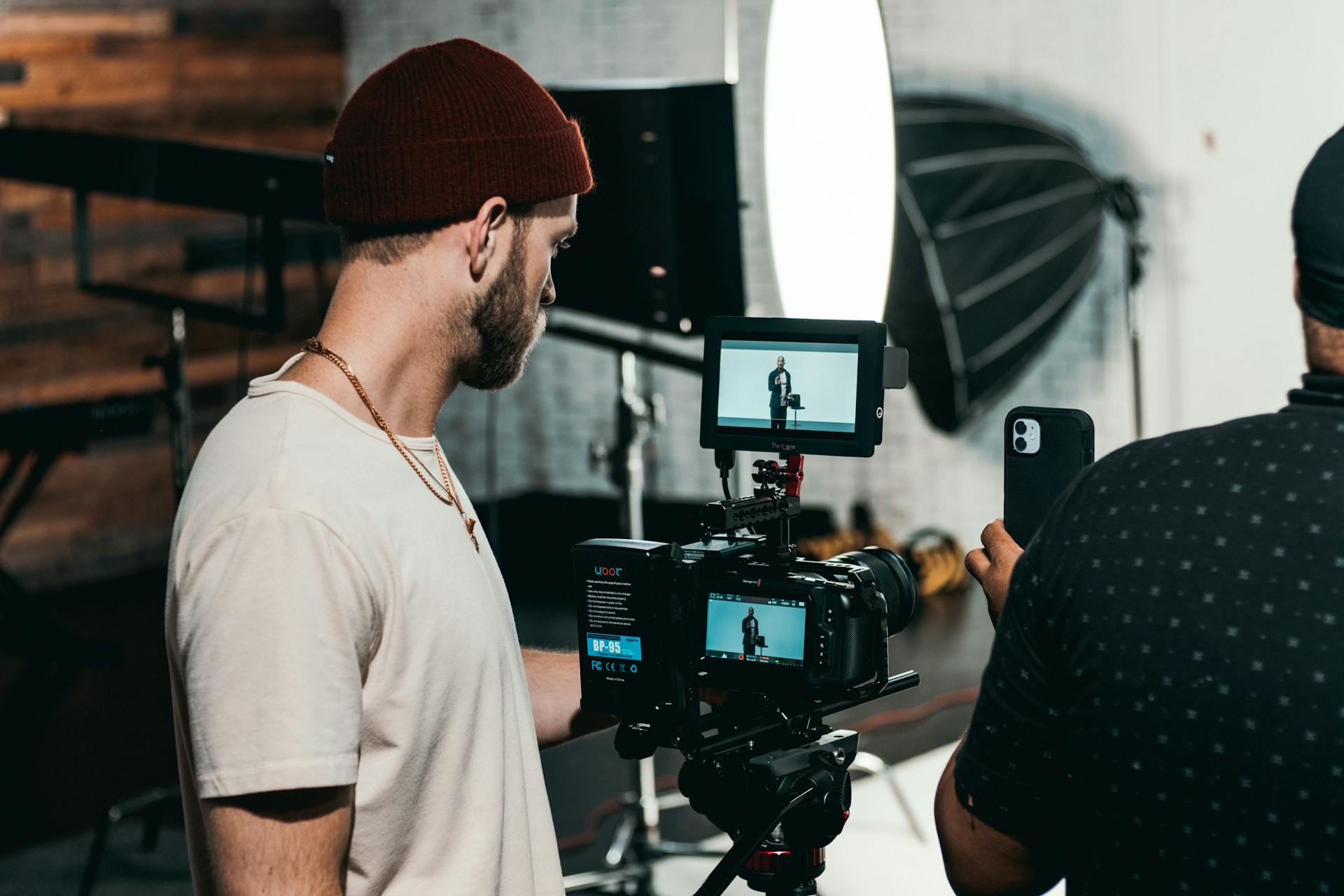
At some point, the boardroom deck has to turn into a real set, real crew, and real performances. That is where a proper production hub matters.
Toronto brings world-class crews, diverse locations, four honest seasons, and production infrastructure that can stand up to global brand expectations. In January, when the snow and grey skies hit, it is the perfect planning season. Lock scripts, casting, logistics, and approvals now, and you are ready to shoot for spring campaigns and events.
Local presence with global standards is the sweet spot. For Canadian and US Fortune 500 teams, time zone fit and cultural alignment can make approvals and reviews simpler. When you work with an enterprise video production partner in Toronto that already understands corporate stacks, security needs, and stakeholder layers, you move faster with less drama.
This is exactly how we work at Viva Media. We act as a strategic partner from planning through scale, not a vendor waiting for a brief. We live at the crossroads of cinematic storytelling and enterprise reality, which is where ambitious ideas actually survive.
Instead of ad hoc "we need a video for this event" requests, we push for a portfolio mindset:
- Brand films
- Demand and ABM content
- Sales enablement libraries
- Internal and leadership communication
- Talent and recruitment assets
We help teams shoot once and deploy many times by building reusable visual and narrative systems. Over the fiscal year, that cuts down time-to-market and keeps your content feeling aligned instead of chaotic.
Stop Pitching Projects, Start Funding a Video Platform That Actually Performs
Here is the mental shift to lock in: video is not a side dish. It is a core channel for revenue, operations, and leadership. Winning inside large organisations means respecting constraints, speaking Procurement and Finance language, and still refusing to bore your audience.
The CMO job is not "get a great video made." It is "build a video ecosystem that reliably moves the numbers your board cares about."
So what now?
Audit your current library against real outcomes. Which pieces supported pipeline, win rate, retention, or employee results? Which ones just looked good in an internal email?
Then sketch a 12-month video roadmap that ties each asset to a clear goal, a clear KPI, and a clear owner.
From there, bring in a strategic partner who can handle the full chain: planning, procurement alignment, enterprise-grade production, and ongoing performance tuning.
At Viva Media, that is our lane. We help large brands turn creative ambition into a repeatable video platform that Procurement can defend, Legal can live with, and Sales will actually use. If your video keeps dying in the boardroom instead of winning deals in the field, it is not a creative problem. It is a strategy problem, and that is the part we love to solve.
If you are ready to elevate how your company communicates, our team at Viva Media can help you plan and deliver strategic enterprise video production tailored to your goals. We collaborate closely with stakeholders to clarify your message, streamline approvals and keep complex projects moving smoothly. Tell us about your objectives and audience, and we will recommend a practical path forward. To start a conversation about your next initiative, contact us today.