

In 2026, the landscape of workplace learning has evolved rapidly, making corporate training video production essential for organizations aiming to stay competitive. Choose video when the lesson needs a demonstration, screen sequence or worked example.
This guide delivers a clear, actionable roadmap to help you create high-impact corporate training videos that drive real business results. We’ll cover the latest industry trends, strategic planning steps, production workflows, video formats, cutting-edge technology, and proven best practices.
As you read, discover how to boost retention, cut costs, and empower your workforce for the future. Ready to elevate your training initiatives? Let’s get started.
The Strategic Role of Corporate Training Videos in 2026
For hybrid and remote teams, decide which instructions need a recorded demonstration and which need a written reference. Assign an owner to keep both versions aligned when the procedure changes.
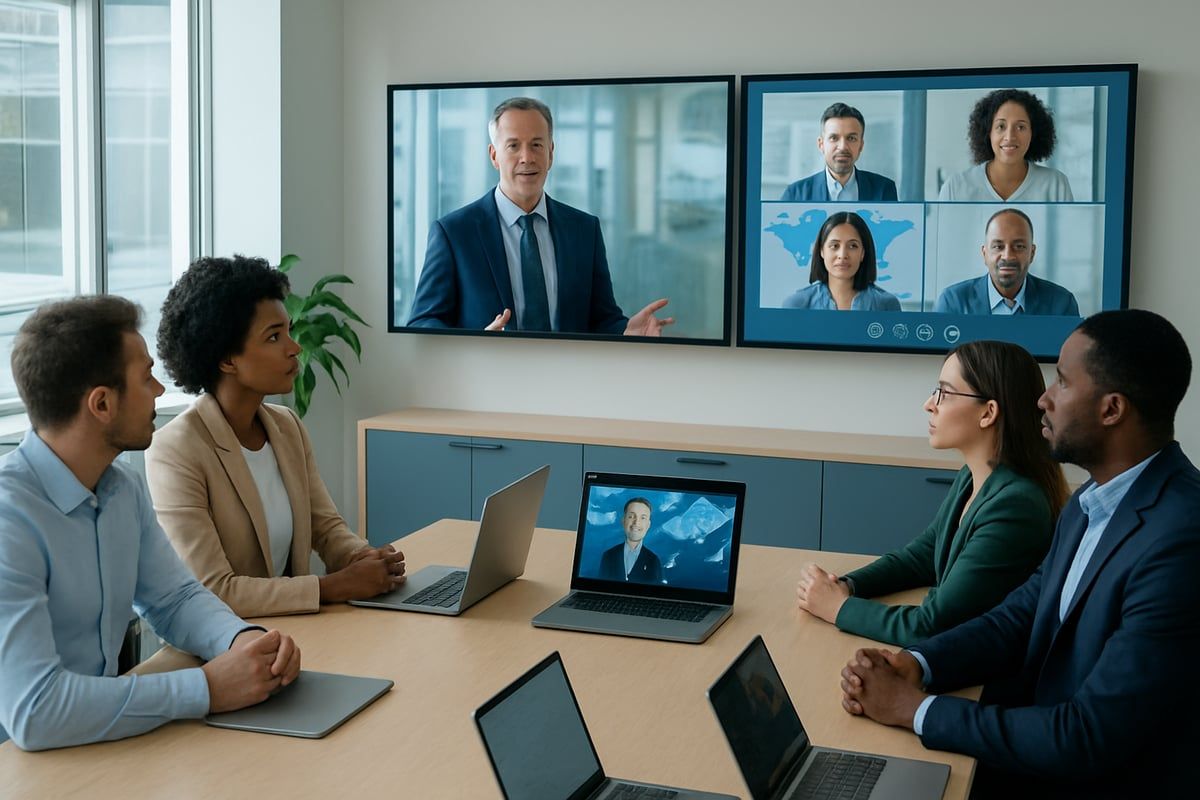
Organizations face mounting pressure to upskill teams, ensure compliance, and onboard talent at scale. Corporate training video production meets these needs by delivering just-in-time learning, adapting quickly to regulatory changes, and accommodating new technologies. For instance, global onboarding videos create a unified experience for new hires, while compliance modules help organizations stay audit-ready.
Choose the training format around the task and the learner’s access needs. For a video lesson, plan playback controls and any language versions before production. Ask the training owner how learners will demonstrate understanding.
Measure the result against the objective agreed before production. Record completion, assessment results and any observed change in the task separately; a logged video completion does not establish that the learner can perform the task.
Use a measurement worksheet to name each metric, report, reporting period and owner. For training, agree with the subject expert how assessments and task observations will be recorded alongside playback data.
Planning Your Corporate Training Video Project
Strategic planning is the core of successful corporate training video production. Before cameras roll, it is vital to define clear objectives, understand your audience, allocate resources, assemble the right team, and set a realistic timeline. Effective planning not only streamlines the process but also maximizes ROI and training impact.
Defining Objectives and Success Metrics
Every corporate training video production must begin with clear, measurable objectives tied directly to business outcomes. Start by identifying what you want to achieve, such as reducing onboarding time, boosting compliance rates, or increasing sales enablement effectiveness.
Use a skills gap analysis to prioritize training needs. For example, if your data reveals low compliance scores, focus your video content on regulatory updates and policy walkthroughs. Link each training objective to specific, trackable KPIs like course completion rates, quiz results, or performance improvements.
A well-defined objective ensures your corporate training video production aligns with organizational goals and delivers measurable value. To further strengthen your approach, consider reviewing the Elements of effective corporate videos to establish a results-driven framework from the start.
Understanding Your Audience
Audience analysis is a cornerstone of successful corporate training video production. Segment your learners by role, department, location, and experience level. New hires, managers, technical teams, and sales staff all have unique needs.
Tailor your video content to fit learner demographics and preferences. For instance, mobile-first videos work well for field teams, while multilingual options support global offices. Adjust complexity and language based on audience skills and backgrounds.
Use data to inform accessibility requirements, such as subtitles or alternative formats. By focusing on the specific needs of each group, your corporate training video production will boost engagement and learning outcomes.
Budgeting and Resource Allocation
Budgeting is a critical step in corporate training video production. Typical costs include scripting, filming, animation, voiceover, editing, and platform integration. Decide whether in-house or outsourced production fits your needs best.
| Production Option | Pros | Cons |
|---|---|---|
| In-house | Greater control, lower cost | Resource and skill limits |
| Outsourced | Professional quality, time savings | Higher cost, less control |
Research competitor pricing models and value-added services to benchmark your budget. To maximize ROI, invest in reusable content and scalable platforms. Smart allocation now ensures your corporate training video production delivers value for years to come.
Assembling the Right Team
A successful corporate training video production relies on a skilled, cross-functional team. Key roles include a project manager, instructional designer, scriptwriter, videographer, editor, and subject matter expert.
Collaboration across HR, L&D, IT, and compliance ensures content accuracy and relevance. Stakeholder buy-in is essential, so establish regular feedback loops and approval processes early. Encourage open communication to align creative vision with business objectives.
The right team transforms your corporate training video production from a task into a strategic asset.
Timeline and Project Management
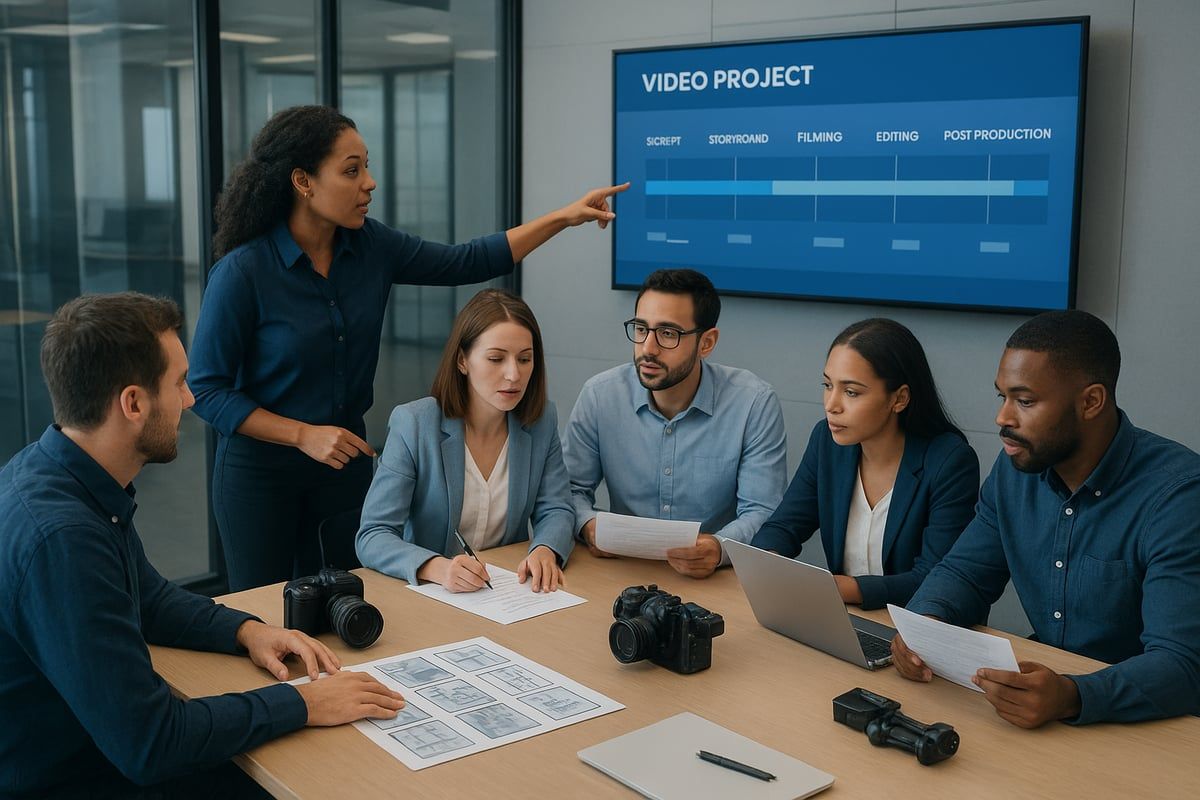
Project management is vital for keeping corporate training video production on track. Begin with a detailed timeline covering concept, scripting, filming, editing, and deployment.
Sample timeline:
- Week 1: Needs analysis and scripting
- Week 2: Storyboarding and approvals
- Week 3-4: Filming and editing
- Week 5: Final review and deployment
Use project management tools like Asana or Trello to track milestones and assign tasks. Schedule regular check-ins for feedback and quick pivots if needed. Iterative reviews help catch issues early, so your corporate training video production stays on schedule and delivers on expectations.
Step-by-Step Corporate Training Video Production Process
Creating impactful corporate training video production involves a clear, repeatable process. By breaking down each stage, organizations can ensure their training content is effective, engaging, and aligned with business outcomes. Let’s explore each step to maximize your 2026 training video investments.
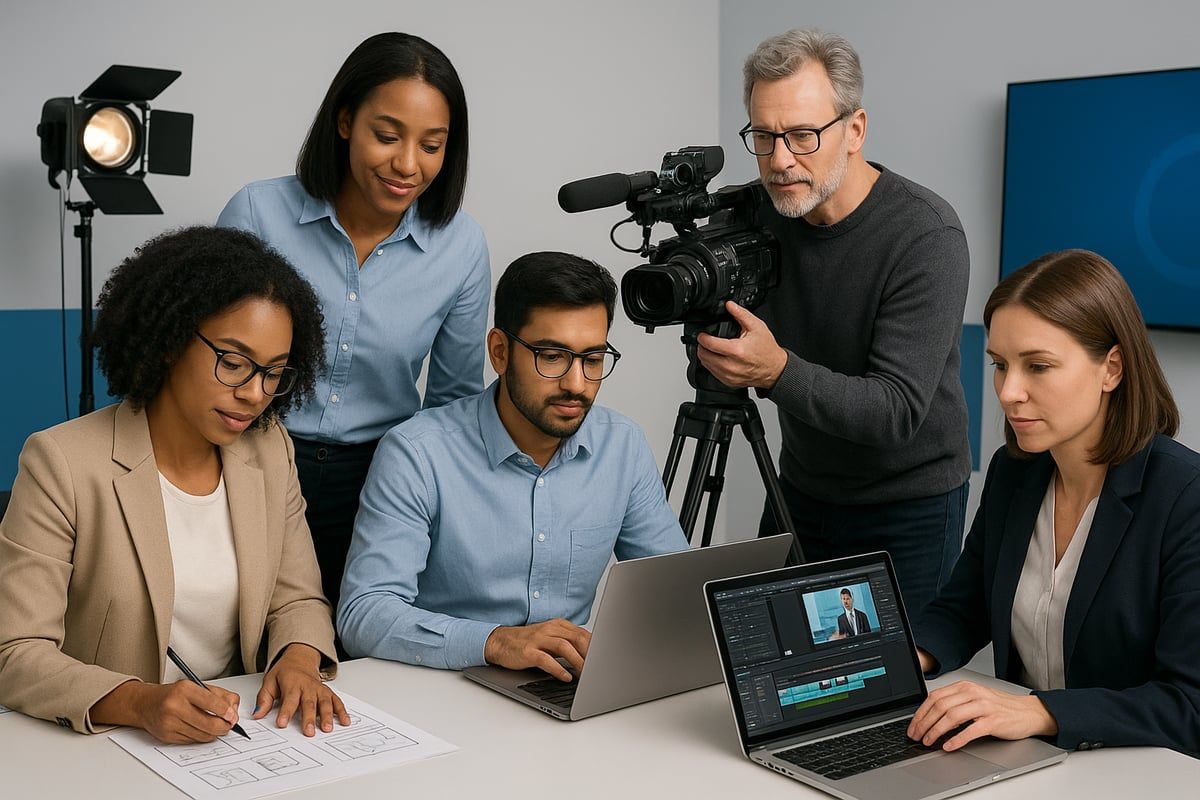
Pre-Production: Laying the Foundation
Pre-production is the cornerstone of any successful corporate training video production. Start with a thorough needs analysis to define learning objectives that connect directly to organizational goals. This ensures every video has a strategic purpose.
Instructional design is your next step. Apply principles such as chunking content for microlearning and using storyboards to visualize each scene. For instance, a compliance scenario video might include a storyboard showing a decision tree for handling workplace incidents.
Scriptwriting should prioritize clarity, engagement, and accessibility. Write concise dialogue and instructions for on-screen text. Incorporate feedback from subject matter experts to ensure accuracy.
Key pre-production steps include:
- Conducting a skills gap analysis.
- Mapping content to business outcomes.
- Drafting scripts and storyboards.
- Reviewing with stakeholders for early alignment.
Laying a solid foundation in pre-production sets the stage for a smooth corporate training video production process.
Production: Bringing Content to Life
Production transforms plans into reality, making your corporate training video production vision tangible. The first decision is format: live-action, animation, or a hybrid. Each serves different learning goals. Live-action is ideal for realistic scenarios, while animation simplifies complex processes.
For a deeper look at format options, explore video solutions for business training needs, which details how different approaches impact engagement.
Set up your shoot for professional quality. Focus on lighting, sound, and set design to reinforce your brand. Decide whether to use employees or professional actors as presenters. Directing talent requires clear communication and rehearsal to ensure authentic delivery.
Tips for effective filming:
- Use multiple camera angles for demonstrations.
- Capture real workplace environments.
- Record high-quality audio to maintain clarity.
Production is where your corporate training video production strategy becomes visible and impactful.
Post-Production: Editing and Enhancement
Post-production is where your corporate training video production comes together. Editing shapes the pacing and flow, ensuring key messages are clear and concise. Add graphics, animations, and interactive elements to boost engagement and reinforce learning points.
Plan captions, transcripts, descriptions of essential visual information and playback controls using W3C’s media accessibility guidance. Have the organisation’s accessibility owner review the requirements and the finished lesson.
A robust quality assurance process is essential. Conduct multiple review cycles with stakeholders to catch errors and refine content. Check for consistent branding and technical accuracy.
Post-production steps to remember:
- Edit for clarity and engagement.
- Add captions and accessible features.
- Review and approve with feedback from all key stakeholders.
A well-executed post-production phase elevates the quality of corporate training video production, driving higher retention and satisfaction.
Deployment and Integration
Deployment is the final step in corporate training video production, turning your content into a practical workplace tool. Publish videos to your learning management system (LMS), company intranet, or mobile platforms to ensure broad access.
Confirm the course authoring, packaging and tracking requirements with the learning-system owner. Agree which completion or assessment events must be recorded, who implements them and how they will be tested in the actual system. Supplying a video file alone does not establish SCORM or xAPI tracking.
Integrate new videos into existing learning ecosystems. For example, rolling out an onboarding series across global offices ensures all employees receive consistent training, no matter their location.
Best practices for deployment include:
- Testing video playback on all devices.
- Using analytics to monitor effectiveness.
- Scheduling regular updates for content relevance.
With effective deployment, your corporate training video production delivers measurable results and supports ongoing workforce development.
Types of Corporate Training Videos for 2026
The landscape of corporate training video production is evolving rapidly, with organizations investing in a range of formats to meet diverse learning needs. According to recent Video Production Services Market Analysis 2025-2035, demand for video-based learning solutions continues to surge as companies seek scalable, engaging training methods. Let’s explore the five most impactful types of training videos shaping success in 2026.
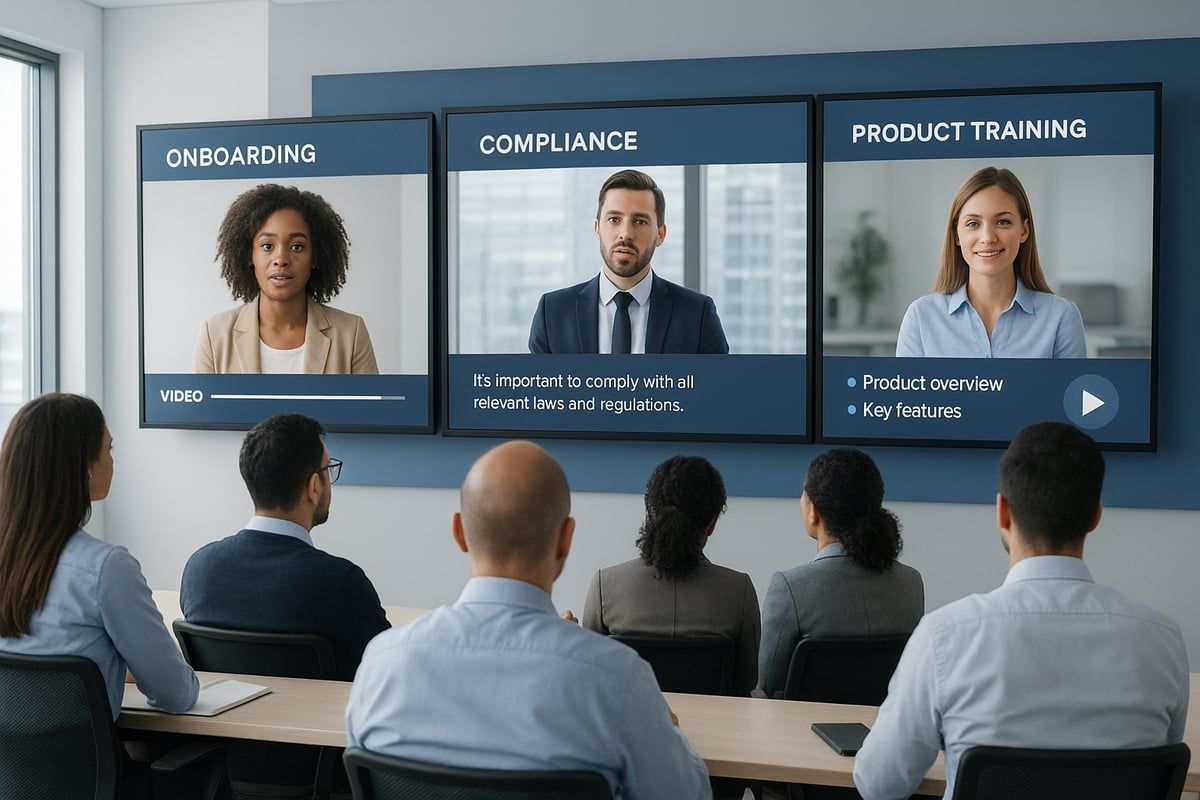
Onboarding and Orientation Videos
Onboarding and orientation videos are foundational in corporate training video production. These videos welcome new hires, introduce company culture, and clearly outline essential policies.
For global or remote teams, virtual office tours and leadership messages can bridge distances. Day-one checklists embedded in video formats help streamline the onboarding journey, providing consistency across locations.
By integrating onboarding content into your corporate training video production, you ensure all new employees start with confidence and clarity.
Compliance and Safety Training Videos
Compliance and safety training videos are essential for keeping employees up-to-date with regulations and workplace standards. These videos make complex topics like cybersecurity, harassment prevention, or equipment safety accessible through scenario-based modules.
Have the training owner check the demonstration against the approved procedure and define how understanding will be assessed.
Have the responsible subject expert approve the procedure, record its version and review date, and identify when the lesson needs an update.
Skills Development and SOP Training Videos
Skills development and Standard Operating Procedure (SOP) videos are critical for upskilling employees and supporting operational excellence. Through corporate training video production, you can deliver both soft skills training, such as leadership or communication, and technical instruction, like software use or machine operation.
Step-by-step walkthroughs and interactive simulations break down complex tasks into manageable segments. Microlearning bursts make ongoing development accessible and engaging, fitting seamlessly into busy schedules.
SOP videos are especially valuable in manufacturing or customer service, ensuring consistency and reducing errors. By leveraging video, you can document best practices and make learning available on demand.
Product and Software Training Videos
Product and software training videos support employees and customers in mastering new tools quickly and efficiently. Within corporate training video production, these videos take the form of animated explainers, live demonstrations, and interactive walkthroughs.
With clear visuals and step-by-step instructions, product training videos help reduce support tickets and speed up adoption rates. For software rollouts, video tutorials can address frequently asked questions and guide users through new features.
By embedding these resources into your training library, you empower users to become proficient and confident, boosting satisfaction and productivity organization-wide.
Sales Enablement and Customer Service Training Videos
Sales enablement and customer service training videos equip teams with the knowledge and skills to drive results. Through corporate training video production, organizations can create role-play scenarios, pitch libraries, and objection handling modules that mirror real-world situations.
Use the scenarios for practice, then ask a subject expert to assess how learners handle the task. Record the assessment method before drawing conclusions about performance.
By investing in specialized video content, businesses ensure that their sales and service teams remain sharp, adaptive, and ready to excel in a competitive market.
Leveraging Technology and Trends in 2026 Training Video Production
Staying ahead in corporate training video production means embracing the latest technology and learning trends. In 2026, innovation is reshaping how organizations design, deliver, and measure the impact of training videos. Let us explore the essential advancements that are driving results and transforming the learning experience.
AI-Powered Personalization and Analytics
Artificial intelligence now lies at the heart of corporate training video production. AI-driven platforms create adaptive video paths tailored to each learner's skill level and progress. These systems deliver real-time feedback, making training more relevant and effective.
Analytics tools measure everything from engagement rates to knowledge retention, allowing organizations to refine content with precision. By leveraging AI, training teams can ensure that each video aligns with business objectives and maximizes ROI.
Interactive Video and Gamification
Engagement is critical for successful corporate training video production. Interactive videos introduce branching scenarios, in-video quizzes, and gamification elements, turning passive viewers into active participants.
Learners can make decisions, practice skills, and receive instant feedback within the video itself. This approach boosts knowledge retention and keeps employees motivated. According to Top Trends in Corporate Training Video Production for 2025, interactivity and gamification are now standard expectations for high-performing training initiatives.
Mobile-First and Microlearning Approaches
Modern employees expect training to be accessible anytime and anywhere. Corporate training video production now prioritizes mobile-first design, ensuring that content displays flawlessly on smartphones and tablets.
Microlearning breaks complex topics into short, focused modules. This format fits into busy schedules, increases completion rates, and supports just-in-time learning. Mobile-first microlearning makes it easy for global teams to access critical knowledge when and where they need it.
VR and AR Integration
Virtual and augmented reality are revolutionizing corporate training video production by creating immersive, hands-on environments. VR simulations allow employees to practice safety protocols, technical tasks, or soft skills in realistic scenarios without real-world risks.
AR overlays digital instructions or guidance onto physical workspaces, enhancing technical and equipment training. These technologies foster deep engagement and help bridge the gap between theory and practical application.
Accessibility, Inclusivity, and Data-Driven Optimization
Ensuring accessibility is essential for successful corporate training video production. Multilingual subtitles, sign language interpretation, and culturally relevant scenarios make learning inclusive for diverse workforces.
Data-driven optimization uses analytics to track learner progress, identify gaps, and refine content continually. By embracing these trends, organizations create training programs that are not only effective but also equitable and future-ready.
Best Practices for High-Impact Corporate Training Videos
Creating high-impact corporate training video production requires a strategic blend of instructional design, technical quality, inclusivity, measurement, and ongoing refinement. By applying the following best practices, organizations can maximize engagement, learning retention, and ROI from their training initiatives.
Engaging Storytelling and Instructional Design
Compelling storytelling is foundational to effective corporate training video production. Using narrative arcs, real-world scenarios, and relatable characters, videos can make learning memorable and actionable. Instructional design models like ADDIE or SAM ensure content is learner-centered and goal-oriented. For example, a leadership development video might follow a manager navigating a challenging team situation, illustrating core concepts through lived experience. Break information into digestible chunks and use visual storyboards to map the learning journey. By weaving storytelling with instructional rigor, corporate training video production drives deeper understanding and behavior change.
Visual and Audio Excellence
Professional visuals and audio are crucial for successful corporate training video production. High-resolution footage, clean sound, and on-brand graphics elevate the learner experience and reinforce credibility. Use animation to simplify complex ideas and maintain viewer interest. Consistent branding helps reinforce organizational identity across all content. Invest in quality lighting, microphones, and editing, ensuring every element supports the training objective. These visual and audio choices directly impact learner engagement and message retention.
Accessibility and Inclusivity
Accessibility is non-negotiable in corporate training video production. All learners, regardless of ability or location, should be able to benefit from training content. Provide captions, audio descriptions, and multiple language options to address diverse needs. Culturally relevant visuals and examples foster inclusivity for global teams. Ask the accessibility owner to identify applicable requirements and review the final content and player. By making accessibility a core design principle, organizations demonstrate their commitment to equity and broaden the impact of their training investments.
Measuring Effectiveness and ROI
Robust measurement is essential to evaluate the success of corporate training video production. Track metrics such as completion rates, knowledge assessments, behavioral changes, and business outcomes. Use analytics to identify patterns and areas for improvement. Feedback loops, including learner surveys and performance data, inform content updates. Advanced techniques, like Label-Guided Summarization of Instructional Videos, can further enhance analysis and optimize training content. Continuous measurement ensures training initiatives are aligned with organizational goals and deliver tangible business value.
Continuous Improvement and Content Refresh
Sustaining impact in corporate training video production requires ongoing content refresh and improvement. Schedule regular reviews to keep material current with industry trends, regulations, and company updates. Modular design enables easy updates and scalability as new needs emerge. Encourage learner feedback to identify gaps and opportunities. By prioritizing continuous improvement, organizations ensure their training remains relevant, engaging, and effective for all employees.
Selecting the Right Corporate Training Video Production Partner
Choosing the right partner for corporate training video production is a pivotal decision for organizations aiming to maximize training impact in 2026. The right production partner will not only deliver high-quality content but also ensure your investment translates into measurable learning outcomes.
A strong selection process begins with a clear assessment of expertise, creativity, and industry experience. Review the vendor’s portfolio for projects similar to your needs, and seek out client testimonials that highlight successful outcomes. Prioritize partners who demonstrate a deep understanding of corporate training video production, as well as a proven track record in your specific sector.
Strategic alignment is equally important. Your chosen partner should take the time to understand your business goals, training objectives, and organizational culture. This alignment ensures that the corporate training video production process remains focused on delivering content that drives real business results. When comparing options, consider whether a full-service agency or a niche specialist best fits your requirements.
Full-service agencies typically offer end-to-end solutions: scripting, filming, animation, editing, and platform integration. Niche specialists may excel in a particular format, such as animated explainers or interactive modules. Evaluate which approach aligns best with your internal resources and the scope of your training needs.
Creative and technical capabilities are critical differentiators. Assess the vendor’s proficiency with animation, live-action, and interactive elements. Inquire about their approach to accessibility features, such as caption and transcript delivery, language versions and accessibility review. Robust project management, transparent communication, and ongoing support are also essential for a smooth production experience.
To help you compare potential partners, consider the following table:
| Criteria | Full-Service Agency | Niche Specialist |
|---|---|---|
| Service Scope | End-to-end | Specialized |
| Creative Range | Broad (live, animation) | Focused (e.g., animation) |
| Project Management | Dedicated teams | Lean teams |
| Cost Structure | Bundled pricing | Custom quotes |
Ask targeted questions during the selection process. What is their experience with corporate training video production at scale? Can they provide examples of improved training outcomes for similar clients? How do they handle revisions, feedback, and stakeholder engagement? Request details on their workflow, turnaround times, and post-launch support.
Building a results-driven partnership requires ongoing collaboration and clear expectations. Establish regular feedback loops and milestone reviews to ensure alignment throughout the project. For additional guidance, review these tips for working with a video production company to set your partnership up for success.
Ultimately, the right corporate training video production partner will bring strategic insight, creative excellence, and operational reliability to your training initiatives. By following a structured selection process, you can ensure your investment delivers measurable impact and supports ongoing workforce development.
Now that you have a solid understanding of how to plan, produce, and measure impactful corporate training videos for 2026, you might be wondering how to put these strategies into action for your organization. Working with a partner who understands your goals and brings proven expertise to every step can make all the difference in achieving measurable business results. If you are ready to elevate your workforce training and drive real ROI with high-performance video content, let’s talk about your vision and how we can help bring it to life. Start a project